Status: Stock
Floating Life by M.Blanasi
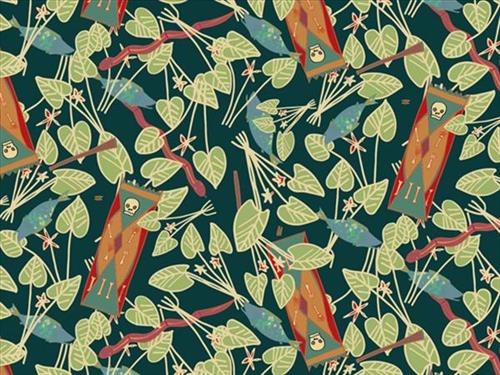
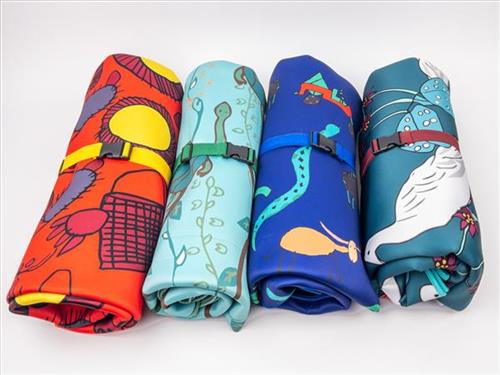
Design features lilypads, fish, file snakes, lorrkon (coffin box) and mako (didj). Based on original artwork by M.Blanasi created in 2020. Designed in Wugularr / Beswick, Arnhem Land.
Status: Stock
Design features lilypads, fish, file snakes, lorrkon (coffin box) and mako (didj). Based on original artwork by M.Blanasi created in 2020. Designed in Wugularr / Beswick, Arnhem Land.
Status: Stock
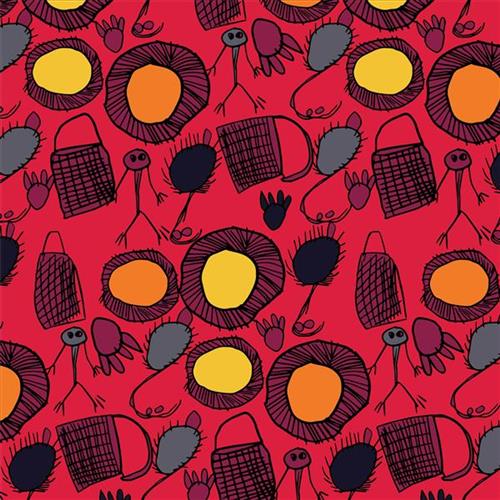
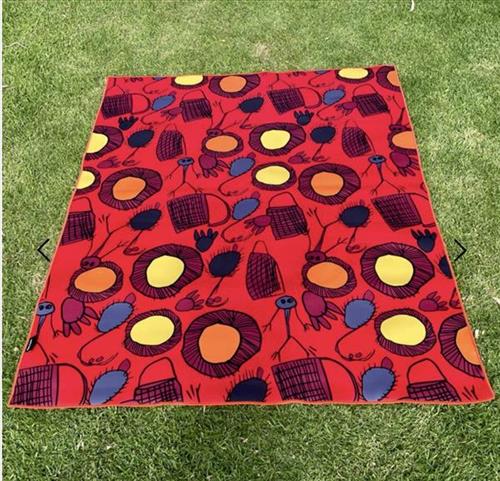
Inspired by Gapu water, design features Dillybag, Pandanus Mats and Mukuy spirit creatures. The Mukuy belong in Yirritja country called Galanbirni. At night you might hear them playing the Didjeridu. The Mukuy travel around a lot and are often found in sacred places. They are mysterious, sometimes playful and sometimes cheeky characters, often referred to as Devil Devil. Mukuy figures tell the stories of country, culture and spiritual beliefs.
Based on original artwork created by P.Forbes and designed in Wugularr / Beswick, Arnhem Land, NT.
Size 170 x 140cm.
Made from neoprene wetsuit material that is quick dry, repels sand, sticks, and grasses whilst being insulating and waterproof. It can provide protection from the wet ground, and shelter you from wind and rain. You can even wrap up your wet gear in it. To clean, hose it down or rinse off after use, dry in shade.
Status: Stock
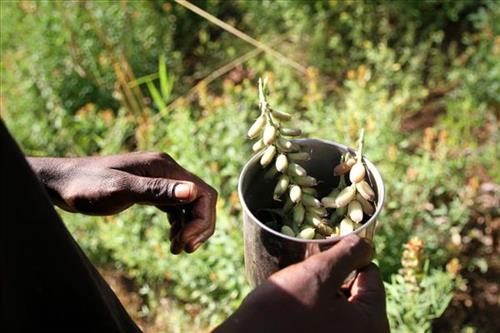
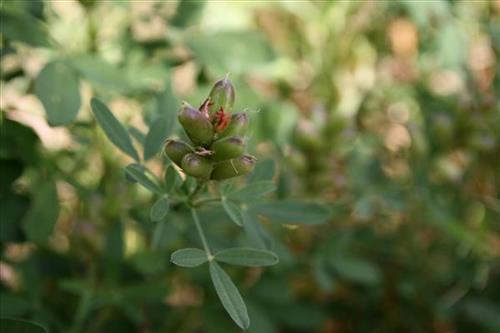
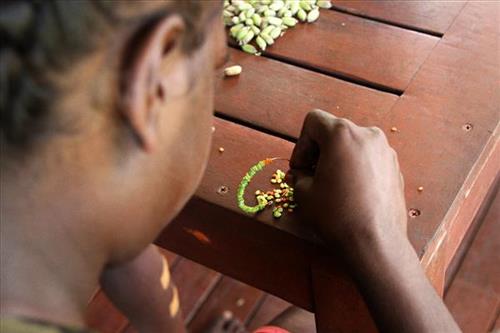
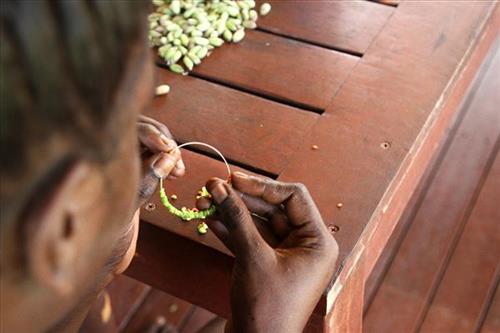
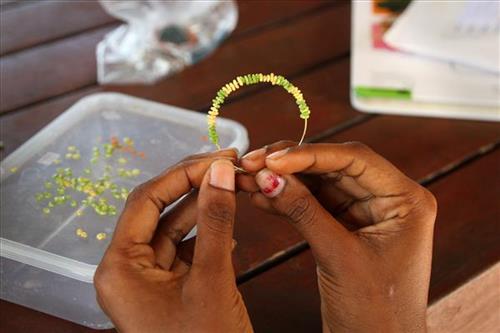
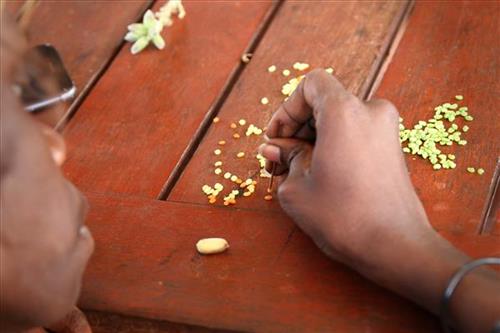
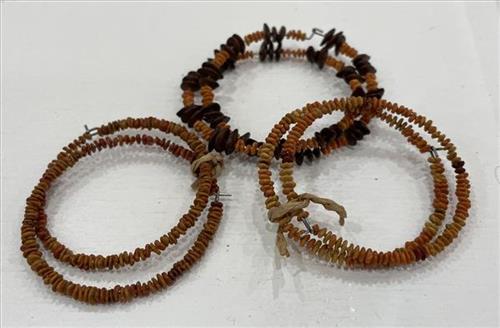
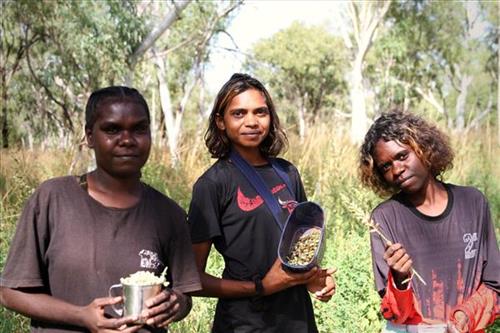
Girring Girring is hand made jewellery using local seeds. These earrings feature seeds from the local Crotalaria novae-hollandiae, hand-threaded on to stainless steel hoops (40-50mm diameter).
Small seeds, harvested from a slightly larger pod, age and transition from green to yellow, orange, red and sometimes even a dark red, almost black, colour. Once pierced and made into jewellery, the colour does not change. Because of this beautiful patterns can be made and each piece is unique.
How do I get these into my ears?
Our artists pack these hoops completely full with seeds, because they shrink as they dry.
After you purchase your desired pair, start at the hooked end and gently twist and push the seeds up the wire until you achieve your desired spacing. As the seeds move along, space will free up on the other end to fit on your ear.
Still need more space? Pinch a few seeds with your fingernails to remove them.
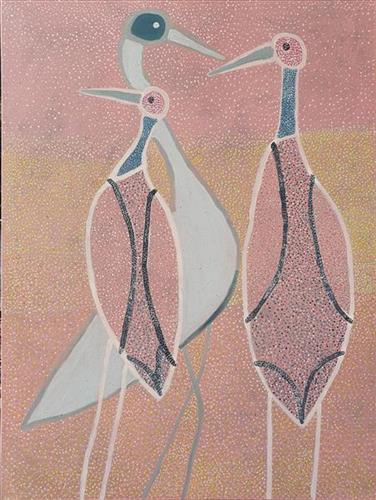
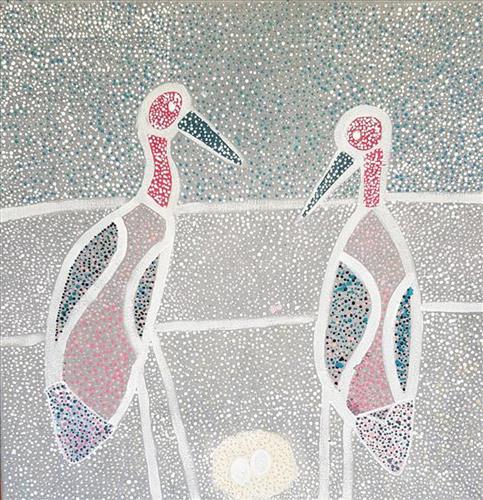
Anne Nunn is Nyungul woman. Her paintings depict cultural, historic and contemporary stories from her Country, the Helensvale and Shipton’s Flat area in Far North Queensland.
“My painting depicts the plants and animals that live and grow around my bubu (country). I love going out bush and am especially inspired by the wetland dikal (birds) like the kubal (brolga) that live in the walngka (swamp grasses) and kababina (water lilies)”.
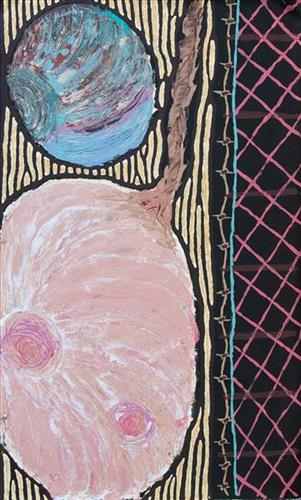
“When I went back to my County, I thought how beautiful the spinifex was. How the sun glazed against the spinifex. The county that I speak of is Jilukurru, my grandfather’s Country.”
“My Nanna, Molly Kelly, walked the Rabbit Proof Fence. My ancestors are from Lake Disappointment and my Grandfather’s country is Jilukurru. Jilukurru is also known as Killagurra Springs and is on the Canning Stock Route, Well 17. The creek line to Lake Disappointment is called Savory creek.”
– Kathleen Maree Sorenson
Jilukurru (Killagurra Springs, Canning Stock Route Well 17) is a yinta (permanent spring) located in the hills and gorges yapurra (west) of Kumpupirntily (Kumpupintily, Lake Disappointment). This spring was an important site for meetings during the pujiman (traditional, desert dwelling) era.
Jilukurru is also sacred for its relation to the Jukurrpa (Dreaming) narrative of the Wati Kujarra (Two Goanna Men), one of the key foundational myths for Western Desert people, and for this reason access to the site is respectfully restricted. The Wati Kujarra existed as half men, half goanna. They were responsible for the creation of many land features in Martu Country and beyond as they travelled, hunted and burned Country together. Wati Kujarra is a ngurlu (sacred, taboo) men’s story, and much of the content is only shared with initiated men.
At Jilukurru, the Wati Kujarra lived for a time. Here they also trimmed their ngarnkurrpa (beards). On one of the rocky headlands of the range system, the form of the two men can be seen, with their long beards rolling down the escarpment. After the Wati Kujarra left Jilukurru the site became home to an ancestral rainmaking jila (snake).
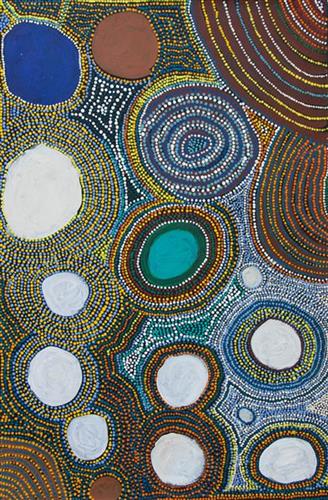
“Mungili rock hole. Big rock hole, big Country. I never see that place. My mother born [there], her and her grandmother walk through there, they tell me story [for that place]. Mother born there in the Country Mungili, walking through the bush. There is a camping spot, camping in bush – bush, bush, bush. [Points at painting] This is the lake Country and goes through there.”
– Matthew Mintern Smith
In this work Matthew depicts a claypan located in Mungili, the small outstation community situated just off the Eagle Highway in Western Australia. Mungili lies approximately 430 kilometres northeast of Wiluna and 250 kilometres north of Warburton. Mungili is ngurra (home (home Country, camp) for Matthew through his mother and grandmother. He typically depicts the site with a central large circular form that represents the main claypan, surrounded by smaller circular forms symbolising satellite water bodies.
The Western Desert term ‘ngurra’ is hugely versatile in application. Broadly denoting birthplace and belonging, ngurra can refer to a body of water, a camp site, a large area of Country, or even a modern house. People identify with their ngurra in terms of specific rights and responsibilities, and the possession of intimate knowledge of the physical and cultural properties of one’s Country. This knowledge is traditionally passed intergenerationally through family connections. Country for Martu is full of memory; not just the memory of their own movement through it, but also of their family. As summarised by Ngalangka Nola Taylor, “painting the ngurra, they do it to remember their connections.”
Painting ngurra, and in so doing sharing the Jukurrpa (Dreaming) stories and physical characteristics of that place, has today become an important means of cultural maintenance. Physical maintenance of one’s ngurra, like cultural maintenance, ensures a site’s wellbeing, and is a responsibility of the people belonging to that area.
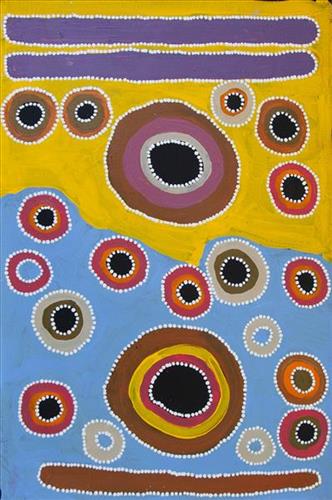
“Katjarra’s [Katjarra Butler] ngurra (home Country, camp). Birthplace. [It is] sandhill country. Rockhole, little bit of rocks. And in the sandhill, there is a jurnu (soakwater). They take that water, come out [of the soakwater]. Partjanta the name of that jurnu. Main one. She [Katjarra Butler] been go jina [foot, walking]. Early days. Walking [to] Kintore, Papunya.”
“I’m painting my grandmother’s country, her way. Katjarra style.”
-Sharon Porter
This site forms part of Sharon’s ngurra (home Country, camp) through her grandmother, Katjarra Butler. Located east of Kiwirrkurra and on Pintupi country.
The Western Desert term ‘ngurra’ is hugely versatile in application. Broadly denoting birthplace and belonging, ngurra can refer to a body of water, a camp site, a large area of Country, or even a modern house. People identify with their ngurra in terms of specific rights and responsibilities, and the possession of intimate knowledge of the physical and cultural properties of one’s Country. This knowledge is traditionally passed intergenerationally through family connections. Country for Martu is full of memory; not just the memory of their own movement through it, but also of their family. As summarised by Ngalangka Nola Taylor, “painting the ngurra, they do it to remember their connections.”
Painting ngurra, and in so doing sharing the Jukurrpa (Dreaming) stories and physical characteristics of that place, has today become an important means of cultural maintenance. Physical maintenance of one’s ngurra, like cultural maintenance, ensures a site’s wellbeing, and is a responsibility of the people belonging to that area.
This work depicts a yinta (permanent spring) within the artists’ ngurra (home Country, camp), typically depicted with circular forms. Yinta provided a reliable source of water and were traditionally used as camping sites throughout the year.
During the pujiman (traditional, desert dwelling) period, knowledge of water sources was critical for survival, and today Martu Country is still defined in terms of the location and type of water. Each of the hundreds of claypans, rockholes, waterholes, soaks and springs found in the Martu desert homelands is known through real life experience and the recounting of Jukurrpa (Dreaming) narratives by name, location, quality and seasonal availability. This encyclopedic knowledge extends even to the nature and movement of arterial waterways, and sustained Martu as they travelled across their Country, hunting and gathering, visiting family, and fulfilling ceremonial obligations. They would traverse very large distances annually, visiting specific areas in the dry and wet season depending on the availability of water and the corresponding cycles of plant and animal life on which hunting and gathering bush tucker was reliant.
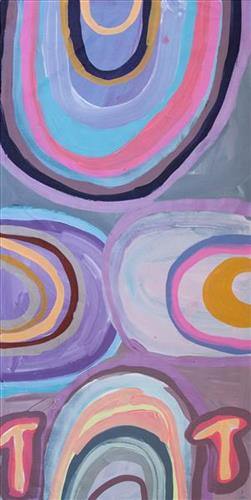
“Emu go to the springs to have a drink of water and then move on to the next one.”
– Judith Anya Samson
Puntawarri is an important cultural area, as well as the site of a now abandoned community, a waterhole, creek and lake. Puntawarri is located on the middle stretches of the Canning Stock Route and east of the Jigalong Aboriginal Community, where Judith grew up with her grandmother and senior Martumili Artist Dadda Samson (dec.). Anya continues to live between Jigalong and Newman today.
Puntawarri lies within Judith’s ngurra (home Country, camp) through her mother’s family, and as a young girl she frequently travelled and hunted with her family in this area, learning the stories for this Country. Depicted in this work are the tracks of a group of emus on their way to Puntawarri waterhole, searching for kapi (water).
Karlaya (emu) were traditionally hunted during the pujiman (traditional, desert dwelling) era, and they continue to be a favoured bush tucker for Martu today. During the pujiman period, Martu would traverse very large distances annually in small family groups, moving seasonally from water source to water source, and hunting and gathering bush tucker as they went. Jina (tracks, footprints) are used by Martu people when tracking bush tucker. In the absence of an actual animal sighting, tracks act as an identifier that an animal was present, which can then be followed to the animal’s present location. Besides providing information on location, Martu are able to interpret from tracks the passage of time since the tracks were imprinted, as well as the corresponding animal species and its size.
The softer and more extensive the ground surface, the easier it is to locate and follow tracks, thus certain conditions are favoured for tracking. Tuulparra (spring) and yalijarra (hot time) are preferred over wantajarra (winter), when south easterly tradewinds blow strongly to obscure tracks. Tracks and burrows are also more readily visible in early growth lands, such as nyurnma (freshly burnt Country) and waru-waru (growth of new shoots and young plants). For this reason, fire burning is an important tool in animal tracking. Small burns are lit to clear vegetation, expose burrows, and to allow for access to walk and track readily in exposed sands, while simultaneously providing diverse regenerating habitats.
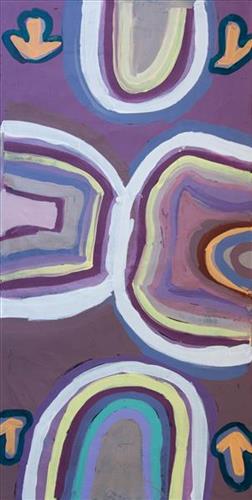
“Emu go to the springs to have a drink of water and then move on to the next one.”
– Judith Anya Samson
Puntawarri is an important cultural area, as well as the site of a now abandoned community, a waterhole, creek and lake. Puntawarri is located on the middle stretches of the Canning Stock Route and east of the Jigalong Aboriginal Community, where Judith grew up with her grandmother and senior Martumili Artist Dadda Samson (dec.). Anya continues to live between Jigalong and Newman today.
Puntawarri lies within Judith’s ngurra (home Country, camp) through her mother’s family, and as a young girl she frequently travelled and hunted with her family in this area, learning the stories for this Country. Depicted in this work are the tracks of a group of emus on their way to Puntawarri waterhole, searching for kapi (water).
Karlaya (emu) were traditionally hunted during the pujiman (traditional, desert dwelling) era, and they continue to be a favoured bush tucker for Martu today. During the pujiman period, Martu would traverse very large distances annually in small family groups, moving seasonally from water source to water source, and hunting and gathering bush tucker as they went. Jina (tracks, footprints) are used by Martu people when tracking bush tucker. In the absence of an actual animal sighting, tracks act as an identifier that an animal was present, which can then be followed to the animal’s present location. Besides providing information on location, Martu are able to interpret from tracks the passage of time since the tracks were imprinted, as well as the corresponding animal species and its size.
The softer and more extensive the ground surface, the easier it is to locate and follow tracks, thus certain conditions are favoured for tracking. Tuulparra (spring) and yalijarra (hot time) are preferred over wantajarra (winter), when south easterly tradewinds blow strongly to obscure tracks. Tracks and burrows are also more readily visible in early growth lands, such as nyurnma (freshly burnt Country) and waru-waru (growth of new shoots and young plants). For this reason, fire burning is an important tool in animal tracking. Small burns are lit to clear vegetation, expose burrows, and to allow for access to walk and track readily in exposed sands, while simultaneously providing diverse regenerating habitats.
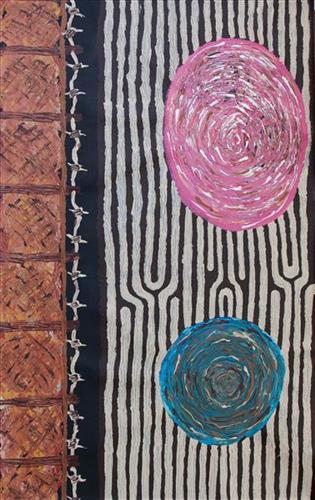
“When I went back to my County, I thought how beautiful the spinifex was. How the sun glazed against the spinifex. The county that I speak of is Jilukurru, my grandfather’s Country.”
“My Nanna, Molly Kelly, walked the rabbit proof fence. My ancestors are from Lake Disappointment and my Grandfather’s country is Jilukurru. Jilukurru is also known as Killagurra Springs and is on the Canning Stock Route, Well 17. The creek line to Lake Disappointment is called Savory creek.”
– Kathleen Maree Sorenson
Jilukurru (Killagurra Springs, Canning Stock Route Well 17) is a yinta (permanent spring) located in the hills and gorges yapurra (west) of Kumpupirntily (Kumpupintily, Lake Disappointment). This spring was an important site for meetings during the pujiman (traditional, desert dwelling) era.
Jilukurru is also sacred for its relation to the Jukurrpa (Dreaming) narrative of the Wati Kujarra (Two Goanna Men), one of the key foundational myths for Western Desert people, and for this reason access to the site is respectfully restricted. The Wati Kujarra existed as half men, half goanna. They were responsible for the creation of many land features in Martu Country and beyond as they travelled, hunted and burned Country together. Wati Kujarra is a ngurlu (sacred, taboo) men’s story, and much of the content is only shared with initiated men.
At Jilukurru, the Wati Kujarra lived for a time. Here they also trimmed their ngarnkurrpa (beards). On one of the rocky headlands of the range system, the form of the two men can be seen, with their long beards rolling down the escarpment. After the Wati Kujarra left Jilukurru the site became home to an ancestral rainmaking jila (snake).