377810582283917


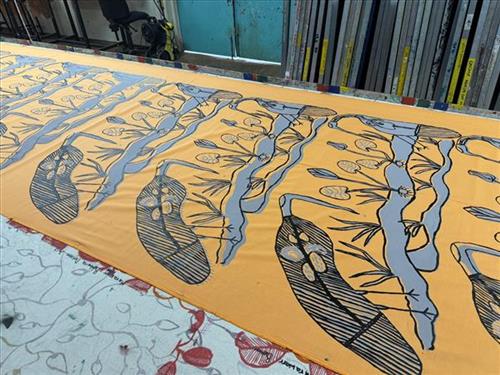
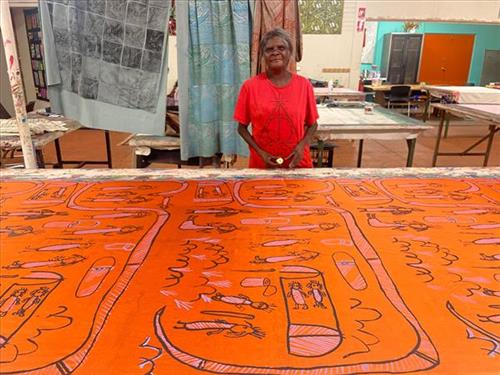
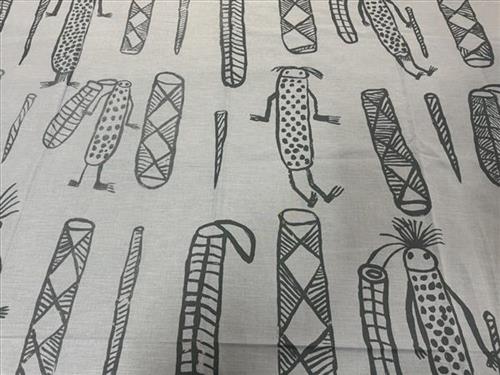
Bawáliba (Stone Country Mimih)

‘Bawáliba is the djang (Dreaming) of my mother and my uncles. They are good spirits, they protect us and they recognise families. They are really tall- just like human beings, like us. They dance late at night and have a lot of hair.

In olden times, long long long time ago Bawáliba were here, before people were on the land. Bawáliba used to go out hunting and care for country. They hunt carrying fish traps and digging sticks, near the homeland Djinkarr. They go out hunting on the floodplains with dilly bags and digging sticks. They collect a lot of bush foods, and sleep together with one bark shelter.
Sometimes now they still come alive when we sleep, they might come to our houses and peep through the window. At night, they cover themselves with white clay and red cloth tied around their waist. If we hear them, we jump out of bed and get up to look -but they have disappeared, they’re just too quick. Bawáliba might knock on the window to remind us they are there looking out for us.If you listen deeply you can hear them whisper, sometimes they talk about us and might say, ‘why are those people making camp here?’ then they realise ‘Oh they are family from here, it’s ok, they are just sleeping here for the night’.

During the day they always turn into stone and they sleep. We still know that green rock covered in moss near Djinkarr, that’s Bawáliba sleeping.
Some of my ancestors used to speak the same language as the Bawaliba, but all those old people are passed away now. It’s a little bit sad for us, because no one now can speak that Bawaliba language anymore.’ Lucy Yarawanga 2019

377810582283903


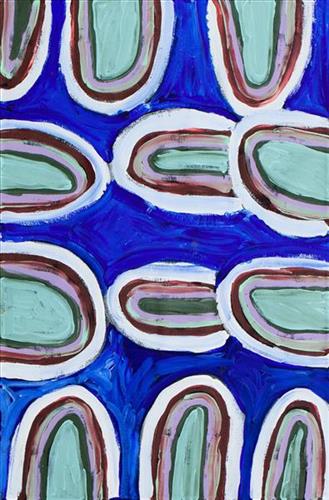
Djomi Egg

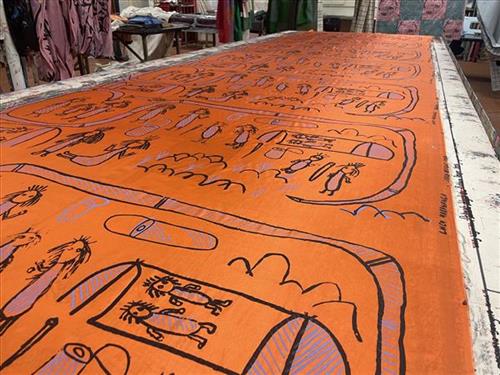
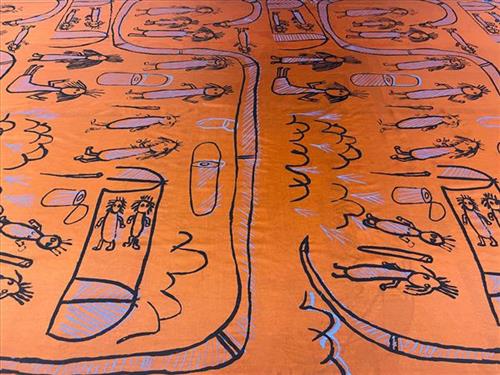
This design depicts the story of the artist’s ancestral dreaming, the Djomi freshwater spirit mermaid.


The Djomi figure is a mermaid like spirit with fish tail that lives in the freshwater stream that flows out to the sea cliff near Maningrida. Djomi is a known to be a very powerful fertility symbol.


‘There is a swamp by the ocean, near my home, where all the Djomi live and come to lay their eggs, they lay them here to grow more and more Djomi. When the wet season comes, the cyclones, storms, and big rain, brings enough water for the Djomi to swim out and into the water ways surrounding Maningrida.


Anyone wanting to have a baby can go to that place and Djomi will give them a baby. This is a real story; we have lots of Djomi babies here in Maningrida.


When the big rains of wet season are too strong, Djomi swim up into the pipes to hide and keep safe. Sometimes they will keep swimming further up the pipes and into pipes of people’s homes, they can travel everywhere. The Djomi carries human babies with them and will sometimes put babies into the water that people in Maningrida drink, that’s why we see many young women expecting babies.’ – Joy Garlbin 2023

377810582283887


Kandji

‘Minmanyarr is the wetlands area before Mumeka, my homeland. There are always a lot of birds there, including this Kandji (Jabiru). The Kandji belongs to the Yirridja moiety, so I call this bird mother. They are looking for fish and turtle in the billabong area, in the mud. There is also wayuk (water lily) in this design, the flowers can be pink, white or yellow. The bottom part with the roots we call bulparr. Wayuk is good manme (food). We eat the yellow seedpods inside.’ Deborah Wurrkidj

377810582283884


Kandji

‘Minmanyarr is the wetlands area before Mumeka, my homeland. There are always a lot of birds there, including this Kandji (Jabiru). The Kandji belongs to the Yirridja moiety, so I call this bird mother. They are looking for fish and turtle in the billabong area, in the mud. There is also wayuk (water lily) in this design, the flowers can be pink, white or yellow. The bottom part with the roots we call bulparr. Wayuk is good manme (food). We eat the yellow seedpods inside.’ Deborah Wurrkidj

377810582283880


Kandji

‘Minmanyarr is the wetlands area before Mumeka, my homeland. There are always a lot of birds there, including this Kandji (Jabiru). The Kandji belongs to the Yirridja moiety, so I call this bird mother. They are looking for fish and turtle in the billabong area, in the mud. There is also wayuk (water lily) in this design, the flowers can be pink, white or yellow. The bottom part with the roots we call bulparr. Wayuk is good manme (food). We eat the yellow seedpods inside.’ Deborah Wurrkidj

377810582283866


Ngaldadmurrng (Saratoga)

This design tells the story of Saratoga dreaming,  a freshwater fish that swims on the edge of creeks and rivers. This design is the Saratoga dreaming from the Mularra songline. Where the Saratoga we call Murdulngu, Danguny travelled from Malmyangarnak billabong to Mirrigatja.

This Billabong was owned by Murdulngu (Saratoga) before the water was taken over by shark Barlangu he came all the way from east to north then to west. He was travelling when that water level was high he went up the stream but he couldn’t make it. This Barlangu came from Murruggun clan but really this shark came from long way all the way south. This story is connected through Mularra songline it represents many clans.

With permission from clan elders, Carol is able to pass on this family knowledge through her passion in textile and art.


‘I am proud of my first design, I want to keep this design for future, for my children and grandchildren so they remember this story, this story is a big part of the mularra songline’ Carol Liyawanga Campion

111581739334


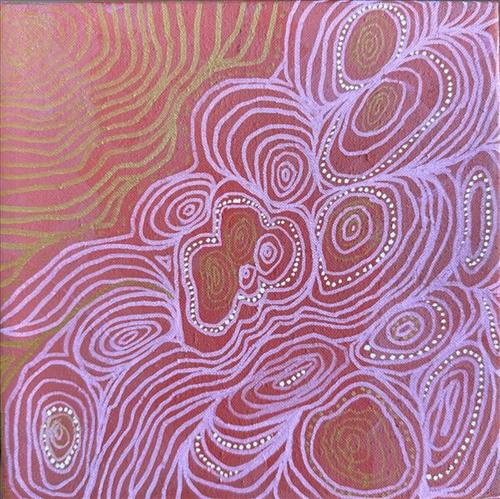
Puntawarri

This painting depicts Puntawarri, the artists’ mother’s family’s country. Puntawarri is on the middle stretches of the Canning Stock Route, near Well 17 also known as Durba Springs. Puntawarri is an important cultural area, east of the Jigalong Aboriginal Community, where the artist now lives with her grandmother. The artist’s grandmother frequently travelled and hunted with her family in this area when she was a young girl, and is now teaching Judith the stories for this country.

222082282464


dhandyuri

freshwater mussel shells, left by the river after a feed. Freshwater mussels were an important source of food for our people. Middens containing large numbers of mussel shells are widespread alongside rivers and lakes.

377810582282828


Bawáliba and Ngalyod (Rainbow Serpent)

‘My Kikka (mother), when she was alive, she would tell me these stories. I was just a  little girl and she would tell us the stories in her language Gurrgoni.

In the camps there were boy and girl Bawaliba, and old Bawaliba too. They loved to  dance by the firelight, keeping rhythm with a stick. They had lots of hair, they were  really tall and skinny, with spots on their bodies. The Bawaliba lived a long time in  peace. They were the only spirits on their country and so they were never disturbed.

One day, a long time ago, the Bawaliba were out hunting and they saw a large  snake- they didn’t know then but she was the Rainbow Serpent. They were really  scared, they had never seen that. creature before. She was really beautiful- like a  normal king brown snake but with a rainbow from the sky on her back. The rainbow  serpent was really hungry, and she could smell the Bawaliba from a long way away.  She was out looking for food.  The Bawaliba tried to stop Ngalyod coming for them but she was just too quick. She  snuck up behind the Bawaliba and before they could get away she ate them up.  When she was really full and couldn’t eat anymore Bawaliba she changed the rest of  them into stone. Still til this day, the Bawaliba stay on that same country as stones.’ Lucy Yarawanga