114182399637


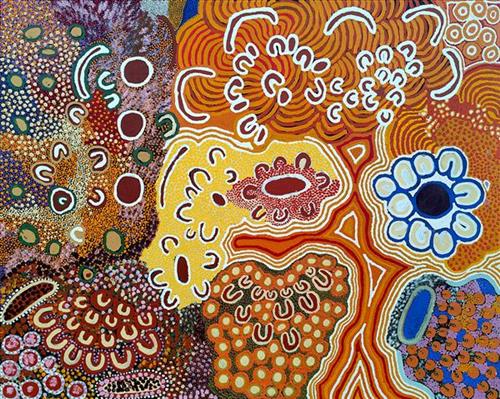
The boy who turned into wind (pirriya) at Walu rockhole

This story is about a young boy who had no parents and was neglected.

There were two men (the boy’s uncles) and one young boy camping at Walu Rockhole, an important water site in the Gibson Desert, northwest of the tri-state border between Western Australia, the Northern Territory and South Australia. 

The men went hunting and the boy stayed behind waiting. The men returned with an emu and pulled out its heart. The boy was holding the heart and blood spilt out onto the rocks. He ran away with the heart and turned into a big whirlwind. The big whirlwind. came up and swept the families away. Today you can still see the emu’s blood trail where it stained the rocks.

Walu rock hole is a special place north of Papulankutja (Blackstone) where traditionally Yarnangu families would gather when water was available in the holes found in a flat rocky area.

114182399636


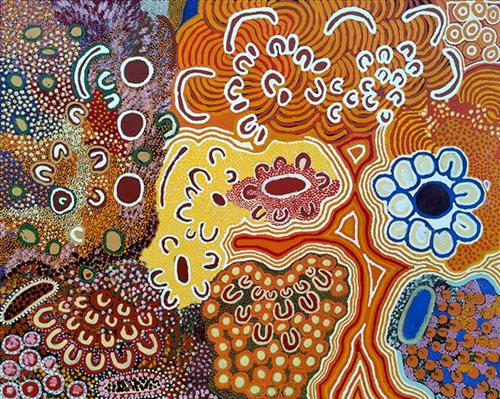
The boy who turned into wind (pirriya) at Walu rockhole

This story is about a young boy who had no parents and was neglected.

There were two men (the boy’s uncles) and one young boy camping at Walu Rockhole, an important water site in the Gibson Desert, northwest of the tri-state border between Western Australia, the Northern Territory and South Australia. 

The men went hunting and the boy stayed behind waiting. The men returned with an emu and pulled out its heart. The boy was holding the heart and blood spilt out onto the rocks. He ran away with the heart and turned into a big whirlwind. The big whirlwind. came up and swept the families away. Today you can still see the emu’s blood trail where it stained the rocks.

Walu rock hole is a special place north of Papulankutja (Blackstone) where traditionally Yarnangu families would gather when water was available in the holes found in a flat rocky area.
115682399411


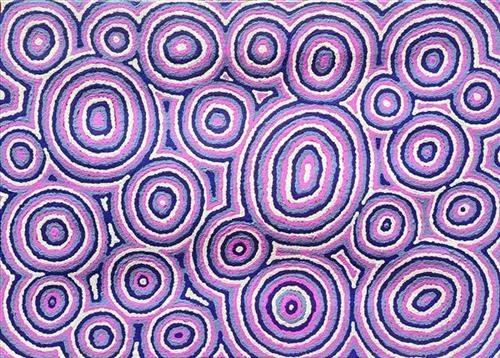
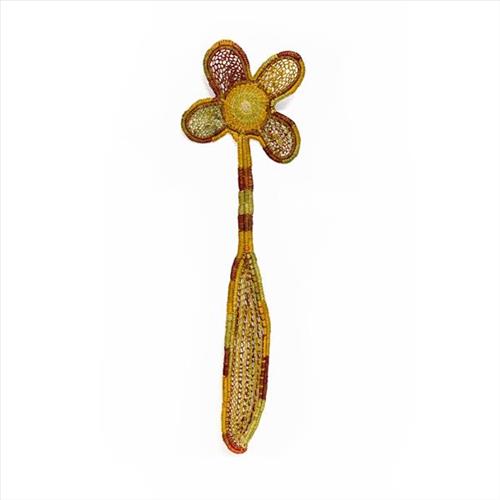
Woven Sculpture (Flower)

Yolŋu weavers of Arnhem Land craft both utilitarian and ceremonial objects using naturally sourced materials, with more recent works also including decorative pieces. The choice of fibre depends on the intended function of each piece.

One of the primary materials is the young, green leaves of the Pandanus spiralis tree, harvested with a long hook. The leaves are stripped of their prickles, and the smaller fibres are dried to produce a strong, resilient material. These fibres can be twisted, coiled, or combined using various techniques to create baskets (Bathi), dillybags (Mindirr), and mats—both in the modern flat style and the traditional conical style (Nganiyal).

For more flexible, open-weave designs, weavers use the bark of the kurrajong tree. This material is particularly suited for dillybags (Mindirr) and ceremonial objects, such as Matjka (body adornments) and Malka (headwear).

Bula’bula weavers exclusively use natural dyes, derived from locally sourced roots, leaves and grasses. These pigments are extracted and infused into pandanus fibres by boiling over an open fire, producing the rich, vibrant colours characteristic of contemporary Yolŋu weavings.

115682399410


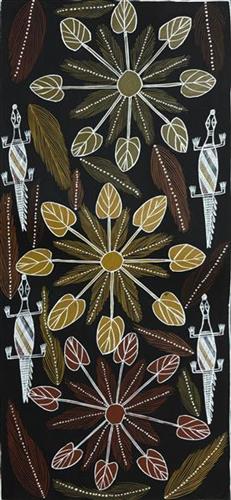
Baru Dhawu (Crocodile Story)

Baru (the crocodile man), was from the Gumatj clan. People usually call him Gurdu Gurdu or Baru which means crocodile. He lived his life at a place called Yirrkala. Living near him were other people, and when Baru didn’t have enough to eat he began to kill and eat these other people. After a while others noticed that some people were missing. When Baru went to the toilet, the people could smell this strong smell, so they knew that he ate the other people. Some men went to get help and they took message sticks to the other tribes. Some were sending smoke signals. When they came to Baru’s camp they started to spear him in the left side of his ribs. He dropped into the fire and burnt his left hand and maybe his right hand. He then ran into the bush and yelled to his countrymen – the animals, birds and fish that live on the land and in the sea. He stopped and he named the tribes and clans and also the places until he came to a place called Gamarru/Guyurru. There he took a rest and said to himself “This is where I stop and call this place Gamarru/Guyurru”. Baru, still in pain from the fire, then jumped into the water and turned himself into a crocodile. The fire left scars on his back. Baru paintings belong to Gumatj and Warrawarra and also the Marpi clan. This painting is used at death ceremonies or initiations and it normally is painted on the belly, which means the person the design is painted on is part of Gurdu Gurdu (the crocodile people).

114182399642


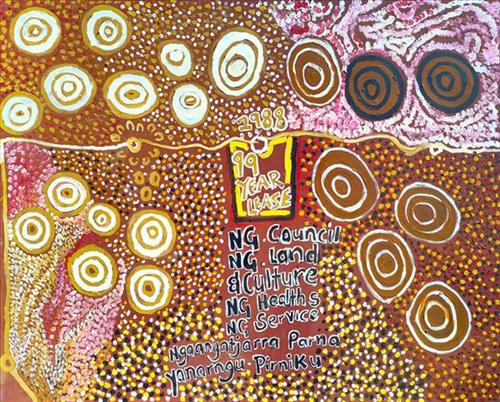
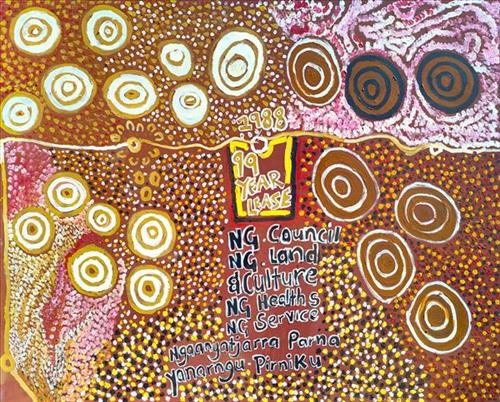
Walu 99yr lease

Painting by Winston Mitchell This painting was directed by Winston Mitchell to commemorate the 99-year cultural lease of the Walu site. Walu Rockhole, north of Papulankutja (Blackstone), is an important water source in the Gibson Desert and a central meeting place for Yarnangu families. The site connects with surrounding Tjukurrpa (Dreaming) places and remains vital for cultural practices, knowledge sharing, and community identity. In recent years Winston has worked with the Ngaanyatjarra Land and Culture Rangers to strengthen cultural access to Walu. At the 40-year anniversary of the lease, he helped lead a gathering that grew from 30 people to more than 130, including community members and Ngaanyatjarra Council leaders. This painting celebrates not just the site itself but the recognition of Yarnangu custodianship over generations to come. The 99-year lease secures community access to Walu and its surrounding Dreaming sites, ensuring these connections are protected, celebrated, and passed on.

114182399641


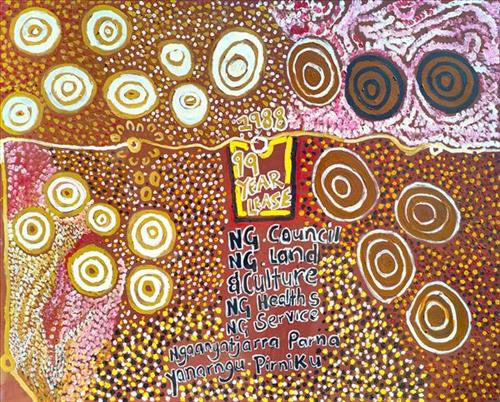
Walu 99yr lease

Painting by Winston Mitchell This painting was directed by Winston Mitchell to commemorate the 99-year cultural lease of the Walu site. Walu Rockhole, north of Papulankutja (Blackstone), is an important water source in the Gibson Desert and a central meeting place for Yarnangu families. The site connects with surrounding Tjukurrpa (Dreaming) places and remains vital for cultural practices, knowledge sharing, and community identity. In recent years Winston has worked with the Ngaanyatjarra Land and Culture Rangers to strengthen cultural access to Walu. At the 40-year anniversary of the lease, he helped lead a gathering that grew from 30 people to more than 130, including community members and Ngaanyatjarra Council leaders. This painting celebrates not just the site itself but the recognition of Yarnangu custodianship over generations to come. The 99-year lease secures community access to Walu and its surrounding Dreaming sites, ensuring these connections are protected, celebrated, and passed on.

114182399640


Walu 99yr lease

Painting by Winston Mitchell This painting was directed by Winston Mitchell to commemorate the 99-year cultural lease of the Walu site. Walu Rockhole, north of Papulankutja (Blackstone), is an important water source in the Gibson Desert and a central meeting place for Yarnangu families. The site connects with surrounding Tjukurrpa (Dreaming) places and remains vital for cultural practices, knowledge sharing, and community identity. In recent years Winston has worked with the Ngaanyatjarra Land and Culture Rangers to strengthen cultural access to Walu. At the 40-year anniversary of the lease, he helped lead a gathering that grew from 30 people to more than 130, including community members and Ngaanyatjarra Council leaders. This painting celebrates not just the site itself but the recognition of Yarnangu custodianship over generations to come. The 99-year lease secures community access to Walu and its surrounding Dreaming sites, ensuring these connections are protected, celebrated, and passed on.

114182399635


The boy who turned into wind (pirriya) at Walu rockhole

This story is about a young boy who had no parents and was neglected.

There were two men (the boy’s uncles) and one young boy camping at Walu Rockhole, an important water site in the Gibson Desert, northwest of the tri-state border between Western Australia, the Northern Territory and South Australia. 

The men went hunting and the boy stayed behind waiting. The men returned with an emu and pulled out its heart. The boy was holding the heart and blood spilt out onto the rocks. He ran away with the heart and turned into a big whirlwind. The big whirlwind. came up and swept the families away. Today you can still see the emu’s blood trail where it stained the rocks.

Walu rock hole is a special place north of Papulankutja (Blackstone) where traditionally Yarnangu families would gather when water was available in the holes found in a flat rocky area.
114182399499


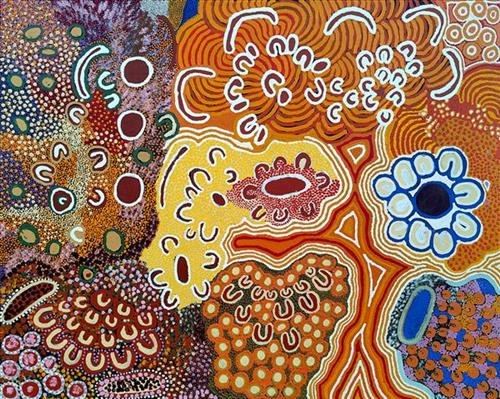
Kungkarrangkalpa (Seven Sisters)

‘Kungkarrangkalpa’ (The Seven Sisters or Pleaides) is significant Tjukurrpa (dreamtime). Its origins you may be familiar with in astronomy and its connection to ‘Wati Nyiru’ (Magic Man or Orion).  The roots of this dreaming stems across indigenous groups around the world. The Australian Aboriginal songline is one part to the whole dreaming which can be traced all around the world. The ladies of the Ngaanyatjarra Lands depict their significant chapter and understanding of the journey of the sisters. The different versions of this story depend on where you live and the significance’s of local Tjukurrpa places.

Nyiru fell in love with the sisters but he was of the wrong skin group to marry, but he still pursued them on their journey. The sisters travel across the land to escape Nyiru’s unwanted attentions, but he is persistent and always finds them. There are significant land forms which can be sited today that evidence this dreaming. As Nyiru is chasing the sisters he tries to catch them by using magic to turn into the most tempting kampurarrpa (bush tomato) and the most beautiful Yirli (wild fig tree), for them to eat and camp under. However, the sisters are knowledgeable of his magic and too clever for Nyiru who they outwit again and again. They go hungry and run through the night rather than be caught by him. As the journey continues, Nyiru gets so frustrated at the wit of the sisters that he uses his magic to make the oldest sister sick to try and get closer to her. The other sisters rescue the big sister and nurse her back to health. It is said he also captures the youngest sister, but with the help of the oldest sister, she escapes back to her sisters who are waiting for her. Eventually, the sisters fly into the sky to escape Nyiru, forming the constellation. Nyiru felt lonely, longing for the sisters who were so far away. Nyiru used his magic to go to the sky, forever in pursuit.