Yarrunga
Sometime early in the 20th century…
“That Ngargarrliny, he got a nawan. Deg ginini janga-janga-baya. That chain janga-janga. Right-Oh, when they bin thed-hi, they bin give it em that mawiya. You know, lardge-girrem. And deg ginini wayini gerloor. Ngerlil nginini. I’ll wiji there, he nginini. Right oh, they bin berralg janga-janga la olabat an start derlbawoo olabat. And that two jiyiliny bin bardal. Two fella bin bardal and bib benamanyji that goongoorloom an nawiyangem mawoojbe he bin jirri. An that, they bin goorloorrji gotta marne. Ngoowan. He neva boorrngoord. He bin wayini. Difbalany ngininiyin.
Yiligin ngoorrayang. An marra berrayi, marnem-booroo. An deg ginini, yiligi-biny. Ngoorrooma, ngoorrooma ngirribawoorroon, bawoo nginini, Ngoowan nhang-ngen-nga. You fella can berdij la me goorloorr, ngoorroon laarne. “You fella bin wanta thed la me.” Right-oh, marrarn nginiyi now.
An nginy gardiyany, benamanyji yawardam an wankil loorroobany ngoorrama. “Ngoowan, can’t kitch-em-ap him.” Walig giniyi yiligin, langa that nawan. Right-oh… berrayin yiligin doorlbawoo. “Wawoo! Wawoo!” He bin wawoo-wawoo yagoorn. Might e bin yagoorn, he bin look gerloorroong-biny. He bin deg gerliwirring-biny. Right oh, they bin booj, thadan marne.Dany marneny, he neva walig yiligin. He bin biriri. Doorr wanemayinde. Right oh, marra berrayi.
Mendawoon, deg wanema. He bin maj wainin, marne. Little bit warnkany. Goldbalam. Right-oh, he bin wethed ngarrgarle. He bin boorab ngoorroon, he bin, gerd mijelb here langa ngarrgarle. He bin go la moondoowoon naw. Right marrarn nginiyi, deg wanema. Wooraj nginiyin. Warrag ginini, Barliny-yoorroong Darrajayin.
Biri nginiyi, ngenengga. Nhang nginiward ngenengga. Yeah, that’s all.
___________________________________________________________________________
English transcript:
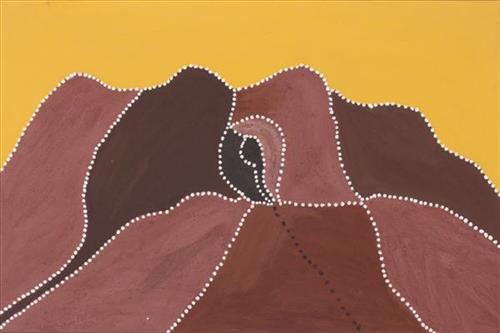
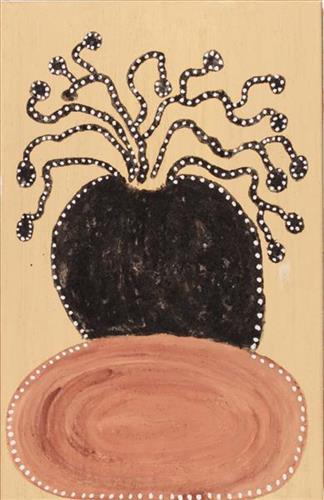
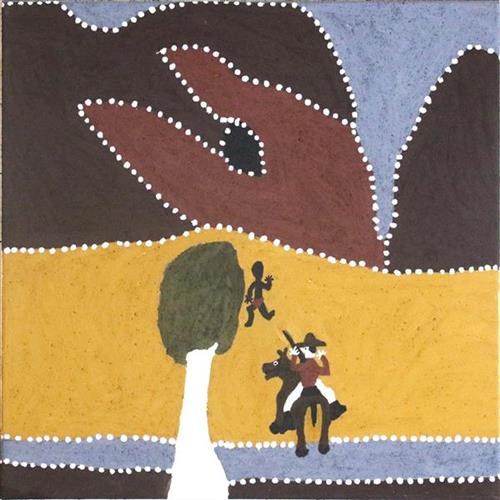
There is a cave in that rocky hill. This man at the cave when he was in chains. Chain is called “janga-janga.” Right-oh, when the white people killed the Aboriginal people here, they gave them that poison to make them bad in the head. And this man looked up to the hill in that way. He looked sideways. “I’ll run there” he said to himself. Right oh, they took the chains off the people and started to shoot them. And those two men fell down. Two men fell down and the other man got some of the blood and put it on his mouth to show himself as dead. And they poked him with a burning stick. No. He never flinched. He was like this. He stayed really still (stiff).
They put him in the middle of the pile of bodies. And they went away to get firewood. And he looked from inside the pile. They were over there, over there far away (and) he called out. I am not dead. You lot can climb up for me, over there up high. “You lot wanted to kill me.” Right-oh, he went away then.
And this white man, he got horses and a rifle, they chased him. “No, can’t catch up with him.” (they said). He went inside that cave then. Right oh… they came and were shooting inside. “Wawoo! Wawoo!” He called out ‘Wawoo-wawoo’ pretending to have been hit. He must have been lying, he looked from up in the cave. He looked up from up high. Right oh, they set fire to the firewood (piled outside the cave). The fire did not go right inside the cave. It kept coming back. It made a noise inside. Right oh, they went away (the murderers).
In the night he looked. He touched the burned part like this. It had cooled down a bit. It was cold. Alright then, he threw down a stone. He came out over there, he burned himself here on the stones. He went in the dark then. Right, he went away, he looked. He came this way. He walked to Springvale Station in Darrajayin country.
He came back here. He died here. Yeah, that’s all.
____________________________________________________________________________________
With the assistance of Frances Kofod and Bernadette-Trench Thiedeman