110682237914


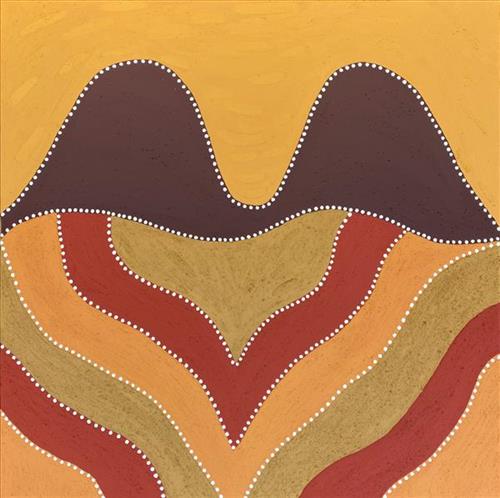
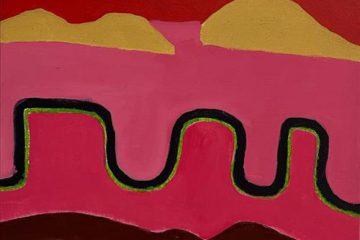
Jimbala Country- Spear head Stones by Kathy Ramsey

This is Jimbala country. Jimbala means Spear head Stones, just below the Iron ore mine.

The rock is called Loomoogool, meaning Blue-Tongue Lizard. back in the old days. 

T part of the land is so strong and gifted to my elders to this country. the rock tells its story. its very powerful and it has Ngarrnangarni story.

This rock is an old woman also my great great Grandmothers stories told to her families. This rock gave my families tongue to sing the tribal songs (corroboree). My families is well well known corroboree people, My grandfather Timmy Timms and his sister Peggy Patrick, also my Mother Mona Ramsey are the very special people of the Gija tribe.

The country of Bow river and Jimbala country is the boundaries of our ancestors that once walked, camped, gave names to hills, shared their songs together. Its been passed to them. and then, when the Kardiya (=White people) came, white people the pioneers of the Kimberley as they would called themselves, took over our native land and built pastorals over it and remain as their stations, also mining companies has taken parts of our land and left it in big ruin. God gave us boundaries to have and to hold, not to destroy it. For God is our creator. just remember that our country is spiritually connected to us  
110682243382


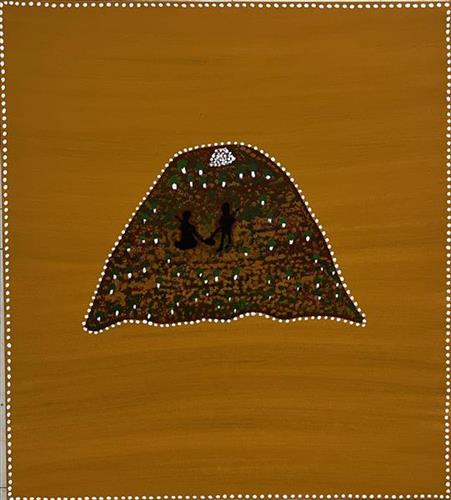
WINUBA – EVELYN MALGIL

‘This is my family place. Hot water spring and cold water spring. That big hill on the background is my family place. That water live all year ’round. That little sand frog, it live for a long time.’ This place is the Ngarrangkarni (Dreaming) site for the sand frog. The waterhole at Winuba holds water all through the Dry season.

110682247846


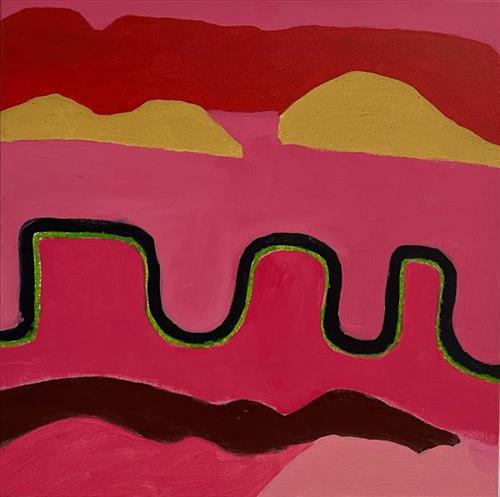
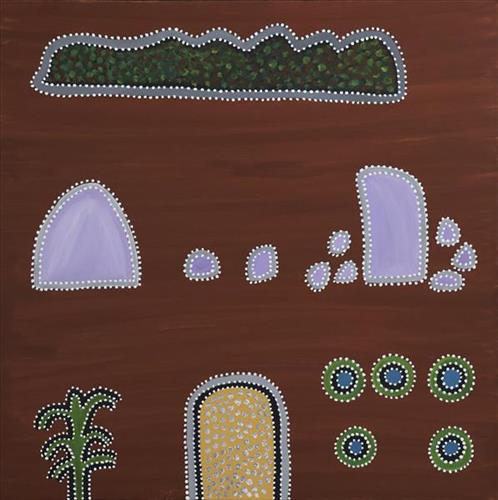
Warlawoon& Bow River Country – Kathy Ramsay

This painting represents two countries – Kathy’s dad’s country, Warlawoon, and her country where she grew up, Bow River.


One half is about the Warlawoon Country my dad Rammie Ramsay country my beautiful old artist dad who left his memory with me to carry on after him.

Trees

Camping areas

water holes

hills

and traditional stories of his mum and dad and their parents and so on he told me.


The other half is Bow River County.

My family has a strong history of this place. My grandfather Timmy Timms (Snr) named the dams here redrock damn, and the redrock itself called redrock and the damn near the hill is called marringarnji dam, meaning where dingos come to drink water with the horses and cattle.

My families has drovin’ histories and traditional stories both.

The road is called the old Wyndham road back in the early days. In nowadays it’s been graded.

My ancestors used to live anywhere here, at camping areas near the river beds. They used to live off the land eating kangaroo, porcupine, all sorts of bush foods.

We are so blessed God gave us boundaries to keep and to hold our future generation children to have and to hold.

110682247841


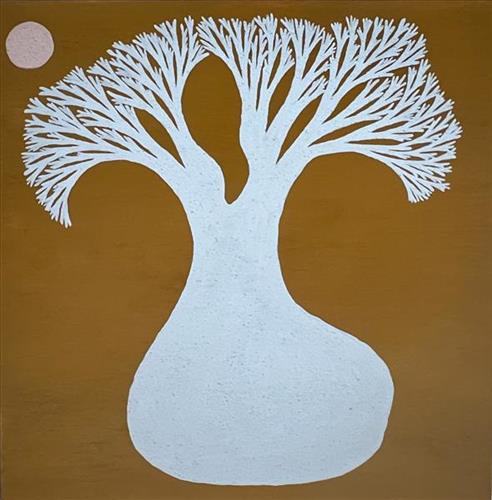
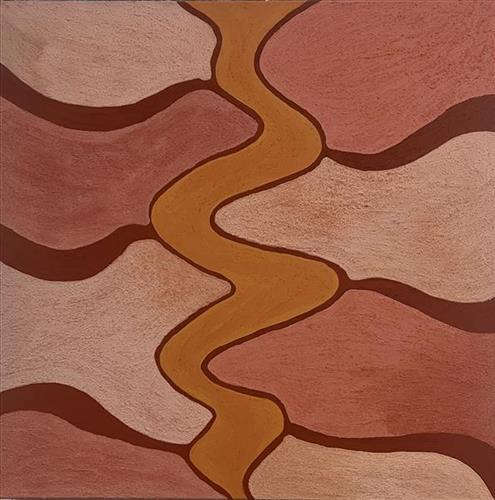
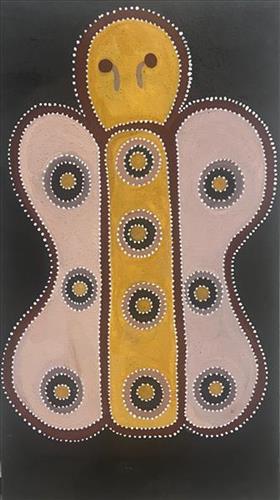
Ngaginyji Joomooloony

This painting is about Joomena’s Ngaginyji Joomooloony, her boab tree. “The boab tree we are born under becomes our special tree; this one is Ngaginyji Joomooloony, which means ‘My Boabtree'” 


Eileen Bray Joomena was born on the side of a dusty highway along the road to Ord River and next to the creek that runs into Birnuwun (Alice Downs), Joomoon’s traditional county. The family had ventured out on a fishing trip when Eileen’s mum went into labour and was ‘laid down, with her sisters in law’, under a big boab tree and gave birth. The women stayed under the boab for a week, as is customary, and until ready to go back to camp.

110682247826


Ant Hills – Tatum Rivers

Tatum has found her voice recently painting these beautiful Ant Hills, at times framed as they are and at others whimsically sitting within an East Kimberley landscape. Depicted in the classic Warmun style but with a fresh new take and colour palate. Tatum was drawn to painting antills as they are significant to the Kimberley landscape but also because of their meaning to her and her family. 

Her ancestors were placed in anthills of a particular colour when they passed away as these helped the body to change swiftly from form to soil, and her Jaru family believe anthills are for healing. In this ritual you are “rubbed down using soil from the anthills, and after you wash it off you feel refreshed. This process will wash away any difficult or negative feelings and also heals sickness and colds.”

110682248854


Argyle Diamond Mind Rehab

This painting is about the closure of Argyle mine – the right hand side depicts the devastation caused by the site, and the left hand side depicts how we would would like it to be rehabilitated for our future generations.

The current rehabilitation project started in 2020 and we can see some positive changes, however we know that our land will never be the same again.

110682248706


Kilkayi Barramundi Dreaming

Three women trying to trap Dayiwul the great barramundi with spinifex nets. This is a traditional method of fishing where by nyiyirriny (river spinifex) is rolled and placed in the water forming a kind of net. Dayiwul was too clever for the women and jumped over the barrier they had laid.  She pushed her body through the rock of what is now called Pitt Range. The women gave up and walked to a place called Gawinyji (Cattle Creek) where they turned into rocks.
The scales of Dayiwul embedded in the rock, became the diamonds that are extracted from the Argyle Diamond Mine.

115682259663


Wagilag ga Wititj Dhawu (Wagilag Sisters and Olive Python Story)

The Wagilag Sisters are central to the four important ceremonies of the Dhuwa moiety; the Djungguwan, the Gunabibi, the Ngulmarrk, and the Mandaialla.

The story is primarily an account of how, in the distant past, the two Wagilag Sisters came out of the southern interior and across the countryside to the Liyagalawumirr waterhole at Mirarrmina. There the younger sister profaned the pool of Wititj (the great Olive Python) by accidently allowing her blood to fall into the waterhole. Because of this, the women (and their children) were swallowed by Wititj.

All of the other sacred snakes stood up with their heads in the clouds and talked to each other with voices like thunder. The Pythons discovered that they had different languages and ‘skins’. Wititj confessed to eating the two women; his own moiety and fell to earth making a big depression in the ground. The big wind blew across the land making the first dry season. Wititj was ordered by the snakes to vomit the women and children back up. When he did this he also vomited up all the water from the waterhole, creating the monsoonal rains.

115682261301


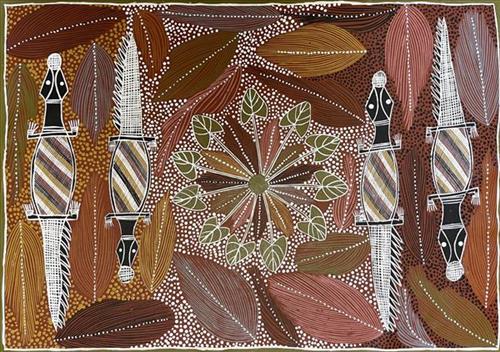
Baru Dhawu (Crocodile Story)

Baru (the crocodile man), was from the Gumatj clan. People usually call him Gurdu Gurdu or Baru which means crocodile. He lived his life at a place called Yirrkala. Living near him were other people, and when Baru didn’t have enough to eat he began to kill and eat these other people. After a while others noticed that some people were missing. When Baru went to the toilet, the people could smell this strong smell, so they knew that he ate the other people. Some men went to get help and they took message sticks to the other tribes. Some were sending smoke signals. When they came to Baru’s camp they started to spear him in the left side of his ribs. He dropped into the fire and burnt his left hand and maybe his right hand. He then ran into the bush and yelled to his countrymen – the animals, birds and fish that live on the land and in the sea. He stopped and he named the tribes and clans and also the places until he came to a place called Gamarru/Guyurru. There he took a rest and said to himself “This is where I stop and call this place Gamarru/Guyurru”. Baru, still in pain from the fire, then jumped into the water and turned himself into a crocodile. The fire left scars on his back. Baru paintings belong to Gumatj and Warrawarra and also the Marpi clan. This painting is used at death ceremonies or initiations and it normally is painted on the belly, which means the person the design is painted on is part of Gurdu Gurdu (the crocodile people).