225682257088


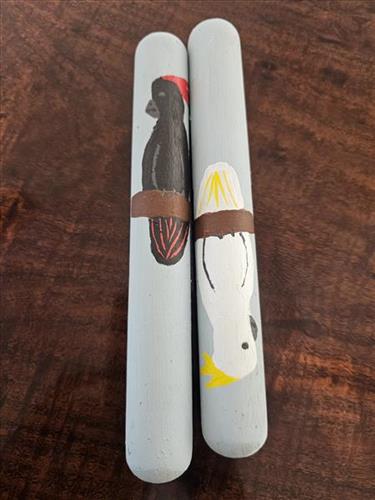
Hand Painted – Clapsticks

Bana Yirriji Art Centre represents artists from the Yalanji, Nyungkul and Jalunji clan groups.  

Bama (local people) have had a long history of artistic expression, including ceremonial body painting, weavings made from local plants, rainforest shields and weaponry decorated with clan designs using earth pigments.

Today, artists create stunning contemporary arts and crafts; including paintings, prints, works on paper, textiles, weavings, artefacts and a range of merchandise. Artists draw on their rich cultural, historic, and contemporary stories and profound connection to country as inspiration.

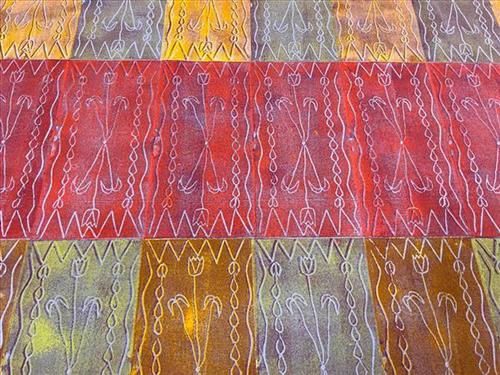
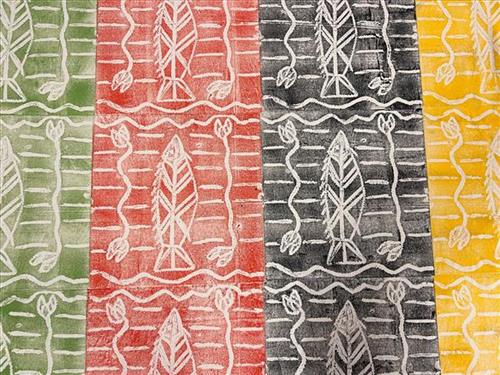
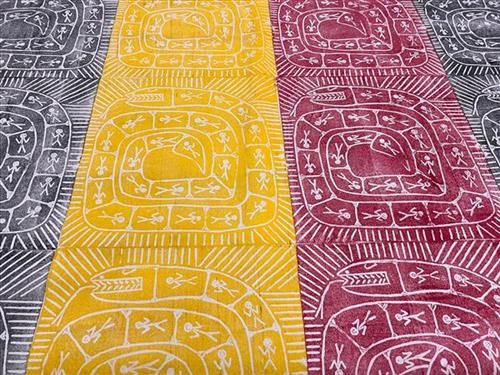
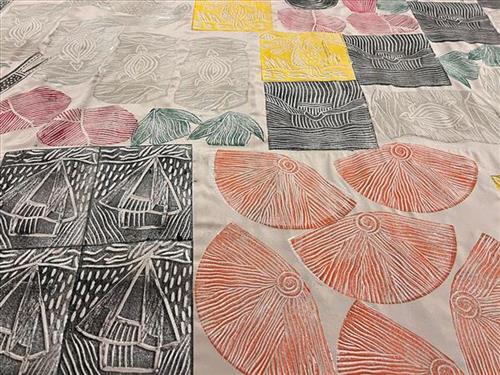
These clapsticks have been hand painted and represents the artists country and culture through designs and mark making. 

Each pair is unique.

11151030189


Puntawarri

“We camped here, me, my husband, my kids, not far from Jigalong. The old people used to live here and work here. The road goes from Jigalong, past Puntawarri, and then [continues to] the Canning Stock Route. There is a waterhole here where the old bush people used to go to in the pujiman (traditional, desert-dwelling) days while they were still walking around that Country.”

 – Dadda Samson 

Puntawarri is an important cultural area located on the middle stretches of the Canning Stock Route and east of the Jigalong Mission (now Jigalong Aboriginal community), where Dadda continues to live today. It is also the site of a now abandoned community, waterhole, creek and lake. Puntawarri’s close proximity to Jigalong Mission made it a popular site for Martu to visit during the ‘mission days’. While growing up at Jigalong Mission in the 1960’s, Dadda would return to Puntawarri every weekend to hunt and camp. 

For many Martu, like Dadda and her family, Jigalong Mission was the site where their pujiman lifestyle came to an end from the late 1940s as they transitioned to a life as stockmen and women working in cattle stations in the Pilbara region and beyond. In the wake of the extreme and prolonged drought of the 1960s, the last of the remaining pujimanpa (desert dwellers) were forced to move to missions like Jigalong, where a supply of food and water was assured. There, many Martu were reunited with family members that had already moved in from the desert.

The waterhole at Puntawarri is said to be populated by several kinds of ancestral jila (snakes), however the site is best known for its association with the Ngayurnangalku, fearsome ancestral cannibal beings. During the Jukurrpa (Dreaming) the Ngayurnangalku came together from all over the desert, first stopping near Puntawarri on their travels to Kumpupirntily (Kumpupintily, Lake Disappointment). At Kumpupirntily, they had a big meeting to debate whether or not they would continue to live as cannibals, and eventually came to the decision to stop eating people. That night, a female baby cannibal was born to the eastern Ngayurnangalku on the red sandhills at Puntawarri, where she continues to live today as the ‘big mummy’ Ngayurnangalku. Following protocol, the baby also had to be consulted by the group. She determined that the Ngayurnangalku should continue to eat people. Her decision divided the group, and from this point the group from the east continued to live as ‘bad’ cannibals at Kumpupirntily, while the group from the west became ‘good’, thereafter consuming only animals.

111580837204


Untitled

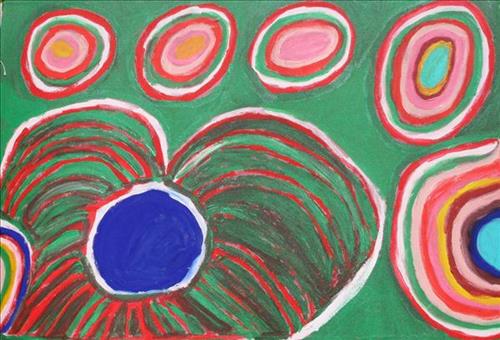
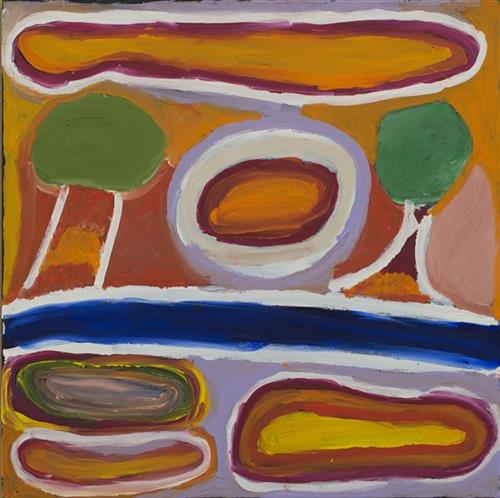
This is Dadda’s Country- her ‘ngurra’ (home Country, camp). People identify with their ngurra in terms of specific rights and responsibilities, and the possession of intimate knowledge of the physical and cultural properties of one’s Country. Painting ngurra, and in so doing sharing the Jukurrpa (Dreaming) stories and physical characteristics of that place, has today become an important means of cultural maintenance. Dadda’s ngurra encompasses her birthplace, Old Jigalong, and the Country that her family walked in the pujiman (traditional, desert-dwelling) era, around Mungkulu, Pinpi (Durba Springs), Pulyapulya (Sunday Well), and Puntawarri.

Portrayed in this work are features of Dadda’s family’s ngurra, such as the striking salt lakes, dominant permanent red tali (sandhills), warta (trees, vegetation), and the individually named water sources they camped at. Rock holes, waterholes, soaks and springs were all extremely important sites for Martu people during the pujiman period, and are generally depicted with circular forms. 

The encyclopaedic knowledge of the location, quality and seasonal availability of the hundreds of water bodies found in one’s Country sustained Martu as they travelled across their Country, hunting and gathering, visiting family, and fulfilling ceremonial obligations. They would traverse very large distances annually, visiting specific areas in the dry and wet season depending on the availability of water and the corresponding cycles of plant and animal life on which hunting and gathering bush tucker was reliant. As they travelled and hunted they would also burn areas of Country, generating a greater diversity of plant and animal life.

111581138678


Yurl Yurl

“This is my brother Dusty’s country, he was born here. It is my country too but I was born at Jigalong. This country is the otherside of Puntawarri – my mother told me stories about this place. It’s good country.”

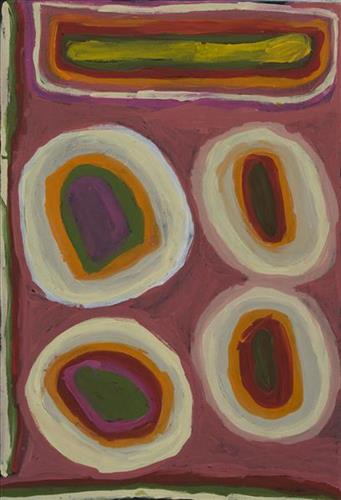
This painting depicts Yurl Yurl, located in the country surrounding Jigalong, where the artist lives. The artist’s home county lies to the east of Jigalong Community. While growing up at Jigalong mission, the artist returned to her home every weekend to hunt and camp.

Dadda is recognised as a great authority in Jigalong and is particularly knowledgeable about Country in that area. Many of her paintings have a hovering, vibrating quality that is thoroughly grounded in Country, jukurrpa (dreaming) and history, even while it challenges stereotypes of ‘traditional’ desert paintings.


111581138677


Puntawarri Minyipuru

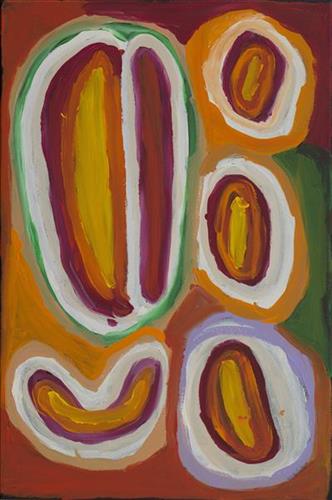
This painting depicts Puntawarri, the artists’ family’s country. Puntawarri is on the middle stretches of the Canning Stock Route, near Well 17 also known as Durba Springs. Puntawarri is an important cultural area, east of the Jigalong Aboriginal Community, where the artist now lives with her family. The artist frequently travelled and hunted with her family in this area when she was a young girl, and is now teaching her grandchildren the stories for this country.

Minyipuru is an important jukurrpa (dreamtime) story about seven sisters that are travelling through the desert, running away from Yurla, a lustful old man. The man chases the wanti (women) all the way from Roebourne on the west coast, right through Martu country before flying east across Australia. Along the way they stop at many significant sites to camp, sing, dance and collect bush tucker, leaving markers in the landscape along the way. The many events and interactions with Yurla chronicled through the story create a culturally rich narrative that is associated with the Pleiades star constellation.

222081633149


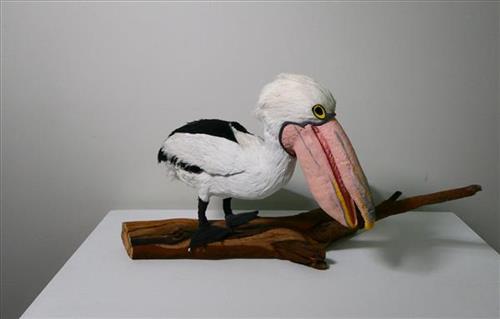
Pelican/ Gadin

Gadin (Pelican) he came to life when my grandkids was help[ing me gather things to make him and my grandson Peter created the fish for the Gadin