111582256608


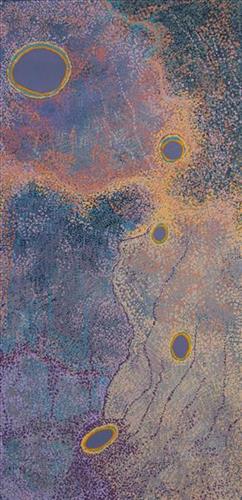
Waterholes

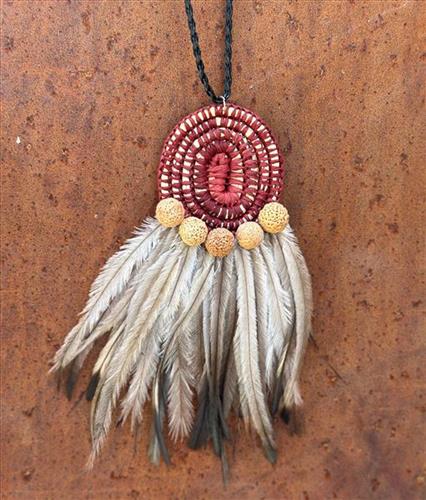
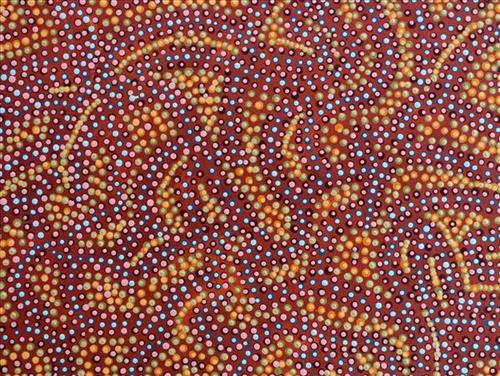
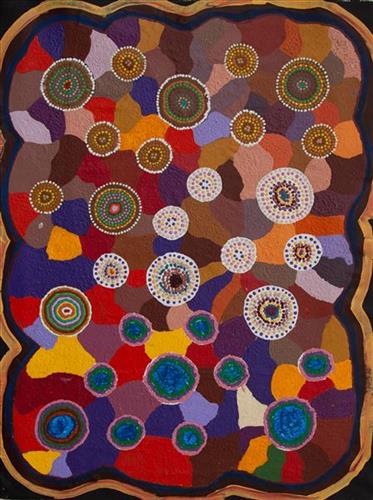
This work depicts a waterhole within the artists’ ngurra (home Country, camp), typically represented with circular forms. Waterholes are sites that require maintenance, including digging to increase flow, clearing out surrounding growth, and cleaning up after sullying by camels or cattle.

During the pujiman (traditional, desert dwelling) period, knowledge of water sources was critical for survival, and today Martu Country is still defined in terms of the location and type of water. Each of the hundreds of claypans, rockholes, waterholes, soaks and springs found in the Martu desert homelands is known through real life experience and the recounting of Jukurrpa (Dreaming) narratives by name, location, quality and seasonal availability. This encyclopedic knowledge extends even to the nature and movement of arterial waterways, and sustained Martu as they travelled across their Country, hunting and gathering, visiting family, and fulfilling ceremonial obligations. They would traverse very large distances annually, visiting specific areas in the dry and wet season depending on the availability of water and the corresponding cycles of plant and animal life on which hunting and gathering bush tucker was reliant.
111582256607


Waterholes

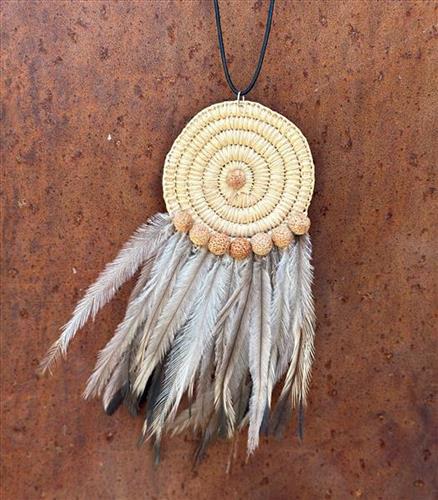
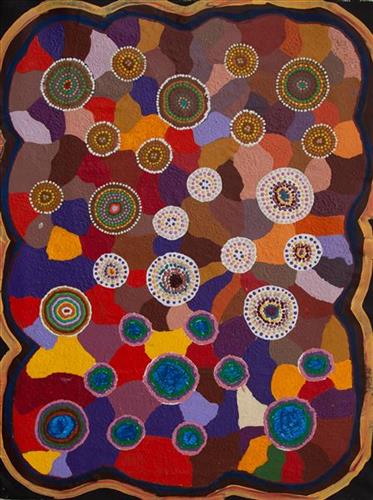
This work depicts a waterhole within the artists’ ngurra (home Country, camp), typically represented with circular forms. Waterholes are sites that require maintenance, including digging to increase flow, clearing out surrounding growth, and cleaning up after sullying by camels or cattle.

During the pujiman (traditional, desert dwelling) period, knowledge of water sources was critical for survival, and today Martu Country is still defined in terms of the location and type of water. Each of the hundreds of claypans, rockholes, waterholes, soaks and springs found in the Martu desert homelands is known through real life experience and the recounting of Jukurrpa (Dreaming) narratives by name, location, quality and seasonal availability. This encyclopedic knowledge extends even to the nature and movement of arterial waterways, and sustained Martu as they travelled across their Country, hunting and gathering, visiting family, and fulfilling ceremonial obligations. They would traverse very large distances annually, visiting specific areas in the dry and wet season depending on the availability of water and the corresponding cycles of plant and animal life on which hunting and gathering bush tucker was reliant.
111582256602


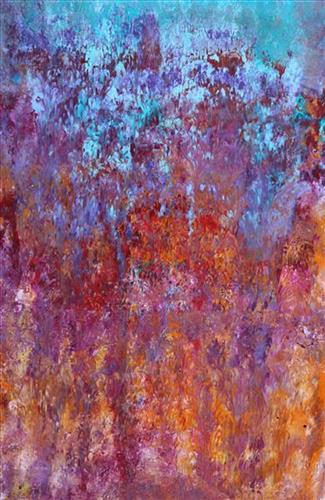
Seasons

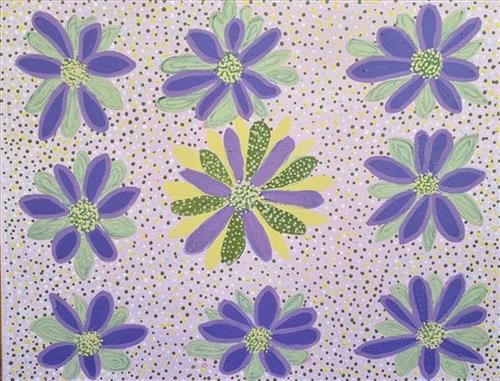
“My paintings are all about the seasons. The Country is always changing. One day you might see one kind of flower and the next day they are gone; they have given way to a new kind of flower. 

I see the Country in a different way. In my paintings I am looking at the Country with a birds eye view, the way you see the land when you’re in a plane.”

– Derrick Butt 


This work portrays an area of Derrick’s ngurra (home Country, camp) represented aerially. During the pujiman (traditional, desert dwelling) period, Martu would traverse very large distances annually in small family groups, moving seasonally from water source to water source, and hunting and gathering bush tucker as they went. At this time, one’s survival depended on their intimate knowledge of the location of resources; thus physical elements of Country, such as sources of kapi (water), tali (sandhills), different varieties of warta (trees, vegetation), ngarrini (camps), and jina (tracks) are typically recorded in paintings with the use of a system of iconographic forms universally shared across the desert.  

An additional layer of meaning in the work relates to more intangible concepts as described by Derrick; life cycles based around kalyu (rain, water) and waru (fire).

116482256515


Fortescue Sunset

Fortescue sunset with the beautiful range of colours it creates in the sky – lilac, yellow, pink and red – is like a rainbow going down.

116482256495


Pilbara Wildflowers

These are the Pilbara wildflower’s that grow on the ground they have a beautiful orange colour blending in the country during flower season.

225682256390


Kababina, waterlily

My painting represents the waterlily that live and grow around my bubu (country). I love going out bush and am enjoy looking at the wetlands which gives me inspiration for my artwork.

I am a Nyungul woman. My art depicts cultural, historic and contemporary stories from my Country, the Helensvale and Shipton’s Flat area in Far North Queensland. 

22144003783


Status: Stock


Accommodation – 3 Bedroom – 2 Bathroom House

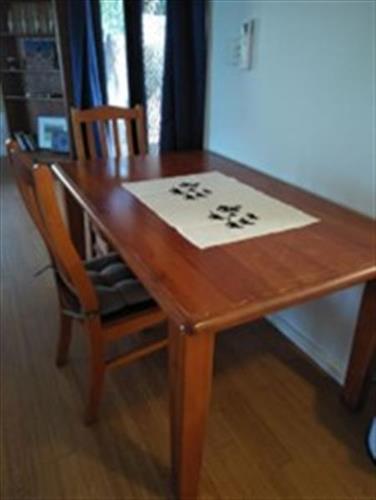
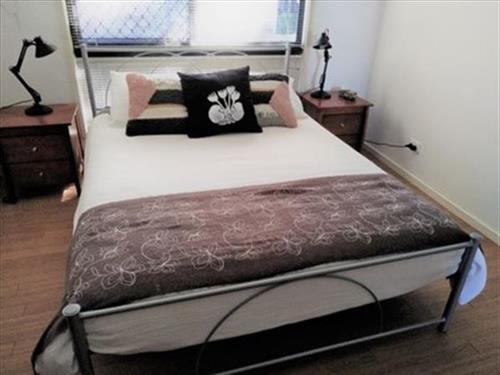
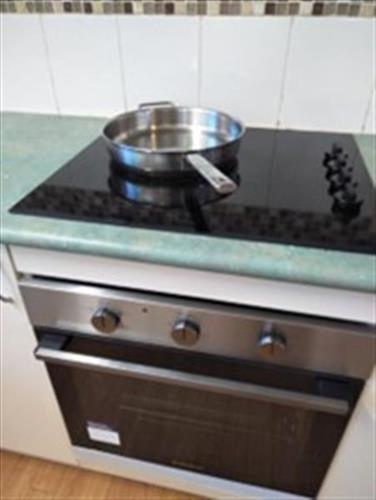
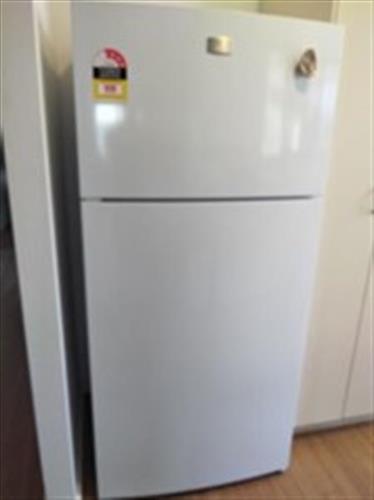
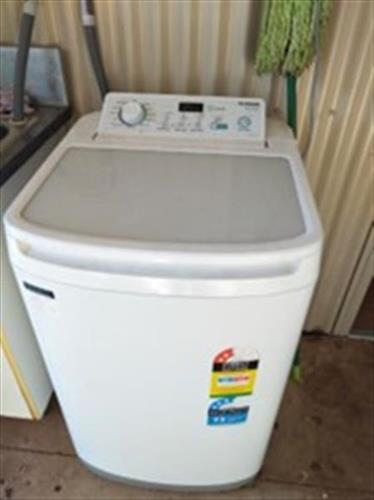
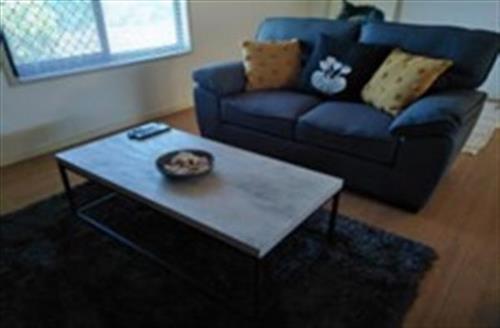
2A Anyula Street Accommodation. 3 bedrooms providing accommodation to up to 6 people. Master bedroom has a Queen size bed and the other bedrooms have 2 x single beds in each. 2 bathrooms. 1 x kitchen. 1 x living and dining area. Self contained including fridge/freezer, microwave oven, oven and stove top, cooking utensils etc. Washing machine.

115682243804


Raypiny Dhawu (Fresh Water Story)

All Aboriginal people originate from a spiritual source, fixed in a particular place in their land or the sea. These ‘spiritual reservoirs’ are often in the form of special waterholes made by Wangarr (creative spirits) that were created long ago close to the beginning of time. These creator beings moved across the countryside, shaping the land and implanting in each tract of country, the spiritual life force for the people who were to own it. These creative spirits took many forms and when they gave the land to each group, they also gave songs, dances, ceremony, the associated laws and language.


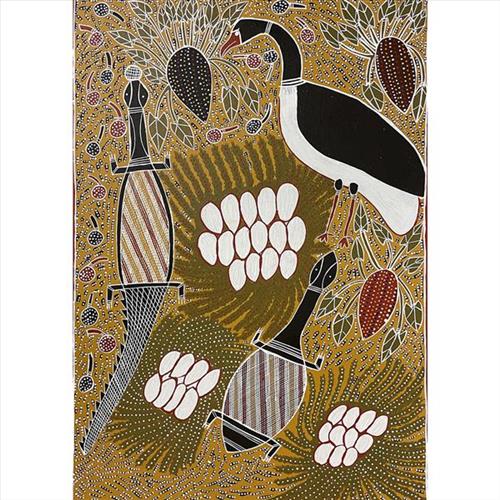
The creation story for Ganalbingu people took place near the middle section of the Glyde River where it becomes the Goyder River. Their land, Ngaliyindi, sits astride the Arafura Swamp in Central Arnhem Land. Many Ganalbingu artists paint totemic species significant to their clan. These can include baru (crocodile), banda (long necked turtle), buliya (catfish), yalman (waterlilies), gumang (magpie geese), dakawa (fresh water yabby), ratjuk (barramundi), warrnyu (flying fox) and more.