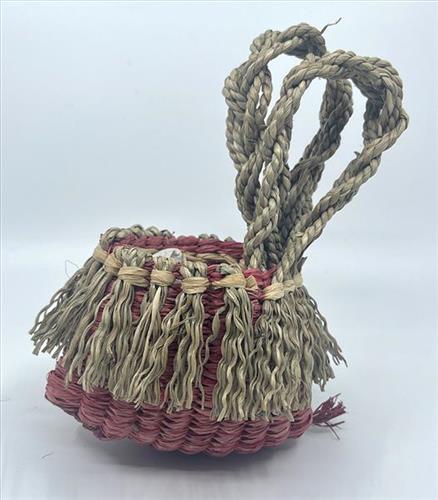
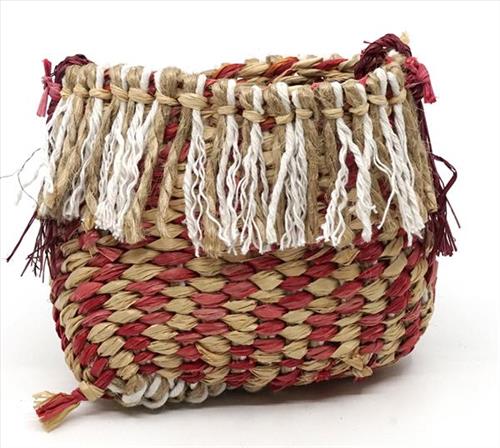
Art Centre notes: The bag is made of natural raffia / cotton / jute It is made using a traditional ‘one twist’ method. The dyes are commercial and colour fast.
359709482229630
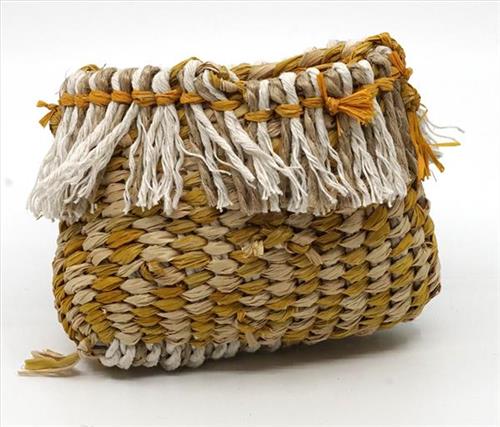
Art Centre notes: The bag is made of natural raffia / cotton / jute It is made using a traditional ‘one twist’ method. The dyes are commercial and colour fast.

377810582229625
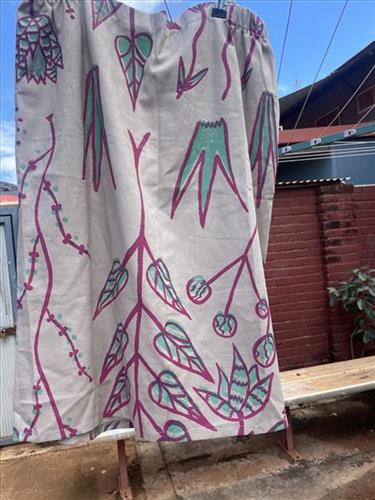
Collecting Manme (Bush Food)
‘All that jungle around Mumeka, on the other side of the river.. that’s where we go looking for manme (bush food) like manyawok (cheeky yam) and karrbarda (long yam). The yawk yawk (young woman spirit) is holding a kunkaninj (digging stick), kun-madj (dilly bag) and all that manme.’ Jennifer Wurrkidj 2021
115682230007
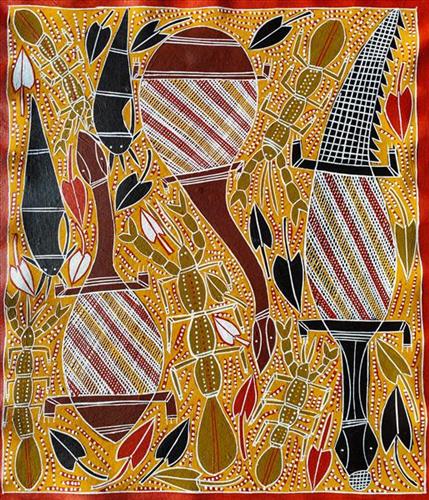
Raypiny Dhawu (Fresh Water Story)
All Aboriginal people originate from a spiritual source, fixed in a particular place in their land or the sea. These ‘spiritual reservoirs’ are often in the form of special waterholes made by Wangarr (creative spirits) that were created long ago close to the beginning of time. These creator beings moved across the countryside, shaping the land and implanting in each tract of country, the spiritual life force for the people who were to own it. These creative spirits took many forms and when they gave the land to each group, they also gave songs, dances, ceremony, the associated laws and language.
The creation story for Ganalbingu people took place near the middle section of the Glyde River where it becomes the Goyder River. Their land, Ngaliyindi, sits astride the Arafura Swamp in Central Arnhem Land. Many Ganalbingu artists paint totemic species significant to their clan. These can include baru (crocodile), banda (long necked turtle), buliya (catfish), yalman (waterlilies), gumang (magpie geese), dakawa (fresh water yabby), ratjuk (barramundi), warrnyu (flying fox) and more.
37781434003254
Status: Stock
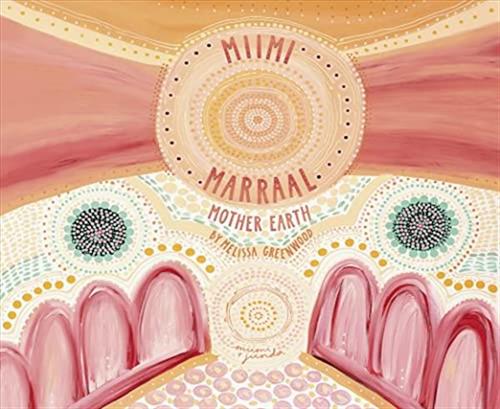
Brumby Sunstate- Miimi Marraal (mother earth)
Miimi Marraal is the Mother Earth
111576675904
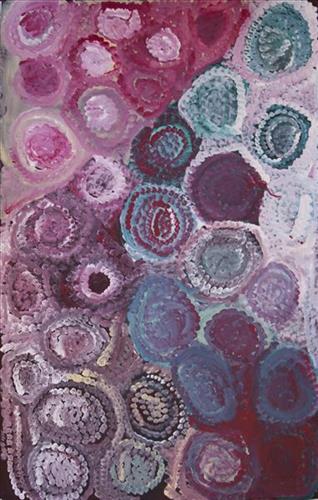
Kunawarritji (Canning Stock Route Well 33)
“I learnt how to paint in Kunawarritji; I’ve been painting here. I go to Punmu, Jigalong and Parnngurr, but I always go home to Kunawarritji. I learnt how to paint in Kunawarritji.
[When I was young] I was walking around Kunawarritji and Kun Kun, looking for meat with Jakayu and her family.”
– Bugai Whyoulter
Kunawarritji is an important site in the Great Sandy Desert where multiple stories and histories intersect. Originally a spring water and major Martu pujiman (traditional, desert dwelling) camping site, at the turn of the 20th century Kunawarritji was converted to a well along the Canning Stock Route. Each year throughout the 1930-50s, the well became a site of contact between the drovers, their cattle, and desert families such as Bugai’s. Bugai grew up, walked and hunted primarily around Punmu, Kunawarritji and Kun Kun (Kuny-Kuny), and as a young woman travelled up and down large tracts of the 1850km long Canning Stock Route, where she and her husband met and walked with cattle drovers.
Long before colonial history entered this Country, however, other stories dominated this site. Primarily, Kunawarritji features in the Minyipuru (Jakulyukulyu, Seven Sisters) Jukurrpa (Dreaming). Minyipuru is a central Jukurrpa narrative for Martu, Ngaanyatjarra, Pitjantjatjara and Yankunytjatjara people that is associated with the seasonal Pleiades star constellation. Beginning in Roebourne on the west coast of Western Australia, the story morphs in its movement eastward across the land, following a group of women as they walk, dance, and even fly from waterhole to waterhole. As they travelled the women left markers in the landscape and create landforms that remain to this day. During the entirety of their journey the women are pursued by a lustful old man, Yurla, although interactions with other animals, groups of men, and spirit beings are also chronicled in the narrative.
The Minyipuru travelled to Kunawarritji from Nyipily (Nyipil, Nibil, Canning Stock Route Well 34), and transformed themselves into a distinctive group of trees that remain in the area between these two sites. From Kunawarritji Yurla followed the sisters to Pangkapirni, where he finally caught one of the women.
Today, Kunawarritji is a site of return, a place where people came back to continue their life in the desert with the formation of Kunawarritji Aboriginal community in the early 1980s. The community’s cultural significance endures, with the population swelling up to 1000 during cultural business.
Kunawarritji is Bugai’s home today, and the place where she first began painting her Country. As is clearly expressed in her account, for Bugai Kunawarritji is her ngurra (home Country, camp).
359709481835127
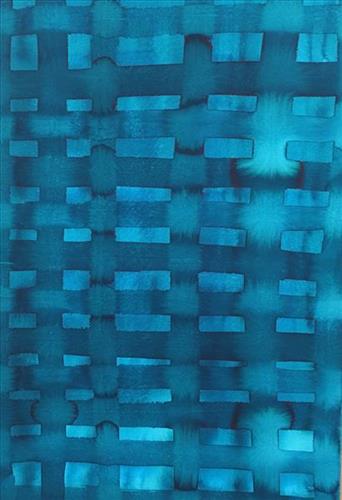
Strengthness and Flow
Strength and flow comes from within, having a connection to what surrounds us in life to regain strength to overcome.
359709481983326
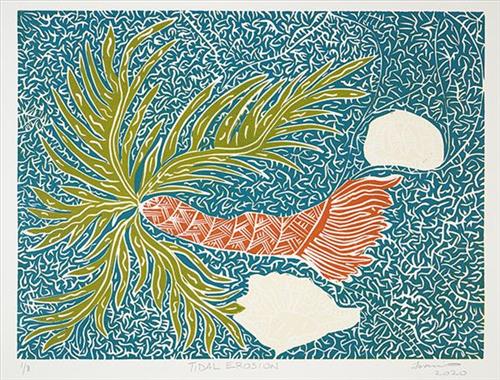
TIDAL EROSION
On my island o the beach front once stand a coconut palm trees right along the beach, but because of the effects of climate changes and rising of the tides caused tidal erosions on the island. It has destroyed most of the coconut trees and has change the beautiful shore line of the beach.
359709482092325
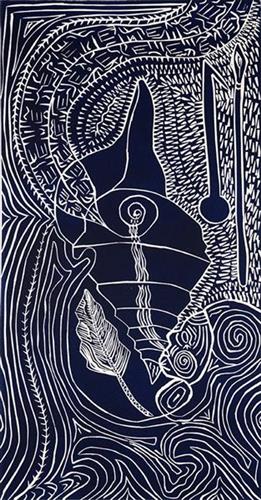
The Trumpet Blower II
This artwork tells a story about myself, how I was specifically chosen by the elders of my community and was taught from a very young age to use a trumpet blower to notify he community if there was any special occasions. The community members would know exactly which event is about to occur by the sound of the trumpet, each events had their own unique rhythms and style.
Art Centre notes:
Image Size: 510mm x 260mm Paper size: 760mm x 560mm
The artwork is a (colour reduction/B/W) lino print, printed on BFK Rives paper (100% cotton rag with strong archival properties).