Baltji (Yam)
This painting depicts Baltji (Yam) which has been a reliable food source for Yolngu people for many centuries. Baltji can be found across the different landscapes of East Arnhem Land and are only harvested seasonally.
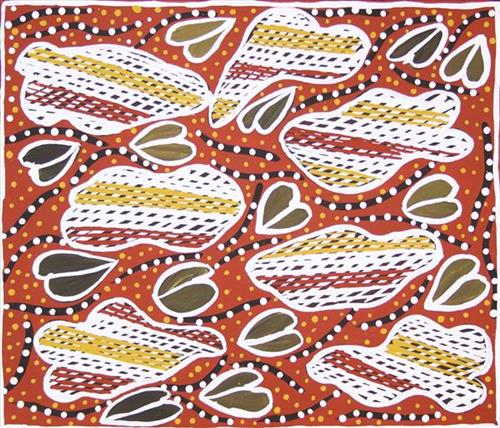
This painting depicts Baltji (Yam) which has been a reliable food source for Yolngu people for many centuries. Baltji can be found across the different landscapes of East Arnhem Land and are only harvested seasonally.
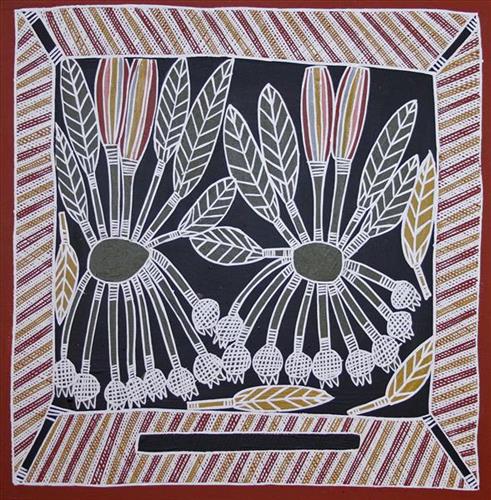
This painting depicts Dhulumburrk (Nymphaea violacea), a fresh waterlily. The flowers and lily pads of fresh waterlilies can be seen far and wide across the Arafura wetlands, providing coverage for many animal species including Banda (long-necked turtle) and Baru (crocodile). The flowers come in many beautiful colours, in particular a vibrant purple.
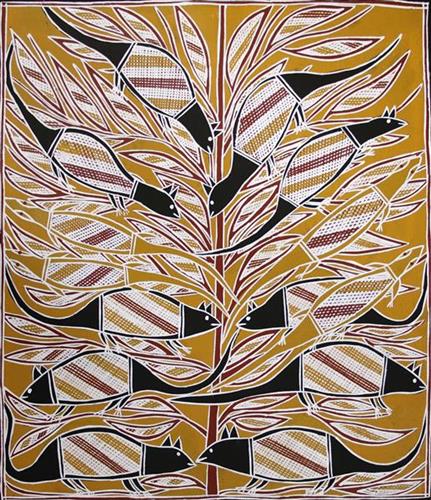
This painting depicts Lurrpu (Sulphur-crested cockatoo) and Marrngu (possum) in a Mayku Tree (Paper Bark Tree) and is a song line for the Gupapuyngu people. In the song line the Lurrpu feed on nuts and seeds of the Mayku Tree across the vast landscapes of Arnhem Land.
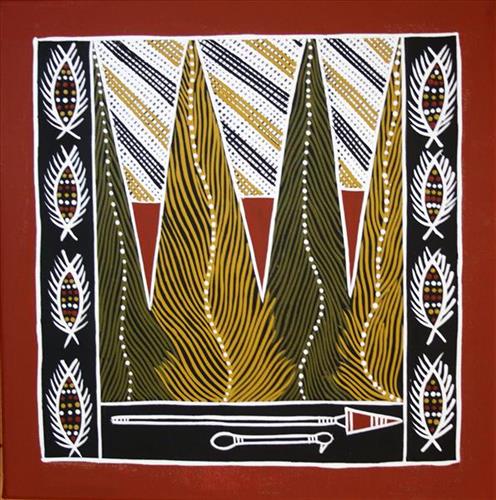
The Wagilag Sisters are central to the four important ceremonies of the Dhuwa moiety; the Djungguwan, the Gunabibi, the Ngulmarrk, and the Mandaialla.
The story is primarily an account of how, in the distant past, the two Wagilag Sisters came out of the southern interior and across the countryside to the Liyagalawumirr waterhole at Mirarrmina.
This painting is where the two sisters came along and get all the tools for hunting. They got ritjano and Damilipa (Blue Tongue Lizard). Ritjano is similar to a carrot, and grows abundantly in North East Arnhem Land. The vegetable is a staple food in traditional Yolngu culture, and has been a reliable food source when other foods are scarce. The ladies will collect and roast the ritjano, which has a very sweet flavour.
The sisters put all the bush food into their dilly bags.
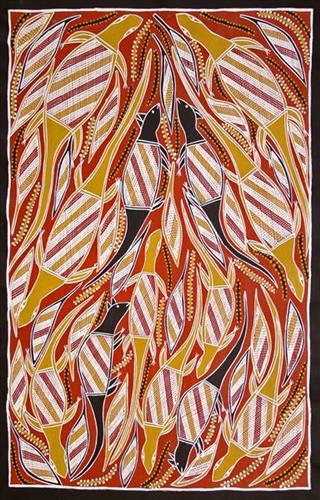
This painting depicts Djanda (goanna) and Marrngu (possum) in a Mayku Tree (Paper Bark Tree) and is a song line for the Gupapuyngu people. In the song line the Djanda and Marrngu live in the depths of the Mayku Tree across the vast landscapes of Arnhem Land.
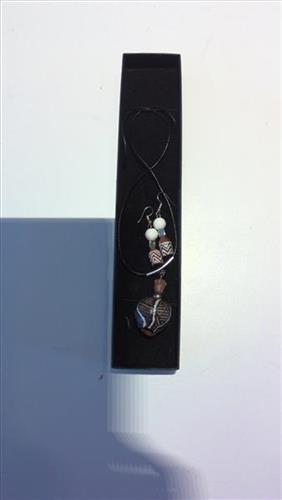
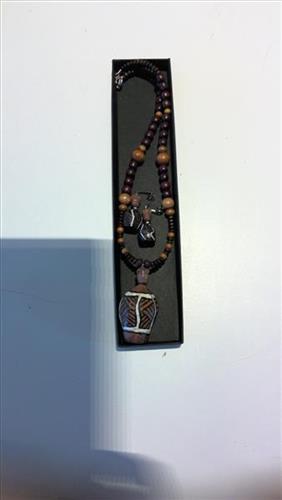
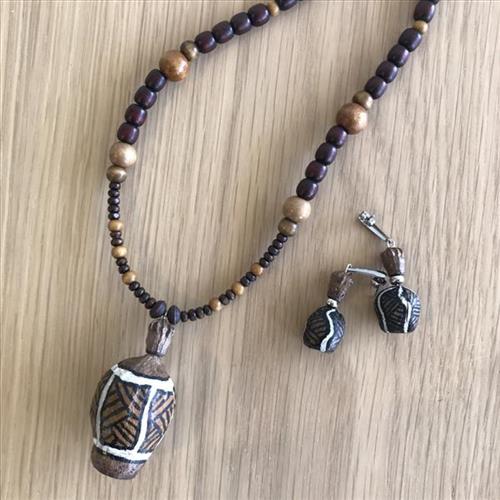
Gum Nut Jewellery set #1
Necklace and earring set created from gum nuts, seeds and various beads
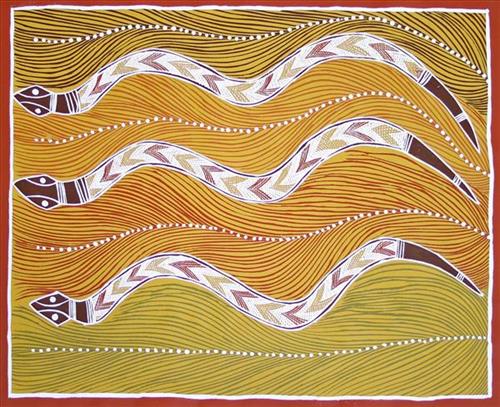
This painting depicts Dhanbaniny (King Brown Snake). This is a Dhuwa dreaming and is the totem for Borruwa and her two sisters Burruna and Djampalil. Dhanbaniny can be found across the dry landscapes of NE Arnhem Land particularly during the dry season.
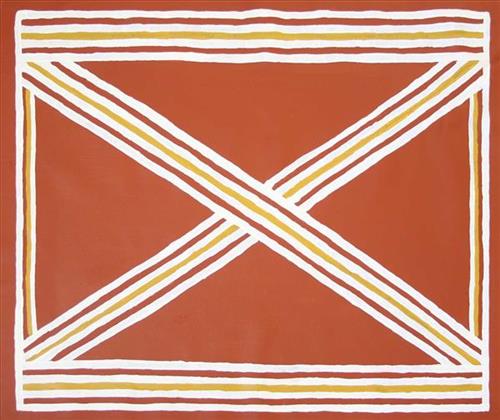
Each Yolngu clan was created by their ancestors as they moved along the country whilst they were singing, dancing and talking. Each time they arrived at a new land, they created distinct rom (culture, law). A part of this rom is miny’tji (art, totemic designs, colours). Each clan has a distinct miny’tji, and Yolngu can tell where someone is from by their miny’tji. The ancestors passed down sacred designs, some of which are secret or have secret meanings. These designs were traditionally painted on people’s bodies, or carved into sacred objects. More recently, they have been painted on canvases and barks. This painting is of Dhunbaḻmirriwuy’s miny’tji. It uses the colours which were passed down to her from her ancestors. The circles represent waterholes, while the lines represent the land. This design is a sort of coat of arms for the Garrawura clan.
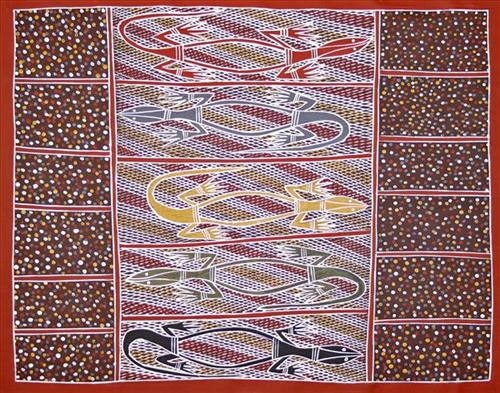
Djarrka is a freshwater goanna that can be found in small inland creeks and feeds on small crabs and yabbies. People hunt this goanna for food and they can be very delicious to eat, like other meats you can find around and in the creek. Djarrka is a Dhuwa water goanna and it plays a big part in some ceremonies. In nearly all Liyagawumirr Dhuwa ceremony like Djungguwan, Ngulmarrk, and Liyagalawumirr Ngarra, Djarrka is represented. The ceremonies are very secret to both women and children and those not in this group and unconnected to Yolngu lifestyle and their beliefs. It is very taboo to speak about.