377810582126827


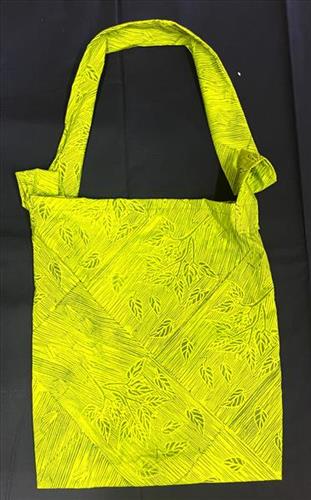
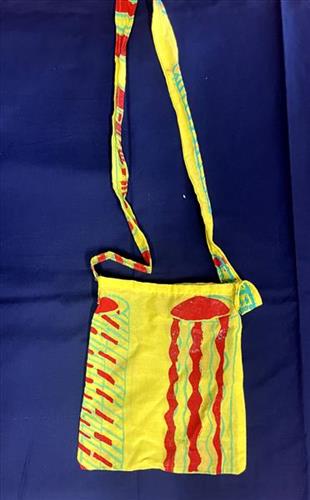
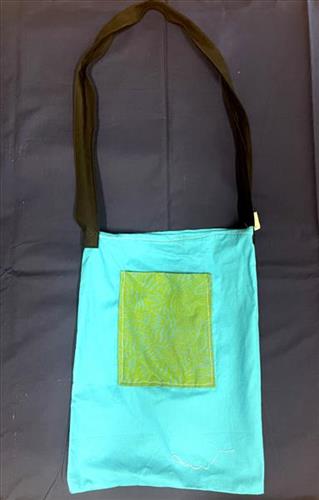
Hand Made Bag

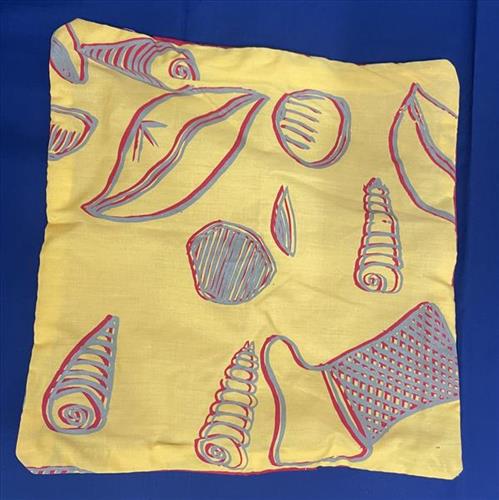
Marilyn’s first screen print design depicts the story of lorrkkon (hollow funeral logs). This the story of her great, great grandfather and grandmother who were bark painters, as well as also sacred lorrkkon painters.

When designing this screen print, Marilyn was remembering her childhood living in a small house on Liverpool river Ngar-wunja (Thompson hole) with other families.

Through the painting process, Marilyn remembered and relived the times when people still lived permanently on remote homelands, living off the land before balanda (non-indigenous people) arrived.

Marilyn recalls “it makes me think back, we did lots of things, some people was hunting, some was weaving, some was painting barks and lorrkkon. As my great, great grandfather and grandmother was painters, I painted this my story for them.”
377810582126808


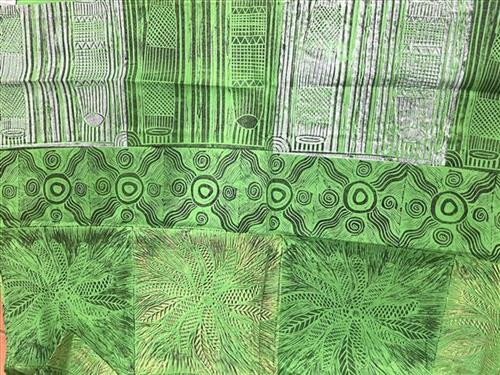
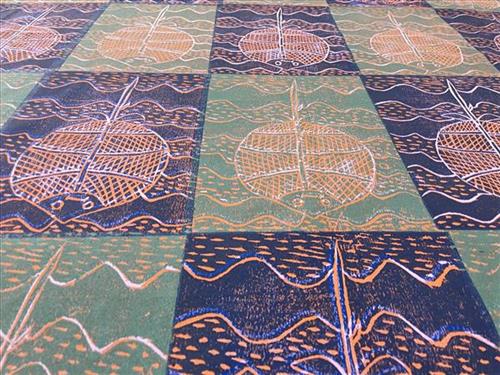
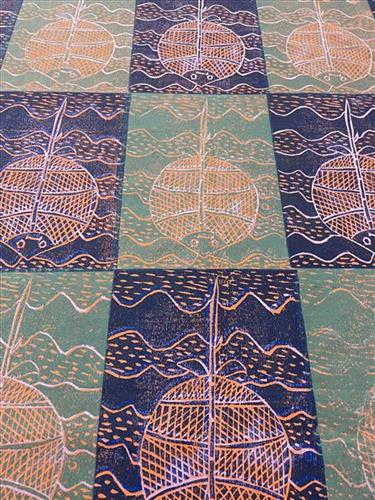
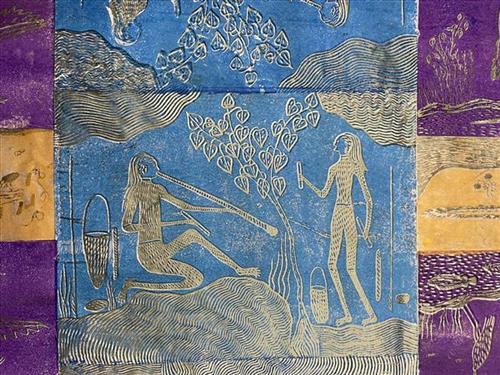
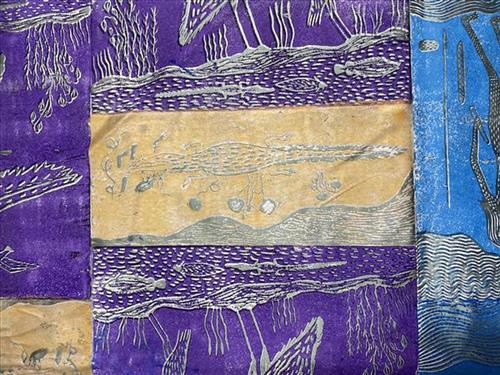
Kunmadj & Marebu Hand Sewn Tablecloth

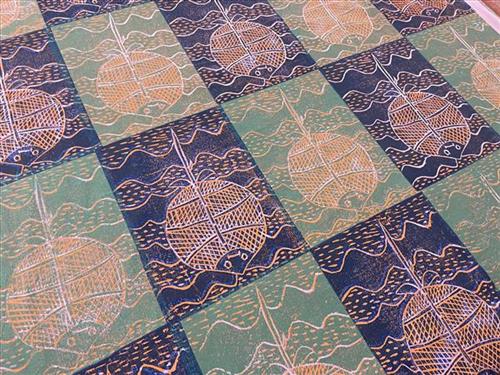
Kunmadj is the Kuninjku term for large woven collecting baskets, known as dillybags.

They are often made from the burney vine (Malaisia scandens), a strong, pliable plant that grows along the ground and into the canopy of monsoon vine thickets. The baskets are used to collect a variety of heavy foods, such as fish caught in conical fish traps or a good harvest of yams. As well as being of practical use, dillybags are of cultural significance to Arnhem Land people. Dillybags are totemic objects and they are associated with particular sites in the landscape.

111982127242


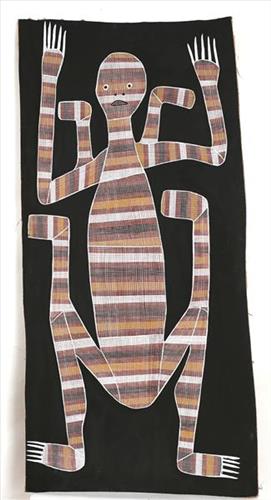
Namarrkon the Lightning Spirit

Namarden or Namarrkon are Eastern Kunwinjku names for the Lightning Spirit. This entity, which is responsible for lightning and thunder, is painted on both stone and bark in a form described as ‘like a grasshopper’. Namarrkon is said to have made Ngaldjurr – Leichardt’s or the spectacular grasshopper [Petasia ephippigera]. The species emerges, mates and is most active and visible in the season known as Kunemeleng, between October and December when there are intense electrical storms. Ngaldjurr is then said to be ‘looking for’ Namarrkon. Namarrkon makes lightning and thunder by striking out with kurlbburru – stone axes which protrude from its joints. Today, the Kuninjku will not leave axes lying out in the open during an electrical storm as the axes act as an attraction to the destructive force of Namarrkon. The lines emanating from Namarrkon’s head are said to be mardno or lightning bolts of power.

There is a dreaming site for the lightning spirit on the Liverpool River. The site, Kukkurrh, is a high undercut red gravel bank on a bend in the river. The rest of the country along the river is either flat grassy plains or thick mangrove forest. The red cliffs are in startling contrast to the rest of the landscape. The Kuninjku tell of a lightning man who grew angry and began making a terrifying and destructive storm. A lightning woman began to feel sorry for the human beings who were being killed by the storm. The man and woman stood as ‘cousin’ to each other in tribal relationship – this relationship between men and women is one of restraint and avoidance. When the lightning woman grabbed her cousin to calm him down he immediately became quiet and let people live. So it is today, say the Kuninjku, if a man is fighting and no one can calm him, he will become quiet if his cousin tries to restrain him

377810582127233


(Saratoga Fish)

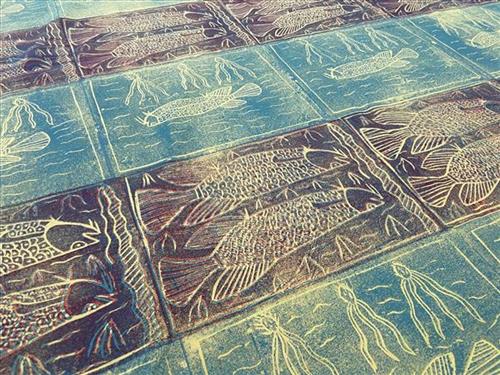
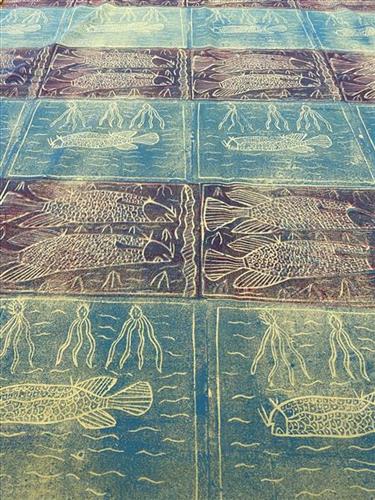
This design tells the story of Saratoga dreaming a freshwater fish that swims on the edge of creeks and rivers. This design is the Saratoga dreaming from the Mularra songline. Where the Saratoga we call Murdulngu, Danguny travelled from Malmyangarnak billabong to Mirrigatja.

This Billabong was owned by Murdulngu (Saratoga) before the water was taken over by shark Barlangu he came all the way from east to north then to west. He was travelling when that water level was high he went up the stream but he couldn’t make it. This Barlangu came from Murruggun clan but really this shark came from long way all the way south. This story is connected through Mularra songline it represents many clans.

With permission from clan elders, Carol is able to pass on this family knowledge through her passion in textile and art.
‘I am proud of my first design, I want to keep this design for future, for my children and grandchildren so they remember this story, this story is a big part of the mularra songline’

Black linen with pink and antique gold metallic ink

377810582127230


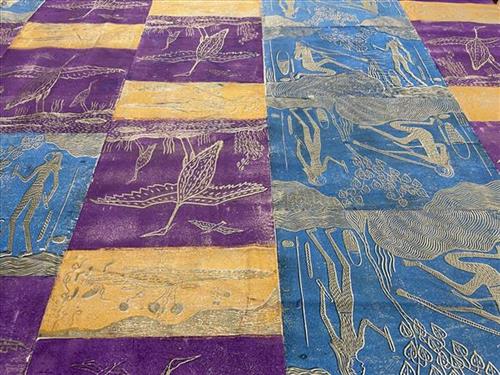
Namurre Boko

‘Bini-murreko means two brothers – big brother and little brother.

Two brothers were really strong leaders and good hunters, sharing animals with different tribes.
With those different tribe there were jealousy going on.
Little brother went walkabout and heard the different tribe was talking about his tribe.
They said ngarribin manre djed-djedme bokko
Meaning: will make spear for them
Ngarrbin danj-bun, ngarrbinbun
Meaning: will spear them kill them
little brother turn around went back tell his brother
Namurre bokko kadi marne djed-djedme Karre wonens, kardi-djal danjbun
Meaning: they making spear for us, they gonna spear us
Couple of months they saw different tribe
They changed their attitude
They been bringing lots of animals to them and start asking for women
And that tribe realise that’s how those brothers died.
They kill them
This Why? They got jealous because two brothers was a good hunter.

This story written on the rock art and it stays forever.’