Dog Selfie
Someone photo bombed the family photo.


Someone photo bombed the family photo.


What fun!


dfodihfosfj


Status: Stock
6 x 6 cm and 6 x 7.5 cm (variable)
Designs and forms by Hermannsburg Potters artists, developed collaboratively in workshops
Porcelain and glaze, slip cast cup


Status: Stock
26 October 2020 marked the 35th Anniversary of the Handback of Uluru to Anangu people. To celebrate this historic occasion and the 1 Year Anniversary of the 2019 Climb Closure, Walkatjara artists have created two exclusive, limited edition T-shirt designs.
This design features artwork by Rene Kulitja & Valerie Brumby on the front and back.
Front text in Pitjantjatjara language:
‘Pukulpa Pitjama, Anangku Ngura-kutu’
Back text:
‘1985 Handback, 26th October, Climb Close 2019’
Quality mid-weight 100% combed cotton, regular fit, crew neck.
Neck ribbing, side seamed, shoulder to shoulder tape, double needle hems, preshrunk to minimise shrinkage.
Available in three colours: Charcoal, Mauve & Copper

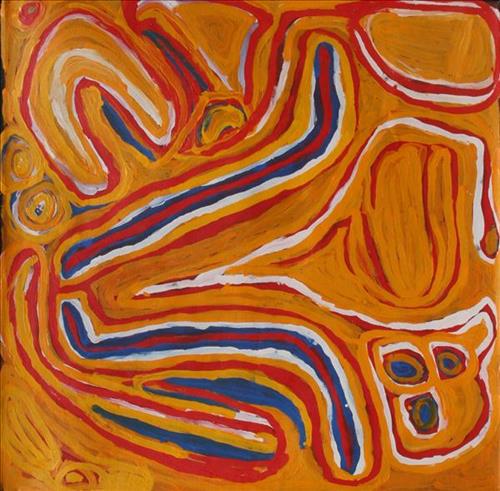
The artist has depicted several wells on the Canning Stock Route and a number of permanent water sources in the same region.


This artist primarily paints her country around Kunawarritji (Well 33) and across to Kiwirrkura which is her birth place. As a young woman, the artist travelled this country extensively so she has a very in depth knowledge of the land. Kumpaya now lives on the community of Parnngurr with her family.


This painting depicts Yartuturma Warla, a salt lake in the artist’s country between Punmu and Kunawarritji Aboriginal Communities. May says, “In the Jukurrpa (Dreamtiume), two wantis (women) went there looking for men. They were singing out there. Then the men found them and put them on their heads and then flew far away.”


This painting represents the “Rock hole’ Jurnu, Yinta, everything!!”When the artist was younger during the Pujiman (bush) days she walked around a very extensive area of the desert all around the Canning Stock Route area. They would walk from water source to water source; this is what she is illustrating through this painting. Represented are a lot of the different Jurnu (rock holes) and Yinta (spring) where she and her family would go. Mili means belongs to everybody and Ngurra is home or country, all of the artists family walked here. She was here with all her Jurtu (sisters) Wungu, Yarpa, Nyikaya and Wunja walking around everywhere. She was also in this country with fellow artists Nora Wompi and Nora Nungabar as well as her mummy Yurnurr. When the artist was a baby in the Pujiman time near Kilkil (well 36) on the Canning Stock Route there was no whitefellas. Then they saw the drovers with the bullocks and camels so they ran away a long way. She didn’t like them and she had no clothes on.


This painting is part of a quadriptych painted by the artist representing different times and cycles within his country Kulyakartu. Kulyakartu is an area in the far north of the Martu homelands, near the Percival Lakes in the northern Great Sandy Desert. The artist lived out this way traditionally with his family during the pujiman (bush) days.
This is the second panel that shows Kulyakartu later when it is a little bit dry and the spinifex starts to dry out, maybe around winter time. This is when the flowers come out, particularly the ngatarn-ngatarn which is a yellow mulla mulla known as a tassel top or a Pussytail, when the seeds dry up you can eat them.