Status: Stock
The Caterpillar Dreaming
dfodihfosfj

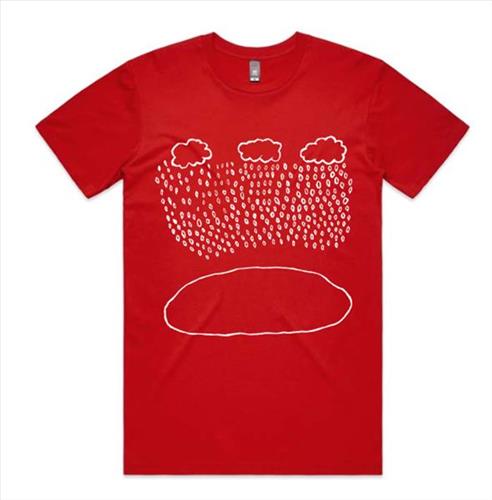
Status: Stock
dfodihfosfj

Status: Stock

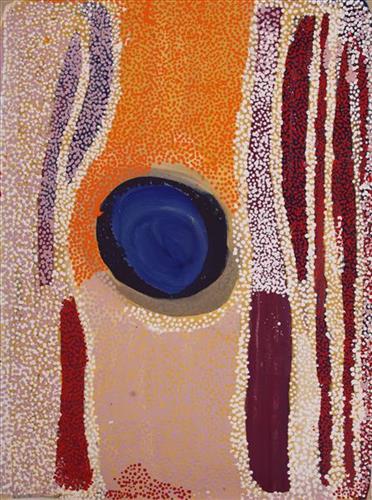
This painting depicts an area in the artist’s country where she lived and travelled extensively throughout the pujiman (bush) days with her family. She travelled from what is now Balfour Downs station where she was born, all around the Parnngurr area and up and down the Canning Stock Route as far as Kunawarritji. Kunawarritji is also known as well 33 and is now her Ngurra (home) community. Bugai has extensive knowledge of all of this area and loves to paint and tell the stories for her country.

Aboriginal people in the rocky environments of western and south-western Arnhem Land tell of the existence of tall slender spirits which they call Mimih. The name Mimih is well known throughout the top end of the Northern Territory. Aboriginal groups living in the rocky environments of western and southern Arnhem Land share mythology which relates to the beings known as Mimih. These groups include the Kunwok chain of languages, and also Rembarrnga, Dalabon and Djawoyn language groups. Other groups of people with familial and ceremonial links to rock country inhabitants are also familiar with the idea of the Mimih.
In recent years the Mimih has become a topic in the repertoires of some artists among the Kunibídji people, speakers of the Ndjébbana language and the traditional landowners of the Maningrida area. The people of western Arnhem Land believe that Mimih spirits live in a social organisation similar to Aboriginal people and that Mimih society existed before humans. Mimih are credited with instructing the first people with knowledge relating to survival in the rocky environment of the Arnhem Land plateau. Mimih are said to have taught the first humans how to hunt and butcher game and also how to dance, sing and paint. The song and dance style of western Arnhem Land Aboriginal people is still known today as Mimih style. This term is also used by Aboriginal people further to the east in Central Arnhem Land when describing the dance and song of their western neighbours.
Despite the usual descriptions of Mimih as being benign towards humans, sometimes however they are attributed with mischievous and dangerous qualities, capable of kidnapping and even killing humans. ‘Clever’ men, or Aboriginal men with supernatural powers, sometimes befriend the Mimih and are taught their songs and dances and shown their secret places. The Mimih are like people using the same kinship terms and speaking the same language as the local Aboriginal group. They live in families like humans and it is said that some of these Aboriginal men with mystical knowledge have spent time living with them in their camps.
Mimih are however, terribly thin, having necks so slender that a stiff breeze would be fatal. For this reason they emerge only on windless days and nights to hunt. As soon as a breeze develops, the Mimih are said to run back to their rocky caverns and disappear inside.

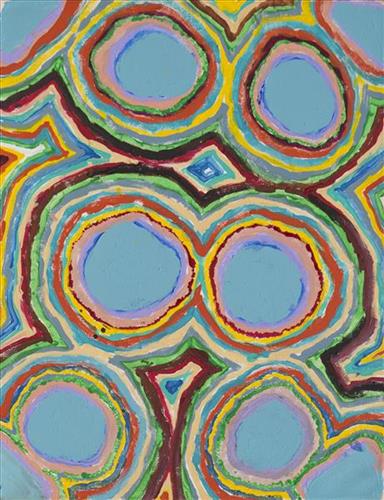
This painting depicts some rockholes surrounded by extensive tali (sandhills) in the artist’s country. Rockhole’s, waterholes, soaks and springs were important sites for Martu people during pujiman (bush) days. The Martu lived very nomadically moving from water source to water source hunting and gathering bush tucker as they went. They would traverse very large distances visiting some areas in the dry and some in the wet season depending on the availability of water. As they travelled and hunted they would also burn areas of country creating a larger diversity of plant and animal life. Tali are a very dominant feature of the Western desert landscape where the Martu people live and as a result often feature in their paintings along with water sources.

The Lorrkon or bone pole coffin ceremony was the final ceremony in a sequence of mortuary rituals celebrated by the people of Arnhem Land. This ceremony involves the placing of the deceased’s bones into a hollow log which was decorated with painted clan designs and ceremonially placed into the ground where it remained until it slowly decayed over many years.
The log is made from a termite hollowed Stringybark tree (Eucalyptus tetradonta) and is decorated with totemic emblems. The western Arnhem Land version of the Lorrkon ceremony involves the singing of sacred songs to the accompaniment of karlikarli, a pair of sacred boomerangs used as rhythm instruments. During the final evening of the ceremony, dancers decorate themselves with kapok down, or today, cotton wool and conduct much of the final segments of the ceremony in the secrecy of a restricted mens’ camp. The complete ceremony may stretch over a period of two weeks, but on the last night the bones of the deceased, which have been kept in a bark container or today wrapped in cloth and kept in a suitcase are taken out, are painted with red ochre and placed inside the hollow log. This ceremony may take place many years after the person has died.
At first light on the final morning of the Lorrkon ceremony, the men appear, coming out of their secret bush camp carrying the pole towards the women’s camp. The two groups call to each other using distinct ceremonial calls. The women have prepared a hole for the pole to be placed into and when it is stood upright, women in particular kinship relationships to the deceased dance around the pole in a jumping/shuffling motion. The Lorrkon is then often covered with a tarpaulin and left to slowly decay.

The Lorrkon or bone pole coffin ceremony was the final ceremony in a sequence of mortuary rituals celebrated by the people of Arnhem Land. This ceremony involves the placing of the deceased’s bones into a hollow log which was decorated with painted clan designs and ceremonially placed into the ground where it remained until it slowly decayed over many years.
The log is made from a termite hollowed Stringybark tree (Eucalyptus tetradonta) and is decorated with totemic emblems. The western Arnhem Land version of the Lorrkon ceremony involves the singing of sacred songs to the accompaniment of karlikarli, a pair of sacred boomerangs used as rhythm instruments. During the final evening of the ceremony, dancers decorate themselves with kapok down, or today, cotton wool and conduct much of the final segments of the ceremony in the secrecy of a restricted mens’ camp. The complete ceremony may stretch over a period of two weeks, but on the last night the bones of the deceased, which have been kept in a bark container or today wrapped in cloth and kept in a suitcase are taken out, are painted with red ochre and placed inside the hollow log. This ceremony may take place many years after the person has died.
At first light on the final morning of the Lorrkon ceremony, the men appear, coming out of their secret bush camp carrying the pole towards the women’s camp. The two groups call to each other using distinct ceremonial calls. The women have prepared a hole for the pole to be placed into and when it is stood upright, women in particular kinship relationships to the deceased dance around the pole in a jumping/shuffling motion. The Lorrkon is then often covered with a tarpaulin and left to slowly decay.

Aboriginal people in the rocky environments of western and south-western Arnhem Land tell of the existence of tall slender spirits which they call Mimih. The name Mimih is well known throughout the top end of the Northern Territory. Aboriginal groups living in the rocky environments of western and southern Arnhem Land share mythology which relates to the beings known as Mimih. These groups include the Kunwok chain of languages, and also Rembarrnga, Dalabon and Djawoyn language groups. Other groups of people with familial and ceremonial links to rock country inhabitants are also familiar with the idea of the Mimih.
In recent years the Mimih has become a topic in the repertoires of some artists among the Kunibídji people, speakers of the Ndjébbana language and the traditional landowners of the Maningrida area. The people of western Arnhem Land believe that Mimih spirits live in a social organisation similar to Aboriginal people and that Mimih society existed before humans. Mimih are credited with instructing the first people with knowledge relating to survival in the rocky environment of the Arnhem Land plateau. Mimih are said to have taught the first humans how to hunt and butcher game and also how to dance, sing and paint. The song and dance style of western Arnhem Land Aboriginal people is still known today as Mimih style. This term is also used by Aboriginal people further to the east in Central Arnhem Land when describing the dance and song of their western neighbours.
Despite the usual descriptions of Mimih as being benign towards humans, sometimes however they are attributed with mischievous and dangerous qualities, capable of kidnapping and even killing humans. ‘Clever’ men, or Aboriginal men with supernatural powers, sometimes befriend the Mimih and are taught their songs and dances and shown their secret places. The Mimih are like people using the same kinship terms and speaking the same language as the local Aboriginal group. They live in families like humans and it is said that some of these Aboriginal men with mystical knowledge have spent time living with them in their camps.
Mimih are however, terribly thin, having necks so slender that a stiff breeze would be fatal. For this reason they emerge only on windless days and nights to hunt. As soon as a breeze develops, the Mimih are said to run back to their rocky caverns and disappear inside.

Aboriginal people in the rocky environments of western and south-western Arnhem Land tell of the existence of tall slender spirits which they call Mimih. The name Mimih is well known throughout the top end of the Northern Territory. Aboriginal groups living in the rocky environments of western and southern Arnhem Land share mythology which relates to the beings known as Mimih. These groups include the Kunwok chain of languages, and also Rembarrnga, Dalabon and Djawoyn language groups. Other groups of people with familial and ceremonial links to rock country inhabitants are also familiar with the idea of the Mimih.
In recent years the Mimih has become a topic in the repertoires of some artists among the Kunibídji people, speakers of the Ndjébbana language and the traditional landowners of the Maningrida area. The people of western Arnhem Land believe that Mimih spirits live in a social organisation similar to Aboriginal people and that Mimih society existed before humans. Mimih are credited with instructing the first people with knowledge relating to survival in the rocky environment of the Arnhem Land plateau. Mimih are said to have taught the first humans how to hunt and butcher game and also how to dance, sing and paint. The song and dance style of western Arnhem Land Aboriginal people is still known today as Mimih style. This term is also used by Aboriginal people further to the east in Central Arnhem Land when describing the dance and song of their western neighbours.
Despite the usual descriptions of Mimih as being benign towards humans, sometimes however they are attributed with mischievous and dangerous qualities, capable of kidnapping and even killing humans. ‘Clever’ men, or Aboriginal men with supernatural powers, sometimes befriend the Mimih and are taught their songs and dances and shown their secret places. The Mimih are like people using the same kinship terms and speaking the same language as the local Aboriginal group. They live in families like humans and it is said that some of these Aboriginal men with mystical knowledge have spent time living with them in their camps.
Mimih are however, terribly thin, having necks so slender that a stiff breeze would be fatal. For this reason they emerge only on windless days and nights to hunt. As soon as a breeze develops, the Mimih are said to run back to their rocky caverns and disappear inside.

Aboriginal people in the rocky environments of western and south-western Arnhem Land tell of the existence of tall slender spirits which they call Mimih. The name Mimih is well known throughout the top end of the Northern Territory. Aboriginal groups living in the rocky environments of western and southern Arnhem Land share mythology which relates to the beings known as Mimih. These groups include the Kunwok chain of languages, and also Rembarrnga, Dalabon and Djawoyn language groups. Other groups of people with familial and ceremonial links to rock country inhabitants are also familiar with the idea of the Mimih.
In recent years the Mimih has become a topic in the repertoires of some artists among the Kunibídji people, speakers of the Ndjébbana language and the traditional landowners of the Maningrida area. The people of western Arnhem Land believe that Mimih spirits live in a social organisation similar to Aboriginal people and that Mimih society existed before humans. Mimih are credited with instructing the first people with knowledge relating to survival in the rocky environment of the Arnhem Land plateau. Mimih are said to have taught the first humans how to hunt and butcher game and also how to dance, sing and paint. The song and dance style of western Arnhem Land Aboriginal people is still known today as Mimih style. This term is also used by Aboriginal people further to the east in Central Arnhem Land when describing the dance and song of their western neighbours.
Despite the usual descriptions of Mimih as being benign towards humans, sometimes however they are attributed with mischievous and dangerous qualities, capable of kidnapping and even killing humans. ‘Clever’ men, or Aboriginal men with supernatural powers, sometimes befriend the Mimih and are taught their songs and dances and shown their secret places. The Mimih are like people using the same kinship terms and speaking the same language as the local Aboriginal group. They live in families like humans and it is said that some of these Aboriginal men with mystical knowledge have spent time living with them in their camps.
Mimih are however, terribly thin, having necks so slender that a stiff breeze would be fatal. For this reason they emerge only on windless days and nights to hunt. As soon as a breeze develops, the Mimih are said to run back to their rocky caverns and disappear inside.