Blak, Loud and Proud
‘Keep the fire burning!, Blak, Loud and Proud.” – Inspired by the 2024 Naidoc week theme


‘Keep the fire burning!, Blak, Loud and Proud.” – Inspired by the 2024 Naidoc week theme

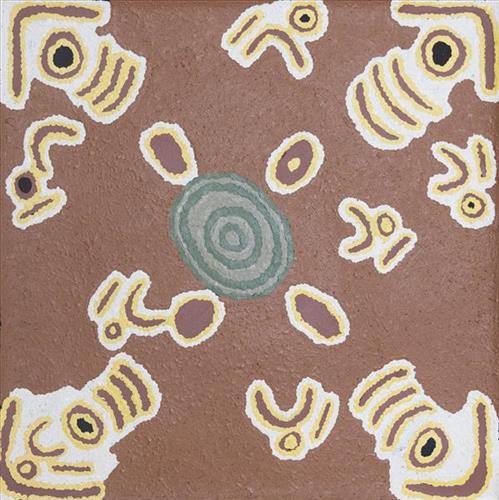
This painting depicts the Minyma Kutjarra Dreamtime story as the women travelled through Docker River up north to Kintore. This is a sacred dreamtime story and not much more can be said.


This is Tapatjatjaka, Titjikala means ‘eagle from the clay pan’, and that’s the clay pan on the way into town. It’s sacred. This is the story of the Irretye – Wedge tailed Eagle, who flew overhead and saw a little boy sitting there crying. The boy’s mother just walked away from him to go hunting. Left him there crying. All that boy’s crying brought the Eagle. He heard him, saw him down there on his own. Eagle fly down. The boy climbed on the back of the Eagle, who took him away. They been fly away. That little boy never been seen again. The Eagle stole the little boy and took him away to another place. This happened just near these cattle yards, and the water tank that are part of the old Maryvale Station. Tapatjatjaka is another name for Titjikala community. The Eagle Dreaming is significant to the region and people. The community is also known as Maryvale and Tapatjatjaka.


They were sitting down talking yarns, separate. That’s Walu way, this side of Walu (Petermann Ranges). That middle wati said ‘I was here when I was little boy with grandfather and we look round for hunting. We spear one kangaroo. Go back home. We bin had a good feed. When I grow up young fella then I saw them young fella and I joined in with them. Look around for woman. And we used to stay separate. No trouble then.’

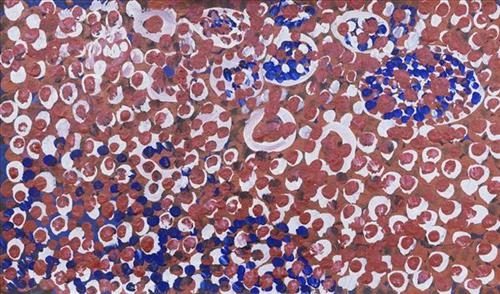
Elaine is a painter from Papulankutja (Blackstone) who now resides at Wanarn Aged Care. Elaine paints tjukurrpa from her country of Papulankutja, which includes songlines for associated tjukurrpa of Wati Kutjarra and Lirru – carpet python dreaming.
Warakurna Artists works closely with Wanarn Aged Care Facility to conduct painting sessions with elderly patients. This program nurtures artists who have contributed largely to one of the most significant art movements in Australia. The joyous communal activity has a myriad of positive benefits such as reliving boredom and frustration. Health staff report that this diversional therapy helps to reduce patient’s drug intake and the old people rejoice in sharing and passing on their important Tjukurrpa with their families who visit them when the workshops are conducted. Warakurna Artists is a positive and powerful example of Aboriginal businesses managed and governed by artists and community elders ensuring the wealth of talent and economic returns are retained in the community.

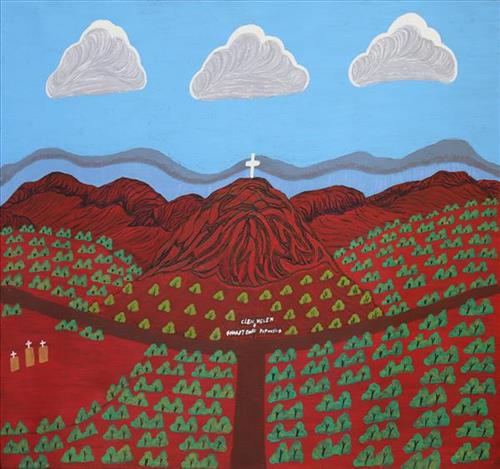
On the road to Haasts Bluff and Papunya turn off, they built a big cross on memory hill. Lots of people go to see it, lots of tourists driving by.

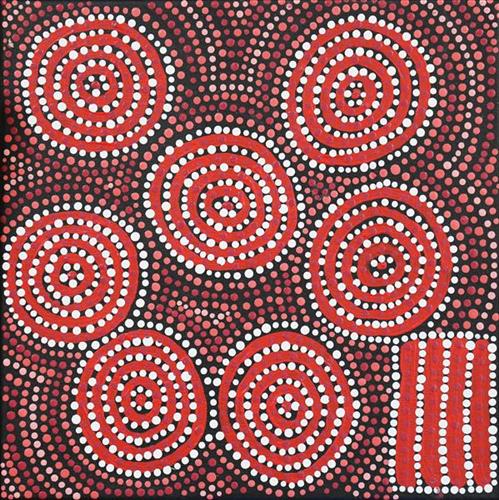
‘This painting is about the way women hunt Wardapi – that sand goanna. He digs holes in the dunes, makes his nest deep inside. Many of the holes all join up. Women hunt Wardapi in the dunes by digging out the holes. Sometimes cover one, and Wardapi runs out other one. Need to hunt him together. Find all the holes. Dig them at the same time. Someone going to get him that way.’
The Wardapi Jukurrpa [Varanus Gouldii Goanna] belongs to the Spencer Sisters. It comes from Yarripilangku [aka Yinyiripalangu], south-west of Yuendumu. A group of Warlpiri Karnta [women] are sitting down in a circle when a Japangardi Wati [man] from Puturlu [Mt Theo], called Wamaru came upon them. He wants to take one of them, named Yurlkurinyi, of Nungarrayi skin, which is the wrong skin for him. He takes the Nungarrayi woman up a hill, where they make love. In response, the earth on top of the hill turns to Ngunjungunju [white ochre], and yellow and red ochre. The yellow is for Karnta and the red for Wati. The ochre is used by Warlpiri people for love magic and ceremonial decoration. The Wati turns all the Karnta and himself into Wardapi, aka Varanus Gouldii goannas. This Jukurrpa belongs to the Napaljarri/Japaljarri and Nungarrayi /Jungarrayi subsections, and the Japanangka/Napanangka, Japangardi/Napangardi subsections of Puturlu. The women are often represented by ‘U’ shapes. Concentric circles may illustrate Wardapi holes, or their droppings left behind them, and Wardapi tracks are usually represented by ‘W’ shapes and wavy lines.

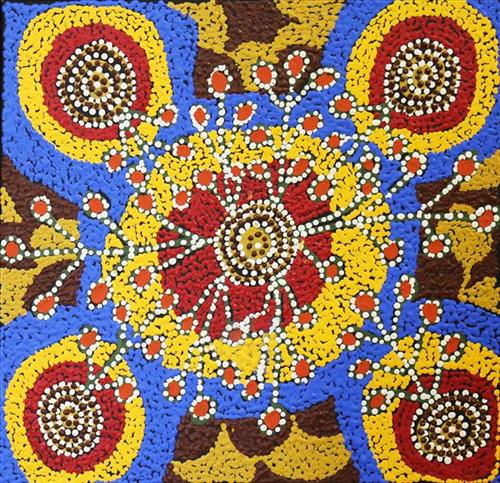
Puli Murpu refers to the Musgrave Ranges behind Amata Community, where rockholes fill after rain. Also after rain, Kaliny-Kalinypa [Honey Grevillea], also called Ultukunpa, flower on the sandy plains. The nectar is used to make a cherished sweet drink by soaking blossoms in a billy can of water, or simply by sucking the nectar from the blossoms. Morning is the best time to collect.

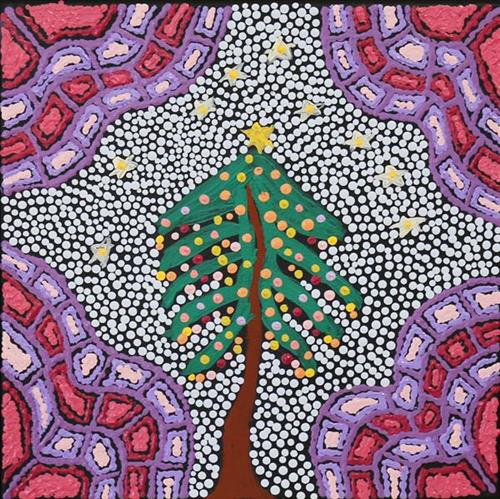
My country celebrating Christmas, bright lights leading Santa to our home.

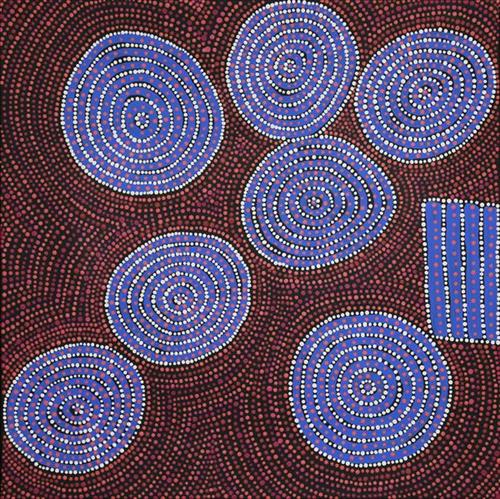
‘This painting is about the way women hunt Wardapi – that sand goanna. He digs holes in the dunes, makes his nest deep inside. Many of the holes all join up. Women hunt Wardapi in the dunes by digging out the holes. Sometimes cover one, and Wardapi runs out other one. Need to hunt him together. Find all the holes. Dig them at the same time. Someone going to get him that way.’
The Wardapi Jukurrpa [Varanus Gouldii Goanna] belongs to the Spencer Sisters. It comes from Yarripilangku [aka Yinyiripalangu], south-west of Yuendumu. A group of Warlpiri Karnta [women] are sitting down in a circle when a Japangardi Wati [man] from Puturlu [Mt Theo], called Wamaru came upon them. He wants to take one of them, named Yurlkurinyi, of Nungarrayi skin, which is the wrong skin for him. He takes the Nungarrayi woman up a hill, where they make love. In response, the earth on top of the hill turns to Ngunjungunju [white ochre], and yellow and red ochre. The yellow is for Karnta and the red for Wati. The ochre is used by Warlpiri people for love magic and ceremonial decoration. The Wati turns all the Karnta and himself into Wardapi, aka Varanus Gouldii goannas. This Jukurrpa belongs to the Napaljarri/Japaljarri and Nungarrayi /Jungarrayi subsections, and the Japanangka/Napanangka, Japangardi/Napangardi subsections of Puturlu. The women are often represented by ‘U’ shapes. Concentric circles may illustrate Wardapi holes, or their droppings left behind them, and Wardapi tracks are usually represented by ‘W’ shapes and wavy lines.