111582406413


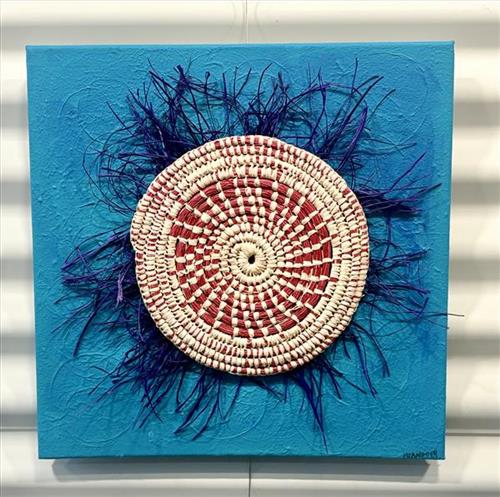
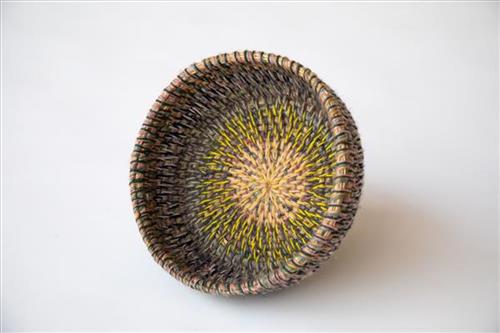
Basket

Weaving is a skill that has been practiced by Martu for thousands of years in the making of utilitarian and ceremonial items, such as yakapiri (bark sandals) and manguri (head pads for balancing carved carrying dishes). However, coiled basket weaving as an artform is a relatively newly adopted practice for the Martu, a skill passed on from Central Desert artists in the 1990’s. Leading Martu fibre arts practitioner Nola Taylor says that basket weaving was so popular amongst Martu women that it “spread across the desert like a waru (fire)”.

Each basket is built up through wrapping fine bundles of grass in brightly coloured wool and then stitching each round on to the previous one. The baskets are primarily made from puntayarra and minarri (Amphipogon Caricinus) grass, usually collected incidentally during trips to visit family, attend ceremonies, maintain Country, and hunt and gather bush tucker. Martu artists have developed a distinctive style of basketry and individual artists continue to develop new designs and incorporate novel materials, including steel, wire and wood, into their work. 

220982210690


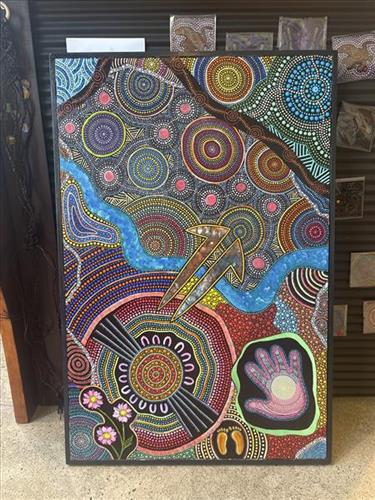
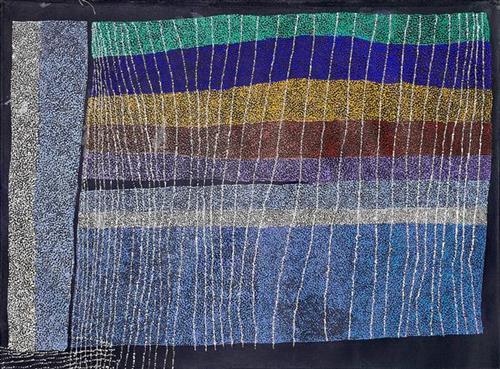
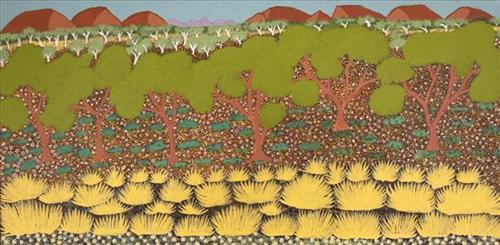
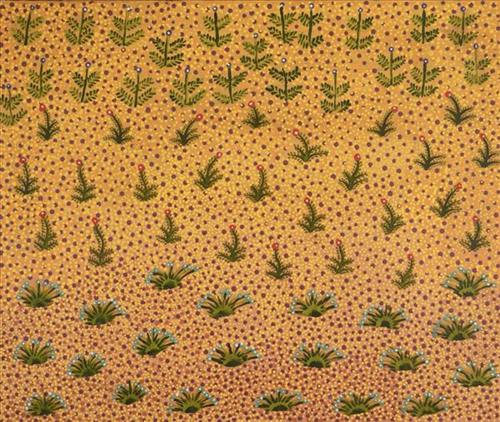
View Of Country

The community of Ampilatwatja made a conscious decision not to paint ‘altyerr’ dreaming stories, the artists paint their country where those stories sit.

This painting shows the layered landscape of Alyawarr, Central Australia. Knowing your country is an important part of living in a remote community like Ampilatwatja. Knowing when and where to go hunting and gathering, knowing where there is ‘soakage’ (where you can dig for water), travelling with family for ceremonies, and maintaining a connection with the land.

“This is my country, my view of country.”

114182218432


Kungkarrangkalpa (Seven Sisters)

‘Kungkarrangkalpa’ (The Seven Sisters or Pleaides) is significant Tjukurrpa (dreamtime). Its origins you may be familiar with in astronomy and its connection to ‘Wati Nyiru’ (Magic Man or Orion).  The roots of this dreaming stems across indigenous groups around the world. The Australian Aboriginal songline is one part to the whole dreaming which can be traced all around the world. The ladies of the Ngaanyatjarra Lands depict their significant chapter and understanding of the journey of the sisters. The different versions of this story depend on where you live and the significance’s of local Tjukurrpa places.

Nyiru fell in love with the sisters but he was of the wrong skin group to marry, but he still pursued them on their journey. The sisters travel across the land to escape Nyiru’s unwanted attentions, but he is persistent and always finds them. There are significant land forms which can be sited today that evidence this dreaming. As Nyiru is chasing the sisters he tries to catch them by using magic to turn into the most tempting kampurarrpa (bush tomato) and the most beautiful Yirli (wild fig tree), for them to eat and camp under. However, the sisters are knowledgeable of his magic and too clever for Nyiru who they outwit again and again. They go hungry and run through the night rather than be caught by him. As the journey continues, Nyiru gets so frustrated at the wit of the sisters that he uses his magic to make the oldest sister sick to try and get closer to her. The other sisters rescue the big sister and nurse her back to health. It is said he also captures the youngest sister, but with the help of the oldest sister, she escapes back to her sisters who are waiting for her. Eventually, the sisters fly into the sky to escape Nyiru, forming the constellation. Nyiru felt lonely, longing for the sisters who were so far away. Nyiru used his magic to go to the sky, forever in pursuit.

220982291902


Wilma Ngala Ross – My View Of Country

My grandmother, my mother, and myself come from the heart of the country,  Anmatyerr country.  My mother was born at the old Telegraph Station (old bungalow) Alice Springs.   

In 1979 I came to Ampilatwatja with my new husband Joe Morton, and I am still here.  I have raised six children in Ampilatwatja.  I always accompanied Joe on hunting trips and he would show me his country.

I was involved with the 80’s batik movement and instrumental in starting the painting activities in the early days.  I come from a long line of artists.  I enjoy spending my time painting.


This is the layered landscape of Alyawarr, Central Australia. Knowing your country is an important part of living in a remote community like Ampilatwatja. Knowing when and where to go hunting and gathering, knowing where there is ‘soakage’ (where you can dig for water), travelling with family for ceremonies, and maintaining a connection with the land.

“This is my country, my view of country.”

The community of Ampilatwatja made a conscious decision not to paint ‘altyerr’(dreaming stories). The artists paint their country where those stories sit.

116482343512


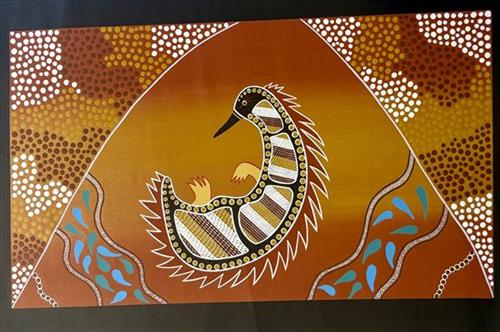
Native Wildlife

Animals from Yindjibarndi Country.

*Damaged at top. Price reflects peeling paint.

This artwork is currently on stretched canvas. We will have to obtain a freight quote if you would like to purchase this work stretched.

220982352381


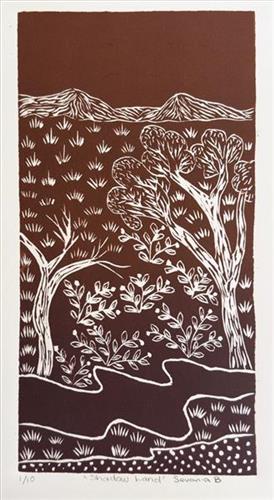
Sevania Kemarre Bonney – Great Grandmothers Country

Shadowland

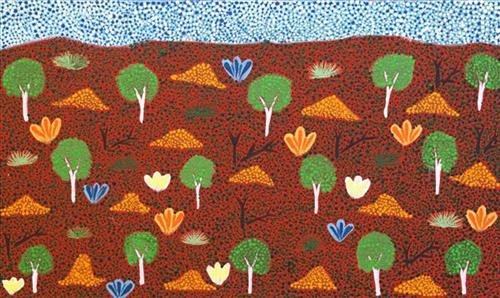
My great Grandmothers Country is where we go hunting. We hunt goanna and bush turkey. We swim in the river. We look for bush banana, bush potato and wild oranges. I am inspired by the beautiful wild flowers that grow there. Being on my Great grandmothers country makes me happy and content.

220982354551


Dakota Ngwarraye Petrick – Mwanyen (Bush Tomato)

My twin sister Latoya and myself have just started painting bush flowers.  Our grandmother Elizabeth Ngwarraye Bonney shows us the good way.

I did the mwanyen (bush tomato) plant because it is sweet tasting fruit that we find in creek beds after the rain.