111582384360


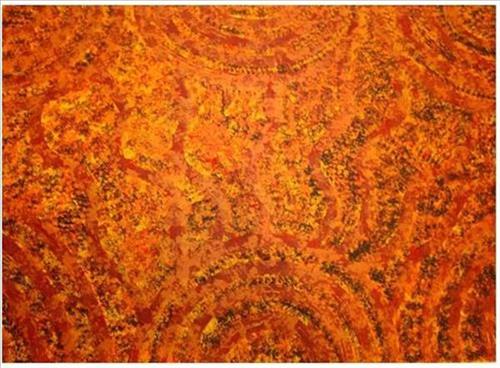
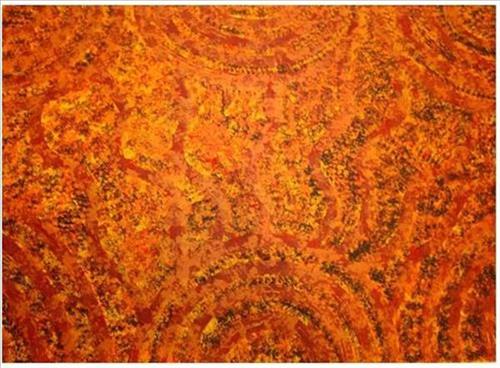
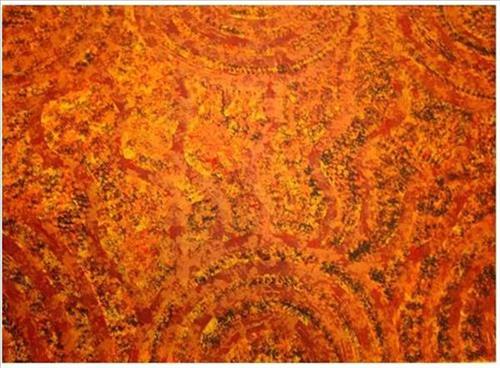
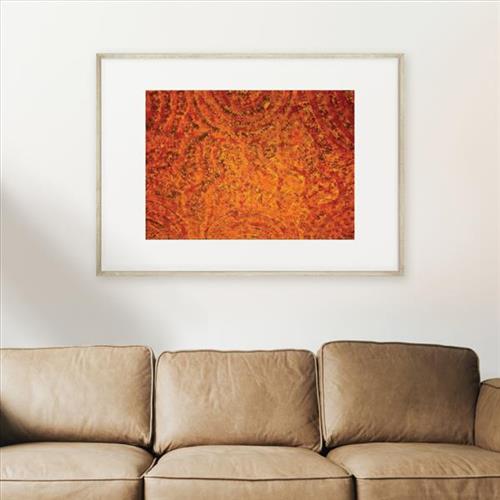
Untitled

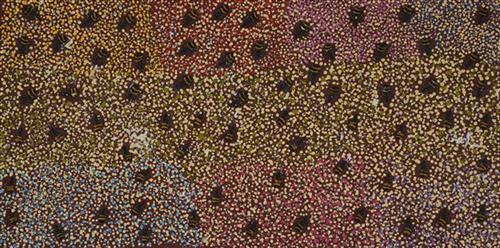
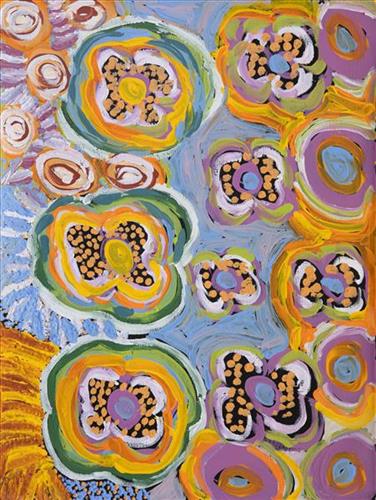
“I like to paint bush foods and flowers.”

– Mary Rowlands


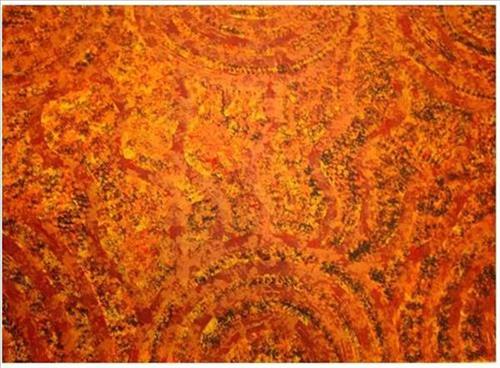
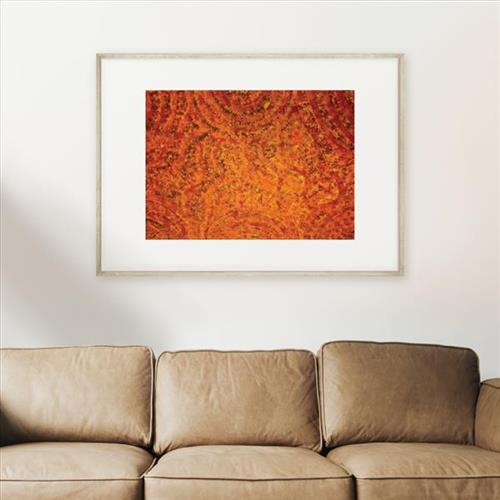
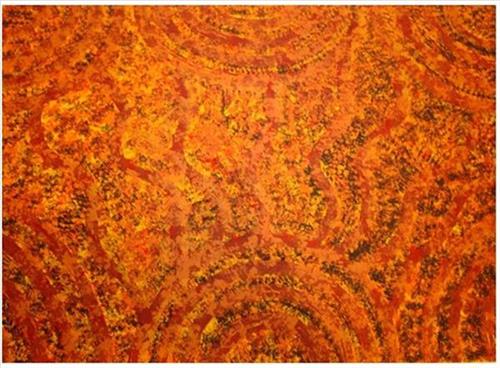
Depicted in this work are a combination of desert flowers and traditional types of mayi (plant food).

During the pujiman (traditional, desert dwelling) period, Martu would traverse very large distances annually in small family groups, moving seasonally from water source to water source, and hunting and gathering bush tucker as they went. Whilst desert life has moved away from mobile hunter-gatherer subsistence throughout the course of the twentieth century, bush tucker continues to be a significant component of the modern Martu diet, and hunting and gathering bush tucker remains equally valuable as an important cultural practice that is passed on intergenerationally.

Popular mayi includes minyarra (bush onion), collected from small, grass like plants; root vegetables dug from underground such as kulyu and mata (types of bush potato); and seeds such as kalaru (samphire, salt bush), yuwinyji, and marnkalpa (spinifex species). Jawirli (quondong), wamurla (bush tomatoes), jinyjiwirrily (wild gooseberry), ngaputa (melon), and karlkula (bush banana) are some of the most popular bush fruits. These are often collected in the wantajarra (cool season) and tuulpara (spring) months, along with juri (sweet) botanical gums and wama (nectar), obtained from various plant species.

Mary, through her work, acknowledges the intrinsic value of the remarkably diverse flora found through Martu Country. These plants are not only vital as significant food sources, but also celebrated for their aesthetic splendour. In the context of the often harsh and arid environments in which desert flowers bloom, their vibrancy, delicacy, and variation become even more spectacular. 
116482384570


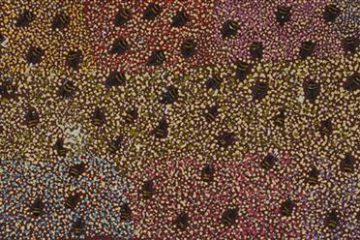
Honey Ants

Honey ants are shown here collecting food before winter. Bunjima people call the food ‘mulma nujnu’. This name comes from the leaves, and another name is ‘ngardanu’, which comes from the branches.

22024004042


Status: Stock


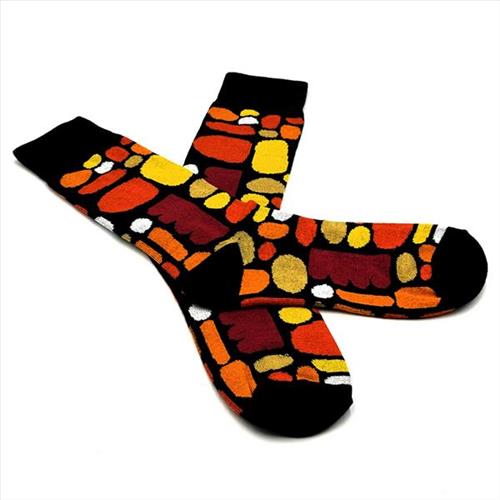
Cotton Socks – Puli Puli

These groovy socks feature the ‘Puli Puli’ design by Keturah Zimran, and comes from our collaboration with ethical makers, Better World Arts.

In this work Keturah depicts the natural rock formations (puli) found in and around Haasts Bluff as well as combining it with her childhood memories of her mother’s country of Lake Macdonald in Western Australia.

Packaged in Craft Paper with zero plastic. One size fits most.

22024002661


Status: Stock


Watiya Tjuta Modal Scarf (Grey)

This exquisite Lenzing Modal scarf is the result of a fair trade project between Better World Arts, Ikuntji Artists and artisans in India. Beautifully made in fine modal a fibre derived from nature, LENZING™ Modal fiber types have been certified as compostable and biodegradable under industrial, home, soil and marine conditions, thus they can fully revert back to nature.

Artwork Story:

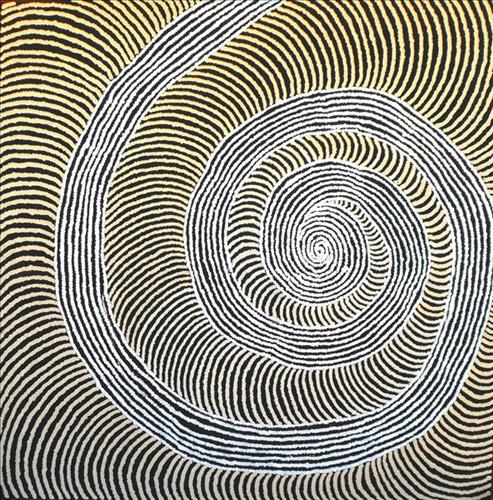
‘Watiya Tjuta’ Napurrula’s father, Tupa Tjakamarra gave her the right to paint works related to Ilyingaungau in the Gibson Desert. This site, south of Walungurru (Kintore), some 520 kilometres west of Mparntwe (Alice Springs), is where the artist’s Mutikatjirri ancestors assembled their kulata (spears) for a conflict with the Tjukula men. Allusive works that refer to the straightening of kulata by Tjupurrula are among the landmark paintings of the Ikuntji Artists movement’s 30-year history.

The paintings of Napurrula and her husband, Long Tom Tjapanangka, have come to be understood as archetypical of Ikuntji art since they began to work with the arts centre in 1993. Napurrula remembers, ‘ … After I got married, my mother taught me my father’s Tjukurrpa in the sand, that’s what I’m painting on the canvas’. The white pigment eddies around abstract forms that refer to the spearwood trees. The tightly structured patterning of the key motifs and bold use of colour demonstrates the artist’s confidence in her individual artistic vision within a family of superlative artists – and the cultural heritage that continues to inform the myriad expressions of Western Desert artists.

Mitjili paints the Watiya Tjuta tree. Mitjili’s style is unique and recognisable. The Watiya Tjuta in Mitjili’s paintings is her father’s Tjukurrpa (dreaming) in Ilyingaungau country (Gibson Desert). This was passed down to her by her mother, Tjunkayi Napaltjareri when story telling, using the same to draw the story as it is told in the traditional way. She remembers “…After I got married, my mother taught me my father’s Tjukurrpa in the sand, that’s what I’m painting on the canvas”, a women’s interpretation.

Better World Arts has been operating for over two decades. They work with traditional artisans from remote regions in Kashmir, Peru, West Bengal, Uttar Pradesh and Nepal (Tibetan refugees). They work with Australian Aboriginal artists from remote communities across Australia, from Arnhem Land to Central and the Western Desert regions, from rural locations and from cities.

Better World Arts are endorsed members of the Fair Traders Association of Australia and New Zealand.

220273312748


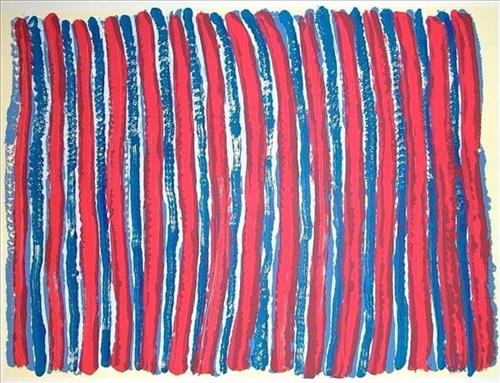
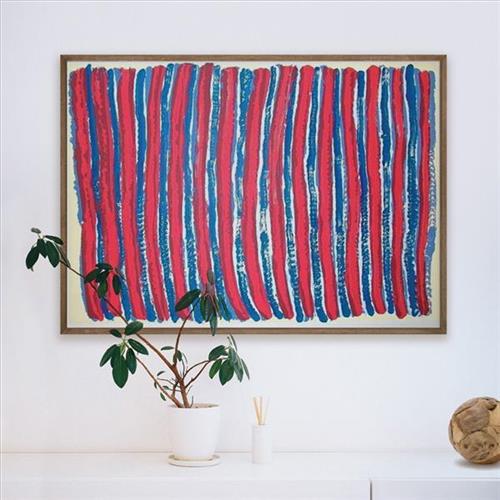
Tali Tali – Sandhills

This painting shows the artist’s Tjukurrpa, the Tali Tali Dreaming. It refers to the vast and desolate sandhills of her country near Taalalpi, which is located beyond the Kintore/Kiwikurra road near the West Australian and Northern Territory border. This is the country where her father and mother used to travel by foot when she was a young girl. The place is still of great spiritual significance to Alice and her father’s family as it contains both, personal and tribal law to which Alice relates in her work. Water has collected in between the sandhills, providing sustenance for her porcupine. The tjikamamta (porcupine) is Alice’s own personal tjukurrpa (dreaming). She returned to her country for a visit in late 2005.

220273312690


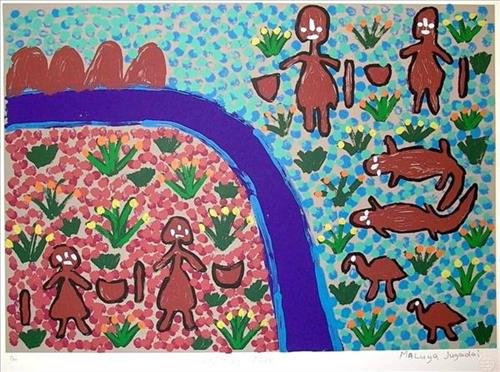
Napaltjarri Sisters

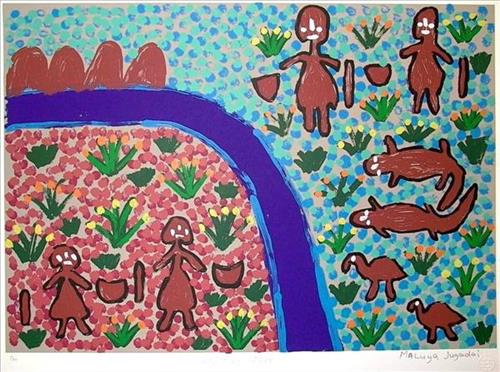
Maluya tells the story of significance to her skin name Napaltjarri. The Napaltjarri sisters descend from the seven stars and begin to roam the earth, searching for bush tucker and collecting dew.

220273312691


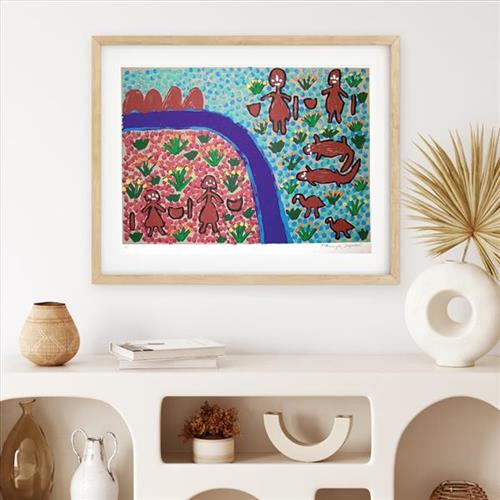
Napaltjarri Sisters

Maluya tells the story of significance to her skin name Napaltjarri. The Napaltjarri sisters descend from the seven stars and begin to roam the earth, searching for bush tucker and collecting dew.

11412917747


Pulypal

Ruby has depicted a story of a young Rock Wallaby who was chased all over this country by men, women, children and their dogs from a nearby tribe. The Auntie Rock Wallaby saw what was happening to her nephew, so she dug a large soak hole with a big stick. The young Wallaby fell into the hole and was soon followed by the men, women, children, and their dogs. They were all trapped in the soak and couldn’t find a way out.

220277270409


Waru

This work by Alison shows the bushfire tracking across vast areas of the desert, causing destruction but also renewing the landscape. It was common for Luritja people to set fire to the spinnefix as a means of controlling the harsh desert, using it to stimulate new plant growth of seeds and fruit, and to attract large game such as the Red Kangaroo who come to eat the new grass shoots.

220277270408


Waru

This work by Alison shows the bushfire tracking across vast areas of the desert, causing destruction but also renewing the landscape. It was common for Luritja people to set fire to the spinnefix as a means of controlling the harsh desert, using it to stimulate new plant growth of seeds and fruit, and to attract large game such as the Red Kangaroo who come to eat the new grass shoots.