220281845642


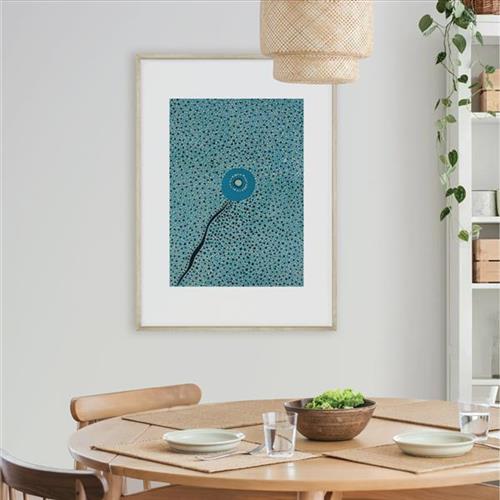
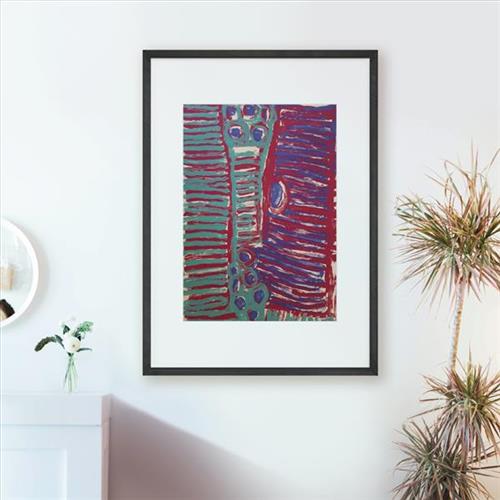
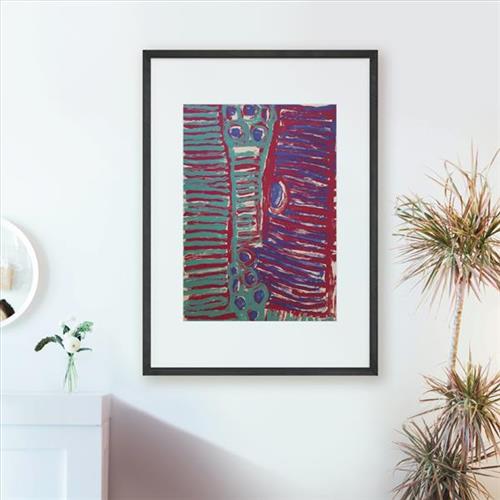
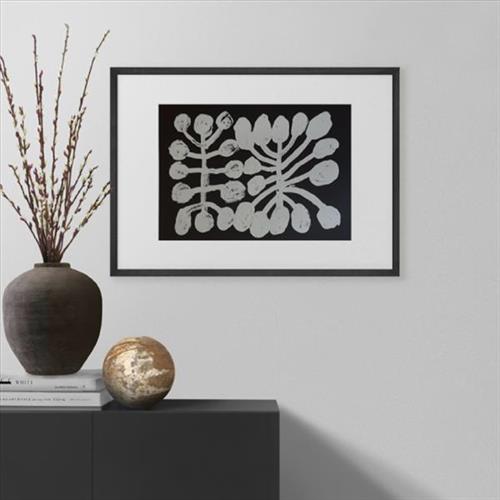
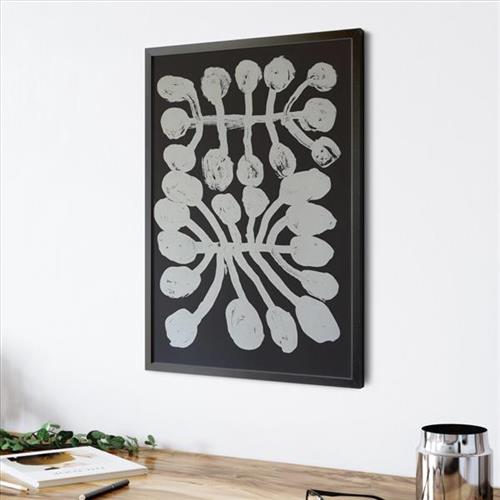
Tali Tali – Sandhills

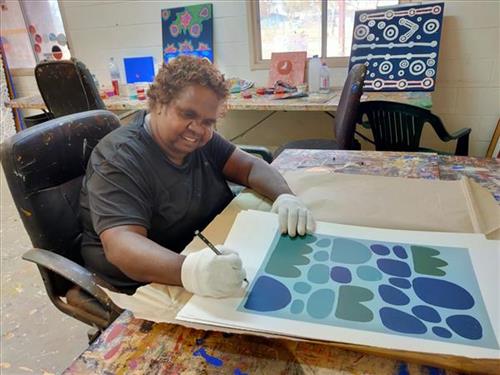
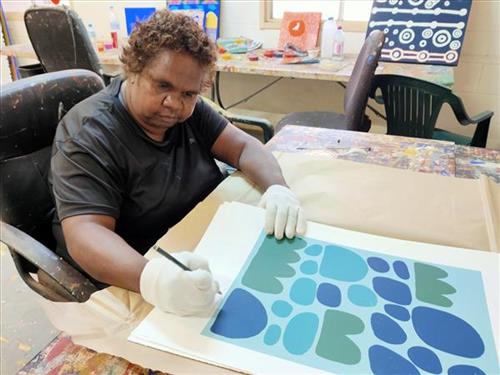
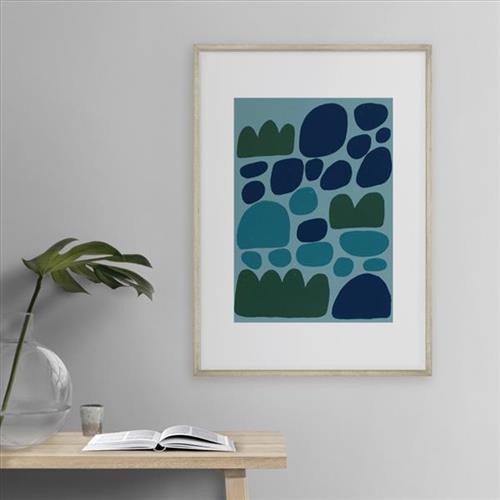
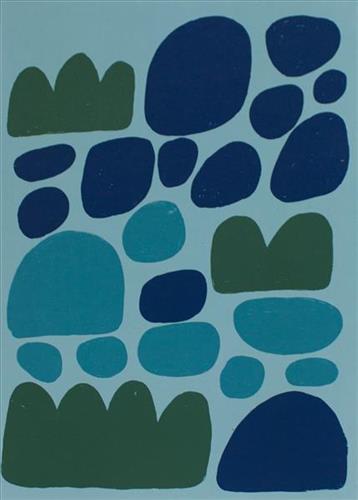
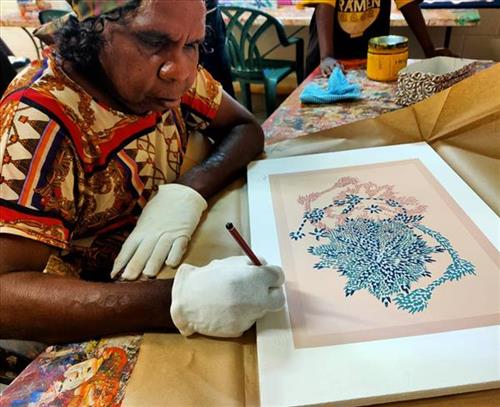
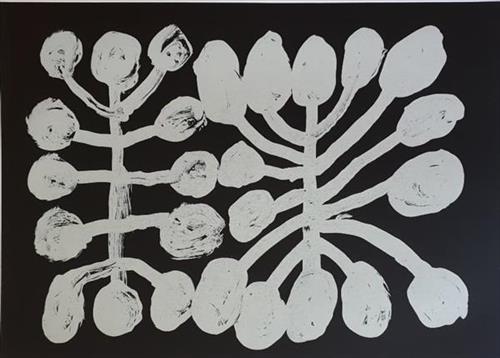
This print shows the artist’s Tjukurrpa, the Tali Tali Dreaming. It refers to the vast and desolate sandhills of her country near Taalalpi, which is located beyond the Kintore/Kiwikurra road near the West Australian and Northern Territory border. This is the country where her father and mother used to travel by foot when she was a young girl. The place is still of great spiritual significance to Alice and her father’s family as it contains both, personal and tribal law to which Alice relates in her work. Water has collected in between the sandhills, providing sustenance for her porcupine. The tjikamamta (porcupine) is Alice’s own personal tjukurrpa (dreaming). She returned to her country for a visit in late 2005.

220281968802


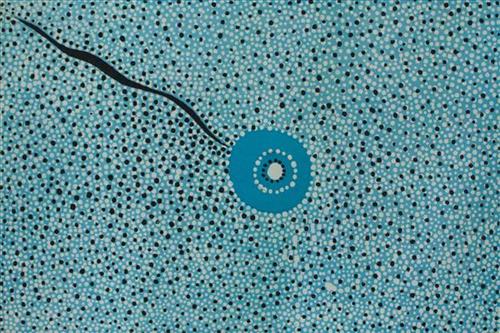
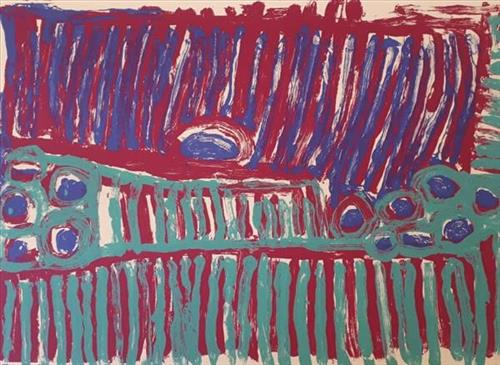
Kakalyalya Tjukurrpa – White Cocky Dreaming

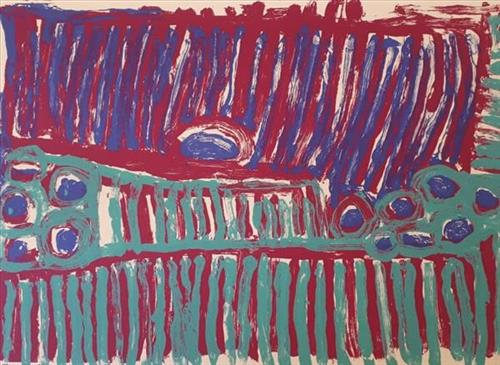
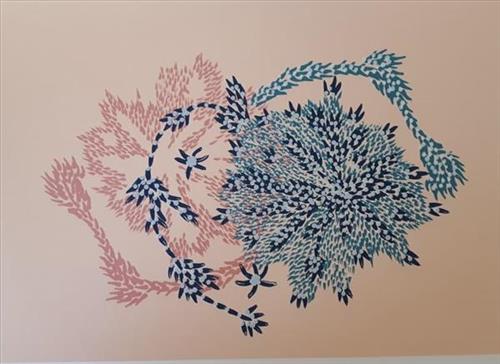
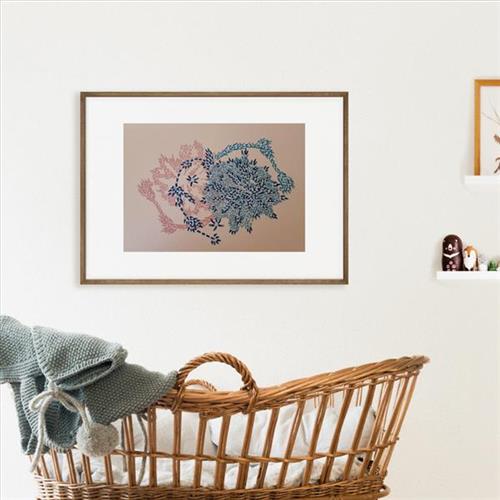
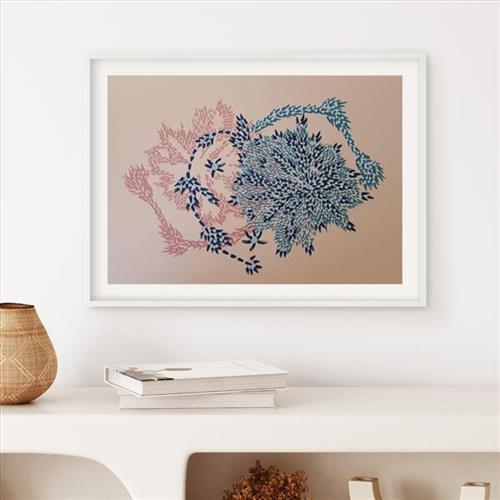
In the artist’s words: This is the story in my father’s country of Pirrupa Kaala. It is the story of the white cocky (circle middle on top) with mako (witchetty grubs) in its mouth. The eagle (left bottom) brought malo (kangaroo) meat (circle left top) for the white cocky as she had a broken wing. But a crow (circle right side bottom) chased the white cocky all over the country because the white cocky had such a big mob of mako. The crow started to hit the white cocky with a nulla nulla and called her greedy. The eagle helped the cocky and chased the crow away. So it happend that the eagle came to stay with white cocky for a little while. But on day he said: ”Oh, I am going home to find another place to stay”, and left the white cocky behind to stay there by herself for good.

The blue colour shows the tracks from the water running into the deep water holes in the sand after the rain. The red colour shows the little mountains where the water comes from and goes into the creek flowing south.

220281968811


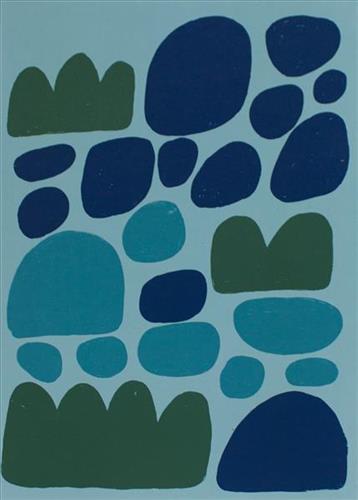
Puli Puli – Rocks

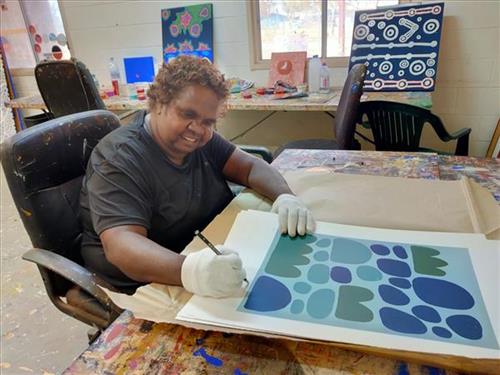
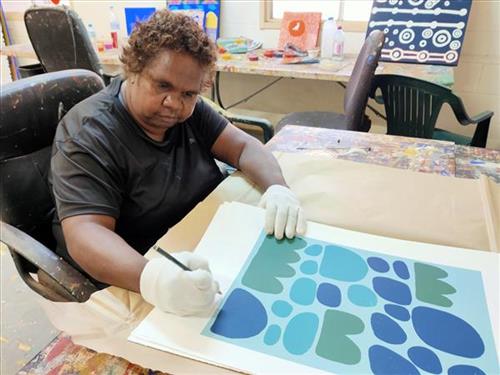
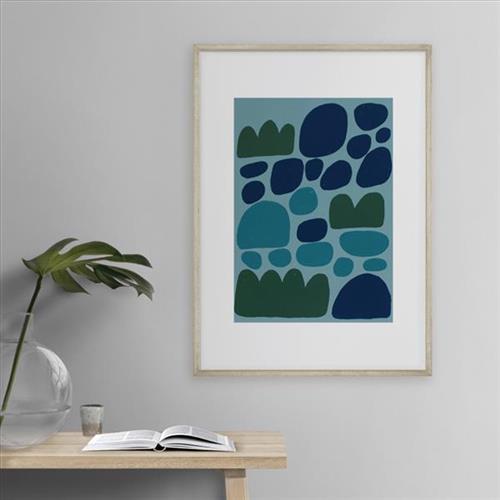
Keturah depicts the puli puli (rocks) at two different sites. She paints the landscapes at Haasts Bluff where she grew up and also at Karrkurrutintja (Lake Mcdonald in Pintupi), located west of Kintore along the Western Australia/Northern Territory border. Karrkurrutintja country is an important site of the Pilkati (snake) Tjukurrpa (dreaming) of Kaniya Kutjarra (two carpet snakes, two brothers, two Tjangalas). This story was passed town to her from her grandmother Narputta Nangala Jugadai, who was born there. Narputta was passed down this story from her father, Talaku Tjampitjinpa. Both Keturah’ss grandmother and mother, Molly Jugadai painted this same country. Narputta was one of the founding members of Ikuntji Artists, and has been painting since the beginning of the desert painting movement in the 1970’s. Keturah’s grandmother and mother have since passed away, with Keturah being the only remaining daughter in this lineage of artist to still be painting this story.

Keturah has been inspired by the painting legacy and tutorage from her grandmother and mother, though has developed a distinctive style over her practice. Keturah uses different colours and hues to depict the ways the puli puli change colours with the weather, especially at sunrise and sunset.

 “The sand hills I paint are my mother’s story and the rocks I paint are my own story. My paintings are about my story and my mother’s… I like to paint; painting helps me forget my troubles. I paint every day. My Grandmother used to say to me when I was younger: “One day you will paint.”

220281968809


Puli Puli – Rocks

Keturah depicts the puli puli (rocks) at two different sites. She paints the landscapes at Haasts Bluff where she grew up and also at Karrkurrutintja (Lake Mcdonald in Pintupi), located west of Kintore along the Western Australia/Northern Territory border. Karrkurrutintja country is an important site of the Pilkati (snake) Tjukurrpa (dreaming) of Kaniya Kutjarra (two carpet snakes, two brothers, two Tjangalas). This story was passed town to her from her grandmother Narputta Nangala Jugadai, who was born there. Narputta was passed down this story from her father, Talaku Tjampitjinpa. Both Keturah’ss grandmother and mother, Molly Jugadai painted this same country. Narputta was one of the founding members of Ikuntji Artists, and has been painting since the beginning of the desert painting movement in the 1970’s. Keturah’s grandmother and mother have since passed away, with Keturah being the only remaining daughter in this lineage of artist to still be painting this story.

Keturah has been inspired by the painting legacy and tutorage from her grandmother and mother, though has developed a distinctive style over her practice. Keturah uses different colours and hues to depict the ways the puli puli change colours with the weather, especially at sunrise and sunset.

 “The sand hills I paint are my mother’s story and the rocks I paint are my own story. My paintings are about my story and my mother’s… I like to paint; painting helps me forget my troubles. I paint every day. My Grandmother used to say to me when I was younger: “One day you will paint.”
220281968766


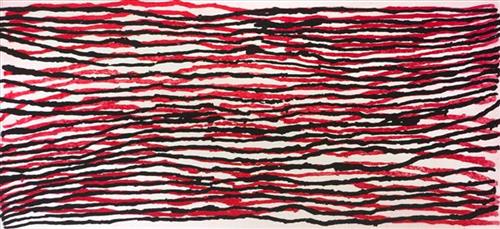
Kalipinpa – Water Dreaming

In this painting Mavis Nampitjinpa paints her Tjukurrpa (Dreaming), the Water Dreaming. it’s north of Kintore
For Aboriginal people of the Western Desert, Kapi (water) is a crucial resource for survival. When the rains arrive in the desert the landscape comes to life with all the desert flowers blooming, bush tucker abundant and people taking advantage of all the joys that water brings.

220281968765


Kalipinpa – Water Dreaming

In this painting Mavis Nampitjinpa paints her Tjukurrpa (Dreaming), the Water Dreaming. it’s north of Kintore
For Aboriginal people of the Western Desert, Kapi (water) is a crucial resource for survival. When the rains arrive in the desert the landscape comes to life with all the desert flowers blooming, bush tucker abundant and people taking advantage of all the joys that water brings.

220281968739


Tali Tali – Sandhills

This painting shows the artist’s Tjukurrpa, the Tali Tali Dreaming. It refers to the vast and desolate sandhills of her country near Taalalpi, which is located beyond the Kintore/Kiwikurra road near the West Australian and Northern Territory border. This is the country where her father and mother used to travel by foot when she was a young girl. The place is still of great spiritual significance to Alice and her father’s family as it contains both, personal and tribal law to which Alice relates in her work. Water has collected in between the sandhills, providing sustenance for her porcupine. The tjikamamta (porcupine) is Alice’s own personal tjukurrpa (dreaming). She returned to her country for a visit in late 2005.

220281968690


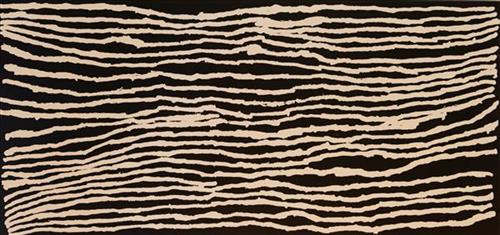
Uwulkari – Watiya Tjuta

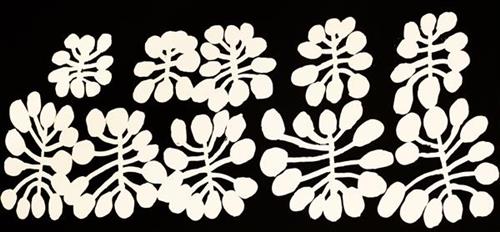
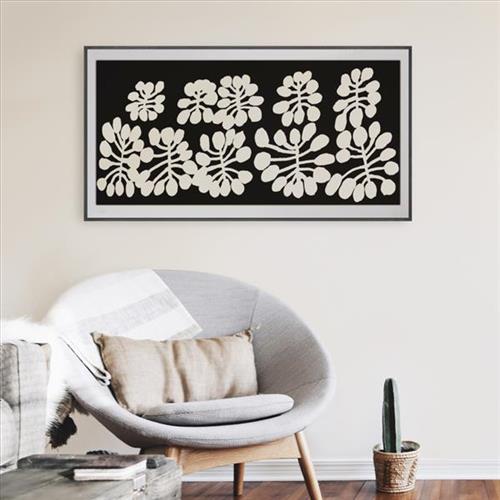
Mitjili paints her fathers Tjukurrpa, the ceremonial spear straightening in Uwalkari country (Gibson desert region). The Watiya Tjuta (Acacia Trees) are the trees that are used to make these spears. Uwalkari country is abundant with Watiya Tjuta, as well as sand hills and other plants. Mitjili paints the motif of the Watiya Tjuta, carrying on the recurring motif as her mother used to draw in the sand. Her mother passed on this Dreaming to her. 

Napurrula’s father, Tupa Tjakamarra gave her the right to paint works related to Ilyingaungau in the Gibson Desert. This site, south of Walungurru (Kintore), some 520 kilometres west of Mparntwe (Alice Springs), is where the artist’s Mutikatjirri ancestors assembled their kulata (spears) for a conflict with the Tjukula men. Allusive works that refer to the straightening of kulata by Tjupurrula are among the landmark paintings of the Ikuntji Artists movement’s 30-year history. The paintings of Napurrula and her husband, Long Tom Tjapanangka, have come to be understood as archetypical of Ikuntji art since they began to work with the arts centre in 1993. Napurrula remembers, ‘ … After I got married, my mother taught me my father’s Tjukurrpa in the sand, that’s what I’m painting on the canvas’. The white pigment eddies around abstract forms that refer to the spearwood trees. The tightly structured patterning of the key motifs and bold use of colour demonstrates the artist’s confidence in her individual artistic vision within a family of superlative artists – and the cultural heritage that continues to inform the myriad expressions of Western Desert artists.

220281968670


Uwulkari – Watiya Tjuta

Mitjili paints her fathers Tjukurrpa, the ceremonial spear straightening in Uwalkari country (Gibson desert region). The Watiya Tjuta (Acacia Trees) are the trees that are used to make these spears. Uwalkari country is abundant with Watiya Tjuta, as well as sand hills and other plants. Mitjili paints the motif of the Watiya Tjuta, carrying on the recurring motif as her mother used to draw in the sand. Her mother passed on this Dreaming to her. 

Napurrula’s father, Tupa Tjakamarra gave her the right to paint works related to Ilyingaungau in the Gibson Desert. This site, south of Walungurru (Kintore), some 520 kilometres west of Mparntwe (Alice Springs), is where the artist’s Mutikatjirri ancestors assembled their kulata (spears) for a conflict with the Tjukula men. Allusive works that refer to the straightening of kulata by Tjupurrula are among the landmark paintings of the Ikuntji Artists movement’s 30-year history. The paintings of Napurrula and her husband, Long Tom Tjapanangka, have come to be understood as archetypical of Ikuntji art since they began to work with the arts centre in 1993. Napurrula remembers, ‘ … After I got married, my mother taught me my father’s Tjukurrpa in the sand, that’s what I’m painting on the canvas’. The white pigment eddies around abstract forms that refer to the spearwood trees. The tightly structured patterning of the key motifs and bold use of colour demonstrates the artist’s confidence in her individual artistic vision within a family of superlative artists – and the cultural heritage that continues to inform the myriad expressions of Western Desert artists.