220282196543


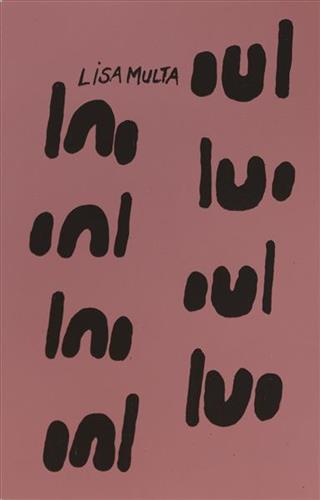
Kungkayunti – Women Dancing

The artist’s birthplace is Edmond Bore, which is near Kungkayunti (Brown’s Bore) south of Ikuntji/Haasts Bluff. This painting shows the artist’s Tjukurrpa (Dreaming), Kungkayunti, the place where all the ancestral Arrernte women come to rest after travelling from Ntaria (Hermannsburg) to Kintore and past Kulpitarra (Outstation). There, they dance, share their stories and renew their law. The women turned into stone, where you still can see them today. Anmanari describes the tracks of all the women. Kungkayunti (women dancing) is the name of the place that the women first camped. They were on a journey, on their way to womens business.

220282196542


Kungkayunti – Women Dancing

The artist’s birthplace is Edmond Bore, which is near Kungkayunti (Brown’s Bore) south of Ikuntji/Haasts Bluff. This painting shows the artist’s Tjukurrpa (Dreaming), Kungkayunti, the place where all the ancestral Arrernte women come to rest after travelling from Ntaria (Hermannsburg) to Kintore and past Kulpitarra (Outstation). There, they dance, share their stories and renew their law. The women turned into stone, where you still can see them today. Anmanari describes the tracks of all the women. Kungkayunti (women dancing) is the name of the place that the women first camped. They were on a journey, on their way to womens business.
220282196533


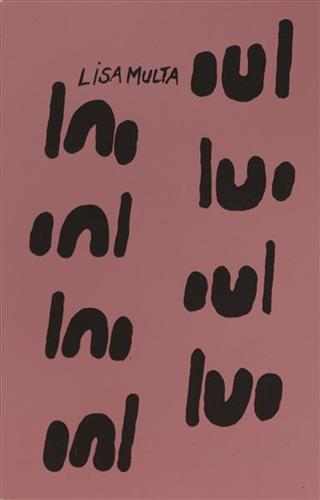
Tali at Kungkayunti

This painting shows the birds eye view of the tali tali (sandhills) at Kungkayunti (Brown’s Bore). This is the country of Joe Tjakamarra Multa, the father of Douglas Multa, Agnes Multa, Lisa Multa, Alison Multa, Rephina Multa, Benita Multa and Patricia Multa and the grandfather to their children. The tali tali are a short walk from where the family lived and the children of Joe grew up.

Lisa remembers walking up the tali tali with her sister, Agnes Multa, who was the same age as her. When Lisa got married she brought her partner to see those tali tali. From the tali tali, a 360-degree view can be seen of the surrounding country. The area is abundant with bush tucker, especially bush tomatoes and bush banana.

Kungkayunti is an important place for the travelling Tjukurrpa of the ancestral Arrernte women who travelled 600 kms from Ntaria (Hermannsburg) to Kintore, past Kulpitarra (Outstation) to attend to women’s business. Kungkayunti is the place where the women first camped. On their long journey, the women stopped at Kunkayunti (Brown’s Bore) to camp, rest, eat and dance. When the women reached their destination, they danced, shared their stories and renewed their law. Those women turned into stone and can be seen today. Annual events continue today to strengthen this Tjukurrpa.

220282196532


Tali at Kungkayunti

This painting shows the birds eye view of the tali tali (sandhills) at Kungkayunti (Brown’s Bore). This is the country of Joe Tjakamarra Multa, the father of Douglas Multa, Agnes Multa, Lisa Multa, Alison Multa, Rephina Multa, Benita Multa and Patricia Multa and the grandfather to their children. The tali tali are a short walk from where the family lived and the children of Joe grew up.

Lisa remembers walking up the tali tali with her sister, Agnes Multa, who was the same age as her. When Lisa got married she brought her partner to see those tali tali. From the tali tali, a 360-degree view can be seen of the surrounding country. The area is abundant with bush tucker, especially bush tomatoes and bush banana.

Kungkayunti is an important place for the travelling Tjukurrpa of the ancestral Arrernte women who travelled 600 kms from Ntaria (Hermannsburg) to Kintore, past Kulpitarra (Outstation) to attend to women’s business. Kungkayunti is the place where the women first camped. On their long journey, the women stopped at Kunkayunti (Brown’s Bore) to camp, rest, eat and dance. When the women reached their destination, they danced, shared their stories and renewed their law. Those women turned into stone and can be seen today. Annual events continue today to strengthen this Tjukurrpa.

220282196614


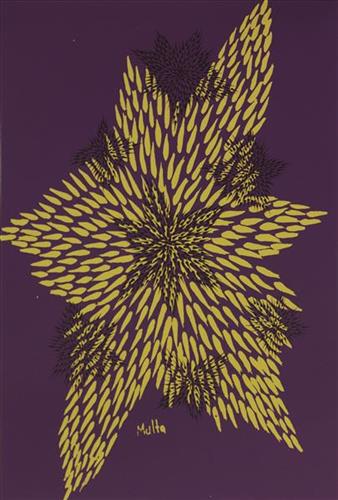
Ininti at Muruntji

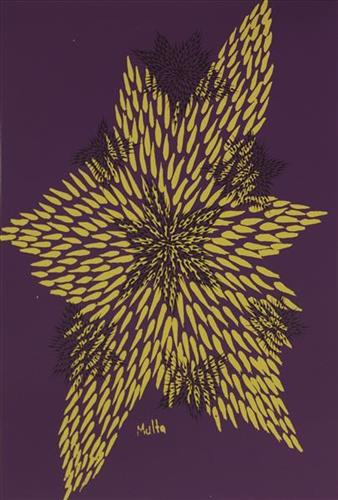
This painting depicts the bush seeds that come from the ininti tree (batwinged coral tree).  The tree is native to the Western Desert of Central Australia, growing in sand around creek beds. The ininti grow abundantly in Muruntji country where the artist has spent much time collecting the seeds. Muruntji is west of Kungkayunti (Browns Bore), the outstation where the artist’s family is from. Both Patricia Multa, and her daughter Virgillia Multa paint the ininti at Muruntji, expressing the colours and movement of the ininti tree and its seeds and flowers throughout the seasons. Patricia remembers collecting the seeds when she was a child and making them into necklaces. The seeds can be found in the sand, or inside the pods still on the trees. The seeds naturally grow in varying colours from dark reds to light yellows. The flowers are equally vibrant, ranging from rich oranges into reds. Ininti are still collected today and made into jewellery at Ikuntji Artists. 

220282196668


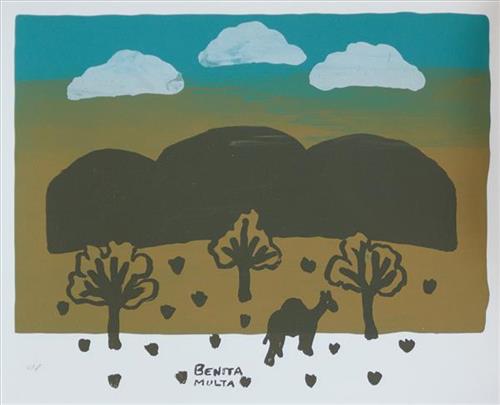
Kungkayunti

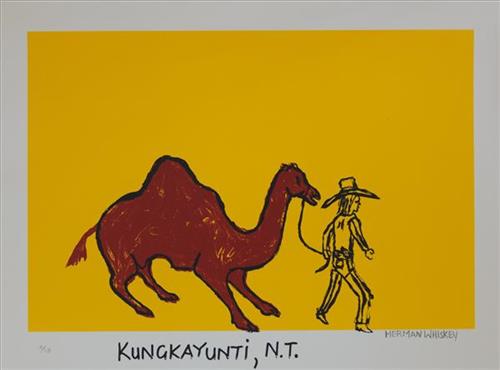
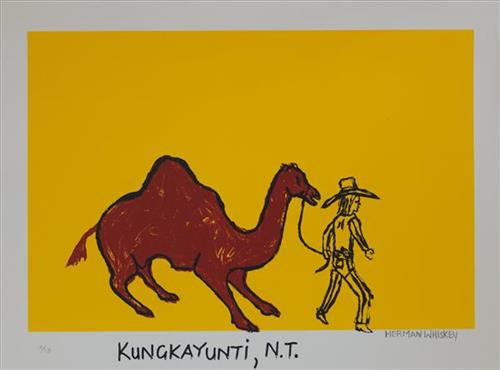
“The tracker is travelling along with his Kamula (camel) in Kungkayunti (Brown’s Bore). This is an old story and I was handed this story down by family.”

220282196667


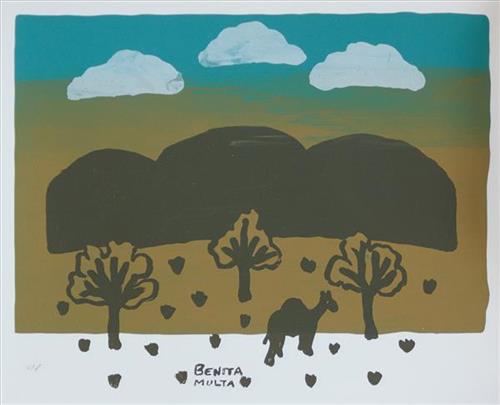
Kungkayunti

“The tracker is travelling along with his Kamula (camel) in Kungkayunti (Brown’s Bore). This is an old story and I was handed this story down by family.”

220282196650


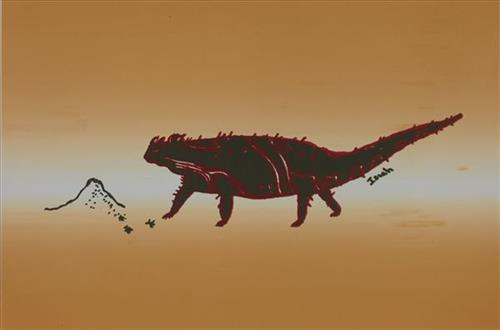
Thorny Devil Lizard

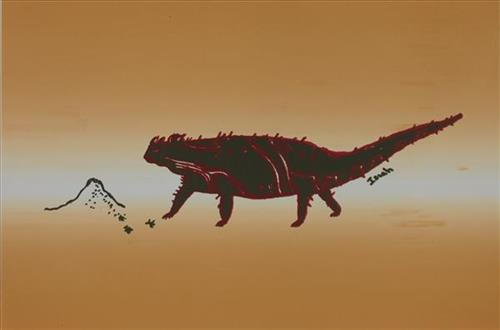
“The Thorny Devil Lizard lives off the little ants, he eats them. The water runs down his back that’s what he drinks. He only lives on one sand hill.” Isiah Jugadai about his print. 

220282196649


Thorny Devil Lizard

“The Thorny Devil Lizard lives off the little ants, he eats them. The water runs down his back that’s what he drinks. He only lives on one sand hill.” Isiah Jugadai about his print. 

220282196635


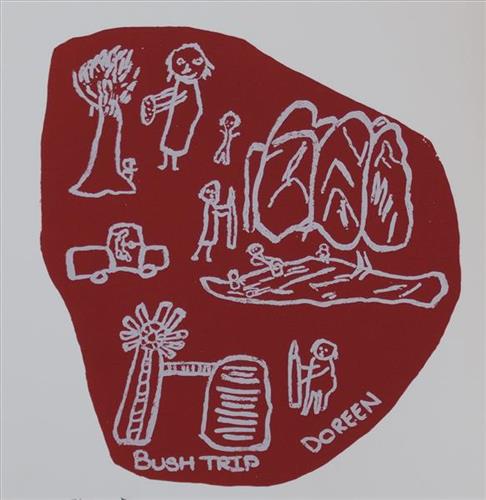
Bush Trip

“When we were kids we used to go for bush trip in the afternoon. We would jump on the back of the ute and drive out to go swimming at the dam. It was such a wonderful time.”