220982378957


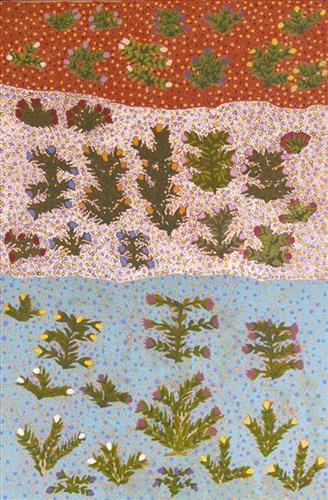
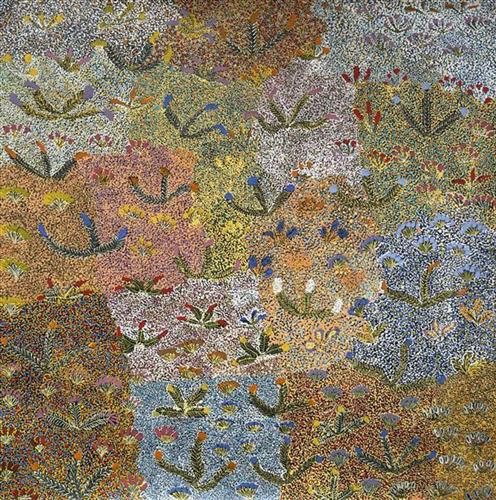
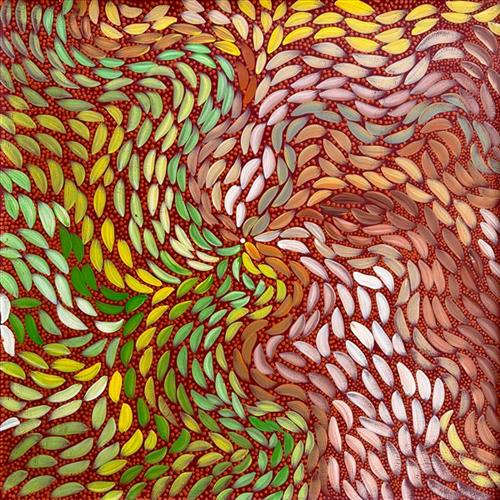
Alana Ngwarraye Holmes – Wild Flowers

Out in the plain after the rain the wild flowers grow and bloom, I see these flowers on my mother’s country.

The plant has pretty flowers, we take them home and show them to the children. They are a beautiful purple, yellow and pink colour.

220982379102


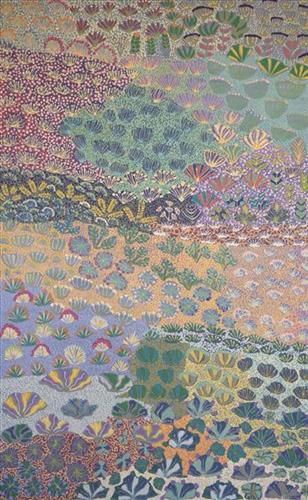
Julieanne Ngwarraye Morton – My Country, My Bush Medicine

My Mother, Lilly Kemarre, taught me to paint. She likes to paint her Mother’s and Father’s country from the old days, when they used to live off of the land.

The landscape changes during the different seasons in the year. I paint the dried flowers and bushes from last season as well as the new plants that come after the rain. These plants have special meanings and uses for us. I have been taught how to read the country, and now I teach my children these skills.

Julieanne’s painting’s are inspired by her Mother’s stories of the old days, walking and living on their land, and also of her own experience of life out here in Alyawarr country.

220282379125


Tali at Kungkayunti

This painting shows the birds eye view of the tali tali (sandhills) at Kungkayunti (Brown’s Bore). This is the country of Joe Tjakamarra Multa, the father of Douglas Multa, Agnes Multa, Lisa Multa, Alison Multa, Rephina Multa, Benita Multa and Patricia Multa and the grandfather to their children. The tali tali are a short walk from where the family lived and the children of Joe grew up.

Lisa remembers walking up the tali tali with her sister, Agnes Multa, who was the same age as her. When Lisa got married she brought her partner to see those tali tali. From the tali tali, a 360-degree view can be seen of the surrounding country. The area is abundant with bush tucker, especially bush tomatoes and bush banana.

Kungkayunti is an important place for the travelling Tjukurrpa of the ancestral Arrernte women who travelled 600 kms from Ntaria (Hermannsburg) to Kintore, past Kulpitarra (Outstation) to attend to women’s business. Kungkayunti is the place where the women first camped. On their long journey, the women stopped at Kunkayunti (Brown’s Bore) to camp, rest, eat and dance. When the women reached their destination, they danced, shared their stories and renewed their law. Those women turned into stone and can be seen today. Annual events continue today to strengthen this Tjukurrpa.
221282379097


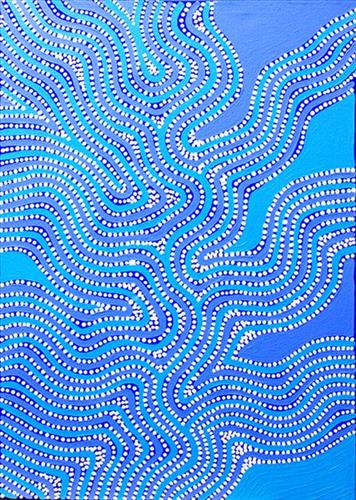
Ngayuku Walka / My Design

Walka means design or pattern. Artists use this title to describe artworks that are pattern based rather than descriptive or telling a story.

220982379340


Sevania Kemarre Bonney – My View of Country

Sevania was born in Soapy Bore, Utopia and started to paint when she was teenager. She learnt the way to paint landscape and bush medicine from her mother Elizabeth Ngwarraye Bonney and grandmother Eileen Kemarre Bonney, a former health worker and artist.

Sevania finds painting soothing and enjoys sharing this activity with her twin daughters Dakota and Latoya,  so they can learn as she did with her mother and grandmother.

Knowing your country is an important part of living in a remote community like Ampilatwatja. Knowing when and where to go hunting and gathering, knowing where there is ‘soakage’ (where you can dig for water), traveling with family for ceremonies, and maintaining a connection with the land.

“This is my country, my view of country.”

The community of Ampilatwatja made a conscious decision not to paint ‘altyerr’(dreaming stories). The artists paint their country where those stories sit.

220982379632


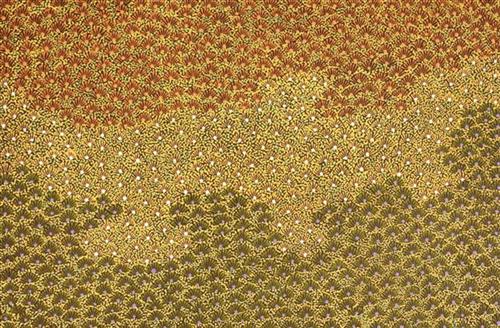
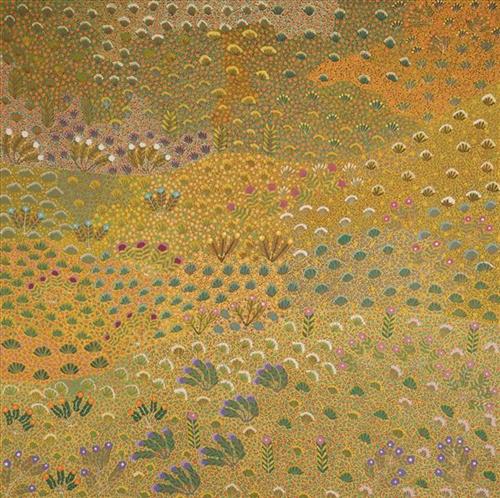
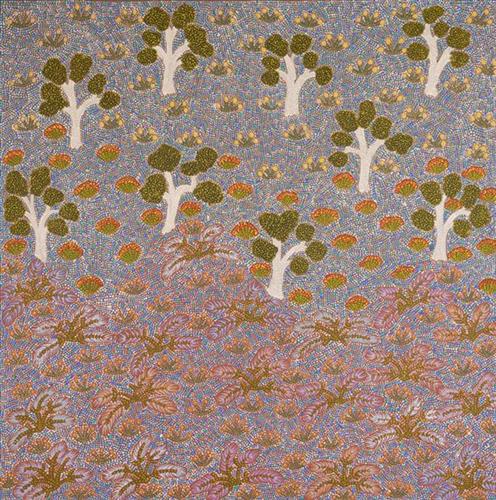
Kindy Kemarre Ross – Irrultja is My Country

My country is called Irrultja, it’s past the hill and the dried-up creek from here, it’s a nice place, my dad’s country too, and my Mum’s country is here in Ampilatwatja. When I go to see my country, we always go to gather bush medicine, we always climb up the hill that’s in the south, we always go there.

We like to look out over the land and there are lots of flowers and bush medicine up there. I love my countryside; I see the nice flowers and gather bush medicine for me and my family. I like to paint a mix of wildflowers and bush medicines in all my paintings because it reminds me of my favourite part of my country and when it rains the flowers come out. Yeah, my countryside.

The community of Ampilatwatja made a conscious decision not to paint altyerr (dreaming stories). The artists paint their country where those stories sit.

220982380290


Jessie Pula Luck – My Bush Medicine Plants

I was born in Irrultja, my father’s country. I paint therrpeyt, a plant with red and pink flowers, it is my family symbol. You can suck the flowers to get a sweet honey from. You can wash your body with the leaves to heal sores and clean your body. I paint arreth which grows in the rocky ground and helps fix my sore throat when I make a hot tea from the leaves. I love to paint, I feel happy when I paint, I feel busy and good.

220982380248


Sandra Pula Teece – Bush Medicine Plants

This is Antarrengeny Country, sandhill country, my fathers country. 

After rain the sandhills are abundant with flowers, grasses and bush medicine plants.

This painting depicts the landscape filled with arrwelth (Parakeelya flowers), alekw (Acacia plants) and aywert (spinifex grass).

115682380109


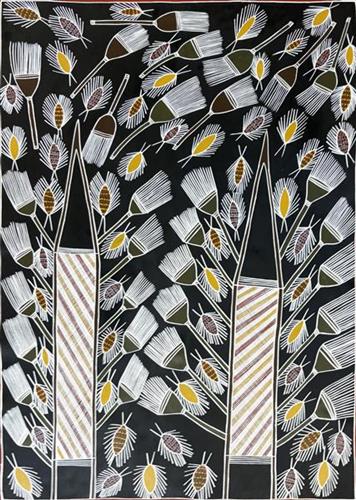
Wurrutjara (Sand Palm)

Seen in and around Ramingining, the sand palm is a small, slender palm, growing to about 7 m tall. It is fire tolerant and usually grows in environments where it is exposed to frequent fires. Aboriginal people use this palm as the fruits are edible and the heart  can be eaten, either raw or roasted. The core of the stem is pounded and made into a drink which was used to treat coughs, colds, chest infections, diarrhoea, and tuberculosis.

114182380542


Yirmangka – Yirmangka ( Bush Medicine)

This is from a series of small works from our main artists depiocting the love of collecting from the bush traditional medicines and tucker.