114182380459


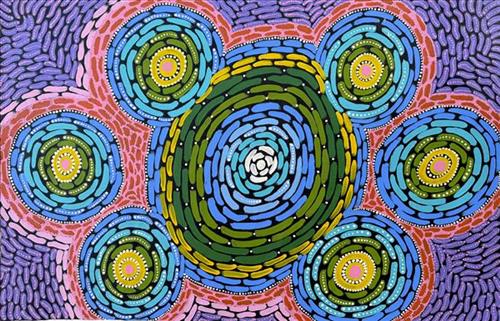
Kungkarrangkalpa (Seven Sisters)

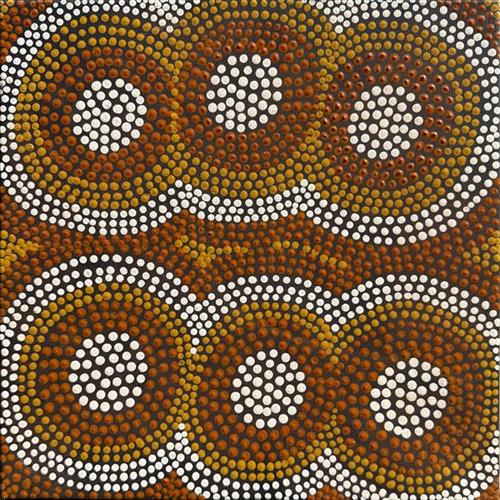
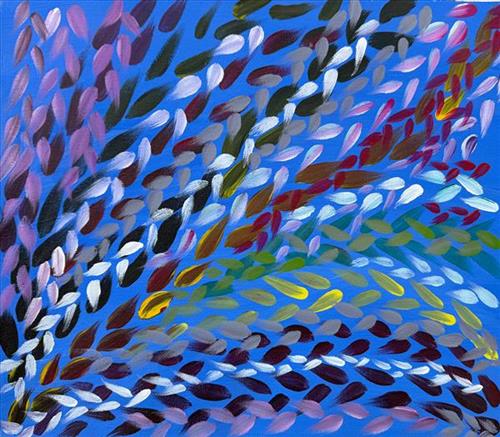
‘Kungkarrangkalpa’ (The Seven Sisters or Pleaides) is significant Tjukurrpa (dreamtime). Its origins you may be familiar with in astronomy and its connection to ‘Wati Nyiru’ (Magic Man or Orion).  The roots of this dreaming stems across indigenous groups around the world. The Australian Aboriginal songline is one part to the whole dreaming which can be traced all around the world. The ladies of the Ngaanyatjarra Lands depict their significant chapter and understanding of the journey of the sisters. The different versions of this story depend on where you live and the significance’s of local Tjukurrpa places.

Nyiru fell in love with the sisters but he was of the wrong skin group to marry, but he still pursued them on their journey. The sisters travel across the land to escape Nyiru’s unwanted attentions, but he is persistent and always finds them. There are significant land forms which can be sited today that evidence this dreaming. As Nyiru is chasing the sisters he tries to catch them by using magic to turn into the most tempting kampurarrpa (bush tomato) and the most beautiful Yirli (wild fig tree), for them to eat and camp under. However, the sisters are knowledgeable of his magic and too clever for Nyiru who they outwit again and again. They go hungry and run through the night rather than be caught by him. As the journey continues, Nyiru gets so frustrated at the wit of the sisters that he uses his magic to make the oldest sister sick to try and get closer to her. The other sisters rescue the big sister and nurse her back to health. It is said he also captures the youngest sister, but with the help of the oldest sister, she escapes back to her sisters who are waiting for her. Eventually, the sisters fly into the sky to escape Nyiru, forming the constellation. Nyiru felt lonely, longing for the sisters who were so far away. Nyiru used his magic to go to the sky, forever in pursuit.

114182380458


Yirmangka – Yirmangka ( Bush Medicine)

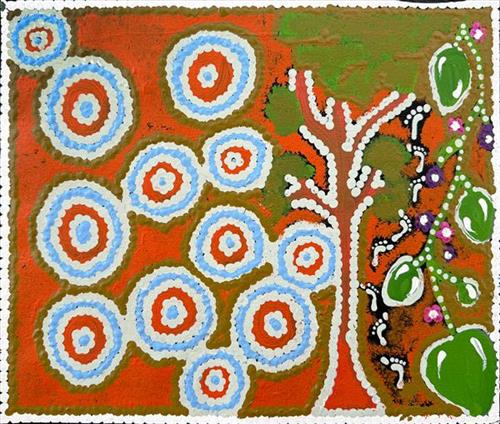
This is from a series of small works from our main artists depiocting the love of collecting from the bush traditional medicines and tucker.

114182380457


Women collecting bush foods

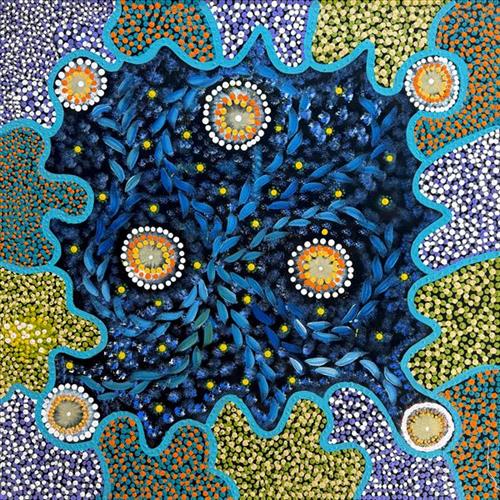
The Anangu people travelled vast desert landscapes, following the seasons for food and shelter, deeply attuned to the rhythms of the land. This resilience and wisdom embedded in traditional bush foods that sustained them across generations.

Maku (Witchety Grubs), with their creamy, nutty flavour, represent survival and the resourcefulness to draw nourishment from deep within tree roots. Kampurarrpa (Desert Raisins), small and tangy, add brightness and essential nutrients to desert diets, thriving under intense sun.

Ipalu (Bush Banana), a climbing vine with crisp, slender fruits, offers fibre and hydration—a refreshing staple in arid climates. Ili (Bush Figs), with their mild sweetness, grow from rugged trees, offering a delicate treat in the harsh terrain.

Through vibrant colours and intricate designs, these bush foods embody the spirit of Ngaanyatjarra culture, each a testament to the land’s gifts and the knowledge passed through generations.

114182380456


Kungkarrangkalpa (Seven Sisters)

‘Kungkarrangkalpa’ (The Seven Sisters or Pleaides) is significant Tjukurrpa (dreamtime). Its origins you may be familiar with in astronomy and its connection to ‘Wati Nyiru’ (Magic Man or Orion).  The roots of this dreaming stems across indigenous groups around the world. The Australian Aboriginal songline is one part to the whole dreaming which can be traced all around the world. The ladies of the Ngaanyatjarra Lands depict their significant chapter and understanding of the journey of the sisters. The different versions of this story depend on where you live and the significance’s of local Tjukurrpa places.

Nyiru fell in love with the sisters but he was of the wrong skin group to marry, but he still pursued them on their journey. The sisters travel across the land to escape Nyiru’s unwanted attentions, but he is persistent and always finds them. There are significant land forms which can be sited today that evidence this dreaming. As Nyiru is chasing the sisters he tries to catch them by using magic to turn into the most tempting kampurarrpa (bush tomato) and the most beautiful Yirli (wild fig tree), for them to eat and camp under. However, the sisters are knowledgeable of his magic and too clever for Nyiru who they outwit again and again. They go hungry and run through the night rather than be caught by him. As the journey continues, Nyiru gets so frustrated at the wit of the sisters that he uses his magic to make the oldest sister sick to try and get closer to her. The other sisters rescue the big sister and nurse her back to health. It is said he also captures the youngest sister, but with the help of the oldest sister, she escapes back to her sisters who are waiting for her. Eventually, the sisters fly into the sky to escape Nyiru, forming the constellation. Nyiru felt lonely, longing for the sisters who were so far away. Nyiru used his magic to go to the sky, forever in pursuit.

114182380455


Emus eating quandongs

In this painting Dorothy has painted two emus and their chicks eating quandongs or native peach (red dots) from the quandong tree. The birds in the sky have quandongs in their beaks as they also enjoy eating the fruit. Quandongs were a traditionally a significant food source for Yarnangu in the Ngaanyatjarra Lands.

114182380453


Kungkarrangkalpa (Seven Sisters)

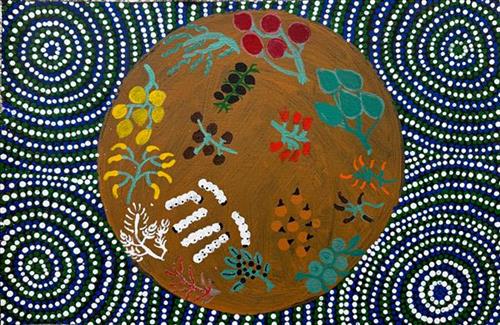
‘Kungkarrangkalpa’ (The Seven Sisters or Pleaides) is significant Tjukurrpa (dreamtime). Its origins you may be familiar with in astronomy and its connection to ‘Wati Nyiru’ (Magic Man or Orion).  The roots of this dreaming stems across indigenous groups around the world. The Australian Aboriginal songline is one part to the whole dreaming which can be traced all around the world. The ladies of the Ngaanyatjarra Lands depict their significant chapter and understanding of the journey of the sisters. The different versions of this story depend on where you live and the significance’s of local Tjukurrpa places.

Nyiru fell in love with the sisters but he was of the wrong skin group to marry, but he still pursued them on their journey. The sisters travel across the land to escape Nyiru’s unwanted attentions, but he is persistent and always finds them. There are significant land forms which can be sited today that evidence this dreaming. As Nyiru is chasing the sisters he tries to catch them by using magic to turn into the most tempting kampurarrpa (bush tomato) and the most beautiful Yirli (wild fig tree), for them to eat and camp under. However, the sisters are knowledgeable of his magic and too clever for Nyiru who they outwit again and again. They go hungry and run through the night rather than be caught by him. As the journey continues, Nyiru gets so frustrated at the wit of the sisters that he uses his magic to make the oldest sister sick to try and get closer to her. The other sisters rescue the big sister and nurse her back to health. It is said he also captures the youngest sister, but with the help of the oldest sister, she escapes back to her sisters who are waiting for her. Eventually, the sisters fly into the sky to escape Nyiru, forming the constellation. Nyiru felt lonely, longing for the sisters who were so far away. Nyiru used his magic to go to the sky, forever in pursuit.
115682380568


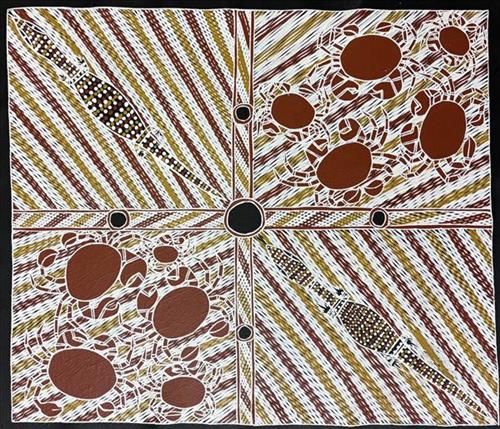
Djang’kawu sisters Creation Story featuring mud crabs and lizards

This painting is part of the Djang’kawu sisters Creation Story. The details of this story can vary according to clan and/or country, but the central story is the same, which is one of fertility and procreation.

The Djang’kawu sisters gave birth to all the Dhuwa Moeity clans giving them language, land, law/lore, ceremony, songs and dances. As they travelled westward from Yirrkala, they travelled through all the dhuwa lands naming all the plants and animals and showed people how to use them. At the Glyde River, they hung their sacred dilly bags on a tree whilst they hunted. Men came and took the dilly bags and learnt all the songs and dnaces. Now the men condiuct all the ceremonies. The sisters decided to accept this as they (women) always retain their power as the bearer of children.

This painting is part of this story, it is a saltwater story featuring mud crabs, longbums and a water lizard and a drinking hole.

220982380593


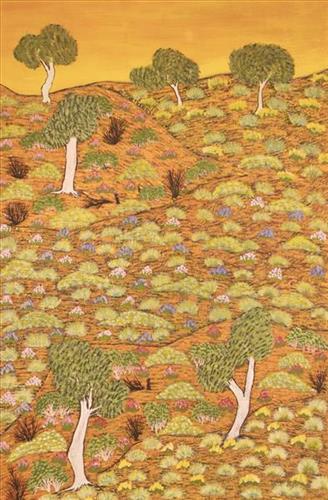
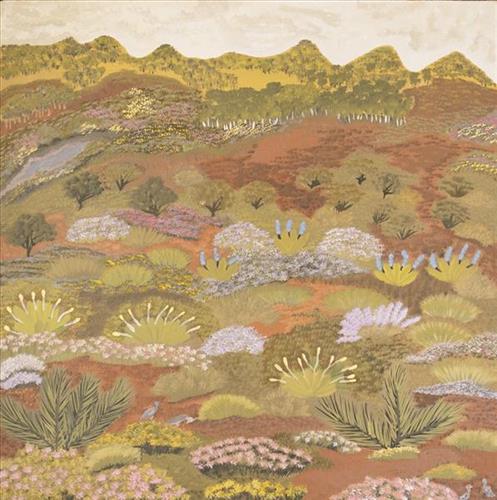
Yvonne Ngwarraye Bonney – My Hunting Country

Yvonne has painted her favourite hunting country after rain. “This is when the storm ants come and make the goannas nice and fat, the ground is soft for digging honey ants and it’s when the bush foods and grasses come up and grow strong. The country is normally bare with small stones and rocks everywhere, but after rain, everything comes alive.”

Yvonne is a tremendous hunter, she is skilled in reading tracks and reading the land. Painting hunting country is important and special to her. 

The community of Ampilatwatja made a conscious decision not to paint ‘altyerr’(dreaming stories). The artists paint their country where those stories sit.

220982380802


Kathleen Nanima Rambler – My Fathers Country

I paint the country of my Father and Mother and where they grew up, near Barrow Creek.

This is the painting of my Father’s country, where I grew up. When we would go hunting, we always climbed those hills. We would take the kids hunting too and take photos of the hills.

I use bright colours and beautiful attention to detail expresses the love and joy that I have for the country closest to my heart.

The community of Ampilatwatja made a conscious decision not to paint altyerr (dreaming stories). The artists paint their country where those stories sit.

115682380785


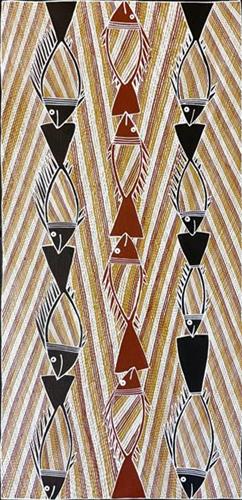
JB Fisher – Wuldulbal/badju (bream)

JB paints stories from his Dhuwa homeland in northeast Arnhem Land. Stories are passed on either paternally or maternally, and JB would have learnt these stories from his ancestors. The cross-hatching style is a traditional painting style of this area and can represent elements such as water, air and wind.

JB’s paintings often feature totemic animals of the fresh waters of north east Arnhem Land.