359709482381786


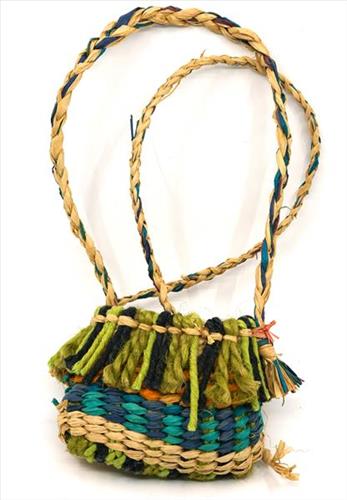
Bag

Art Centre notes: 

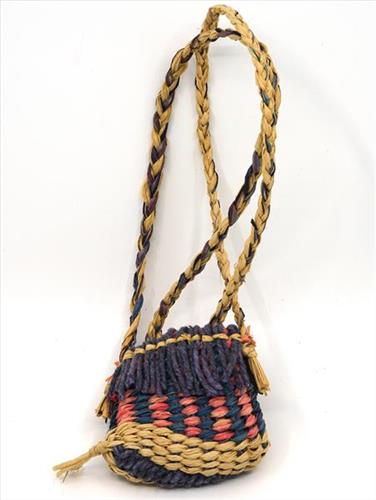
The basket / bag is made of natural raffia / cotton / jute / sea chord.

It is made using a traditional ‘one twist’ method. It has a thin / thick plaited strap and long tassles underneath. It has long tassels above and/or below.

The dyes are commercial and colour fast. 

Size of bowl:  9 x 10

Length of strap: 40cm

359709482381784


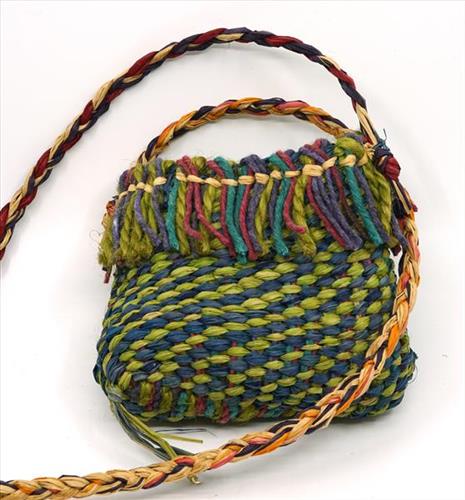
Bag

Art Centre notes: 

The basket / bag is made of natural raffia / cotton / jute / sea chord.

It is made using a traditional ‘one twist’ method. It has a thin / thick plaited strap and long tassles underneath. It has long tassels above and/or below.

The dyes are commercial and colour fast. 

Size of bowl:  14 x 14cm

Length of strap: 40cm

359709482381783


Bag

Art Centre notes: 

The basket / bag is made of natural raffia / cotton / jute / sea chord.

It is made using a traditional ‘one twist’ method. It has a thin / thick plaited strap and long tassles underneath. It has long tassels above and/or below.

The dyes are commercial and colour fast. 

Size of bowl:  8 x 10cm

Length of strap: 40cm

377810582381839


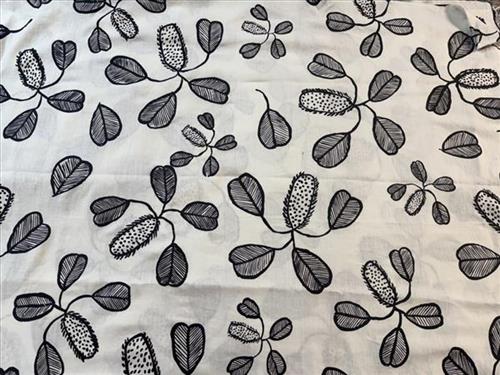
Manyawok (Cheeky Yam)

This design depicts the cheeky yam, which is found on the artist’s country, near the outstation of Mumeka in central Arnhem Land. Yams are an important bush food that are collected during the wet season.

Unlike other yams that can be eaten roasted, the cheeky yam can be poisonous if not properly prepared. The preparation process of the yam traditionally takes two days. Firstly, the yams are dug up with a digging stick and boiled over a fire. They are then peeled and sliced into thin strips, which are placed in a special dillybag woven by women from pandanus leaves. The yam-laden dillybag is then strung from an overhanging branch into a river, so the bag just touches the flowing fresh water. The cheeky yams are left like this overnight to allow the running water to remove the toxins. The next morning, people return and collect the dillybag, and leave the yam pieces in full sunlight to dry out. Finally, when the yam pieces have dried in the sun for a day, they are ready to eat.
377810582381838


Manyawok (Cheeky Yam)

This design depicts the cheeky yam, which is found on the artist’s country, near the outstation of Mumeka in central Arnhem Land. Yams are an important bush food that are collected during the wet season.

Unlike other yams that can be eaten roasted, the cheeky yam can be poisonous if not properly prepared. The preparation process of the yam traditionally takes two days. Firstly, the yams are dug up with a digging stick and boiled over a fire. They are then peeled and sliced into thin strips, which are placed in a special dillybag woven by women from pandanus leaves. The yam-laden dillybag is then strung from an overhanging branch into a river, so the bag just touches the flowing fresh water. The cheeky yams are left like this overnight to allow the running water to remove the toxins. The next morning, people return and collect the dillybag, and leave the yam pieces in full sunlight to dry out. Finally, when the yam pieces have dried in the sun for a day, they are ready to eat.
377810582381837


Manyawok (Cheeky Yam)

This design depicts the cheeky yam, which is found on the artist’s country, near the outstation of Mumeka in central Arnhem Land. Yams are an important bush food that are collected during the wet season.

Unlike other yams that can be eaten roasted, the cheeky yam can be poisonous if not properly prepared. The preparation process of the yam traditionally takes two days. Firstly, the yams are dug up with a digging stick and boiled over a fire. They are then peeled and sliced into thin strips, which are placed in a special dillybag woven by women from pandanus leaves. The yam-laden dillybag is then strung from an overhanging branch into a river, so the bag just touches the flowing fresh water. The cheeky yams are left like this overnight to allow the running water to remove the toxins. The next morning, people return and collect the dillybag, and leave the yam pieces in full sunlight to dry out. Finally, when the yam pieces have dried in the sun for a day, they are ready to eat.
377810582381836


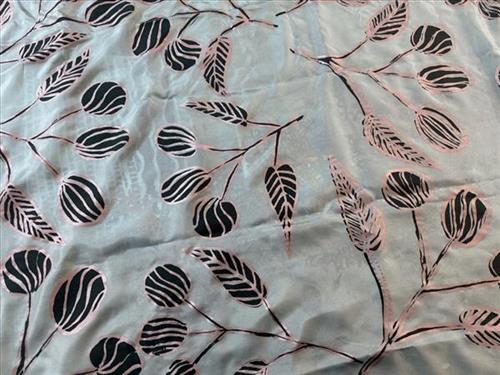
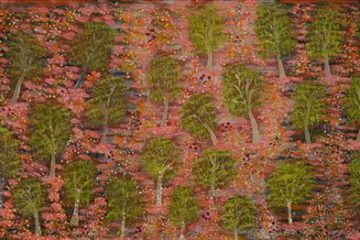
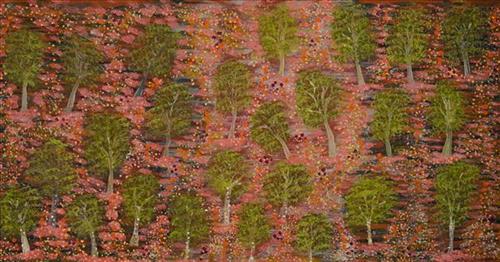
Man-djarduk (Red Bush Apples)

Deborah Wurrkidj is a Kuninjku artist from the Kurulk clan whose country lies around the outstation of Mumeka in central Arnhem Land.

In this design she has depicted man-djarduk (red bush apples) – a sweet, crisp bush food that is a favourite to collect.

Man-djarduk fruits in kurrung and kunumeleng seasons, the build-up and first rains seasons.

116482381923


Pilbara Region

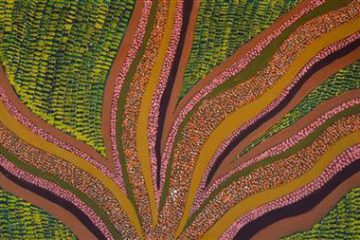
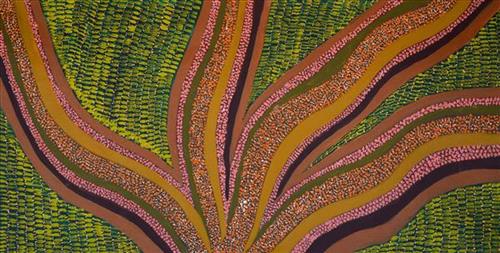
This is a painting of the Claypan Wattle when it is ripe, but it’s poisonous. This shrub starts off as a light green colour and then, as it matures, it gets darker. The flowers are a yellowy orange and also get darker with a bit of black as they are fading away.

116482381922


Pilbara region

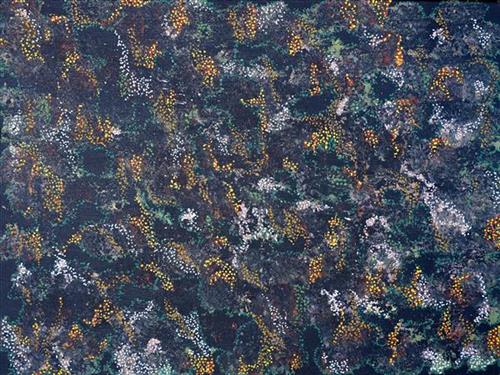
This is a painting of the Claypan Wattle when it is ripe, but it’s poisonous. This shrub starts off as a light green colour and then, as it matures, it gets darker. The flowers are a yellowy orange and also get darker with a bit of black as they are fading away.

116482381921


Bloodheart Tree

This is the bloodheart tree that has the jayimarra flower. The bark can be burnt and rubbed onto skin like a sunscreen, to keep cool.