225182378004


SJB: “Ngayu kuku balkan” (my story). Black State.

Kuku Yalanji (talk of this place) – pronounced Guh-guh Yell-an-gee

Ngayu kuku balkan (my story) – pronounced ngay-yuh guh-guh bul-gun

Wurarr-wurarr (dragonfly) – pronounced oo-rard-oo-rard


Kuku Yalanji people are the Traditional Owners of the celebrated Daintree Region.

Where the rainforest meets the reef and has one of the oldest living Cultures in the creation.

Traditional Lands extends from south of Port Douglas, northbound to the south of Cooktown area and west to the Great Dividing Range.

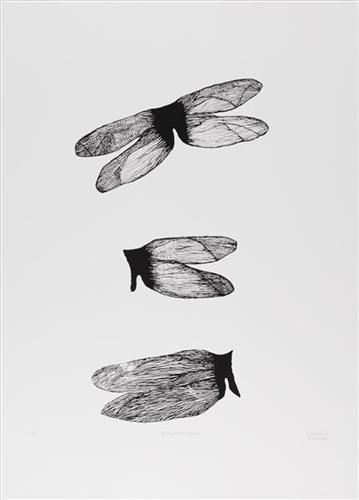
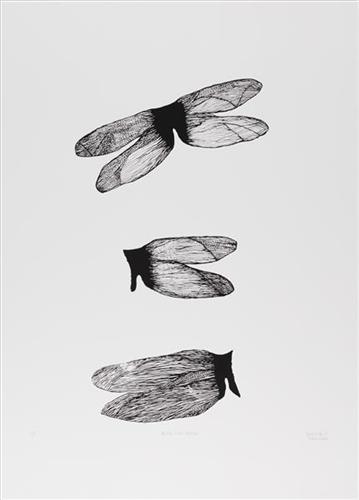
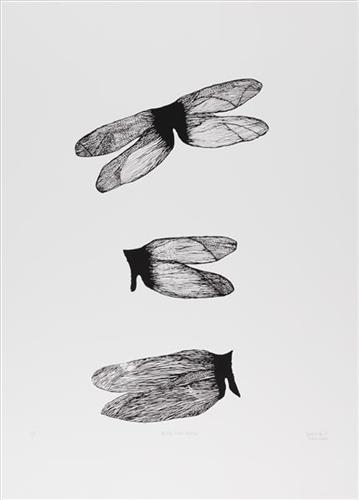
My artwork depicts that this is a portion of ngayu kuku balkan and that each wurarr-wurarr in this artwork represents my transformation.  

For many years a lot of my artwork was created interpreting the dragonfly.  Through my pieces you see how I have changed as a person over time and how the dragonfly has transformed with me; however in this piece I am the dragonfly.   My affiliation with the dragonfly never faded and I am relaxed with the feeling of a peaceful connection when creating it.  

Sheryl J Burchill ©

Printed on Arches BFK Rives 300gsm paper is made in France at the Arches paper mill. The paper is mould-made and crafted from 100% cotton fibers. 

225182378003


SJB: “Ngayu kuku balkan” (my story). Black State.

Kuku Yalanji (talk of this place) – pronounced Guh-guh Yell-an-gee

Ngayu kuku balkan (my story) – pronounced ngay-yuh guh-guh bul-gun

Wurarr-wurarr (dragonfly) – pronounced oo-rard-oo-rard


Kuku Yalanji people are the Traditional Owners of the celebrated Daintree Region.

Where the rainforest meets the reef and has one of the oldest living Cultures in the creation.

Traditional Lands extends from south of Port Douglas, northbound to the south of Cooktown area and west to the Great Dividing Range.

My artwork depicts that this is a portion of ngayu kuku balkan and that each wurarr-wurarr in this artwork represents my transformation.  

For many years a lot of my artwork was created interpreting the dragonfly.  Through my pieces you see how I have changed as a person over time and how the dragonfly has transformed with me; however in this piece I am the dragonfly.   My affiliation with the dragonfly never faded and I am relaxed with the feeling of a peaceful connection when creating it.  

Sheryl J Burchill ©

Printed on Arches BFK Rives 300gsm paper is made in France at the Arches paper mill. The paper is mould-made and crafted from 100% cotton fibers. 

225182378002


SJB: “Ngayu kuku balkan” (my story). Black State.

Kuku Yalanji (talk of this place) – pronounced Guh-guh Yell-an-gee

Ngayu kuku balkan (my story) – pronounced ngay-yuh guh-guh bul-gun

Wurarr-wurarr (dragonfly) – pronounced oo-rard-oo-rard


Kuku Yalanji people are the Traditional Owners of the celebrated Daintree Region.

Where the rainforest meets the reef and has one of the oldest living Cultures in the creation.

Traditional Lands extends from south of Port Douglas, northbound to the south of Cooktown area and west to the Great Dividing Range.

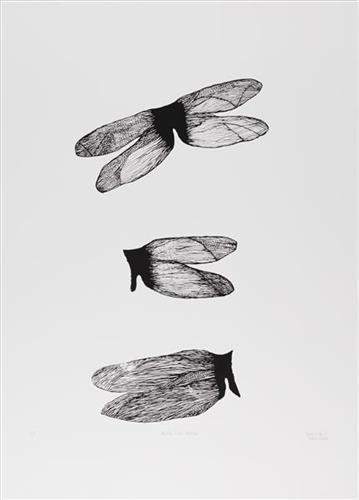
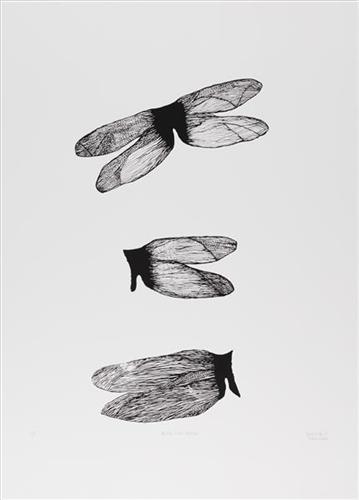
My artwork depicts that this is a portion of ngayu kuku balkan and that each wurarr-wurarr in this artwork represents my transformation.  

For many years a lot of my artwork was created interpreting the dragonfly.  Through my pieces you see how I have changed as a person over time and how the dragonfly has transformed with me; however in this piece I am the dragonfly.   My affiliation with the dragonfly never faded and I am relaxed with the feeling of a peaceful connection when creating it.  

Sheryl J Burchill ©

Printed on Arches BFK Rives 300gsm paper is made in France at the Arches paper mill. The paper is mould-made and crafted from 100% cotton fibers. 

225182378001


SJB: “Ngayu kuku balkan” (my story). Black State.

Kuku Yalanji (talk of this place) – pronounced Guh-guh Yell-an-gee

Ngayu kuku balkan (my story) – pronounced ngay-yuh guh-guh bul-gun

Wurarr-wurarr (dragonfly) – pronounced oo-rard-oo-rard


Kuku Yalanji people are the Traditional Owners of the celebrated Daintree Region.

Where the rainforest meets the reef and has one of the oldest living Cultures in the creation.

Traditional Lands extends from south of Port Douglas, northbound to the south of Cooktown area and west to the Great Dividing Range.

My artwork depicts that this is a portion of ngayu kuku balkan and that each wurarr-wurarr in this artwork represents my transformation.  

For many years a lot of my artwork was created interpreting the dragonfly.  Through my pieces you see how I have changed as a person over time and how the dragonfly has transformed with me; however in this piece I am the dragonfly.   My affiliation with the dragonfly never faded and I am relaxed with the feeling of a peaceful connection when creating it.  

Sheryl J Burchill ©

Printed on Arches BFK Rives 300gsm paper is made in France at the Arches paper mill. The paper is mould-made and crafted from 100% cotton fibers. 

225182378000


SJB: “Ngayu kuku balkan” (my story). Black State.

Kuku Yalanji (talk of this place) – pronounced Guh-guh Yell-an-gee

Ngayu kuku balkan (my story) – pronounced ngay-yuh guh-guh bul-gun

Wurarr-wurarr (dragonfly) – pronounced oo-rard-oo-rard


Kuku Yalanji people are the Traditional Owners of the celebrated Daintree Region.

Where the rainforest meets the reef and has one of the oldest living Cultures in the creation.

Traditional Lands extends from south of Port Douglas, northbound to the south of Cooktown area and west to the Great Dividing Range.

My artwork depicts that this is a portion of ngayu kuku balkan and that each wurarr-wurarr in this artwork represents my transformation.  

For many years a lot of my artwork was created interpreting the dragonfly.  Through my pieces you see how I have changed as a person over time and how the dragonfly has transformed with me; however in this piece I am the dragonfly.   My affiliation with the dragonfly never faded and I am relaxed with the feeling of a peaceful connection when creating it.  

Sheryl J Burchill ©

Printed on Arches BFK Rives 300gsm paper is made in France at the Arches paper mill. The paper is mould-made and crafted from 100% cotton fibers. 

107582378729


Ray

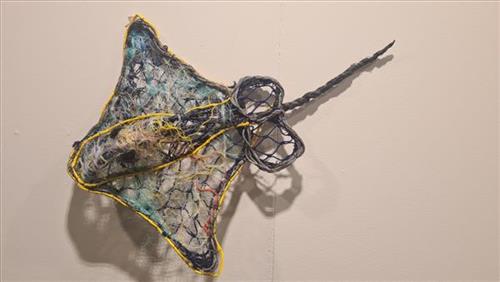
A variety of rays are found around our island home, from the shallow waters of the shoreline to the reefs and deeper waters. This ray has been created by stitching reclaimed fishing net, rope and twine. Reclaimed fishing nets (also known as ghost nets) are derelict fishing nets that drift aimlessly at sea indiscriminately fishing, killing turtles, other creatures and tangling boat propellers. We are recycling these nets, incorporating other flotsam and making products for enjoyment and use. By purchasing this artwork you are helping indigenous communities who collect this net and other groups who make items to develop economic opportunities. We hope this product brings you great joy and helps spread the ghost net message

115682378146


Bathi (Pandanus Basket)

Yolŋu weavers of Arnhem Land create utilitarian, ceremonial, and decorative pieces using naturally sourced materials. This Bathi (Pandanus Basket) is made from young Pandanus spiralis leaves, harvested with a wooden hook, stripped of prickles, and dried to create strong, resilient fibres. These fibres are then twisted, coiled, or woven using various techniques to produce both functional and decorative baskets.

Typically, Bathi are made using a coiling technique which was adapted from techniques used by Indigenous women throughout Southeast Australia. Introduced to Arnhem Land weavers in the 1930’s as Missionaries began commissioning pieces in this style.

Bula’bula weavers exclusively use natural dyes, derived from locally sourced roots, leaves and grasses. These pigments are extracted and infused into pandanus fibres by boiling over an open fire, producing the rich, vibrant colours characteristic of contemporary Yolŋu weavings.

115682378144


Dhawurr or Batjbarra (Fish Trap)

Dhawurr, or Batjbarra, is a traditional fishing method used by Indigenous people in the Arafura Swamp and surrounding wetlands of Arnhem Land. Yolŋu now prefer the modern fishing methods of reels and bait, however, weavers continue to make Batjbarra for cultural conservation and to be sold as decorative pieces.

When used for practical purposes, the Batjbarra was placed into the river with the opening facing oncoming fish. The woven tunnel trapped the fish with the weave tight enough to prevent escape but loose enough to allow water to freely flow through. The traps tapered so that when they were submerged, the water pressure wedged them into place.

The primary material used in this piece is the young, green leaves of the Pandanus spiralis tree, that were harvested using a long wooden hook. The leaves are stripped of their prickles, with the smaller fibres being dried to produce a strong, resilient material. These fibres are then twisted, coiled, or combined using various techniques to create the fish trap.

Bula’bula weavers exclusively use natural dyes, derived from locally sourced roots, leaves and grasses. These pigments are extracted and infused into pandanus fibres by boiling over an open fire, producing the rich, vibrant colours characteristic of contemporary Yolŋu weavings.

111582378402


Kulyakartu

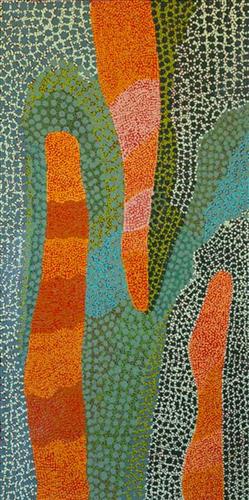
“Kulyakartu, with the sand dunes and the plants, the grass. The season is cold time, after rain, after the rain when it gets green and the different types of grass grow. We are painting about Kulyakartu, I am painting with nana (Nola), the landscape and the colours after the rain. There’s alot of the different plants, especially that one type of grass called yuwinyji that you grind. You take the seed of the grass for the damper.”

–
 Jenny Butt


“This grass, you take and you do it with the rock, you grind it. You make the seed drop and you clean it up and grind it, you shake it and you make damper. We lived on that, with our families. My nana and my mum, they used to collect that, and then they get the rock, do it on the floor, hard one like this. Tastes nice, Juri (beautiful), they make it into damper. Its nice, soft one. They used to go out and get it, my Nana used to do it, and my mum, while my dad goes out hunting, nyarru.”

–
 Nola Taylor


Kulyakartu is a large area in the far north of the Martu homelands, near the Percival Lakes region of Western Australia’s Great Sandy Desert. Kulyakartu is mostly flat grass Country, and is known as a good hunting area. 


The traditional lands of the Martu people encompass the Great Sandy Desert and Rudall River regions of Western Australia, an enormous tract dominated by distinctive red tali, or tuwa (sandhills). These sandhills present an unforgiving landscape; sparse vegetation covers a seemingly never ending expanse of dunes, and yet these lands and the location of resources within them was known intimately by its pujiman (traditional, desert dwelling) inhabitants.

Depicted in this work are traditional types of edible seeds that were gathered during the pujiman (traditional, desert dwelling) period. At this time Martu would traverse very large distances annually in small family groups, moving seasonally from water source to water source, and hunting and gathering bush tucker as they went. Whilst desert life has moved away from mobile hunter-gatherer subsistence throughout the course of the twentieth century, bush tucker continues to be a significant component of the modern Martu diet. Hunting and gathering bush tucker remains equally valuable as an important cultural practice that is passed on intergenerationally.

Popular plants from which seeds can be harvested include kalaru (samphire, salt bush), yuwinyji and marnkalpa (spinifex species). jiwa were grinding stones for grinding seeds into flour.
 

111582378401


Kulyakartu

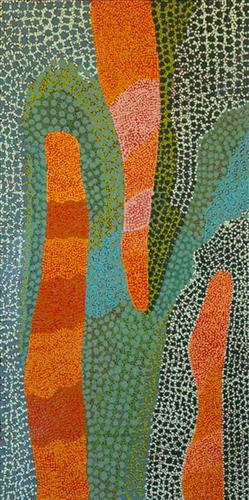
“Kulyakartu, with the sand dunes and the plants, the grass. The season is cold time, after rain, after the rain when it gets green and the different types of grass grow. We are painting about Kulyakartu, I am painting with nana (Nola), the landscape and the colours after the rain. There’s alot of the different plants, especially that one type of grass called yuwinyji that you grind. You take the seed of the grass for the damper.”

–
 Jenny Butt


“This grass, you take and you do it with the rock, you grind it. You make the seed drop and you clean it up and grind it, you shake it and you make damper. We lived on that, with our families. My nana and my mum, they used to collect that, and then they get the rock, do it on the floor, hard one like this. Tastes nice, Juri (beautiful), they make it into damper. Its nice, soft one. They used to go out and get it, my Nana used to do it, and my mum, while my dad goes out hunting, nyarru.”

–
 Nola Taylor


Kulyakartu is a large area in the far north of the Martu homelands, near the Percival Lakes region of Western Australia’s Great Sandy Desert. Kulyakartu is mostly flat grass Country, and is known as a good hunting area. 


The traditional lands of the Martu people encompass the Great Sandy Desert and Rudall River regions of Western Australia, an enormous tract dominated by distinctive red tali, or tuwa (sandhills). These sandhills present an unforgiving landscape; sparse vegetation covers a seemingly never ending expanse of dunes, and yet these lands and the location of resources within them was known intimately by its pujiman (traditional, desert dwelling) inhabitants.

Depicted in this work are traditional types of edible seeds that were gathered during the pujiman (traditional, desert dwelling) period. At this time Martu would traverse very large distances annually in small family groups, moving seasonally from water source to water source, and hunting and gathering bush tucker as they went. Whilst desert life has moved away from mobile hunter-gatherer subsistence throughout the course of the twentieth century, bush tucker continues to be a significant component of the modern Martu diet. Hunting and gathering bush tucker remains equally valuable as an important cultural practice that is passed on intergenerationally.

Popular plants from which seeds can be harvested include kalaru (samphire, salt bush), yuwinyji and marnkalpa (spinifex species). jiwa were grinding stones for grinding seeds into flour.