377810582371095


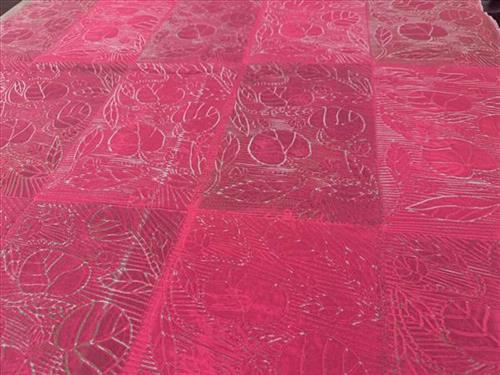
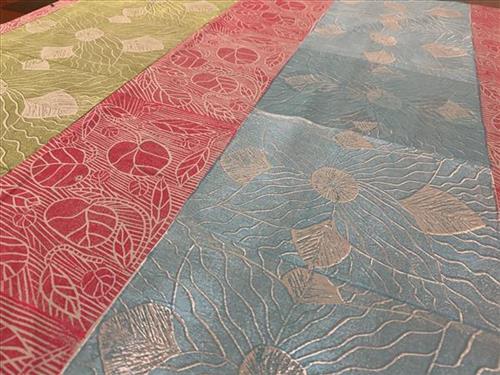
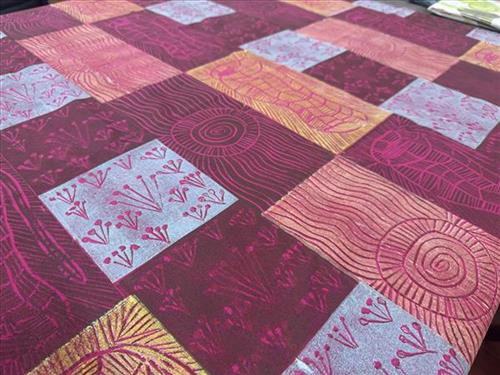
Wayuk (Waterlily)

Wayuk (Waterlily) Nymphaea violacea. 

The stem of wayuk is a popular bushfood and the beautiful flower is enjoyed across Arnhem Land. 

This fabric was created using the linocut printing technique. The lino tile has been carved by the artist in Maningrida, and has been printed by hand using a variety of colours and layers. The linocut technique ensures each textile piece is a one-off, limited edition piece. Bábbarra Women’s Centre supports the economic independence of Indigenous women in the Arnhem Land community of Maningrida, Northern Territory, Australia. Designs created by the women at Bábbarra reflect strong cultural knowledge, which is passed down to younger generations through their textile design practice.

377810582371094


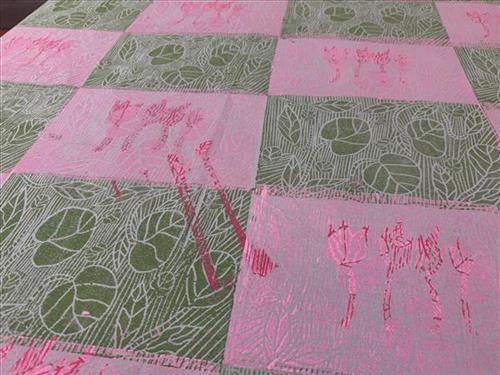
Wayuk (Waterlily)

Wayuk (Waterlily) Nymphaea violacea. 

The stem of wayuk is a popular bushfood and the beautiful flower is enjoyed across Arnhem Land. 

This fabric was created using the linocut printing technique. The lino tile has been carved by the artist in Maningrida, and has been printed by hand using a variety of colours and layers. The linocut technique ensures each textile piece is a one-off, limited edition piece. Bábbarra Women’s Centre supports the economic independence of Indigenous women in the Arnhem Land community of Maningrida, Northern Territory, Australia. Designs created by the women at Bábbarra reflect strong cultural knowledge, which is passed down to younger generations through their textile design practice.

377810582371091


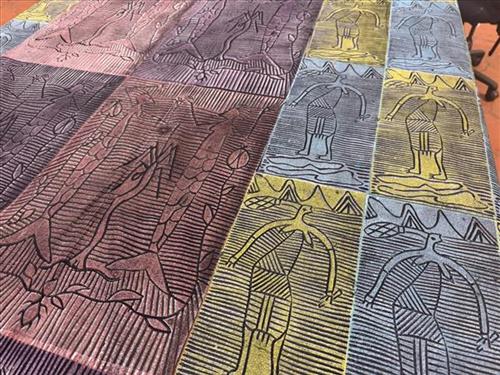
Yawkyawk (young woman spirit) JM

Yawkyawk swim underneath the rock. They always stay there. When the sun comes out they come out from underneath the river, make themselves warm. They sit and they look around. When they sit, they cry to themselves. Ngaldjorlhbo (mother of everything) she created them. Yawkyawk and the other one [Ngalng] (freshwater crayfish).

The Mimih one is a long way from the Stone Country. He is from my uncles country Barrihdjowkkeng. My uncle is the famous artist Crusoe Kurddal and he carves and paints Mimih.  

Sometimes Yawkyawk sit inside the rock. Sometimes they go out to find the manme (food) and the mankung (sugarbag). Also they can sing inside the rock cave. Sometimes Yawkyawk will see the big rain. When the big rain comes they start looking and when the rain comes they go inside and hide themselves. Some Yawkyawk stay on the dry land in a special place inland from Barrihdjowkkeng. Some of the stones get stuck on the breasts of the Yawkyawk.

In my fabric they are all coming together with the grass trees and leaves and the blowing wind. Some of the leaves will fall onto the water. All the round shapes are kunred (rocky country) with dry grass.

– Janet Kalidjan Marawarr


377810582371090


Mandjabu

Kuninjku people traditionally make two sorts of conical fish traps. One is called mandjabu and is made from a strong, durable vine called milil, and a smaller one is called manylik mandjabu, and made from the grass manylik. The mandjabuconical fish trap is bigger and stronger and used in tidal reaches of creeks to catch large fish. The smaller, lighter manyliktrap is used in freshwater flowing creeks to catch smaller fish and freshwater prawns. In earlier times, only men were involved in the construction of the large fish traps, but children would often crawl inside and assist.

To make mandjabu, weavers firstly harvest milil (burney vine, Malaisia scandens) and put it in water overnight to make it soft. Then they start weaving it; they make rings for the inside to keep the fish trap’s shape. People also make string from the bark of burdaga (kurrajong) to attach the bardainy (hibiscus) rings and to tie the conical end of the fish trap. It’s hard work and it can take three or four weeks to make a fish trap. People also use fish-net fences called kunkarlewabe. They would put the kunkarlewabe  across rivers and creeks. In the middle they would place the mandjabu. They also used small things like sticks, rocks, mud and grass to block the fish from going through. This way we would catch fish such as saltwater barramundi rajarra, ngaldadmurrng (freshwater barramundi), small black freshwater catfish (buliya), bonefish (an-guwirrpiya), and sand bass (dalakan) in the mandjabu.
377810582371083


Djomi (Fresh Water Spirit)

This design depicts the story of the artist’s ancestral dreaming, the Djómi (Fresh Water Spirit).

The Djómi figure is a mermaid-like spirit with fish tail that lives in the freshwater stream that flows out to the sea cliff near Maningrida. Djómi is known to be a very powerful fertility symbol.

“If you go there, you can get pregnant easily. Djómi has babies, and they can give other babies too. The Djómi spirit is so powerful, that women can end up with multiple babies at once, twins or sometimes even more. The Djómi spirits lay eggs near the sacred freshwater stream in Maningrida. Inside the eggs are human babies as well as young Djómi. Men do not go near that swamp, because Djomi is so powerful that men might get pregnant there too. So men are too scared of that Djómi. When we visit the Djómi freshwater spring, we can hear young Djómi  crying. They sound like normal babies crying, those Djómi spirits. They are looking for a mother. This Djómi is my dreaming, I got permission from my djungkay (ritual manager) to paint this Djómi design. For me I always ask my djunguy permission to paint, because that is our cultural way. This design also depicts the freshwater lily leaves and seaweed from the base of the sea floor.” Joy Galrbin

377810582371072


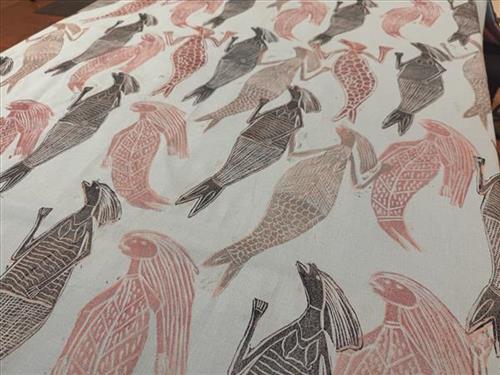
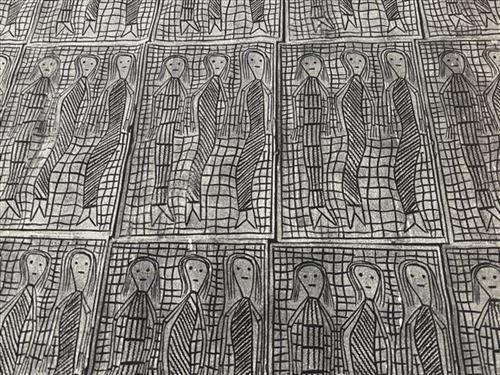
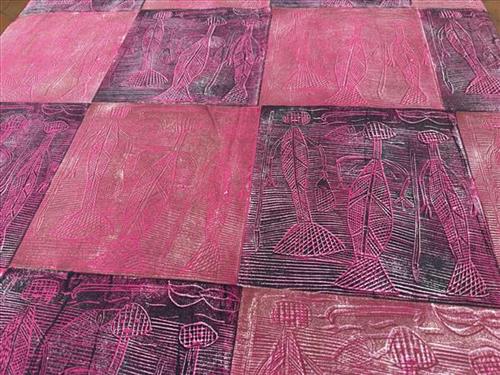
Yawkyawk (young woman spirit)

Yawkyawk is a word from the Aboriginal Kunwinjku language, meaning ‘young woman’ and ‘young woman spirit being’.

Sometimes compared to the European notion of mermaids, yawkyawks are usually depicted with the tails of fish. They have long hair, associated with trailing blooms of algae, typically found in Arnhem Land streams and rock pools.

377810582371064


Yawkyawk (young woman spirit)

Yawkyawk is a word from the Aboriginal Kunwinjku language, meaning ‘young woman’ and ‘young woman spirit being’.

Sometimes compared to the European notion of mermaids, yawkyawks are usually depicted with the tails of fish. They have long hair, associated with trailing blooms of algae, typically found in Arnhem Land streams and rock pools.

377810582371045


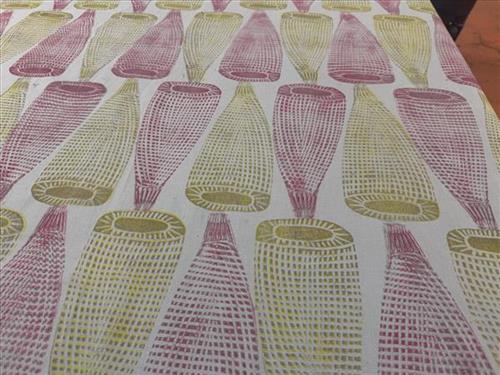
Kunmadj (dilly bag) and Kundalk (grass) – Temika

There are two distinct Lino print designs in this fabric. 

The first depicts a kunmadj (dillybag) made with Kundayarr (pandanus fibre). The second tile depicts Kundalk ( grass). 

This is Temika’s first Lino print design. She is the granddaughter of internationally acclaimed fibre and textile artist, Deborah Wurrkidj.

Works in fibre from the Maningrida region are widely recognised as some of the finest in Australia. Artists confidently push the boundaries of fibre craft and cultural expression, adapting traditional techniques and forms to produce strikingly inventive and aesthetically exquisite artworks.  Artists usually use kundayarr, pandanus spiralis, to weave decorative round or oblong mats, as well as the less common triangular and conical shapes. Weaving is physically hard work, now done only by women. They colour the pandanus using natural dyes made from the roots, leaves or flowers of plants within the weaver’s clan estate. 

377810582371038


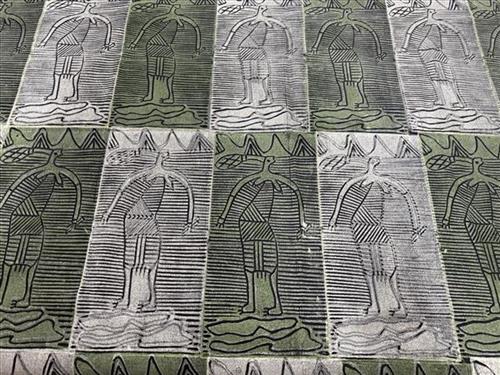
Babbarra Mimih

Bábbarra Women’s Centre is named after a billabong.

This design references the Bábbarra logo that shows a female mimih (spirit being).

This fabric was created using the linocut printing technique. The lino tile has been carved by the artist in Maningrida, and has been printed by hand using a variety of colours and layers. The linocut technique ensures each textile piece is a one-off, limited edition piece. Bábbarra Women’s Centre supports the economic independence of Indigenous women in the Arnhem Land community of Maningrida, Northern Territory, Australia. Designs created by the women at Bábbarra reflect strong cultural knowledge, which is passed down to younger generations through their textile design practice.