377815582371568


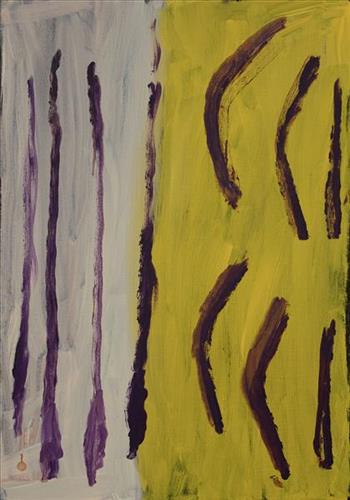
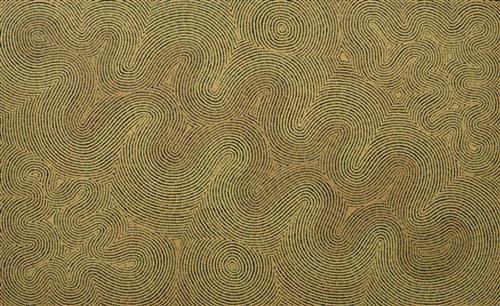
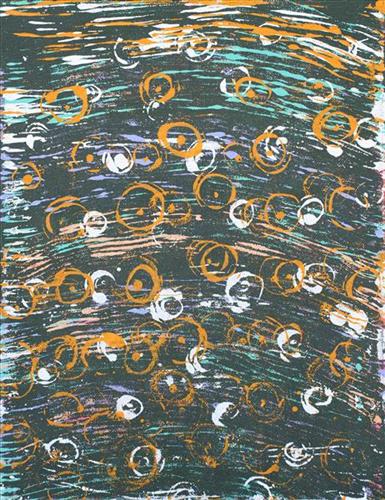
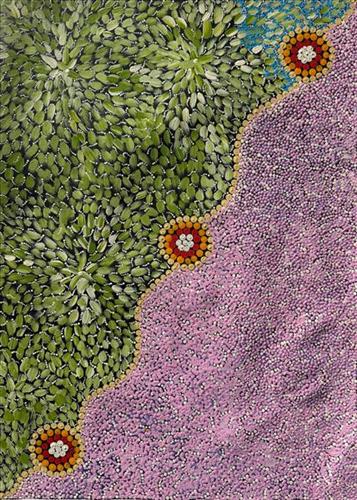
Ngangumarta Warran (Country)

“Nyangumarta Country home to the Nyangumarta people from the Desert to the sea side. Old people lived and walked on this land, we as Nyangumarta still look after the land today, we still go out on Country hunt and keep our way of life living of the traditional food from the land.

Nyangumarta people travelled and lived in the desert and the seaside. This painting is a story from the Nyangumarta dreaming where once a woman who walked with her child along this country collecting sea food “Mayi”. They were both on the reef and suddenly the tide came and drowned them, so now today there’s two rocks which remain out by the sea.

Because we carry the culture and most people tell stories with their painting, and that’s how it was from the beginning. Passing knowledge down. They might not see it now, but in the future, younger people might want to follow in their Elders’ footsteps. And carry on the skills and lifestyles. It can be anything—painting, hunting, becoming leaders.”

– Venetta Yanawana
115682371909


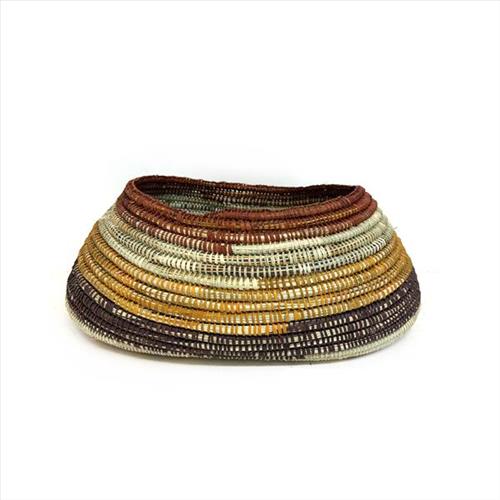
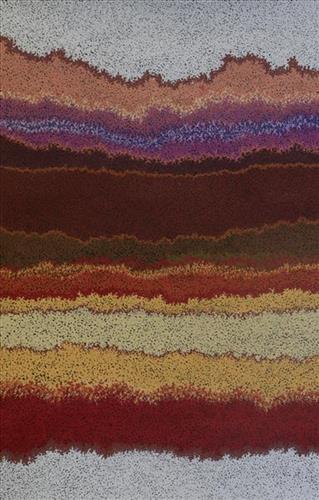
Bathi (Pandanus Basket)

Yolŋu weavers of Arnhem Land create utilitarian, ceremonial, and decorative pieces using naturally sourced materials. This Bathi (Pandanus Basket) is made from young Pandanus spiralis leaves, harvested with a wooden hook, stripped of prickles, and dried to create strong, resilient fibres. These fibres are then twisted, coiled, or woven using various techniques to produce both functional and decorative baskets.

Typically, Bathi are made using a coiling technique which was adapted from techniques used by Indigenous women throughout Southeast Australia. Introduced to Arnhem Land weavers in the 1930’s as Missionaries began commissioning pieces in this style.

Bula’bula weavers exclusively use natural dyes, derived from locally sourced roots, leaves and grasses. These pigments are extracted and infused into pandanus fibres by boiling over an open fire, producing the rich, vibrant colours characteristic of contemporary Yolŋu weavings.

221282371873


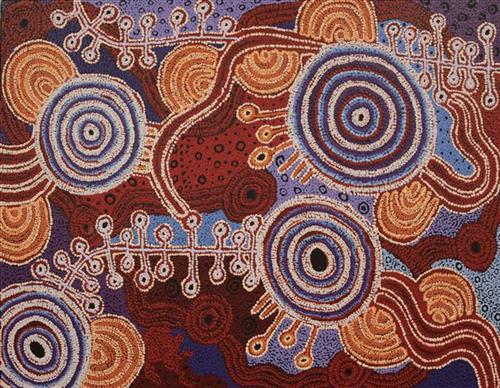
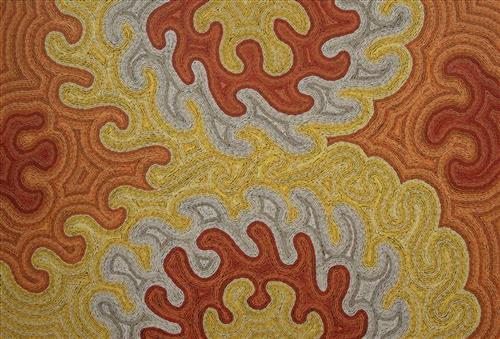
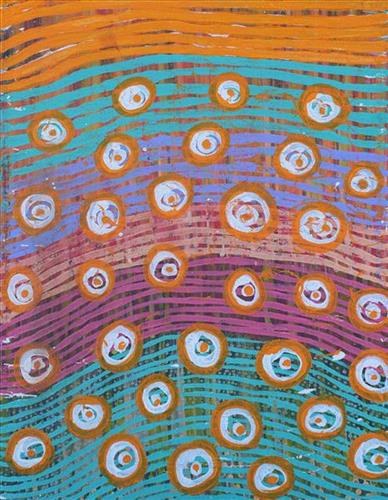
Minyma Kutjara (Two Women Near Ernabella)

There are many stories about the two sisters (Minyma Kutjara). This part of the story is siginificant to the women of Ernabella. There was a gathering of minyma mingkiri (mouse women) at a hill called Yunanpa, which is near Ngarutjara (to the north of Ernabella). They are all collecting bushfoods together when the two sisters decide to go travelling. They travel to several water places to the north and east of Ernabella including Alalka. They keep going until they get to Wamitjara, a waterhole near Kenmore park. Here they come across a man sleeping. They hit him over the head with their wana (digging stick) and knock him unconscious. Then they tie up his arms and legs and head towards Alice Springs, carrying him between them. They sing and dance sacred women’s stories all the way. They leave him at Stuart’s Well, and continue on to Alice Springs to meet up with a large group of women.

221282371872


Kulata Tjuta – Many Spears

Freddy is painting his grandfather’s country in far west South Australia. He depicts kulata tjuta (many spears) travelling through the sky to catch wati wanampi (snake man). Those wati wanampi are moving fast through the sky. There was one woman waiting there with a baby and she said there was a wati who was nearby hiding in a bush, ready to duck down and go and then throw those spears.

221282371871


Piltati

There were two sisters who married two brothers and they all lived together. One day the women went wandering and they went such a long way that they forgot about their husbands. Back at the camp, the two husbands were thinking, ‘Where are our wives?’ and they decided to go looking for them. One brother said to the other, ‘What should we become to go looking for them?’ and the other brother said ‘Why don’t we become Rainbow Serpents?’ And they travelled in the sky looking down for their wives. Finally they see them hunting for carpet snakes and they put something in the hole where the women were digging. The women find it and then dig another hole and once again the men have put something in there. And this is how the men lure the women back to Piltati where the men make the sisters transform into Wanampi, swallow them and keep .them in their throats. All four of them live together in the waterhole and still live there today.

221282371870


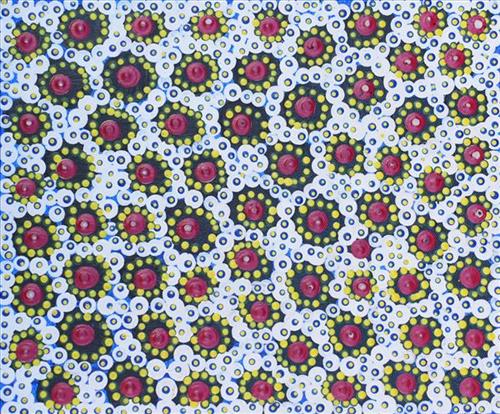
Tjukula/Waterholes

For the Pitjantjatjara people living in the desert, knowledge of their water sources was critical to their survival. This resulted in an intimate understanding of the landscape which continues today. Water is an essential element in the desert. These rock holes were particularly important during the dry season when most of the water holes and creeks dried up.  Deep familiarity with the topography of their country and the way rain would interact with the land ensured constant sources of water could be found. Knowledge of rock hole sites is passed on from generation to generation and revered by all Anangu (people).

Tjukula means rock-holes, which are found with surprising frequency in the Musgrave Ranges and country around Ernabella.  Between visits, Anangu would use a construction of rocks and spinifex to guard these important water sources from spoilage by feral and stock animals such as cattle, camels, horses and donkeys.

114182371981


Yirmangka – Yirmangka ( Bush Medicine)

This is from a series of small works from our main artists depiocting the love of collecting from the bush traditional medicines and tucker.