
220182407373
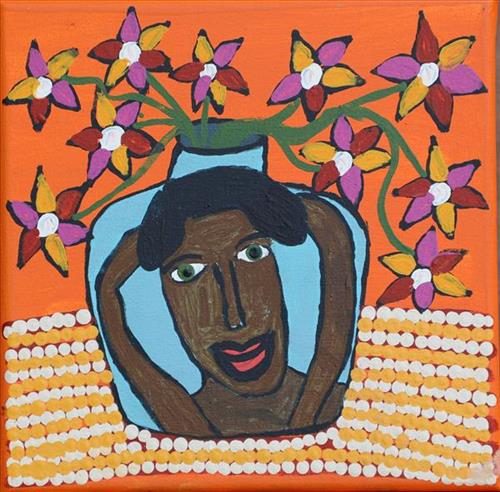
Margaret after Tony after Margaret
221282407328
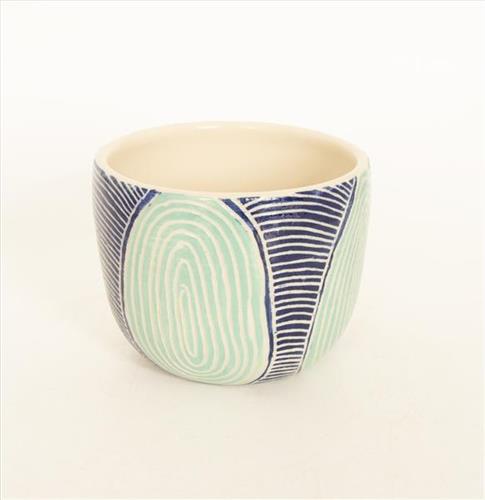
Ngayuku Walka / My Design
Walka means design or pattern. Artists use this title to describe artworks that are pattern based rather than descriptive or telling a story.
221282407247

Ngayuku Walka / My Design
Walka means design or pattern. Artists use this title to describe artworks that are pattern based rather than descriptive or telling a story.
220182407225

Margaret after Tony after Margaret
115682407212
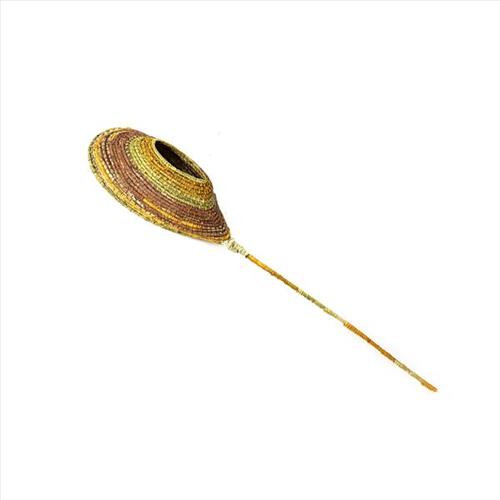
Dhawurr or Batjbarra (Fish Trap)
Dhawurr, or Batjbarra, is a traditional fishing method used by Indigenous people in the Arafura Swamp and surrounding wetlands of Arnhem Land. Yolŋu now prefer the modern fishing methods of reels and bait, however, weavers continue to make Batjbarra for cultural conservation and to be sold as decorative pieces.
When used for practical purposes, the Batjbarra was placed into the river with the opening facing oncoming fish. The woven tunnel trapped the fish with the weave tight enough to prevent escape but loose enough to allow water to freely flow through. The traps tapered so that when they were submerged, the water pressure wedged them into place.
The primary material used in this piece is the young, green leaves of the Pandanus spiralis tree, that were harvested using a long wooden hook. The leaves are stripped of their prickles, with the smaller fibres being dried to produce a strong, resilient material. These fibres are then twisted, coiled, or combined using various techniques to create the fish trap.
Bula’bula weavers exclusively use natural dyes, derived from locally sourced roots, leaves and grasses. These pigments are extracted and infused into pandanus fibres by boiling over an open fire, producing the rich, vibrant colours characteristic of contemporary Yolŋu weavings.
220182407141

Dream Time
115682407082
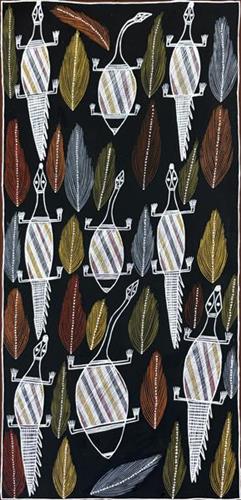
Raypiny Dhawu (Fresh Water Story)
All Aboriginal people originate from a spiritual source, fixed in a particular place in their land or the sea. These ‘spiritual reservoirs’ are often in the form of special waterholes made by Wangarr (creative spirits) that were created long ago close to the beginning of time. These creator beings moved across the countryside, shaping the land and implanting in each tract of country, the spiritual life force for the people who were to own it. These creative spirits took many forms and when they gave the land to each group, they also gave songs, dances, ceremony, the associated laws and language.
The creation story for Ganalbingu people took place near the middle section of the Glyde River where it becomes the Goyder River. Their land, Ngaliyindi, sits astride the Arafura Swamp in Central Arnhem Land. Many Ganalbingu artists paint totemic species significant to their clan. These can include baru (crocodile), banda (long necked turtle), buliya (catfish), yalman (waterlilies), gumang (magpie geese), dakawa (fresh water yabby), ratjuk (barramundi), warrnyu (flying fox) and more.
116482407361
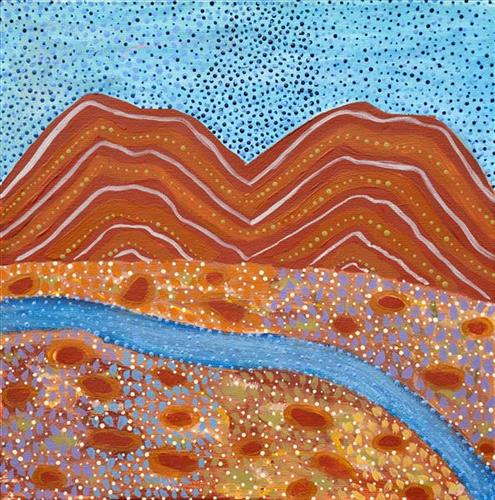
Pilbara Hills
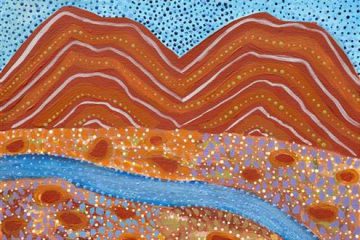
In our country we have many hills of all different shapes and sizes. When driving through country at different times the colours change and some of the hills look like velvet in the evening and morning light.
*This artwork is on stretched canvas.
377810582407400
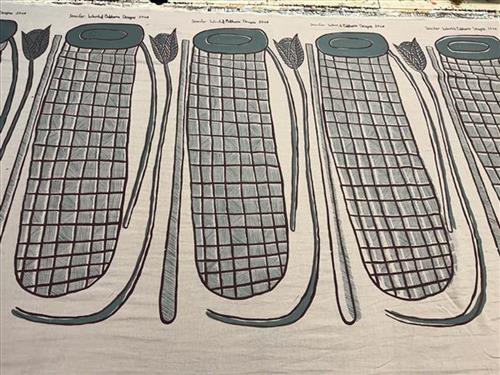
Kunmadj dja Kunkanin (Dillybag and Digging Stick)
In this design, Jennifer has depicted kun-madj (dillybag), which is a large woven collecting basket. These large bags are often made from the burney vine (Malaisia scandens), a strong, pliable plant that grows along the ground and into the canopy of monsoon vine thickets. The bags are used to collect heavy foods, such as fish caught in conical fish traps or yams. They can also be made from kun-dayarr (Pandanus spiralis), a palm that grows in many areas of Arnhem Land. Tightly woven dillybags are used to collect sugarbag, the native honey.
As well as being of practical use, dillybags are of cultural significance to Arnhem Land people. They are totemic objects associated with particular sites in the landscape.