114182350478


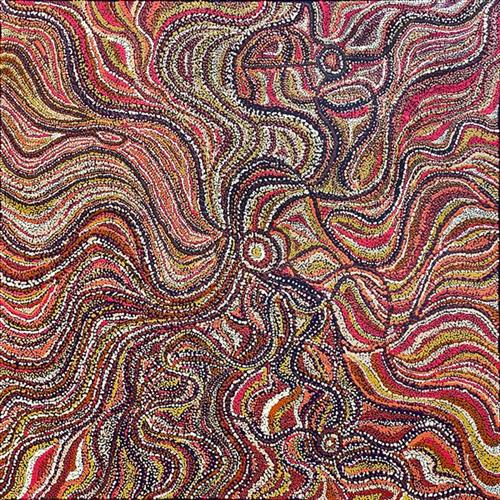
Kuniya Tjukurpa – Wana Wipiya Wipiya

The story begins at Tjuntun Rockhole, near Fregon in South Australia. This is where the Wanapi Snake set out on its journey, moving through the land, carrying its song and its knowledge. As it travelled, it shaped the country, leaving its mark along the way.

Singing the land into being, the Wanapi Snake travelled toward a place that goes by the name of Uluru, moving along its own road, leaving eggs at Ngarutjara, a place holding deep significance. From there, the snake continued on to Piti Pulka, a great Rockhole, before making its way further north.

When it reached Atila, it paused. From here, the snake could see Uluru in the distance. It thought of family there, of kin and ancestors who had walked that land before. And so, it continued forward, until it arrived at Uluru, carrying the song, carrying the Tjukurpa.

At Wana Wipiya Wipiya, it sang again—singing of the land, of the journey, of belonging. This place, this country, is held by the family. It was given by her grandfather and uncle, passed to her mother, her unties and now to her, passed through time. The Tjukurpa remains, carried forward, alive in story, in song, and in the land itself.

114182352709


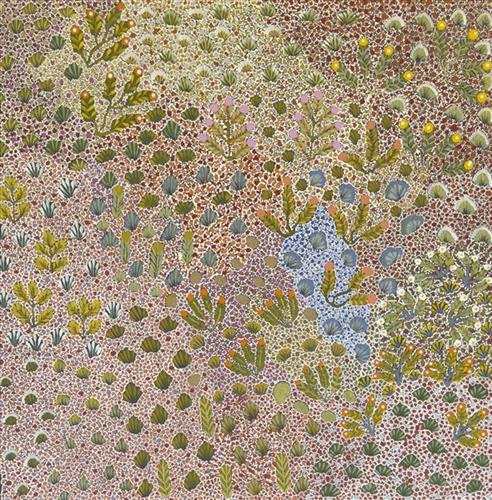
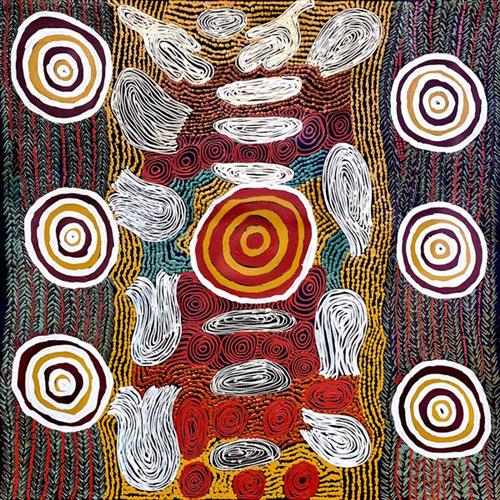
Kungkarrangkalpa Indulrungkalpa (seven sisters, Bush medicine)

In Kungkarrangkalpa Indulrungkalpa (Seven Sisters Bush Medicine) Anawari intertwines the Seven Sisters narrative with the art of making bush medicine. Depicting special leaves and shrubs with the circular technique used to skilfully brew into tea or crafted into rubbing ointment. Anawari is a custodian of Kungkarrangkalpa Tjukurrpa (dreamtime) for the Ngaanyatjarra Lands. Wati Nyiru (Magic Man) fell in love with the sisters; he was of the wrong skin group to marry, but he still pursued them on their journey. The sisters travel across the land to escape Nyiru’s unwanted attentions, he is persistent, shape-shifting into other forms looking for the sisters. There are significant land forms which can be sited today that evidence this dreaming. As Nyiru is chasing the sisters he tries to catch them by using magic to turn into the most tempting kampurarrpa (bush tomato) and the most beautiful yirli (wild fig tree), for them to eat and camp under. However, the sisters are knowledgeable of his magic and too clever for Nyiru who they outwit again and again. 


115682355436


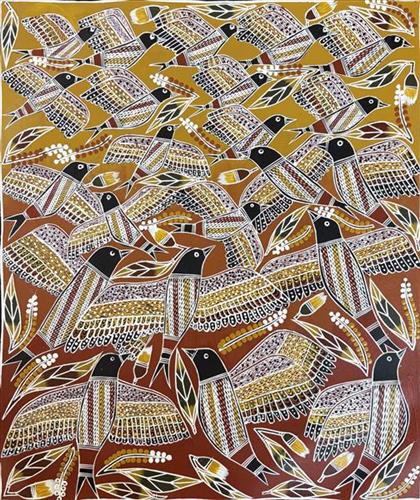
Lidji Lidji (Finch)

This artwork represents totemic finches. These birds herald the beginning of the dry season and are associated with the Ganalbingu clan. Lidji Lidji are also represented in ceremonial song and dance.

220982355976


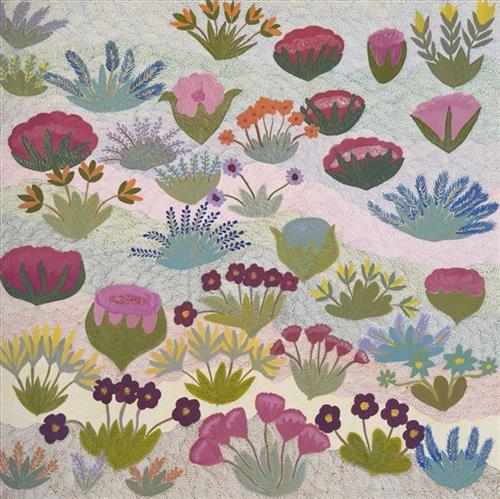
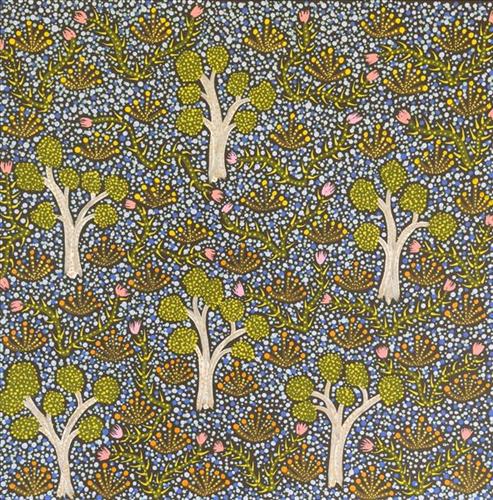
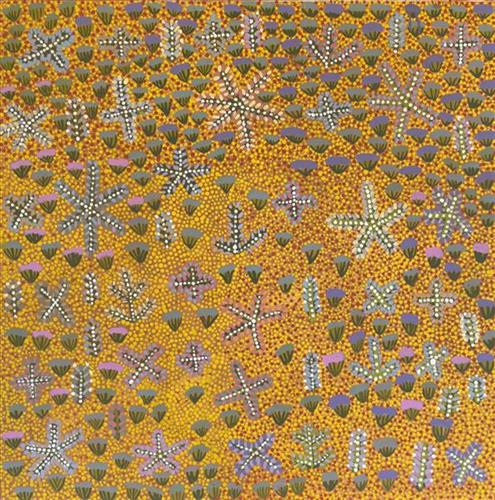
Kindy Kemarre Ross – Irrultja is My Country

My country is called Irrultja, it’s past the hill and the dried-up creek from here, it’s a nice place, my dad’s country too, and my Mum’s country is here in Ampilatwatja. When I go to see my country, we always go to gather bush medicine, we always climb up the hill that’s in the south, we always go there.

We like to look out over the land and there are lots of flowers and bush medicine up there. I love my countryside; I see the nice flowers and gather bush medicine for me and my family. I like to paint a mix of wildflowers and bush medicines in all my paintings because it reminds me of my favourite part of my country and when it rains the flowers come out. Yeah, my countryside.

The community of Ampilatwatja made a conscious decision not to paint altyerr (dreaming stories). The artists paint their country where those stories sit.

115682356723


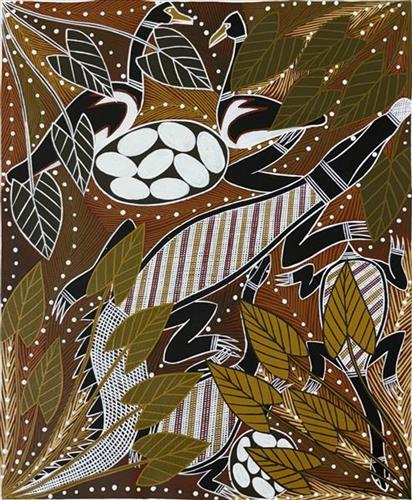
Baru Dhawu (Crocodile Story)

Baru (the crocodile man), was from the Gumatj clan. People usually call him Gurdu Gurdu or Baru which means crocodile. He lived his life at a place called Yirrkala. Living near him were other people, and when Baru didn’t have enough to eat he began to kill and eat these other people. After a while others noticed that some people were missing. When Baru went to the toilet, the people could smell this strong smell, so they knew that he ate the other people. Some men went to get help and they took message sticks to the other tribes. Some were sending smoke signals. When they came to Baru’s camp they started to spear him in the left side of his ribs. He dropped into the fire and burnt his left hand and maybe his right hand. He then ran into the bush and yelled to his countrymen – the animals, birds and fish that live on the land and in the sea. He stopped and he named the tribes and clans and also the places until he came to a place called Gamarru/Guyurru. There he took a rest and said to himself “This is where I stop and call this place Gamarru/Guyurru”. Baru, still in pain from the fire, then jumped into the water and turned himself into a crocodile. The fire left scars on his back. Baru paintings belong to Gumatj and Warrawarra and also the Marpi clan. This painting is used at death ceremonies or initiations and it normally is painted on the belly, which means the person the design is painted on is part of Gurdu Gurdu (the crocodile people).

220982356837


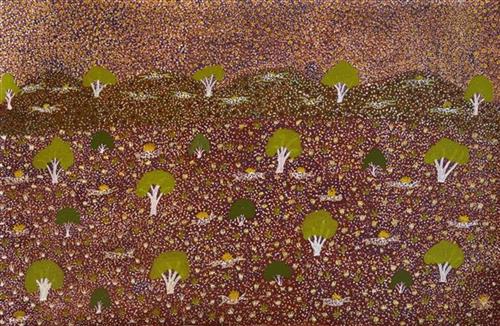
Kathleen Nanima Rambler – Mulangke Aherne (Beautiful Land)

My country. When I go hunting out bush, as we drive along the road towards the hill you can see the beautiful land and the flowers blooming on the side of the road, and near the hills, even the beautiful gum trees.

It makes me proud.

220982356814


Leanne Teece – Anterrengeny – My Father’s Country

Anterrengeny is my Father’s country. I paint the country that I come from, the beautiful landscapes and the many colours as they change during the session.

220982358640


Alana Ngwarraye Holmes – Wild Flowers

Out in the plain after the rain the wild flowers grow and bloom, I see these flowers on my mother’s country.

The plant has pretty flowers, we take them home and show them to the children. They are a beautiful purple, yellow and pink colour.

115682358965


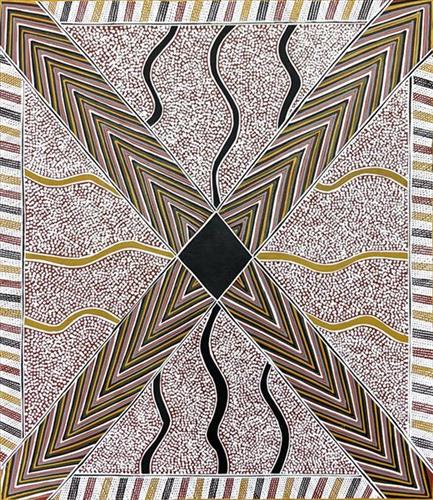
Lungurrma (North-east Wind)

Lungurrma (North-east Wind) heralds the new season when seas are calm and new growth starts. The months for this type of wind are October to December. There are big clouds without thunder or rain. The triangular patterning represents monsoon clouds ‘standing up’ on the northern horizon. The Lunggurrma design belongs to the Yirritja moiety clans linked to this design are known as the ‘line of clouds’ clans

220982359468


Rosemary Ngwarraye Turner – My Landscapes

I love flowers that grow wild in the bush. My Grandmother Rosie Ross taught me how to paint, and paint how I feel. I watched her paint and I took on what she did. I feel happy and relaxed when I paint.

I love all bright colours, I am known for my most beautiful bright colours. My chidren are proud of me when I paint