Seeds and waterways
After the rains in the wet season, the waterways are full and the seeds are ready to come up.
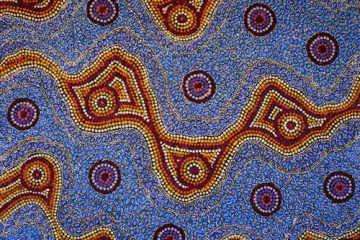
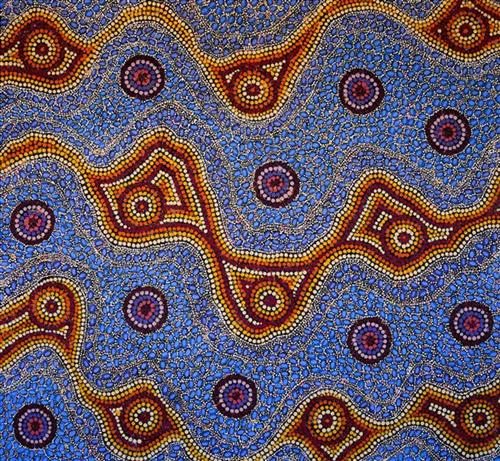
After the rains in the wet season, the waterways are full and the seeds are ready to come up.
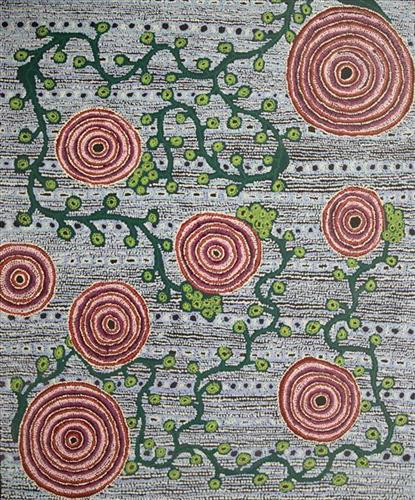
Travelling around getting bush tucker near my home. From when I was a tjitji (child) collecting mai (food). Travelling from home, not today but a long time ago. I would go with my family, friends, with tjitji tjuta (many children).
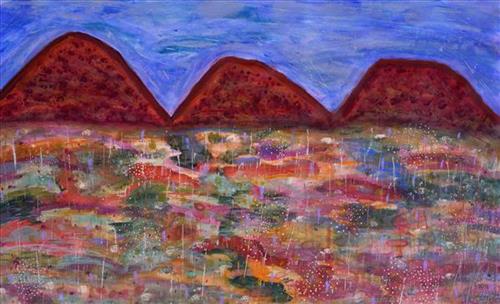
In our country, we have many hills of all different shapes and sizes. When driving through country at different times the colours change and some of the hills look like velvet in the evening and morning light.
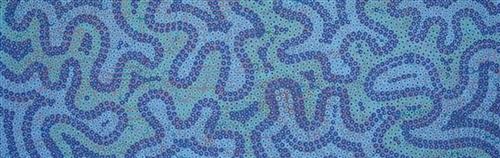
After the rain the rivers and creeks in our country come alive with a new growth of plants. The country is filled with beautiful colours. We rejoice looking at our rivers and creeks full of water, so that we can go fishing, kids can go swimming and we can picnic with our families and friends.
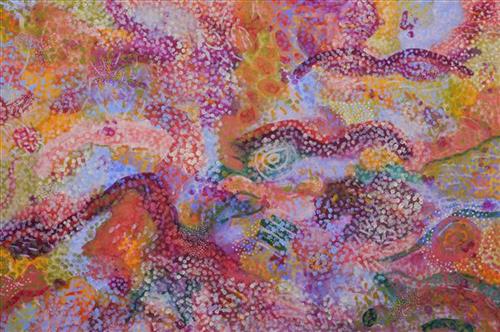
Pilbara is the country where we the Yindjibarndi people live and share many of our cultural stories and history that have been passed onto us by our ancestors of how they used to walk through the flat country we call the (Table Lands) visiting family members at nearby stations. Our country has so much to offer. Bush foods and medicine as well as animals like emu, kangaroo, and goanna. When the rains come our rivers are full and we all love to go out and spend the day fishing. We are also close to the ocean, so we often go fishing there as well. During the holidays many of our families go bush to enjoy what the country offers. Our country is full of riches, and we are connected to our land.
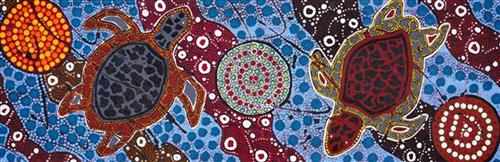
Turtles roam the sea as family every year even when the times to find land to hatch their young on the beach!
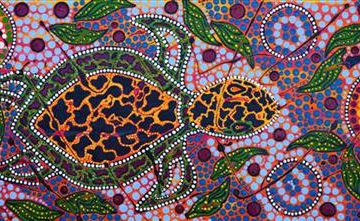
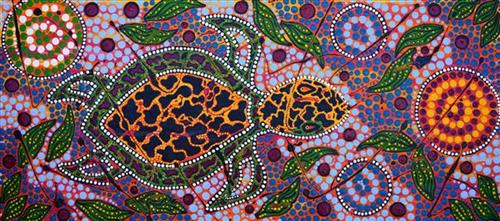
Turtles roam the sea as family every year even when the times to find land to hatch their young on the beach!
My father’s place is Mt. Liebe, sandhill country. The Wanapi rests there under the surface of the creek. When we go to visit that country, the Wanapi stirs underneath the ground and bubbles rise up in the water. He is there to protect that place. We speak to that Wanapi in our language and he knows then that it is us. It’s okay for us to be there and the bubbles settle back down. Close to this creek is where the Arkaryi women are sitting. This is an important women’s site. I can’t speak too much about that, as it would be dangerous to disturb those women.
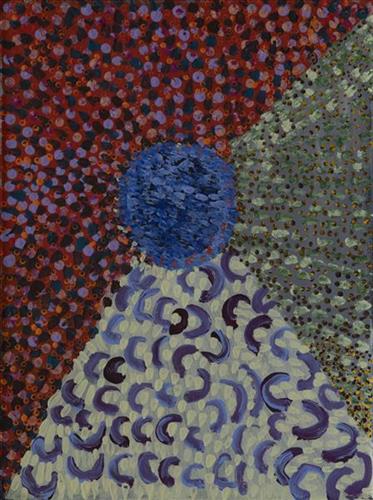
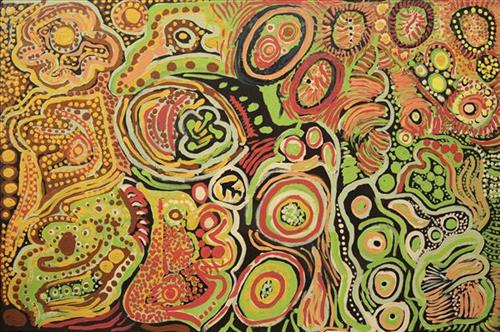
This is Dale’s Country- her ‘ngurra’ (home Country, camp). People identify with their ngurra in terms of specific rights and responsibilities, and the possession of intimate knowledge of the physical and cultural properties of one’s Country. Painting ngurra, and in so doing sharing the Jukurrpa (Dreaming) stories and physical characteristics of that place, has today become an important means of cultural maintenance. Dale’s ngurra encompasses her birthplace, Jigalong, and the Country that her family walked in the pujiman (traditional, desert-dwelling) era, including Puntawarri, Raarki (Canning Stock Route Well 27), Kularti, Kumpupirntily , Mirtikanya, (Kumpupintily, Lake Disappointment), and Mukurtu.
Portrayed in this work are features of Dale’s family’s ngurra, such as the striking salt lakes, dominant permanent red tali (sandhills), warta (trees, vegetation), and the individually named water sources they camped at. Rock holes, waterholes, soaks and springs were all extremely important sites for Martu people during the pujiman period, and are generally depicted with circular forms.
The encyclopaedic knowledge of the location, quality and seasonal availability of the hundreds of water bodies found in one’s Country sustained Martu as they travelled across their Country, hunting and gathering, visiting family, and fulfilling ceremonial obligations. They would traverse very large distances annually, visiting specific areas in the dry and wet season depending on the availability of water and the corresponding cycles of plant and animal life on which hunting and gathering bush tucker was reliant. As they travelled and hunted they would also burn areas of Country, generating a greater diversity of plant and animal life.
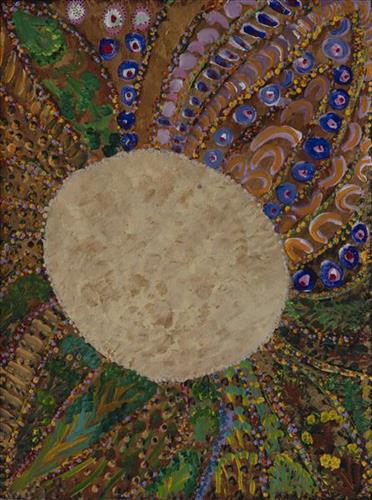
“This one here is Watchpoint Hill near to Jigalong, with all the sandhills and the walyji (river gums). We got warla (lakes) there too. Jigalong is where I grew up.”
– Helen Dale Simpson
Mirtikanya is a hill and claypan close to Balfour Downs Station and north of Jigalong Aboriginal community, where Dale continues to live today. During the pujiman (traditional, desert dwelling) era, Mintikanya was primarily used as a camping site in the wantajarra (wet season), when the claypan filled with kapi (water).
Mirtikanya’s location close to Jigalong Mission made it a popular camping site for mission residents on the weekend. For many Martu Jigalong Mission was where their pujiman lifestyle came to an end from the late 1940s as they transitioned to a life as stockmen and women working in cattle stations in the Pilbara region and beyond. In the wake of the extreme and prolonged drought of the 1960s, the last of the remaining pujimanpa (desert dwellers) were forced to move to missions like Jigalong, where a supply of food and water was assured. There, many were reunited with family members that had already moved in from the desert.