Status: Stock
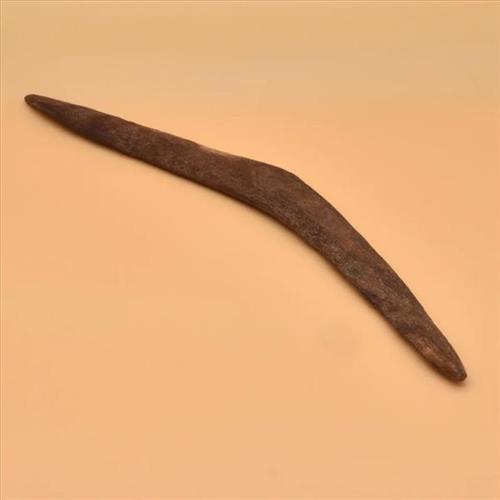
Hand-carved Boomerang
Timber boomerang.
Hand-carved locally.
Artefacts are made locally by artists and craftspeople, many of whom are Mangkaja artists. Keep an eye out for their paintings in our artwork section.
Status: Stock
Timber boomerang.
Hand-carved locally.
Artefacts are made locally by artists and craftspeople, many of whom are Mangkaja artists. Keep an eye out for their paintings in our artwork section.
Status: Stock
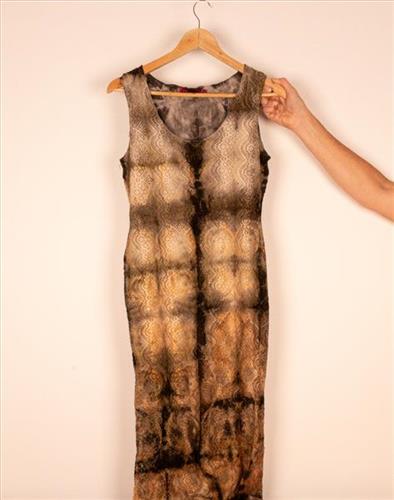
Our company Rukaji Designs is named after the rai (spirit) who lives in the Larrkarti (boab) tree down at the creek on our country. Our Nykina & Walmajarri family lives in a remote desert community of 15 people (not counting dogs and kids) in Jimbalakudunj, an hour from Fitzroy Crossing, and three hours from Broome. We collect parntapi (bark), leaves and other materials around our community and along the Fitzroy River, and we find rusty metal objects.
We are happy to share our unique hand dyed up-cycled clothing up with you and hope you get wonderful use of it.
Care Instructions: Handwash with a little dishwashing detergent and dry in the shade.
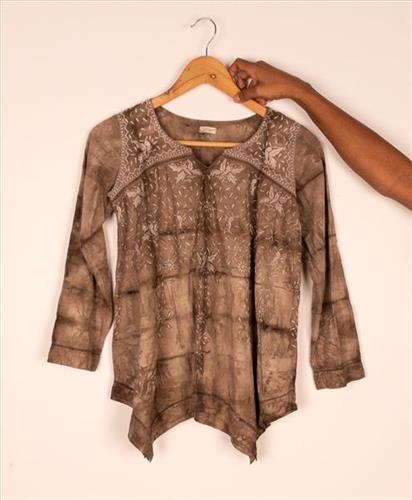
Status: Stock
Our company Rukaji Designs is named after the rai (spirit) who lives in the Larrkarti (boab) tree down at the creek on our country. Our Nykina & Walmajarri family lives in a remote desert community of 15 people (not counting dogs and kids) in Jimbalakudunj, an hour from Fitzroy Crossing, and three hours from Broome. We collect parntapi (bark), leaves and other materials around our community and along the Fitzroy River, and we find rusty metal objects.
We are happy to share our unique hand dyed up-cycled clothing up with you and hope you get wonderful use of it.
Care Instructions: Handwash with a little dishwashing detergent and dry in the shade.
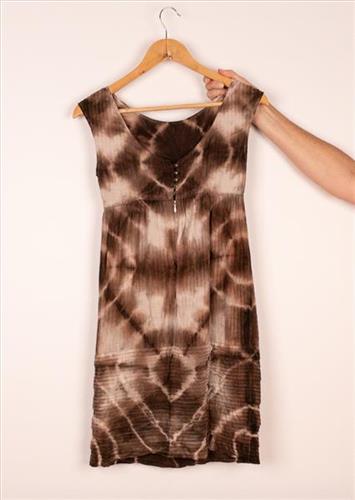
Status: Stock
Our company Rukaji Designs is named after the rai (spirit) who lives in the Larrkarti (boab) tree down at the creek on our country. Our Nykina & Walmajarri family lives in a remote desert community of 15 people (not counting dogs and kids) in Jimbalakudunj, an hour from Fitzroy Crossing, and three hours from Broome. We collect parntapi (bark), leaves and other materials around our community and along the Fitzroy River, and we find rusty metal objects.
We are happy to share our unique hand dyed up-cycled clothing up with you and hope you get wonderful use of it.
Care Instructions: Handwash with a little dishwashing detergent and dry in the shade.
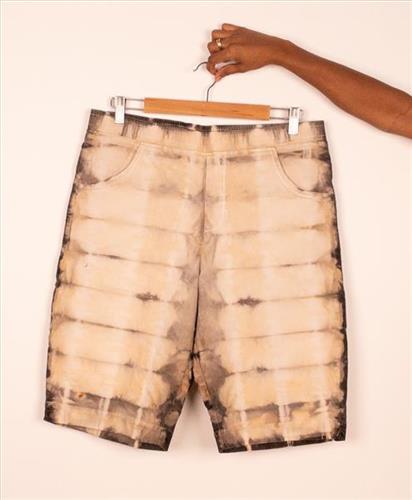
Status: Stock
Our company Rukaji Designs is named after the rai (spirit) who lives in the Larrkarti (boab) tree down at the creek on our country. Our Nykina & Walmajarri family lives in a remote desert community of 15 people (not counting dogs and kids) in Jimbalakudunj, an hour from Fitzroy Crossing, and three hours from Broome. We collect parntapi (bark), leaves and other materials around our community and along the Fitzroy River, and we find rusty metal objects.
We are happy to share our unique hand dyed up-cycled clothing up with you and hope you get wonderful use of it.
Care Instructions: Handwash with a little dishwashing detergent and dry in the shade.
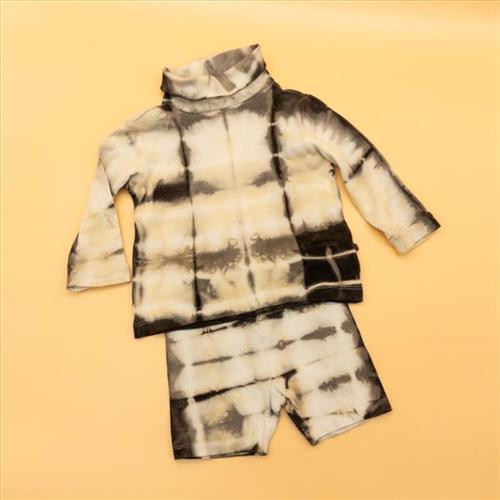
Status: Stock
Our company Rukaji Designs is named after the rai (spirit) who lives in the Larrkarti (boab) tree down at the creek on our country. Our Nykina & Walmajarri family lives in a remote desert community of 15 people (not counting dogs and kids) in Jimbalakudunj, an hour from Fitzroy Crossing, and three hours from Broome. We collect parntapi (bark), leaves and other materials around our community and along the Fitzroy River, and we find rusty metal objects.
We are happy to share our unique hand dyed up-cycled clothing up with you and hope you get wonderful use of it.
Care Instructions: Handwash with a little dishwashing detergent and dry in the shade.
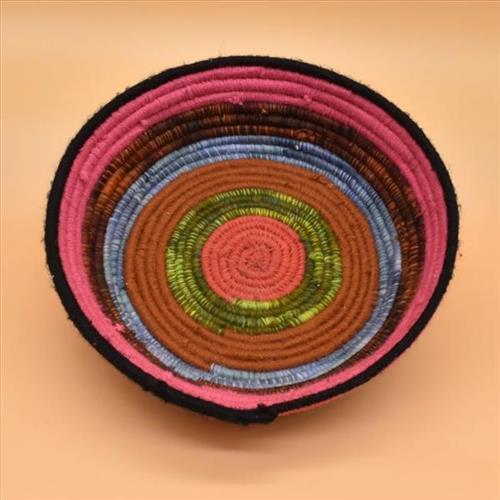
Status: Stock
Decorative Hand-woven bowl.
Artefacts are made locally by artists and craftspeople, many of whom are Mangkaja artists. Keep an eye out for their paintings in our artwork section.
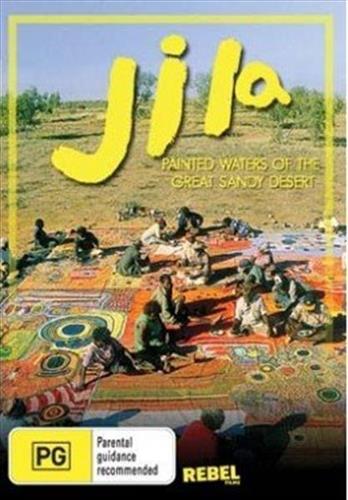
Status: Stock
A story about land ownership, artistic collaboration and the creation of a huge painting of great significance.
Status: Stock
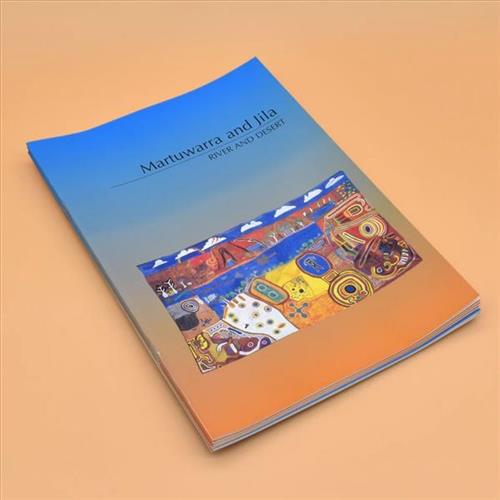
An exhibition of paintings about water by artists from Mangkaja Arts Resource Agency Aboriginal Corporation at the Cullity Gallery, School of Architecture and Fine Arts, The University of Western Australia, 14 July to 9 August 2003.
Produced by Mangkaja Arts Resource Agency & The University of Western Australia
Status: Stock
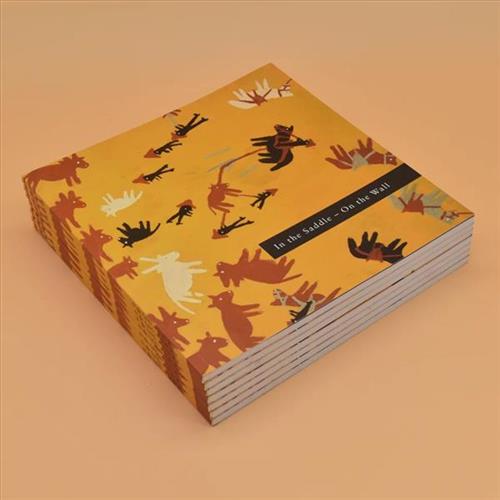
Driven by senior artists from across the Kimberley the paintings, digital recordings and publications that have become In the Saddle – On the Wall contain important historical and deeply personal accounts of a time when aboriginal people were the back-bone of the Kimberley cattle industry. This was a period characterised by injustice and displacement, new experiences of cultural relations, journeys through Country and a deep sense of pride. It was Aboriginal people’s knowledge of their Country, the seasons and stories that shaped it, which enabled the pastoral industry to succeed in this region. As artist and former stockman Patrick Mung Mung remarks, “White men know that we were great in this place.”
Produced by Kimberley Aboriginal Artists