221282358427


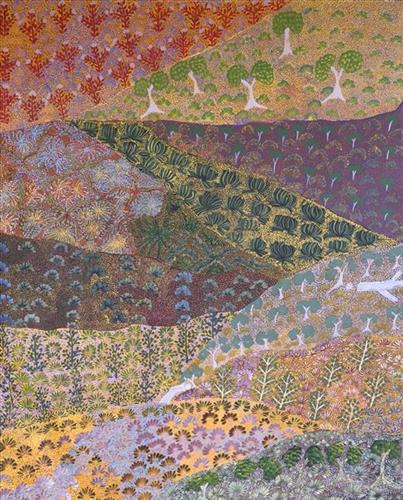
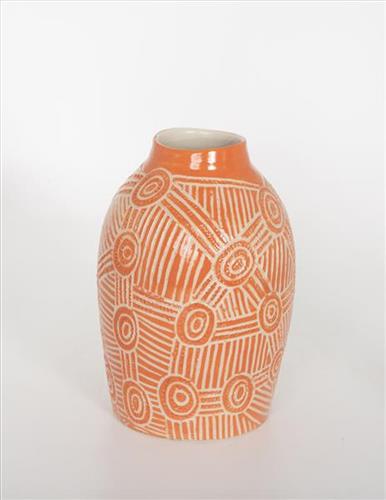
Tjukula/Waterholes

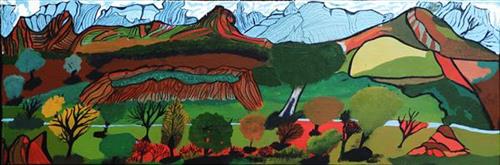
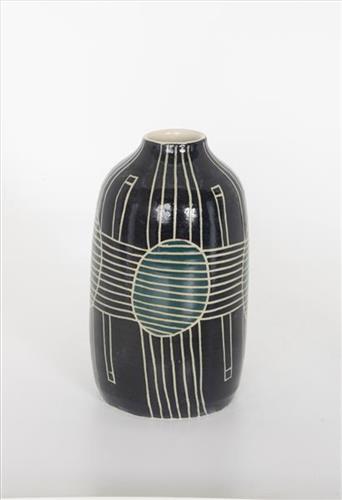
For the Pitjantjatjara people living in the desert, knowledge of their water sources was critical to their survival. This resulted in an intimate understanding of the landscape which continues today. Water is an essential element in the desert. These rock holes were particularly important during the dry season when most of the water holes and creeks dried up.  Deep familiarity with the topography of their country and the way rain would interact with the land ensured constant sources of water could be found. Knowledge of rock hole sites is passed on from generation to generation and revered by all Anangu (people).

Tjukula means rock-holes, which are found with surprising frequency in the Musgrave Ranges and country around Ernabella.  Between visits, Anangu would use a construction of rocks and spinifex to guard these important water sources from spoilage by feral and stock animals such as cattle, camels, horses and donkeys.
221282358426


Tjukula/Waterholes

For the Pitjantjatjara people living in the desert, knowledge of their water sources was critical to their survival. This resulted in an intimate understanding of the landscape which continues today. Water is an essential element in the desert. These rock holes were particularly important during the dry season when most of the water holes and creeks dried up.  Deep familiarity with the topography of their country and the way rain would interact with the land ensured constant sources of water could be found. Knowledge of rock hole sites is passed on from generation to generation and revered by all Anangu (people).

Tjukula means rock-holes, which are found with surprising frequency in the Musgrave Ranges and country around Ernabella.  Between visits, Anangu would use a construction of rocks and spinifex to guard these important water sources from spoilage by feral and stock animals such as cattle, camels, horses and donkeys.
220982351848


Colleen Ngwarraye Morton – Women’s Ceremony and Bush Medicine

The layers of Colleen’s paintings are as detailed and complex as the stories she paints.

Colleen’s painting represents a ceremony that is performed by the women in the community. It involves dance, singing and painting the body in ochre, to celebrate their country and their understanding of bush medicine.

The use of the bush medicine and the edible seeds that come in an assortment of colours, are depicted in many of Colleen’s paintings.

This painting is about singing to country, singing the bush medicine in to existence, maintaining it and where to find it.

118782357592


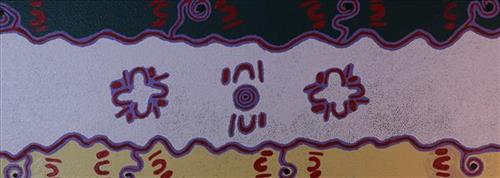
Emily Andy Janmarda

In this painting Emily has depicted designs associated with the Janmarda Tjukurrpa (Onion Dreaming) site of Karrinyarra (Central Mt Wedge). Karinyarra is two hours drive North West of the remote Aboriginal community of Papunya, Northern Territory, where there is a large salt lake and sacred spring. At certain times of year the surrounds become covered with bush onion grass creating a creamy texture across the landscape. Women dig at the grass to find the bush onion that grows at the roots. The bush onions are gathered and cooked on the coals of the fire. Once they are cool enough to be held they are rubbed between the hands so that the outer shell comes away revealing the lovely sweet small onion underneath.

221382358225


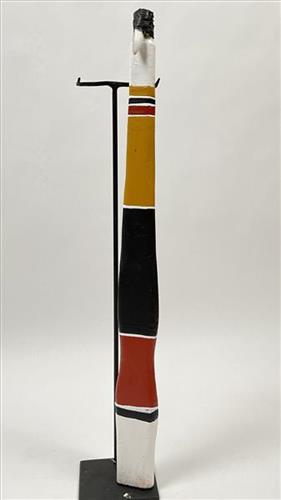
Bodok

Wood carving has always been part of Aboriginal culture and Djilpin artists continue this tradition. Men carved wood for many purposes – tools for hunting or gathering food, axes and knives for building shelters, spears and clubs for protection of their lives and territory, objects for ceremony and to mark sacred sites.

Hunting implements include the boomerang, woomera and spear. The woomera is a lever which helps to increase the speed and distance the spear travels. Clapsticks are used as percussion instruments by the Songmen to accompany dancing along with the didgeridoo (mago).

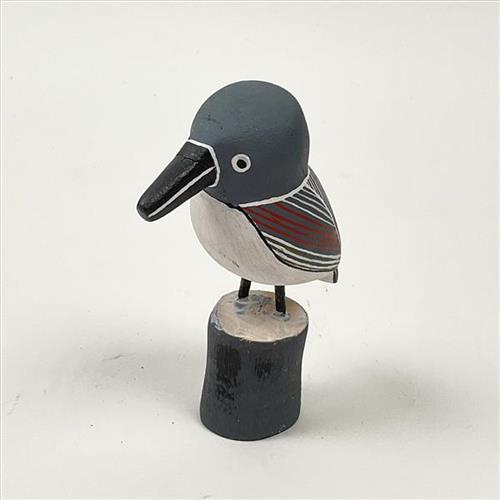
As well as the more functional carvings, artists portray animals and birds in wood, and these carvings are often painted. Ceremonial carvings include spirit creatures including mukuy (devil devils) and mimi.

Some fine mimi figures have been cast in bronze.

221382358188


Kingfisher

Wood carving has always been part of Aboriginal culture and Djilpin artists continue this tradition. Men carved wood for many purposes – tools for hunting or gathering food, axes and knives for building shelters, spears and clubs for protection of their lives and territory, objects for ceremony and to mark sacred sites.

Hunting implements include the boomerang, woomera and spear. The woomera is a lever which helps to increase the speed and distance the spear travels. Clapsticks are used as percussion instruments by the Songmen to accompany dancing along with the didgeridoo (mago).

As well as the more functional carvings, artists portray animals and birds in wood, and these carvings are often painted. Ceremonial carvings include spirit creatures including mukuy (devil devils) and mimi.

Some fine mimi figures have been cast in bronze.