22174009154


Status: Stock


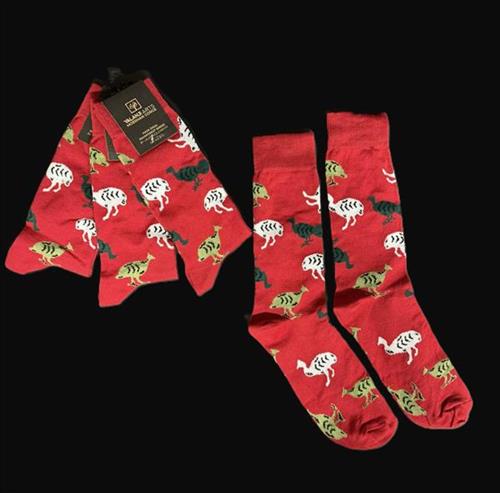
Make it Real Tea Towel by Gemma Unghango

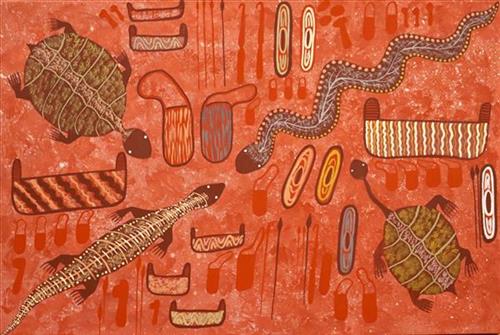
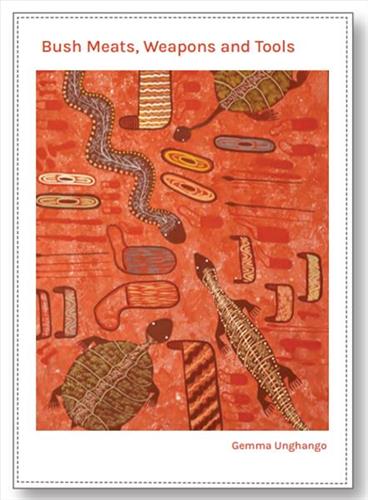
Bush Meats, Weapons and Tools

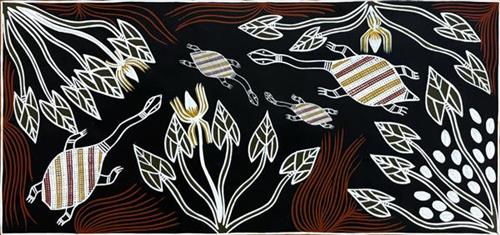
The artist is celebrating the knowledge and provision of bush meats, tools, and utensils, given by the Wandjina. With the knowledge was also given the understanding of how to make the tools and utensils, but also the correct seasons to hunt and eat various bush foods. A very large part of this understanding is the knowledge of sustainable hunting. The knowledge of the seasons reflects the type of food available for hunting. For example, the green turtle, the main species hunted in the Northwestern Kimberley. The large adult turtles contain a lot of meat, and nothing is wasted. The eggs are eaten after being boiled in water.

———————————————————————–

Make it Real
Make it Real is a project delivered through the Aboriginal Art Centre Hub of Western Australia (AACHWA). As a not-for-profit Aboriginal organisation, our profit story ensures the artist receives the economic benefits of their shared generational stories and culture. When an artist thrives, their community also benefits.

The profits generated from this product give 90% back to the artist and 10% back to their art centre. 

*The way profits are distributed can vary, and we ask consumers to be mindful of this when buying Authentic Indigenous Art or products.


————————————————————————-
22174009153


Status: Stock


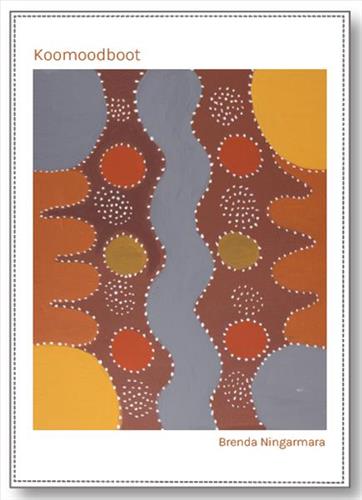
Make it Real Tea Towel by Brenda Ningarmara

Koomoodboot (Coolamon Pocket)

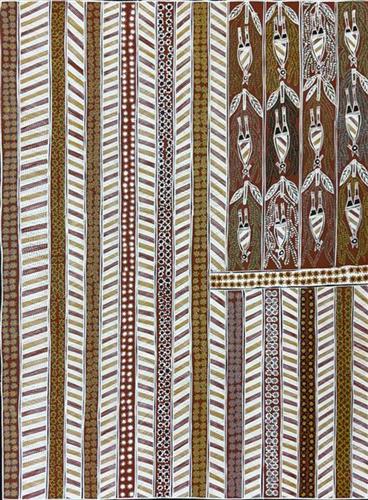
Brenda depicts a place called Koomoodboot (Coolamon Pocket) Dreaming – Tungarmin

———————————————————————-

Make it Real
Make it Real is a project delivered through the Aboriginal Art Centre Hub of Western Australia (AACHWA). As a not-for-profit Aboriginal organisation, our profit story ensures the artist receives the economic benefits of their shared generational stories and culture. When an artist thrives, their community also benefits.

The profits generated from this product give 90% back to the artist and 10% back to their art centre. 

*The way profits are distributed can vary, and we ask consumers to be mindful of this when buying Authentic Indigenous Art or products.


————————————————————————-
37781064009119


Status: Stock


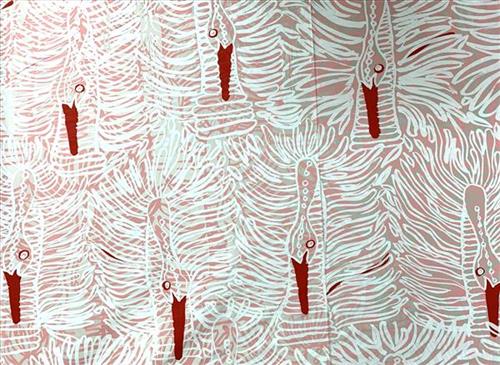
Marlee (Swan) on Rose Silk – Dena Gower

Lengths of handprinted screen printed fabric on 100% silk 137cm wide

The base fabric is rose and it is a three-colour print with off white, pink and red details.

Dena says of this design “The marlee (black swan) is such a beautiful sight when you see them swimming in the Canning River known as Djarlgarro Beelier to the Whadjuk people. They are so graceful to watch. I wanted to catch the beauty and gracefulness of the marlee through my art.”

22204009094


Status: Stock


Kaiela Arts Editions 2025 Catalogue – Unseen Country

The official catalogue for the Kaiela Arts 2025 Editions.

Maree Clarke in collaboration with Spacecraft.

116482388124


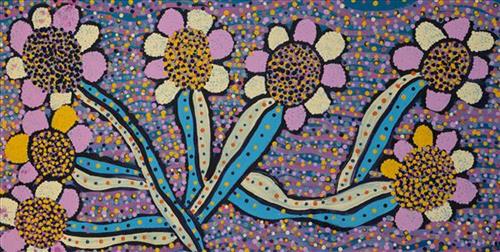
Pilbara Wildflowers

I paint my country in my own style. We have so many beautiful flowers that are watered by the rains. The Pilbara is a place of many beautiful colours.

115682389290


Ganalbingu – Banda (Long Necked Turtle)

The long necked turtle is a dreaming totem for the freshwater people, the Ganalbingu, whose country includes the World Heritage listed, Arafura Wetlands in Central Arnhem Land, Northern Territory

The Yolngu (people) of Arnhem Land originate from a spiritual source, fixed in a particular place in their land or the sea. These ‘Spiritual Reservoirs’ are often in the form of special waterholes made by Wangga (Creator Beings), long ago close to the beginning of time. These creator beings moved across the country side, shaping the land and implanting in each tract of country, the spiritual life force for the people who were to own it.

These creator spirits took many forms. When they gave the land to each group they also gave songs, dances, ceremony, the associated laws and language. The Creation story for Ganalbingu people took place near the middle section of the Glyde River where it becomes the Goyder River. Their land, Ngaliyindi, sits astride the Arafura Swamp in Central Arnhem Land. Some of their major Creative Beings include Banda (freshwater long neck turtle) and Yalman (water lilies).

115682392324


Warrnyu Dhawu (Flying Fox Story)

Back in the Creation time, Warrnyu (Flying Foxes) once lived, like men, in the cave at the place called Kurrki Warrnyu Yirri Djaringal (they also lived in caves called Wadatilmurr & Gurngurmirrngu). Warrnyu lived in these caves for many years and then one day Djanyarr (The Dog), an ancestral being in the form of a man, came along. He was looking around for a place to live. Djanyarr heard the sound of a Flying Fox screaming. He went down to the cliff and pushed the rock and the water came out at the Ganalbingu place called Gurrkawakarrmurr. He then went into the cave and into the sacred hole, frightening all the Flying Fox away. When he went into the hole he left his dilly bag in the tree and went out on the other side of the sacred cave and leaving his spear and woomera. He sat there for a long time. The Dog made three streams and the water went inside the cave. Two of these streams are good drinking water. In the middle it is a sacred water. No-one drinks from the middle of the stream. Children, men, women, young boys or girls are not allowed to drink from the middle of the stream. If they drink the water from the middle of the stream they will go grey too early.

At Kurrki Warrnyu Yirri Ngilaya Djaringal, the Flying Fox made himself into a young man… that’s what Aboriginal people do today. They have ceremonies and dances to make the young boys into men. The songs are called Yirrarwu, Gulumu, Rruburra and Burryun. Dhapi (initiation ceremony) happen today because the Warrnyu (Flying Fox) people performed them a long time ago before the Yolngu people. It was the Warrnyu people who first performed circumcision of the young boys to make them into men. It all happened at Kurrki Warrnyu Yirri Ngilaya Djaringal, this is how this place got its name.

Leaving behind the cave at Kurrki Warrnyu Yirri Djaringal, the Dog travelled west across the Arafura Swamp and came to Djalkulmurr (Mount Delight). From there he travelled north and came to Dunganda (a hill situated a few kilometres east of Ramingining). There he met a female Dog, then they both headed north and came to a place called Garanydjirrmurr where they spoke the Mildjingi language. From Garanydjirrmurr they changed their direction and went west through Guliny’barra, Burgumara and onto the plains. When they reached the plains they smelled something cooking, way up in the north – at Wessel Islands. The aroma they smelt was so enticing that they decided to go there. Lungurrma (the north-east wind) was carrying the smell. One Dog headed north again, but the other Dog decided not to go with him and went back the opposite way. The first Dog that went to Malwanatharra (Sandy Point) went into the sea following its nose to wherever the smell was coming from. It is believed that this Dog still lives in the sea…