221282329328


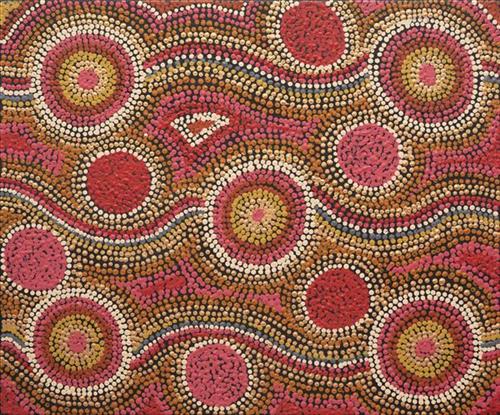
Minyma Kutjara

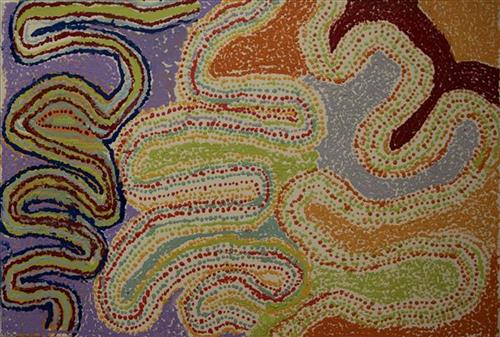
There is a story of deep significance to women which contains metaphorical references to female cycles. It tells of two women travelling north. The pair meet with a group of women, including Kutungu, who are caring for a man who then passes away. They then travel to the area known as Mantaruta, near Uluru, where they chase a curious wanampi (serpent) deep into the ground while trying to catch him. They burn their body hair to attract him and hit him on the head and run away. From afar they throw a manguri/traditional head-ring for carrying which also hits him. He then comes and hits the women who travel on bleeding and hurt.
221282329318


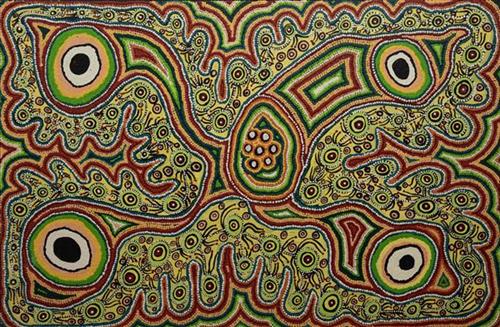
Tjitji Tjuta Walytjata

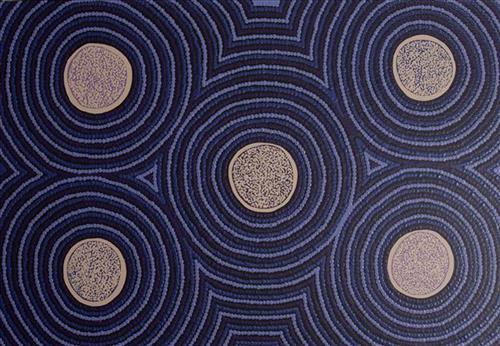
This Tjukurpa is from a place called Walytjata near Pipalyatjara. It’s a true story. You can see all the kids sitting there in the cave. The mother left and told the kids to stay there, but she never came back. It’s a sad story. The older brother, he was looking after everyone. He would go out hunting for malu (kangaroo), kalaya (emu) and bring back the kuka (meat) for all the kids.

221282329746


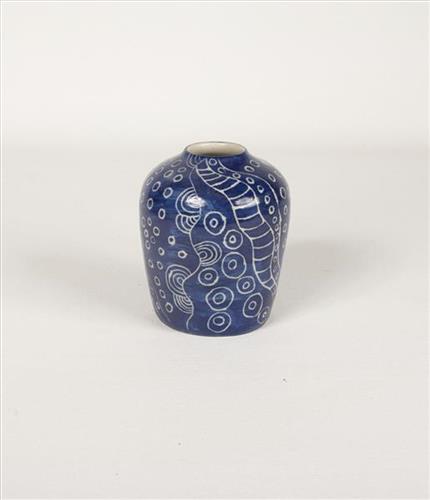
Ngayuku Walka / My Design

Walka means design or pattern. Artists use this title to describe artworks that are pattern based rather than descriptive or telling a story.

221282330639


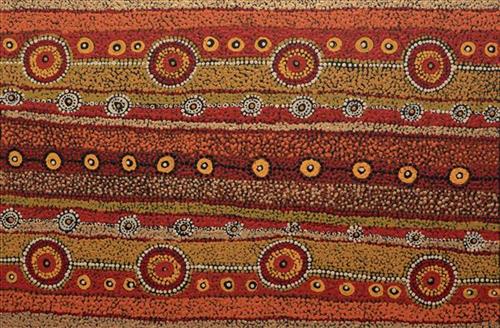
Ngayuku Ngura – My Country

Artists use this title when they are depicting their Country. It might be a representation of a particular place or of different aspects of that area. The artist uses a combination of colour and design to indicate variations in the landscape. Inspiration is drawn from all elements of Country and might include bush tucker, water holes, meeting places, rock formation, birds or animals.

221282331133


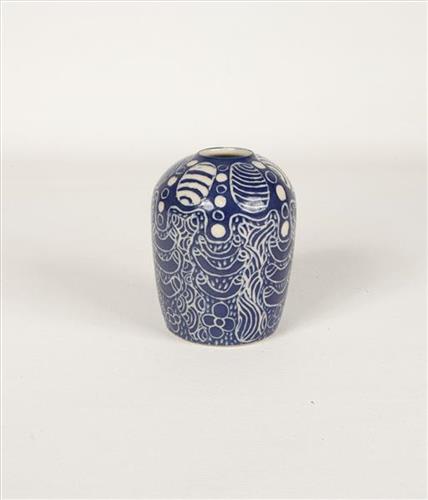
Ngayuku Walka / My Design

Walka means design or pattern. Artists use this title to describe artworks that are pattern based rather than descriptive or telling a story.

221282331232


Ngayuku Walka / My Design

Walka means design or pattern. Artists use this title to describe artworks that are pattern based rather than descriptive or telling a story.

221282331801


Tjukurpa Kunpu (Strong Story)

Before ration times, our life was from Tjukurpa. We ate all the mai putitja (bush foods) and we were happy. Later, petrol came, marijuana came and there was no work. People left their Country, they are going everywhere and they are lost. The Government tries to take our lives, our Manta (Country) and our Tjukurpa. They can’t. This is our place and we have lots of Tjukurpa and our Country and our story is really big. They can’t take it away. We Anangu are strong for our Country and Tjukurpa.


Our Land has been here for a long time, our grandmothers and grandfathers taught us, their grandmothers and grandfathers taught them, not just here, but all over.

This is all still here and it is still strong.

I don’t want to lose my story, I will not lose the Tjukurpa given to me.

221282332559


Ngayuku Ngura – My Country

Artists use this title when they are depicting their Country. It might be a representation of a particular place or of different aspects of that area. The artist uses a combination of colour and design to indicate variations in the landscape. Inspiration is drawn from all elements of Country and might include bush tucker, water holes, meeting places, rock formation, birds or animals.

221282332965


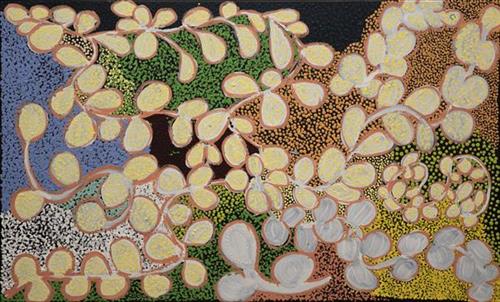
Kaliny-kaliny / Honey Grevillea

Stories are told of the Kaliny-kaliny or Honey Grevillea flower which is a favourite bush food of the Anangu Pitjantjatjara (people). Ultukunpa grows in the sandy soils on the plains. The flowers can be picked and placed in a billycan of water to create ‘honeywater’ (cordial) or they can be sucked for their sweet honey dew.

220982333374


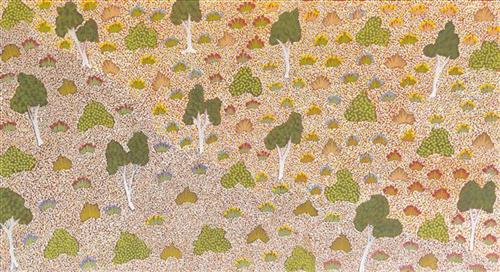
Sevania Kemarre Bonney – View of Country


The community of Ampilatwatja made a conscious decision not to paint ‘altyerr’ dreaming stories, the artists paint their country where those stories sit.

Sevenia was born in Soakage Bore, Utopia and started to paint when she was teenager. She learnt the way to paint landscape and bush medicine from her grandmother Eileen Bonney, a former health worker and artist. Sevenia finds painting soothing and enjoys to share this activity with her kids so they can learn as she did with her grandmother.


Knowing your country is an important part of living in a remote community like Ampilatwatja. Knowing when and where to go hunting and gathering, knowing where there is ‘soakage’ (where you can dig for water), travelling with family for ceremonies, and maintaining a connection with the land.


“This is my country, my view of country.”