


116482339709

Turtles
When we see sea turtles it can mean that they can be mating and that makes us aware that they will soon be going to lay eggs. Some of our people eat the eggs and turtles.

377810582339682
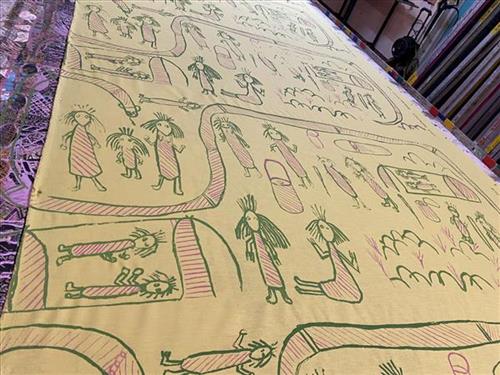
Bawáliba and Bush Flower
This new design from workshops held in 2022 depicting Bawáliba (stone country mimihs) and dilly bags against a background of loosely placed bush flowers. Lucy has depicted her Bawáliba with werrkno (skin) textures.
‘Bawáliba is the djang (Dreaming) of my mother and my uncles. They are good spirits, they protect us and they recognise families. They are really tall- just like human beings, like us. They dance late at night and have a lot of hair.
In olden times, long long long time ago Bawáliba were here, before people were on the land. Bawáliba used to go out hunting and care for country. They hunt carrying fish traps and digging sticks, near the homeland Djinkarr. They go out hunting on the floodplains with dilly bags and digging sticks. They collect a lot of bush foods, and sleep together with one bark shelter.
Sometimes now they still come alive when we sleep, they might come to our houses and peep through the window. At night, they cover themselves with white clay and red cloth tied around their waist. If we hear them, we jump out of bed and get up to look -but they have disappeared, they’re just too quick. Bawáliba might knock on the window to remind us they are there looking out for us.If you listen deeply you can hear them whisper, sometimes they talk about us and might say, ‘why are those people making camp here?’ then they realise ‘Oh they are family from here, it’s ok, they are just sleeping here for the night’.
During the day they always turn into stone and they sleep. We still know that green rock covered in moss near Djinkarr, that’s Bawáliba sleeping.
Some of my ancestors used to speak the same language as the Bawaliba, but all those old people are passed away now. It’s a little bit sad for us, because no one now can speak that Bawaliba language anymore.’ Lucy Yarawanga 2019

377810582339679
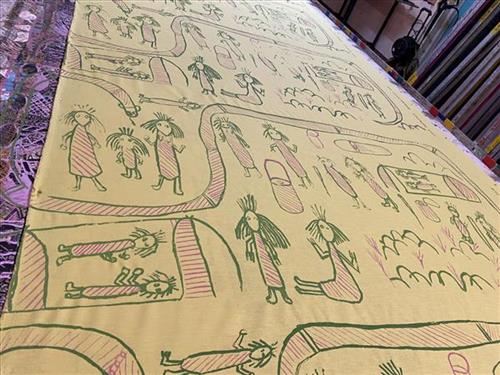
Bawáliba and Bush Flower
This new design from workshops held in 2022 depicting Bawáliba (stone country mimihs) and dilly bags against a background of loosely placed bush flowers. Lucy has depicted her Bawáliba with werrkno (skin) textures.
‘Bawáliba is the djang (Dreaming) of my mother and my uncles. They are good spirits, they protect us and they recognise families. They are really tall- just like human beings, like us. They dance late at night and have a lot of hair.
In olden times, long long long time ago Bawáliba were here, before people were on the land. Bawáliba used to go out hunting and care for country. They hunt carrying fish traps and digging sticks, near the homeland Djinkarr. They go out hunting on the floodplains with dilly bags and digging sticks. They collect a lot of bush foods, and sleep together with one bark shelter.
Sometimes now they still come alive when we sleep, they might come to our houses and peep through the window. At night, they cover themselves with white clay and red cloth tied around their waist. If we hear them, we jump out of bed and get up to look -but they have disappeared, they’re just too quick. Bawáliba might knock on the window to remind us they are there looking out for us.If you listen deeply you can hear them whisper, sometimes they talk about us and might say, ‘why are those people making camp here?’ then they realise ‘Oh they are family from here, it’s ok, they are just sleeping here for the night’.
During the day they always turn into stone and they sleep. We still know that green rock covered in moss near Djinkarr, that’s Bawáliba sleeping.
Some of my ancestors used to speak the same language as the Bawaliba, but all those old people are passed away now. It’s a little bit sad for us, because no one now can speak that Bawaliba language anymore.’ Lucy Yarawanga 2019
116482339655
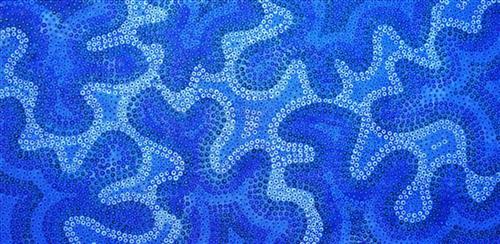
After the Big Rain
After the rain the rivers and creeks in our country come alive with a new growth of plants. The country is filled with beautiful colours. We rejoice looking at our rivers and creeks full of water, so that we can go fishing, kids can go swimming and we can picnic with our families and friends.
115682339904
Bathi (Pandanus Basket)
Bathi are woven from the split leaves of the Screw Palm (Pandanus Spiralis). Coil weaving was introduced to Arnhem Land in the 1930s. It was adapted from techniques used by Indigenous women throughout South East Australia.
115682339903
Bathi (Pandanus Basket)
Bathi are woven from the split leaves of the Screw Palm (Pandanus Spiralis). Coil weaving was introduced to Arnhem Land in the 1930s. It was adapted from techniques used by Indigenous women throughout South East Australia.

221382340037
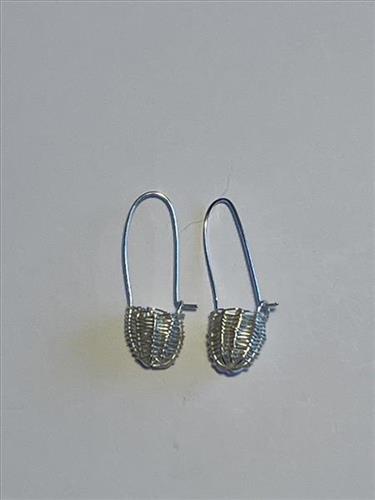
Handwoven Dillybag Earrings Sterling Silver 925
Wagilak Yapa Watj (Wagilak Sisters) range –
exclusive jewellery from indigenous women of Beswick. Developed in studio workshops with jeweller Kate Sale and weaver Fiona Gavino, traditional fibre artists are translating their skills into a series of fine woven wire earrings and pendants. Hand woven in sliver, gold and copper, traditional forms are transformed as delicate interpretations of string and dilly bags, baskets and mats.
Featuring sterling silver, 9ct gold and copper (all nickel-free work).

221382340036
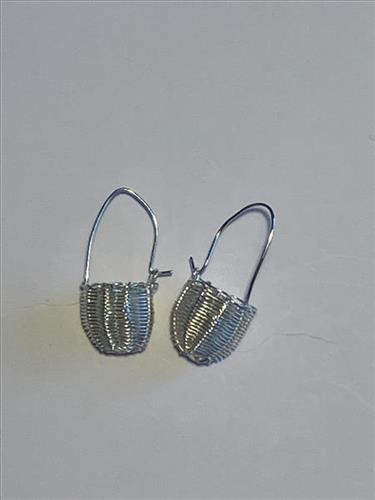
Handwoven Dillybag Earrings Sterling Silver 925
Wagilak Yapa Watj (Wagilak Sisters) range –
exclusive jewellery from indigenous women of Beswick. Developed in studio workshops with jeweller Kate Sale and weaver Fiona Gavino, traditional fibre artists are translating their skills into a series of fine woven wire earrings and pendants. Hand woven in sliver, gold and copper, traditional forms are transformed as delicate interpretations of string and dilly bags, baskets and mats.
Featuring sterling silver, 9ct gold and copper (all nickel-free work).

221382340035
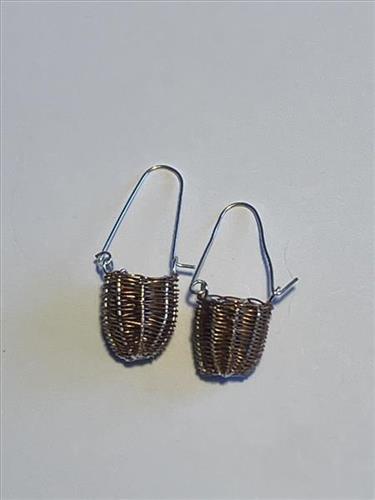
Handwoven DillyBag Earrings Copper &925 Silver
Wagilak Yapa Watj (Wagilak Sisters) range –
exclusive jewellery from indigenous women of Beswick. Developed in studio workshops with jeweller Kate Sale and weaver Fiona Gavino, traditional fibre artists are translating their skills into a series of fine woven wire earrings and pendants. Hand woven in sliver, gold and copper, traditional forms are transformed as delicate interpretations of string and dilly bags, baskets and mats.
Featuring sterling silver, 9ct gold and copper (all nickel-free work).