Dumdum (beetle)
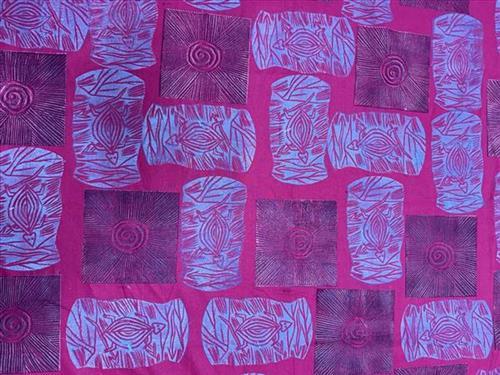
This is the one floating on the river. This is a brown colour, fresh water beetle.
This is family from the yawkyawk (freshwater mermaid).
Janet Marawarr

This is the one floating on the river. This is a brown colour, fresh water beetle.
This is family from the yawkyawk (freshwater mermaid).
Janet Marawarr
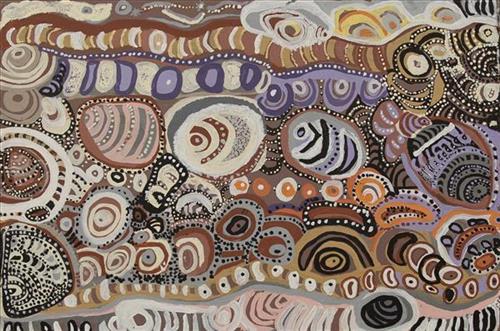
This Tjukurpa is from Lexie’s grandfather’s homeland called Kunytjanu, located just south of Pipalyatjara near the SA border with WA. It’s a story about tjakura, the great desert skink, a small orange lizard found across the APY Lands.
Tjakura has a lot of grandchildren looking after him. One day, a long time ago, he saw too many strangers, an army coming from Mutitjulu. They came and found the tjakura and they killed him. All the kids made a cemetery there for the tjakura. This is a really big story that goes from Kunytjanu to Aralya.
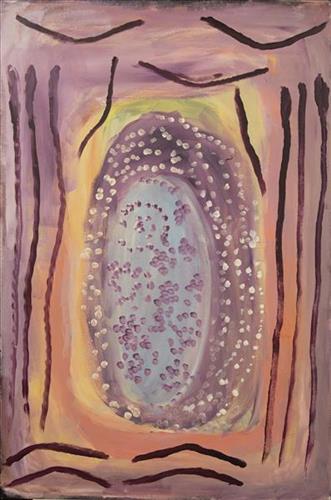
My father told me this story, it’s a dream he had. There was a man who was travelling for a long time. He was travelling with kulata (spear) and kali (boomerang) because someone was waiting there for fighting.
In the middle of the way someone came making problems and trouble. All the kulata gone, all the kali gone. That place is still there and the kangaroo and emu are still drinking there at that waterhole.
This is tjukurpa wiru – a good story. There are some stories I can’t tell you.
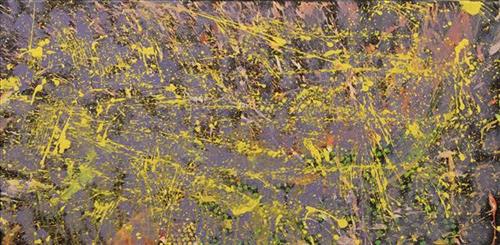
Walka means design or pattern. Artists use this title to describe artworks that are pattern based rather than descriptive or telling a story.
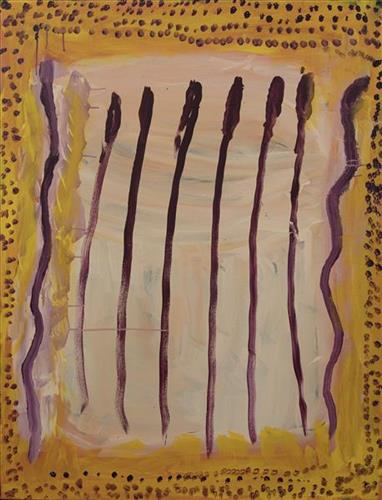
Kungkarangkalpa means the Seven Sisters. This is an extensive creation story that relates to the Pleiades constellation in the southern hemisphere. The story traverses Australia taking on different forms, however Freddy’s part of the story is from his father’s country west of Atila (Mt Connor). For this part of the story a man called Nyiru is chasing the sisters as he wants to sleep with the oldest sister. All the younger sisters are deeply afraid of him.
Nyiru makes kulata tjuta (many spears) and leaves them leaning up against a tree. When the sisters are travelling they find the spears resting there and realise that the wati kura (bad man) is nearby. They get frightened and run away. Eventually, to escape Nyiru, the sisters fly into the sky where they turn into stars and form the constellation.

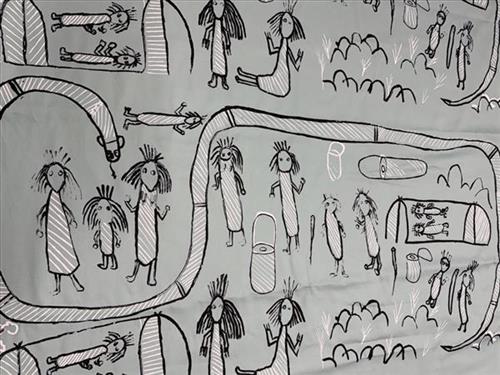
‘My Kikka (mother), when she was alive, she would tell me these stories. I was just a little girl and she would tell us the stories in her language Gurrgoni.
In the camps there were boy and girl Bawáliba, and old Bawáliba too. They loved to dance by the firelight, keeping rhythm with a stick. They had lots of hair, they were really tall and skinny, with spots on their bodies. The Bawáliba lived a long time in peace. They were the only spirits on their country and so they were never disturbed.
One day, a long time ago, the Bawáliba were out hunting, and they saw a large snake- they didn’t know then but she was the Rainbow Serpent. They were really scared, they had never seen that. creature before. She was really beautiful- like a normal king brown snake but with a rainbow from the sky on her back. The Rainbow Serpent was really hungry, and she could smell the Bawáliba from a long way away. She was out looking for food. The Bawáliba tried to stop Ngalyod coming for them but she was just too quick. She snuck up behind the Bawáliba and before they could get away she ate them up. When she was really full and couldn’t eat anymore Bawáliba she changed the rest of them into stone. Still till this day, the Bawáliba stay on that same country as stones.’
Lucy Yarawanga
Yalpirakinu is Adrian’s mother’s country. Adrian’s mother is the late Eunice Napangardi, a well known painter herself. His artworks consistently refer to the desert mountains, ridges and trees which are part of Yalpirakinu. Using a restricted colour palette, Adrian’s brushwork is loaded with energy, drama and memories. He is a deliberate and thoughtful painter; reworking, pushing and pulling the image to completion.
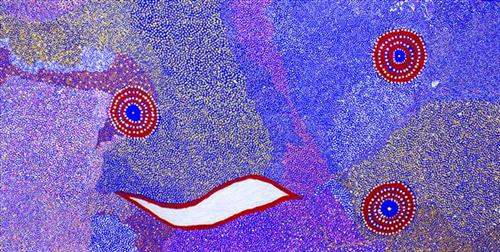
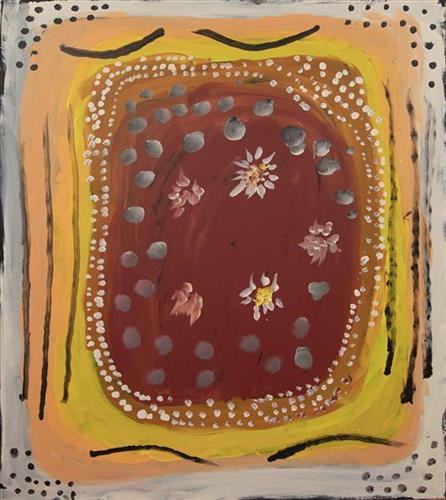
In the artist’s words: This is the story in my father’s country of Pirrupa Kaala. It is the story of the white cocky (circle middle on top) with mako (witchetty grubs) in its mouth. The eagle (left bottom) brought malo (kangaroo) meat (circle left top) for the white cocky as she had a broken wing. But a crow (circle right side bottom) chased the white cocky all over the country because the white cocky had such a big mob of mako. The crow started to hit the white cocky with a nulla nulla and called her greedy. The eagle helped the cocky and chased the crow away. So it happend that the eagle came to stay with white cocky for a little while. But on day he said: ”Oh, I am going home to find another place to stay”, and left the white cocky behind to stay there by herself for good.
The blue colour shows the tracks from the water running into the deep water holes in the sand after the rain. The red colour shows the little mountains where the water comes from and goes into the creek flowing south.

Status: Stock
Unique, one off aprons, hand sewn locally in Broome.
Made from screen printed assorted textile prints created by Nagula Jarndu Artists and hand printed in Melbourne.
These are limited edition garments and each apron is unique
Your purchase of this garment provides income for Aboriginal women artists and helps give them a platform to share their culture and stories.
Nagula Jarndu (Saltwater Woman) is a not-for-profit, 100% Aboriginal owned and governed organisation and the profits from your purchase will go directly to the artist and back into the organisation to fund future projects.
Care and washing guide:
Our designs are hand screen printed onto quality fabric and professionally heat set.
Handwashing your garment in cold water and ironing from the inside-out, will ensure that it is a enjoyed for years to come.