377810582370995


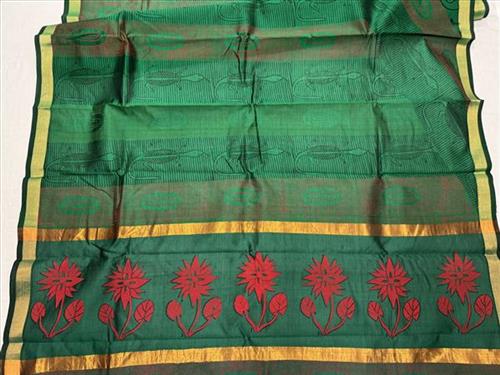
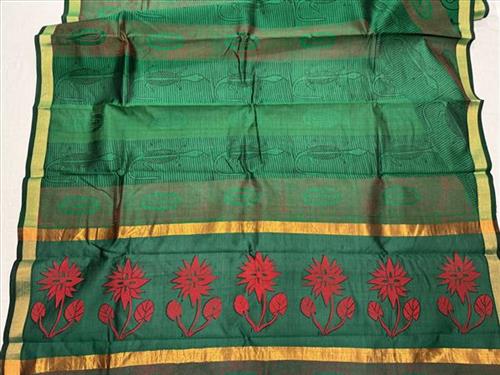
Woodblock Sari by Bábbarra X Tharangini 2025

Woodblock print on handwoven silk, extract print with organic dyes, 100% Silk

Co-created by Bábbarra Women’s Centre, Maningrida and Tharangini Studio, India

Printed by artisans at Tharangini Studio 

Design brief by Bábbarra Women’s Centre Artists

Woodblock carving by Shri C.H. Sreeram and Shri S.K. Rajak

This fabric may feature the following woodblock designs. 

  • Kunred (Country) byJanet Kalidjan Marawarr 
  • Kundalk (Grasses) by Deborah Wurrkidj
  • Ngaldjorlhbo (Mother of Everything) by Janet Kalidjan Marawarr 
  • Yawyyawk (young woman spirit) by Deborah Wurrkidj
  • MANDJABU (FISHTRAP) byJanet Kalidjan Marawarr 
  • MAREBU (PANDANUS MAT) byJanet Kalidjan Marawarr 
  • KUNRED MANKORLOD (MANKORLOD COUNTRY) byJanet Kalidjan Marawarr 
  • ROLK (MAGGOT) KUNWARDDE(ROCKS) by Janet Kalidjan Marawarr 
  • NGALDJORLHBO (MOTHER OF EVERYTHING) by Janet Kalidjan Marawarr 
  • KUNRONJ (FRESH WATER) by Janet Kalidjan Marawarr 
  • NGALYOD (RAINBOW SERPENT) by Janet Kalidjan Marawarr 
  • MANDJABU (FISH TRAP) by Raylene Bonson
  • STINGRAY by Jocelyn Bangardijan Koyole
  • RARRK (CROSS HATCH) by Susan Belinj Marawarr
  • WAK WAK (BLACK CROW DREAMING) A Susan Belinj Marawarr
  • WAK WAK (BLACK CROW DREAMING) B Susan Belinj Marawarr
  • KARRBARDA (CHEEKY YAM) by Deborah Kamanj Wurrkidj
  • MANBIRRBBIRR (FLOWERS OF VERTICORDIA CUNNINGHAMII) by Deborah Kamanj Wurrkidj
  • KUNDALK (NATIVE GRASS)  by Deborah Kamanj Wurrkidj
  • WAYUK (WATERLILY) by Deborah Kamanj Wurrkidj
  • NGALDADMURRNG (SARATOGA) by Carol Kamanj Liyawanga-Campion
  • MERLE MERLE (BUTTERFLY) by Carol Kamanj Liyawanga-Campion
  • BOLUNG (RAINBOW SERPENT) by Jay Belinj Jurrupula-Rostron

“I’m excited to see my Lino design made into a woodblock. We are going to spend Saturday printing with Tharangini Studio. We are going to learn woodblock printing. I’ve been working Bábbarra Women’s Centre for 37 years since it started. I’ve been printing Lino on fabric.” Janet Marawarr 2023

“Tomorrow we do printing Yawkyawk (mermaid spirit) and Ngalyod (rainbow serpent). My design is together with my sister. Together, we started working at the Women’s Centre and Maningrida Arts and Culture, taught by our mother and grandmother. My sister is a sick one, and she passed on her story to me – Ngalyod (rainbow serpent). I help my sister, I help carry the knowledge for her. That’s why we both have designs being made into woodblock.” Deborah Wurrkidj 2024

BACKGROUND

Bábbarra Women’s Centre is located in the Djelk area of Arnhem Land, in a town known as Maningrida and was established in 1987. We represent over 50 women artists from 12 languages and operate under the First Nations-owned Bawinanga Homelands Aboriginal Corporation. The artists at Bábbarra Women’s Centre design screen printed and lino print textiles that illustrate the djang or rich cultural narratives, histories and powerful creation stories of West Arnhem Land. The tradition of lino printing began in the mid-1990s as a way for women to become economically empowered.

Tharangini Studio was established in 1977 in Bangalore by artist and textile enthusiast Lakshmi Srivathsa. Today, it is managed by Srivathsa’s daughter, Padmini Govind, whose global corporate career in technology and defence has led to ingenious eco-friendly printing practices within the lush tropical locale. Under Padmini’s leadership, Tharangini is the only artisan studio with a NEST Ethical Seal of Compliance (fair trade). As the last surviving heritage block print studio in Bangalore, Tharangini is home to one of the largest private archives of vintage woodblocks in India

“Karri-djarrk-durrkmirri means “We work together” in the Kuninjku language of West Arnhem Land and its more than cultural exchange with India, it is two way learning.

Tharangini’s skilled artisans worked closely with Babbarra in 2023-2025 to hand-carve some of Babbarra’s old linocut designs into woodblocks. This initiative was supported by the Centre for Australia-India Relations, Maitri Cultural Partnerships Fund 2023.

The creative relationship not only serves art but it also informs a practical and critical archival outcome for Babbarra Women’s Centre. The walls of Tharangini Studio were neatly lined with boxes of durable woodblocks and many over 200 years old and still being printed. At Bábbarra, we house cupboards and shelves of historic and vulnerable lino tiles, some 30 years old but no longer able to be printed.Tharangini Studio specialises in woodblocks carved out of teak by master artisans, creating a solid medium for textile printing. For Bábbarra Women’s Centre artists, this had the added benefit of preserving the original lino designs. Many lino sheets are crumbling and decaying, a process hastened by the kudjewk (wet season) and humid kurrung (build up).

Combining the cultural authority to share djang and print-making practices at Bábbarra Women’s Centre with the tradition of woodblock printing in India, the project exchanges many thousands of years of knowledge across the globe. The Bábbarra artists, as custodians of these designs, must receive permission from their djungkays (ritual manager through the maternal line) to share their stories.

This connection will undoubtedly sustain a lasting and significant impact on the legacy and longevity of Bábbarra Women’s Centre. The story doesn’t end here in honour of the generosity shown by Tharangini Studio, Padmini Govind will join Babbarra Women’s Centre artists in Maningrida for a workshop in June 2025.” 

Extract taken from karri-djarrk–durrkmirri catalogue essay, Jessica Stalenberg 2025
377810582370994


Woodblock Sari by Bábbarra X Tharangini 2025

Woodblock print on handwoven silk, extract print with organic dyes, 100% Silk

Co-created by Bábbarra Women’s Centre, Maningrida and Tharangini Studio, India

Printed by artisans at Tharangini Studio 

Design brief by Bábbarra Women’s Centre Artists

Woodblock carving by Shri C.H. Sreeram and Shri S.K. Rajak

This fabric may feature the following woodblock designs. 

  • Kunred (Country) byJanet Kalidjan Marawarr 
  • Kundalk (Grasses) by Deborah Wurrkidj
  • Ngaldjorlhbo (Mother of Everything) by Janet Kalidjan Marawarr 
  • Yawyyawk (young woman spirit) by Deborah Wurrkidj
  • MANDJABU (FISHTRAP) byJanet Kalidjan Marawarr 
  • MAREBU (PANDANUS MAT) byJanet Kalidjan Marawarr 
  • KUNRED MANKORLOD (MANKORLOD COUNTRY) byJanet Kalidjan Marawarr 
  • ROLK (MAGGOT) KUNWARDDE(ROCKS) by Janet Kalidjan Marawarr 
  • NGALDJORLHBO (MOTHER OF EVERYTHING) by Janet Kalidjan Marawarr 
  • KUNRONJ (FRESH WATER) by Janet Kalidjan Marawarr 
  • NGALYOD (RAINBOW SERPENT) by Janet Kalidjan Marawarr 
  • MANDJABU (FISH TRAP) by Raylene Bonson
  • STINGRAY by Jocelyn Bangardijan Koyole
  • RARRK (CROSS HATCH) by Susan Belinj Marawarr
  • WAK WAK (BLACK CROW DREAMING) A Susan Belinj Marawarr
  • WAK WAK (BLACK CROW DREAMING) B Susan Belinj Marawarr
  • KARRBARDA (CHEEKY YAM) by Deborah Kamanj Wurrkidj
  • MANBIRRBBIRR (FLOWERS OF VERTICORDIA CUNNINGHAMII) by Deborah Kamanj Wurrkidj
  • KUNDALK (NATIVE GRASS)  by Deborah Kamanj Wurrkidj
  • WAYUK (WATERLILY) by Deborah Kamanj Wurrkidj
  • NGALDADMURRNG (SARATOGA) by Carol Kamanj Liyawanga-Campion
  • MERLE MERLE (BUTTERFLY) by Carol Kamanj Liyawanga-Campion
  • BOLUNG (RAINBOW SERPENT) by Jay Belinj Jurrupula-Rostron

“I’m excited to see my Lino design made into a woodblock. We are going to spend Saturday printing with Tharangini Studio. We are going to learn woodblock printing. I’ve been working Bábbarra Women’s Centre for 37 years since it started. I’ve been printing Lino on fabric.” Janet Marawarr 2023

“Tomorrow we do printing Yawkyawk (mermaid spirit) and Ngalyod (rainbow serpent). My design is together with my sister. Together, we started working at the Women’s Centre and Maningrida Arts and Culture, taught by our mother and grandmother. My sister is a sick one, and she passed on her story to me – Ngalyod (rainbow serpent). I help my sister, I help carry the knowledge for her. That’s why we both have designs being made into woodblock.” Deborah Wurrkidj 2024

BACKGROUND

Bábbarra Women’s Centre is located in the Djelk area of Arnhem Land, in a town known as Maningrida and was established in 1987. We represent over 50 women artists from 12 languages and operate under the First Nations-owned Bawinanga Homelands Aboriginal Corporation. The artists at Bábbarra Women’s Centre design screen printed and lino print textiles that illustrate the djang or rich cultural narratives, histories and powerful creation stories of West Arnhem Land. The tradition of lino printing began in the mid-1990s as a way for women to become economically empowered.

Tharangini Studio was established in 1977 in Bangalore by artist and textile enthusiast Lakshmi Srivathsa. Today, it is managed by Srivathsa’s daughter, Padmini Govind, whose global corporate career in technology and defence has led to ingenious eco-friendly printing practices within the lush tropical locale. Under Padmini’s leadership, Tharangini is the only artisan studio with a NEST Ethical Seal of Compliance (fair trade). As the last surviving heritage block print studio in Bangalore, Tharangini is home to one of the largest private archives of vintage woodblocks in India

“Karri-djarrk-durrkmirri means “We work together” in the Kuninjku language of West Arnhem Land and its more than cultural exchange with India, it is two way learning.

Tharangini’s skilled artisans worked closely with Babbarra in 2023-2025 to hand-carve some of Babbarra’s old linocut designs into woodblocks. This initiative was supported by the Centre for Australia-India Relations, Maitri Cultural Partnerships Fund 2023.

The creative relationship not only serves art but it also informs a practical and critical archival outcome for Babbarra Women’s Centre. The walls of Tharangini Studio were neatly lined with boxes of durable woodblocks and many over 200 years old and still being printed. At Bábbarra, we house cupboards and shelves of historic and vulnerable lino tiles, some 30 years old but no longer able to be printed.Tharangini Studio specialises in woodblocks carved out of teak by master artisans, creating a solid medium for textile printing. For Bábbarra Women’s Centre artists, this had the added benefit of preserving the original lino designs. Many lino sheets are crumbling and decaying, a process hastened by the kudjewk (wet season) and humid kurrung (build up).

Combining the cultural authority to share djang and print-making practices at Bábbarra Women’s Centre with the tradition of woodblock printing in India, the project exchanges many thousands of years of knowledge across the globe. The Bábbarra artists, as custodians of these designs, must receive permission from their djungkays (ritual manager through the maternal line) to share their stories.

This connection will undoubtedly sustain a lasting and significant impact on the legacy and longevity of Bábbarra Women’s Centre. The story doesn’t end here in honour of the generosity shown by Tharangini Studio, Padmini Govind will join Babbarra Women’s Centre artists in Maningrida for a workshop in June 2025.” 

Extract taken from karri-djarrk–durrkmirri catalogue essay, Jessica Stalenberg 2025
377810582370993


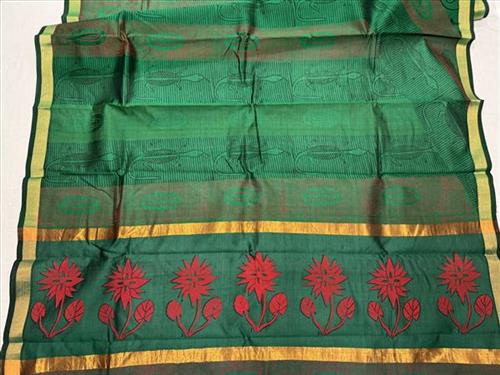
Woodblock Sari by Bábbarra X Tharangini 2025

Woodblock print on handwoven silk, extract print with organic dyes, 100% Silk

Co-created by Bábbarra Women’s Centre, Maningrida and Tharangini Studio, India

Printed by artisans at Tharangini Studio 

Design brief by Bábbarra Women’s Centre Artists

Woodblock carving by Shri C.H. Sreeram and Shri S.K. Rajak

This fabric may feature the following woodblock designs. 

  • Kunred (Country) byJanet Kalidjan Marawarr 
  • Kundalk (Grasses) by Deborah Wurrkidj
  • Ngaldjorlhbo (Mother of Everything) by Janet Kalidjan Marawarr 
  • Yawyyawk (young woman spirit) by Deborah Wurrkidj
  • MANDJABU (FISHTRAP) byJanet Kalidjan Marawarr 
  • MAREBU (PANDANUS MAT) byJanet Kalidjan Marawarr 
  • KUNRED MANKORLOD (MANKORLOD COUNTRY) byJanet Kalidjan Marawarr 
  • ROLK (MAGGOT) KUNWARDDE(ROCKS) by Janet Kalidjan Marawarr 
  • NGALDJORLHBO (MOTHER OF EVERYTHING) by Janet Kalidjan Marawarr 
  • KUNRONJ (FRESH WATER) by Janet Kalidjan Marawarr 
  • NGALYOD (RAINBOW SERPENT) by Janet Kalidjan Marawarr 
  • MANDJABU (FISH TRAP) by Raylene Bonson
  • STINGRAY by Jocelyn Bangardijan Koyole
  • RARRK (CROSS HATCH) by Susan Belinj Marawarr
  • WAK WAK (BLACK CROW DREAMING) A Susan Belinj Marawarr
  • WAK WAK (BLACK CROW DREAMING) B Susan Belinj Marawarr
  • KARRBARDA (CHEEKY YAM) by Deborah Kamanj Wurrkidj
  • MANBIRRBBIRR (FLOWERS OF VERTICORDIA CUNNINGHAMII) by Deborah Kamanj Wurrkidj
  • KUNDALK (NATIVE GRASS)  by Deborah Kamanj Wurrkidj
  • WAYUK (WATERLILY) by Deborah Kamanj Wurrkidj
  • NGALDADMURRNG (SARATOGA) by Carol Kamanj Liyawanga-Campion
  • MERLE MERLE (BUTTERFLY) by Carol Kamanj Liyawanga-Campion
  • BOLUNG (RAINBOW SERPENT) by Jay Belinj Jurrupula-Rostron

“I’m excited to see my Lino design made into a woodblock. We are going to spend Saturday printing with Tharangini Studio. We are going to learn woodblock printing. I’ve been working Bábbarra Women’s Centre for 37 years since it started. I’ve been printing Lino on fabric.” Janet Marawarr 2023

“Tomorrow we do printing Yawkyawk (mermaid spirit) and Ngalyod (rainbow serpent). My design is together with my sister. Together, we started working at the Women’s Centre and Maningrida Arts and Culture, taught by our mother and grandmother. My sister is a sick one, and she passed on her story to me – Ngalyod (rainbow serpent). I help my sister, I help carry the knowledge for her. That’s why we both have designs being made into woodblock.” Deborah Wurrkidj 2024

BACKGROUND

Bábbarra Women’s Centre is located in the Djelk area of Arnhem Land, in a town known as Maningrida and was established in 1987. We represent over 50 women artists from 12 languages and operate under the First Nations-owned Bawinanga Homelands Aboriginal Corporation. The artists at Bábbarra Women’s Centre design screen printed and lino print textiles that illustrate the djang or rich cultural narratives, histories and powerful creation stories of West Arnhem Land. The tradition of lino printing began in the mid-1990s as a way for women to become economically empowered.

Tharangini Studio was established in 1977 in Bangalore by artist and textile enthusiast Lakshmi Srivathsa. Today, it is managed by Srivathsa’s daughter, Padmini Govind, whose global corporate career in technology and defence has led to ingenious eco-friendly printing practices within the lush tropical locale. Under Padmini’s leadership, Tharangini is the only artisan studio with a NEST Ethical Seal of Compliance (fair trade). As the last surviving heritage block print studio in Bangalore, Tharangini is home to one of the largest private archives of vintage woodblocks in India

“Karri-djarrk-durrkmirri means “We work together” in the Kuninjku language of West Arnhem Land and its more than cultural exchange with India, it is two way learning.

Tharangini’s skilled artisans worked closely with Babbarra in 2023-2025 to hand-carve some of Babbarra’s old linocut designs into woodblocks. This initiative was supported by the Centre for Australia-India Relations, Maitri Cultural Partnerships Fund 2023.

The creative relationship not only serves art but it also informs a practical and critical archival outcome for Babbarra Women’s Centre. The walls of Tharangini Studio were neatly lined with boxes of durable woodblocks and many over 200 years old and still being printed. At Bábbarra, we house cupboards and shelves of historic and vulnerable lino tiles, some 30 years old but no longer able to be printed.Tharangini Studio specialises in woodblocks carved out of teak by master artisans, creating a solid medium for textile printing. For Bábbarra Women’s Centre artists, this had the added benefit of preserving the original lino designs. Many lino sheets are crumbling and decaying, a process hastened by the kudjewk (wet season) and humid kurrung (build up).

Combining the cultural authority to share djang and print-making practices at Bábbarra Women’s Centre with the tradition of woodblock printing in India, the project exchanges many thousands of years of knowledge across the globe. The Bábbarra artists, as custodians of these designs, must receive permission from their djungkays (ritual manager through the maternal line) to share their stories.

This connection will undoubtedly sustain a lasting and significant impact on the legacy and longevity of Bábbarra Women’s Centre. The story doesn’t end here in honour of the generosity shown by Tharangini Studio, Padmini Govind will join Babbarra Women’s Centre artists in Maningrida for a workshop in June 2025.” 

Extract taken from karri-djarrk–durrkmirri catalogue essay, Jessica Stalenberg 2025
115682371483


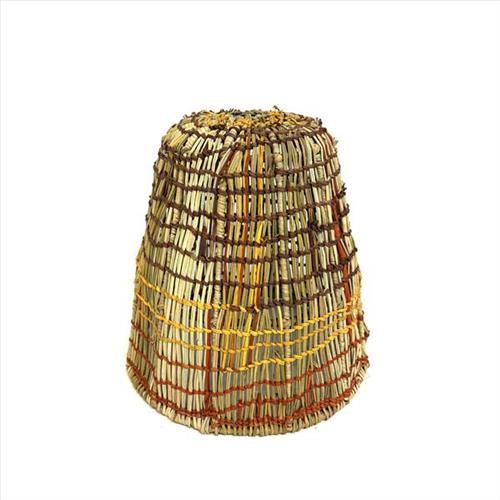
Koskela Lampshade

This beautiful lampshade is made with pandanus. Once harvested from the jungle, the fibres are dyed with roots, barks, leaves or fruits making the natural dyes. 

The weavers of Ramingining in Northeast Arnhem Land usually create traditional ceremonial and ritual objects working together as a group to harvest materials and develop work yet each with their own contemporary colourful and unique designs. This is one of the first times they have embraced making objects which are not traditional Yolngu objects and the strength of their identity as late career Yolngu Artists is distilled in these lampshades.

Exquisite craftsmanship manually transferred from Grandmothers, Mothers and Aunties is used to create these stunning lampshades which look amazing with lighting projecting the rhythms and patterns or without lighting to appreciate the colour, the intricacies and detail of the design.

115682371481


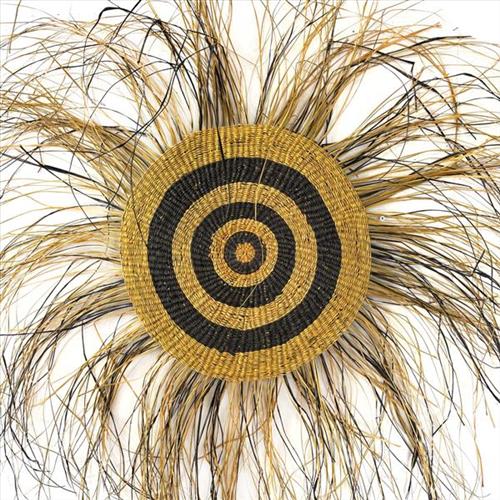
Woven Mat

Yolŋu weavers of Arnhem Land create utilitarian, ceremonial, and decorative pieces using naturally sourced materials. This mat is made from young Pandanus spiralis leaves, harvested with a wooden hook, stripped of prickles, and dried to create strong, resilient fibres. These fibres are then twisted, coiled, or woven using traditional techniques to produce both functional and decorative mats.

Bula’bula weavers exclusively use natural dyes, derived from locally sourced roots, leaves and grasses. These pigments are extracted and infused into pandanus fibres by boiling over an open fire, producing the rich, vibrant colours characteristic of contemporary Yolŋu weavings.

Traditionally, Nganiyal (conical mats) functioned as insect screens when erected and as seating mats when folded, playing an important role in both daily life and ceremonial practices. Today, Yolŋu artists create a variety of shapes, including flat, round, and oblong mats. These non-traditional styles and the use of bright colours became more common after Missionaries began commissioning pieces in this style.

221282371402


Margaret’s Father’s Country

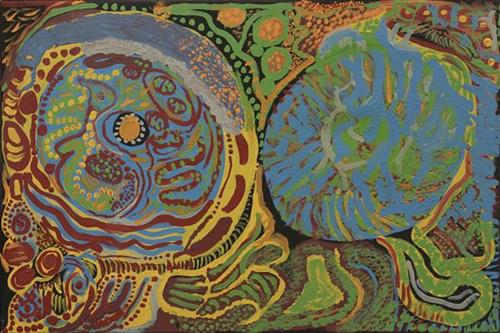
My father’s place is Mt. Liebe, sandhill country.  The Wanapi rests there under the surface of the creek.  When we go to visit that country, the Wanapi stirs underneath the ground and bubbles rise up in the water.  He is there to protect that place.  We speak to that Wanapi in our language and he knows then that it is us. It’s okay for us to be there and the bubbles settle back down.  Close to this creek is where the Arkaryi women are sitting.  This is an important women’s site.  I can’t speak too much about that, as it would be dangerous to disturb those women.

221282371379


Jeffrey’s Birds

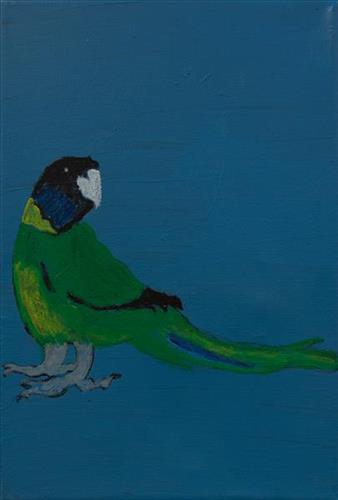
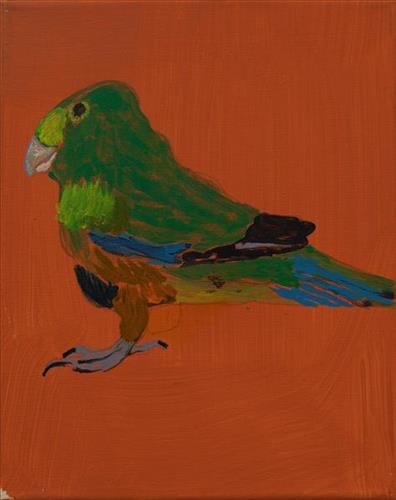
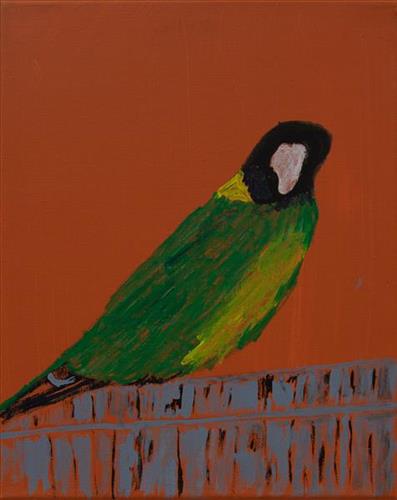
Jeffrey paints his favourite birds that live in the country around Ernabella. These include the kuparu (magpie), partilpa (Port Lincoln ringed neck parrot), kayarkiyarpa (galah), tjintir-tjintirpa (willy wag-tail), piil-piilpa (yellow throated minor) and kuurkuurpa (owls).


.

221282371373


Jeffrey’s Birds

Jeffrey paints his favourite birds that live in the country around Ernabella. These include the kuparu (magpie), partilpa (Port Lincoln ringed neck parrot), kayarkiyarpa (galah), tjintir-tjintirpa (willy wag-tail), piil-piilpa (yellow throated minor) and kuurkuurpa (owls).


.

221282371371


Jeffrey’s Birds

Jeffrey paints his favourite birds that live in the country around Ernabella. These include the kuparu (magpie), partilpa (Port Lincoln ringed neck parrot), kayarkiyarpa (galah), tjintir-tjintirpa (willy wag-tail), piil-piilpa (yellow throated minor) and kuurkuurpa (owls).


.

114182371291


Wati Kutjarra

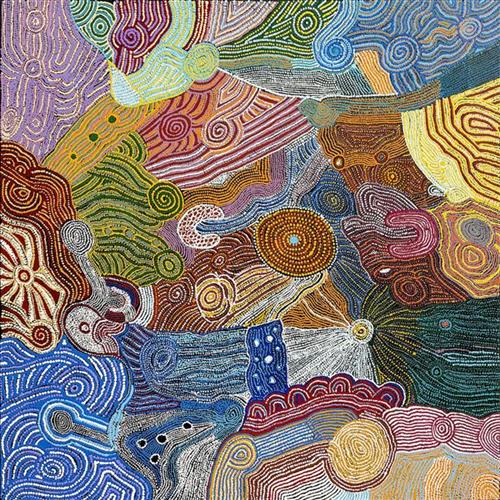
This is the story of two powerful magicians who came to the Ngaanyatjarra Lands from far away to the west;

‘These two men are always together, always camping together. They do all sorts of tricks when they travel across the lands as they stop from place to place. When they reached ‘Wirtapi Wara’ (Long Black or Blackstone Range) they argued about which way to go around. One went around the south side and the other the north side.

At a distance it seemed they didn’t recognise each other or perhaps they were just pretending not to recognise each other! It is also said that at Papulankutja they tricked each other by changing their appearance at the same time so they had no chance to recognise each other. The name Papulankutja comes from the Ngaanyatjarra word meaning, ‘to stare without recognising each other’.

‘They usually took the form of goanna but they could turn into other animals as well. Finally, when they got to Kaltukatjara (Docker River) they had become so arrogant that without realising they walked straight into some local men’s business even though they were warned by the local women. The goanna men led themselves blindly to their fate”.