377815582371579
Untitled
377815582371577
Untitled
377815582371575
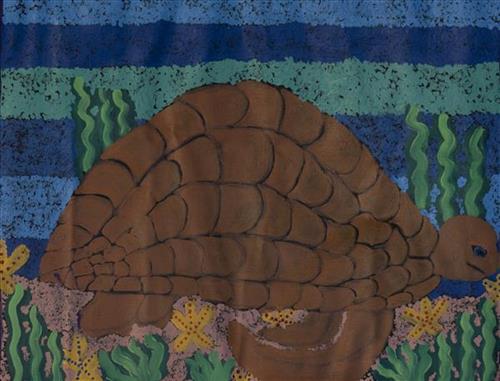
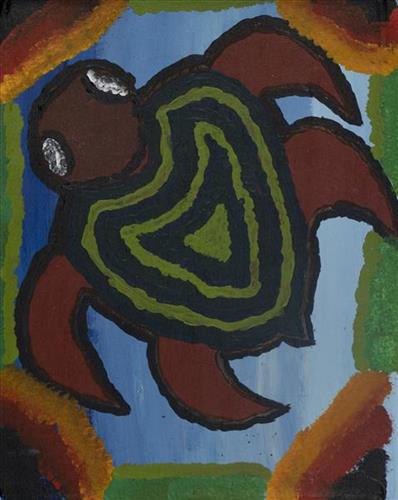
River and Sea Turtle
377815582371574
Untitled
377815582371573
Untitled
377815582371572
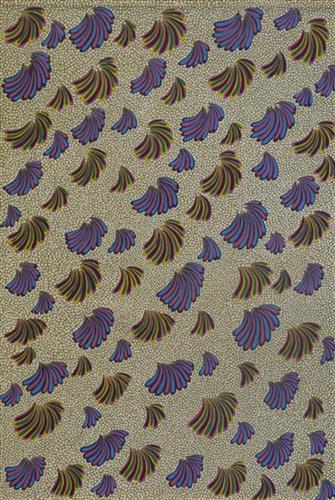
Wild Flowers
377815582371570
Untitled
377815582371568
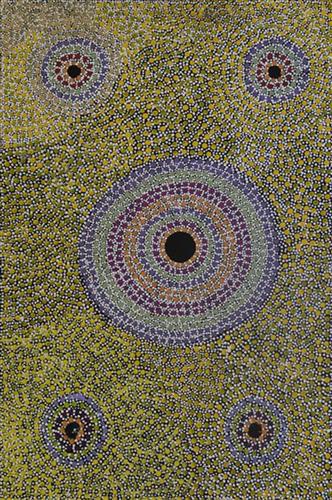
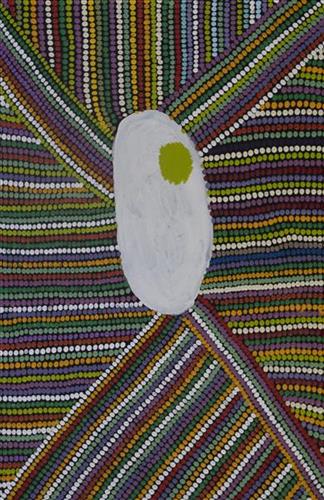
Ngangumarta Warran (Country)
“Nyangumarta Country home to the Nyangumarta people from the Desert to the sea side. Old people lived and walked on this land, we as Nyangumarta still look after the land today, we still go out on Country hunt and keep our way of life living of the traditional food from the land.
Nyangumarta people travelled and lived in the desert and the seaside. This painting is a story from the Nyangumarta dreaming where once a woman who walked with her child along this country collecting sea food “Mayi”. They were both on the reef and suddenly the tide came and drowned them, so now today there’s two rocks which remain out by the sea.
Because we carry the culture and most people tell stories with their painting, and that’s how it was from the beginning. Passing knowledge down. They might not see it now, but in the future, younger people might want to follow in their Elders’ footsteps. And carry on the skills and lifestyles. It can be anything—painting, hunting, becoming leaders.”
– Venetta Yanawana
115682371909
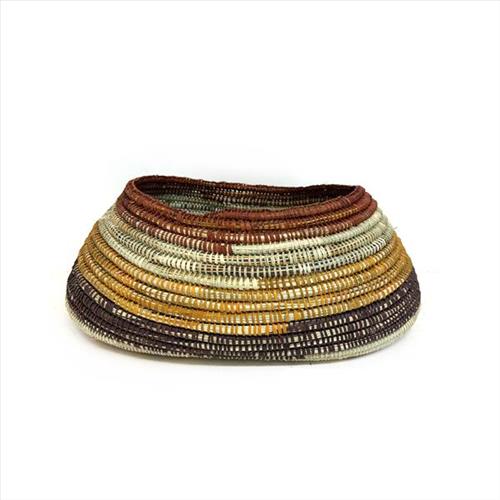
Bathi (Pandanus Basket)
Yolŋu weavers of Arnhem Land create utilitarian, ceremonial, and decorative pieces using naturally sourced materials. This Bathi (Pandanus Basket) is made from young Pandanus spiralis leaves, harvested with a wooden hook, stripped of prickles, and dried to create strong, resilient fibres. These fibres are then twisted, coiled, or woven using various techniques to produce both functional and decorative baskets.
Typically, Bathi are made using a coiling technique which was adapted from techniques used by Indigenous women throughout Southeast Australia. Introduced to Arnhem Land weavers in the 1930’s as Missionaries began commissioning pieces in this style.
Bula’bula weavers exclusively use natural dyes, derived from locally sourced roots, leaves and grasses. These pigments are extracted and infused into pandanus fibres by boiling over an open fire, producing the rich, vibrant colours characteristic of contemporary Yolŋu weavings.