221282370726


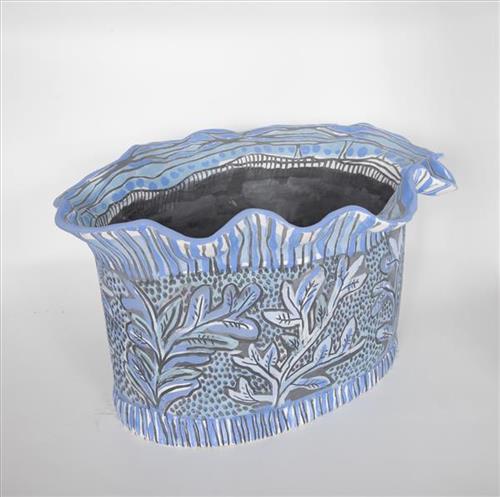
Kampurarpa Tjukurpa – Elizabeth’s Story

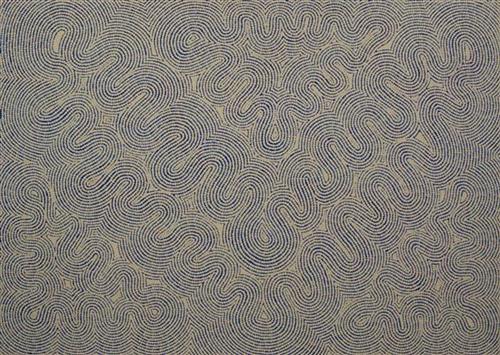
Kampurarpa are bush tomatoes. Elizabeth’s work comments on the environmental change that has occurred on her country due to the introduction of non-native fauna such as cattle, and flora, notably weeds like buffel grass. Buffel grass is so widespread and destructive that it is commonly known in and around Pukatja as tjanpi mamu or devil grass.

From the very start of Elizabeth’s artistic practice she has drawn her kampurarpa tjukurpa (bush tomato story) in clay. In the old times kampurarpa were one of the main foods for Anangu.

I’ve seen the land change. We used to have a lot of flowers. We used to go out to the bush to collect bush tucker, like kampurarpa (bush tomatoes). And now there’s a lot of buffel grass everywhere. The land is changed by the buffel grass. Now there’s no more flowers – no purple flowers, yellow flowers, white or pink flowers. I’ve seen it. When all the cattle and the sheep and the goats came, the kangaroos left and went a long way away. They saw the strange animals and they left. That’s a true story.

Today, sometimes we still go out and collect kampurarpa but not like we did before. Our country has been changed by cattle and weeds like buffel grass, so we can’t find all the old foods like we once did. I’ll keep telling the kampurarpa story in my work, that keeps the stories, songs and dances about these important foods alive and strong.

221282370721


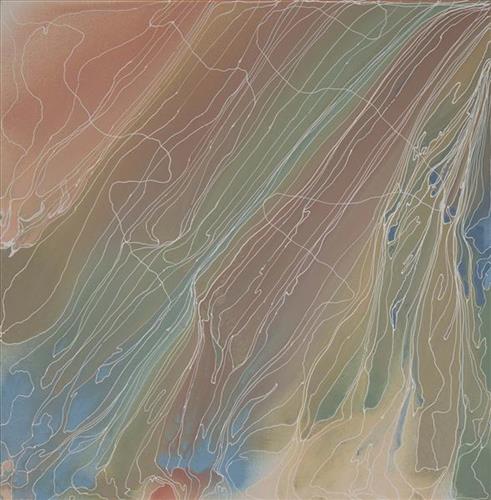
Pantu (Salt lake)

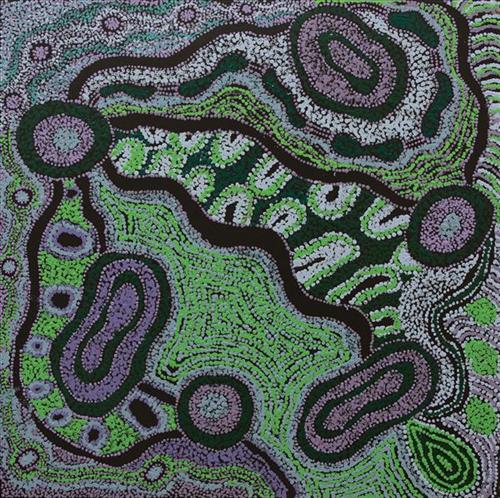
A very significant tjurkurpa (story) to Anangu is Kungkarangkalpa (Seven Sisters) which is an extensive creation story relating to the Pleiades constellation. The story traverses Australia taking different forms, and local women are privy to the part of the story which takes place in the country near Ernabella.

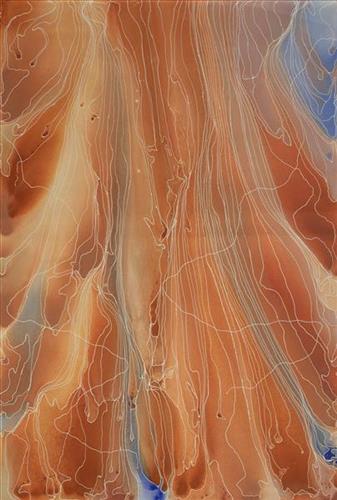
In her paintings Janice is depicting a salt-lake near Attila (Mt Connor) a landmark in the Seven Sisters story. This story has been passed down to her by senior artist and aunt Renita Stanley. In this part of the story the sisters are walking and traveling south through this country. The Salt Lake that is a part of this arid county comes alive after rain. As the kapi (water) moves across the land it transforms the colour and light on the land and Janice is painting this change and movement.

221282370703


Tjukula/Waterholes

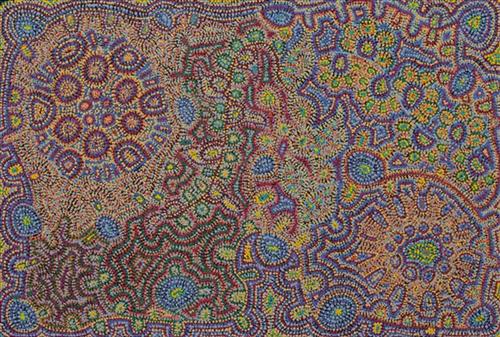
For the Pitjantjatjara people living in the desert, knowledge of their water sources was critical to their survival. This resulted in an intimate understanding of the landscape which continues today. Water is an essential element in the desert. These rock holes were particularly important during the dry season when most of the water holes and creeks dried up.  Deep familiarity with the topography of their country and the way rain would interact with the land ensured constant sources of water could be found. Knowledge of rock hole sites is passed on from generation to generation and revered by all Anangu (people).

Tjukula means rock-holes, which are found with surprising frequency in the Musgrave Ranges and country around Ernabella.  Between visits, Anangu would use a construction of rocks and spinifex to guard these important water sources from spoilage by feral and stock animals such as cattle, camels, horses and donkeys.

221282370701


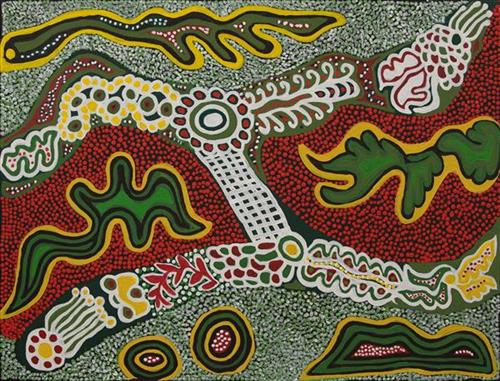
Kulata Tjuta – Kungkarangkalpa Freddy’s Story

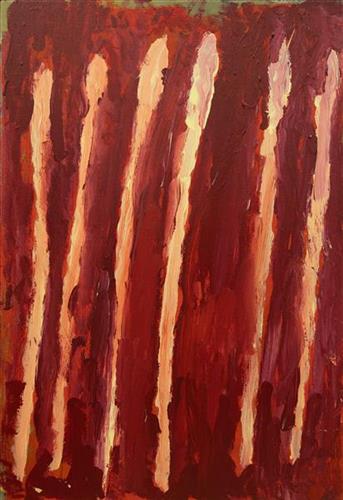
Kungkarangkalpa means the Seven Sisters. This is an extensive creation story that relates to the Pleiades constellation in the southern hemisphere. The story traverses Australia taking on different forms, however Freddy’s part of the story is from his father’s country west of Atila (Mt Connor). For this part of the story a man called Nyiru is chasing the sisters as he wants to sleep with the oldest sister. All the younger sisters are deeply afraid of him. 

Nyiru makes kulata tjuta (many spears) and leaves them leaning up against a tree. When the sisters are travelling they find the spears resting there and realise that the wati kura (bad man) is nearby. They get frightened and run away. Eventually, to escape Nyiru, the sisters fly into the sky where they turn into stars and form the constellation.

221282370700


Minyma Kutjara (Two Women Near Ernabella)

There are many stories about the two sisters (Minyma Kutjara). This part of the story is siginificant to the women of Ernabella. There was a gathering of minyma mingkiri (mouse women) at a hill called Yunanpa, which is near Ngarutjara (to the north of Ernabella). They are all collecting bushfoods together when the two sisters decide to go travelling. They travel to several water places to the north and east of Ernabella including Alalka. They keep going until they get to Wamitjara, a waterhole near Kenmore park. Here they come across a man sleeping. They hit him over the head with their wana (digging stick) and knock him unconscious. Then they tie up his arms and legs and head towards Alice Springs, carrying him between them. They sing and dance sacred women’s stories all the way. They leave him at Stuart’s Well, and continue on to Alice Springs to meet up with a large group of women.

221282370697


Kungkarangkalpa / Seven Sisters

Kungkarangkalpa means the Seven Sisters. This is an extensive creation story that relates to the Pleiades constellation in the southern hemisphere. The story traverses Australia taking on different forms, however local women are privy to the part of the story which takes place in the country near Ernabella. For this part of the story, the man called Nyiru is chasing the sisters as he wants to sleep with the oldest sister. All the younger sisters are deeply afraid of him. As Nyiru is chasing the sisters, he tries to catch them by using magic to turn himself into the most tempting bush tomatoes for the sisters to eat and the most beautiful ili (fig) tree for the sisters to camp under. However, the sisters are aware of his magic and go hungry and run through the night rather than be caught by Nyiru. Eventually, to escape Nyiru, the sisters fly into the sky where they turn into stars and form the constellation.

221282370696


Kungkarangkalpa / Seven Sisters

Kungkarangkalpa means the Seven Sisters. This is an extensive creation story that relates to the Pleiades constellation in the southern hemisphere. The story traverses Australia taking on different forms, however local women are privy to the part of the story which takes place in the country near Ernabella. For this part of the story, the man called Nyiru is chasing the sisters as he wants to sleep with the oldest sister. All the younger sisters are deeply afraid of him. As Nyiru is chasing the sisters, he tries to catch them by using magic to turn himself into the most tempting bush tomatoes for the sisters to eat and the most beautiful ili (fig) tree for the sisters to camp under. However, the sisters are aware of his magic and go hungry and run through the night rather than be caught by Nyiru. Eventually, to escape Nyiru, the sisters fly into the sky where they turn into stars and form the constellation.

221282370695


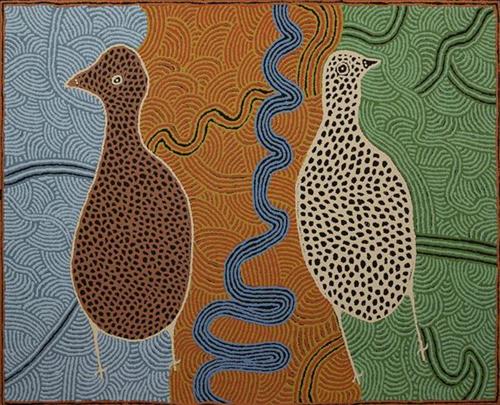
Kipara and Kalaya – Bush Turkey and Emu

A tale of deceit! Emu, a father, had many children as is typical of emu. Bush Turkey was father to only one child. While out hunting they came across one another. Mournfully, Emu told Turkey that he had killed all his children and that Turkey should do the same. Turkey’s son protested! “No father! I am a good son! Don’t kill me!” But Turkey, feeling sorry for Emu, killed his only child. Later Turkey again saw Emu, but with his many children in tow. He was wild with anger and sadness. He told Emu that they should go hunting together. And when this came to pass he used his miru/woomera to hit and kill Emu. Then he chased Emu’s children for miles until they became exhausted and died.

221282370692


Pantu (Salt lake)

A very significant tjurkurpa (story) to Anangu is Kungkarangkalpa (Seven Sisters) which is an extensive creation story relating to the Pleiades constellation. The story traverses Australia taking different forms, and local women are privy to the part of the story which takes place in the country near Ernabella.

In her paintings Janice is depicting a salt-lake near Attila (Mt Connor) a landmark in the Seven Sisters story. This story has been passed down to her by senior artist and aunt Renita Stanley. In this part of the story the sisters are walking and traveling south through this country. The Salt Lake that is a part of this arid county comes alive after rain. As the kapi (water) moves across the land it transforms the colour and light on the land and Janice is painting this change and movement.