221282370679


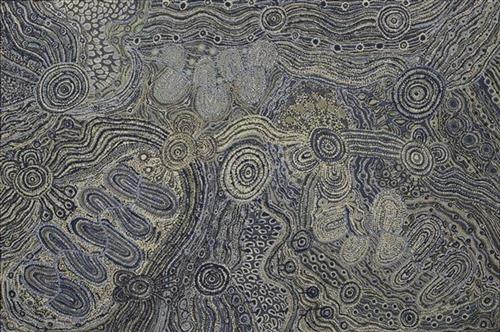
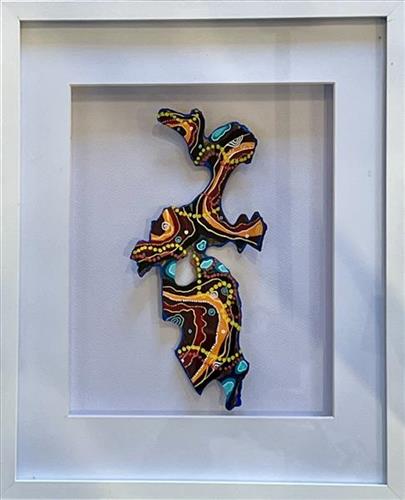
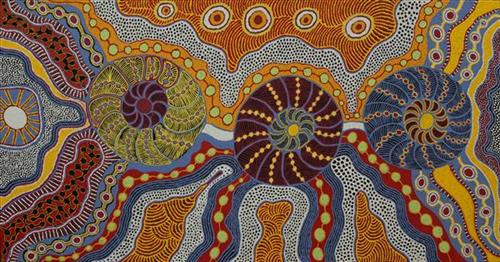
Tjukuḻa – Waterholes Makinti’s Story

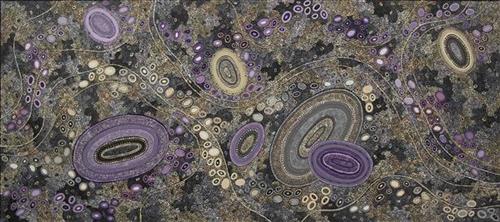
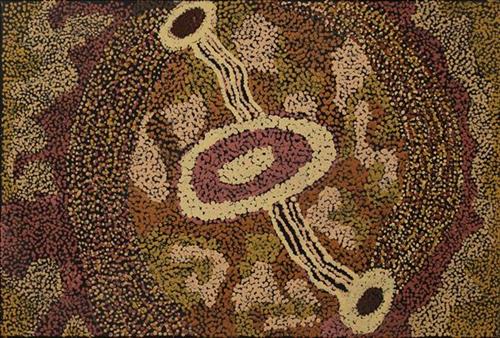
A long time ago when I was about ten years old I went with my mum and dad to visit family at Areyonga in the Northern Territory.  We travelled back to Ernabella, walking with two donkeys and blankets (not swags) for about three weeks.

We arrived near Mulga Park and I remember we came along a short cut from Mulga Park to the New Well area, Mum and Dad knew the place. It was getting dark and they knew there was a rock hole in some low rocks in the middle of the trees.

My aunty Niningka was also with us and they knew that place. There was a rock with many holes, all full of water. We got there at about 10pm and Mum and Dad lit the fire. I was only a little girl. I went with the billycan to find the water. My mum had a cup and we got the water.

We stayed over night and the next day we travelled to New Well, Young’s Well and all the way to Ernabella. I always remember this special place.
221282370678


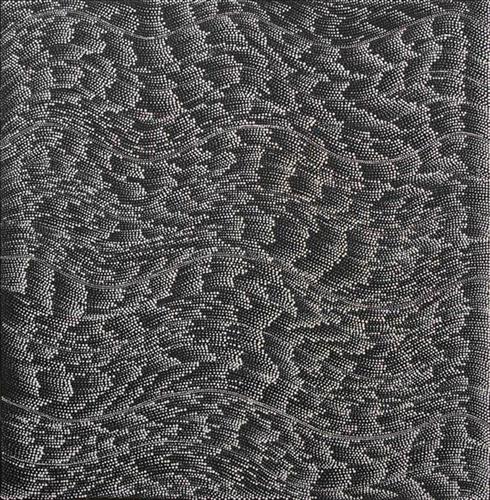
Tali / Sand dune

This design is inspired by the red sand dunes that are found throughout the central desert. There is a large red sand dune near Ernabella named Wamikata which is a popular place for looking for maku (witchetty grubs) and for teaching Milpatjunanyi (telling stories in the sand) to children.

221282370677


Michelle’s Tjala Dreaming (Honey Ant)

Michelle’s father’s country is tjala tjukurpa (honey ant dreaming). Michelle and her family still visit this country where she pays special attention to the natural elements on the land which are then represented in her paintings:

I am painting the landscape from above, as you might see it from an airplane or as a bird looking down. It is beautiful country both from on the ground and up above.

In Michelle’s work she creates how the tjala (honey ants) tunnel though the sandy soil. She also depicts the small groupings of intergenerational women and children sitting together and digging for the tjala. The earth is shown as soft because it’s been raining.

Tjala or honey ants live in nests about a metre underground beneath mulga trees, and they are a highly favoured food source. The tjala tunnels that lead down to the ants’ nests are called nyinantu, and the larvae are called ipilyka-ipilyka. After the rain when the ground is soft the women go digging for tjala by looking for the drill holes under the trees. They then use shovels and crowbars to dig down following the tunnels to find the tjala inside. Aṉangu suck the delicious rich honey-like liquid from the distended abdomen of the tjala. The story of the tjala is told across the Northern Territory into South Australia and is an important link between Aṉangu mythology and inter-dependence on the environment.

221282370676


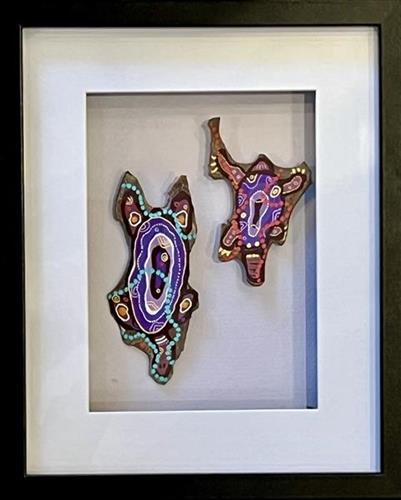
Minyma Kutjara (Two Women Near Ernabella)

There are many stories about the two sisters (Minyma Kutjara). This part of the story is siginificant to the women of Ernabella. There was a gathering of minyma mingkiri (mouse women) at a hill called Yunanpa, which is near Ngarutjara (to the north of Ernabella). They are all collecting bushfoods together when the two sisters decide to go travelling. They travel to several water places to the north and east of Ernabella including Alalka. They keep going until they get to Wamitjara, a waterhole near Kenmore park. Here they come across a man sleeping. They hit him over the head with their wana (digging stick) and knock him unconscious. Then they tie up his arms and legs and head towards Alice Springs, carrying him between them. They sing and dance sacred women’s stories all the way. They leave him at Stuart’s Well, and continue on to Alice Springs to meet up with a large group of women.

221282370674


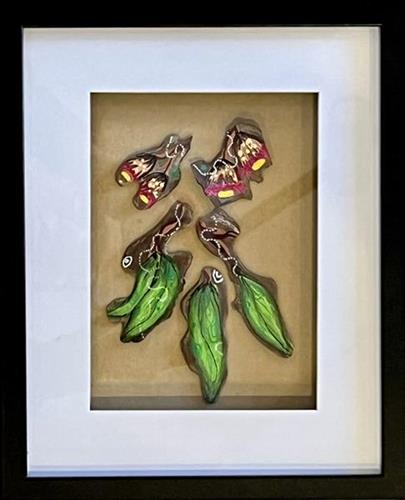
Kaliny-kaliny / Honey Grevillea

Stories are told of the Kaliny-kaliny or Honey Grevillea flower which is a favourite bush food of the Anangu Pitjantjatjara (people). Ultukunpa grows in the sandy soils on the plains. The flowers can be picked and placed in a billycan of water to create ‘honeywater’ (cordial) or they can be sucked for their sweet honey dew.

220182370655


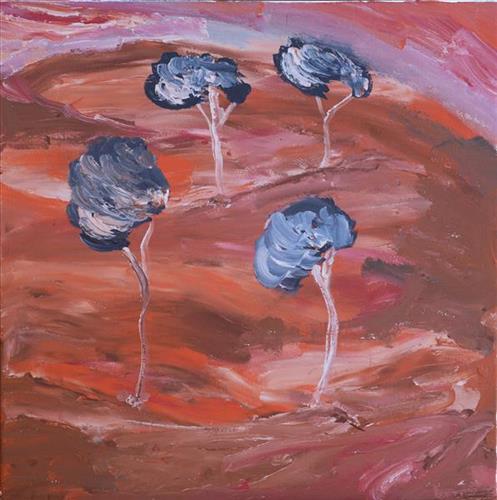
Yalpirakinu

Yalpirakinu is Adrian’s mother’s country. Adrian’s mother is the late Eunice Napangardi, a well known painter herself. His artworks consistently refer to the desert mountains, ridges and trees which are part of Yalpirakinu. Using a restricted colour palette, Adrian’s  brushwork is loaded with energy, drama and memories. He is a deliberate and thoughtful painter; reworking, pushing and pulling the image to completion.