22514008173


Status: Stock


Napkin Ngunyin (Dillybag) on Blue-Black by Margaret Rocky

Dillybags played a vital part in Kuku Yalanji culture. Women used them to carry food when out hunting and gathering or soak bitter yams in creeks before cooking them. Dillybags were also used to hold personal and sacred items.

22514008172


Status: Stock


Napkin Makarr (Fish Trap) on Red by Vanessa Cannon

Fish traps are called Makarr in our language. They were made by men only. Our fathers and uncles used to make them with the lawyer vine. They striped the stems and then soaked them in the river to keep them soft and bendy. They also had a special way of weaving the fish traps. They used them in the river to catch eels, jungle perch fresh water catfish and turtle. To attract fish our old people used to sprinkle rain forest berries as bait over the trap.

22514008171


Status: Stock


Napkin Kakan (Black Palm) Basket Weaving on Brown by Vanessa Cannon

This design shows how the bottom part of a black palm basket is woven. My grandmothers and aunties used to make them. They cut off the young palm leaves in the centre, stripped and scrapped them. Then they would put the strips in freshwater to make them soft and keep them straight for weaving.

22514008170


Status: Stock


Table Runner Birmba (White Cockatoo) on Blue by Lorna Shuan

Birrmba (White Cockatoo) is my family totem. It has been passed down from generation to generation. They always remind me of my grandfather, my sister and other family members who have passed on. White Cockatoos are like protective spirits for me and my family. They will give you signs. Good signs and signs of danger. They will let you know when to move on.
When I’m out with my grandchildren and there is a white cockatoo, I might say, “that is  your grandmother, my sister who is watching us”. At other times, the spirits of other family members visit us in form of white cockatoos. The White Cockatoo  keeps our living and past family connected to each other and to our country. When I’m alone, I know they are around. I speak to their spirit and they give me strength.

22514008169


Status: Stock


Table Runner Birmba (White Cockatoo) on Green by Lorna Shuan

Birrmba (White Cockatoo) is my family totem. It has been passed down from generation to generation. They always remind me of my grandfather, my sister and other family members who have passed on. White Cockatoos are like protective spirits for me and my family. They will give you signs. Good signs and signs of danger. They will let you know when to move on.
When I’m out with my grandchildren and there is a white cockatoo, I might say, “that is  your grandmother, my sister who is watching us”. At other times, the spirits of other family members visit us in form of white cockatoos. The White Cockatoo  keeps our living and past family connected to each other and to our country. When I’m alone, I know they are around. I speak to their spirit and they give me strength.

22514008168


Status: Stock


Table Runner Ngunyin (Dillybag) on Red by Margaret Rocky

Dillybags played a vital part in Kuku Yalanji culture. Women used them to carry food when out hunting and gathering or soak bitter yams in creeks before cooking them. Dillybags were also used to hold personal and sacred items.

22514008167


Status: Stock


Table Runner Ngunyin (Dillybag) on Blue-Black by Margaret Rocky

Dillybags played a vital part in Kuku Yalanji culture. Women used them to carry food when out hunting and gathering or soak bitter yams in creeks before cooking them. Dillybags were also used to hold personal and sacred items.

22514008166


Status: Stock


Table Runner Makarr (Fish Trap) on Red by Vanessa Cannon

Fish traps are called Makarr in our language. They were made by men only. Our fathers and uncles used to make them with the lawyer vine. They striped the stems and then soaked them in the river to keep them soft and bendy. They also had a special way of weaving the fish traps. They used them in the river to catch eels, jungle perch fresh water catfish and turtle. To attract fish our old people used to sprinkle rain forest berries as bait over the trap.

37781074008162


Status: Stock


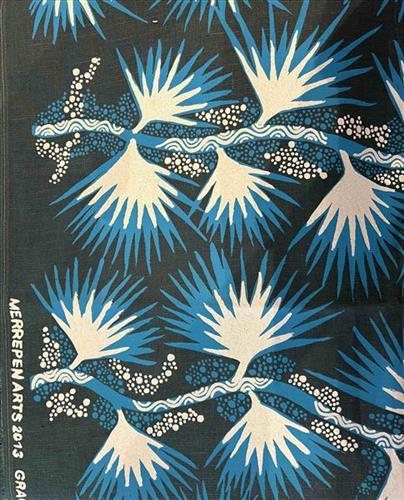
1m on linen

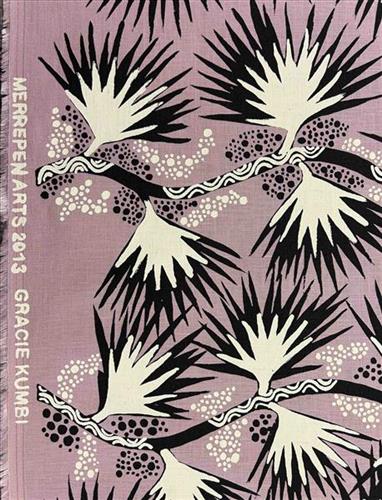
Merrepen (Livistona humilis) is a small fan-leaved palm that grows in the bush all around Ngan’gi country and the Top End. It can be seen in open forests and Eucalyptus woodlands. From September to May it produces clusters of yellow flowers that form a beautiful display above the crown. The oval-shaped fruits grow between January and June, turning a purplish-black as they ripen. It is possible to eat the fruits and heart of this palm. The stem is used to make a variety of traditional medicines, while the fruit can be made into dye.

It is a very important plant for Ngan’gi people and is the name of the art centre at Nauiyu. Merrepen is extensively used to make fibre, which is twinned into string. The new leaves are pulled out of the stem apex of the plant before they unfold. These are then split into fine threads which are sun dried. The fibres may be dyed and then twisted into string. This string is used to make woven dilly-bags dilly-bags, fishing nets and other fibre-craft products. This is a significant industry at Nauiyu, where many women are excellent fibre-craft artisans.