111582439353


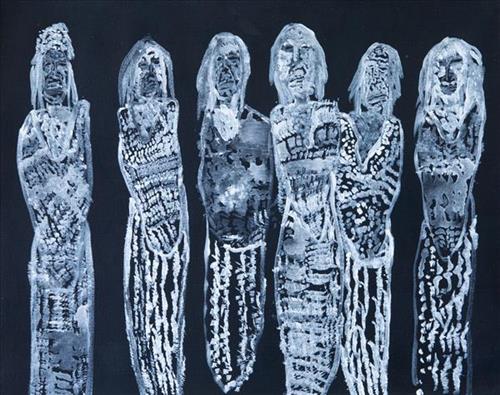
Wanti Yuu (Women, Yeah!)

“Wanti Yuu (Woman Yeah!) is a story of resilience and of women coming together. It is about the strength of the women in our community who put themselves last and take on a lot. She [Wanti Yuu] is someone who looks after her family, putting the grand kids and everyone around her first. The word Matriarch comes to mind. They are the matriarch of the family. The Boss Lady. Always helping everyone else out and leaving herself to the end. She paints, she teaches us her knowledge, like basket weaving and honey ant collecting. She is the top lore woman and her story of Pujiman (traditional, desert dwelling) is so important. She is a leader of the Martu women and a senior artist. That’s all I can say about these women. These women; you give her the bread if you know what I mean. It’s a true story. Anything in my pockets. Because when you look at her, her stance, her energy and her vibe, you can feel it. You don’t muck around with Wanti Yuu.”

-Silvia Wilson

Wanti Yuu celebrates women’s resilience, matriarchal relationships, and Sylvia’s place in this story.

As Sylvia explains, the work is both a depiction of, and attribute to, the women in her life. “I follow my great grandmother’s guidance and direction in life. These women in my life carry so much on their shoulders, as well as the responsibility and future of our culture.”
 

111582439352


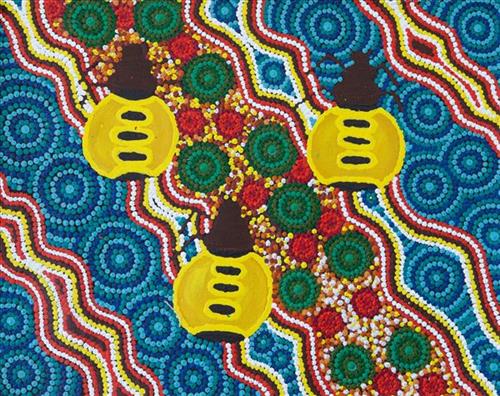
Wuukurta (Honey Ants)

Wuukurta (honey ants) are found in a variety of arid or semiarid environments, with nests of up to two metres deep and more than two metres across. Wuukurta are a highly sought after bush tucker, known otherwise as ‘bush lollies’ due to their sweet, honey like taste. They are eaten whilst still alive by holding the head and legs between two fingers and biting off the thorax. Martu dig for wuukurta nests through the seasons, but they are known to be especially abundant following the rains.

During the pujiman (traditional, desert dwelling) period, Martu would traverse very large distances annually in small family groups, moving seasonally from water source to water source, and hunting and gathering bush tucker as they went. Whilst desert life has moved away from mobile hunter-gatherer subsistence throughout the course of the twentieth century, bush tucker continues to be a significant component of the modern Martu diet. Hunting and gathering bush tucker remains equally valuable as an important cultural practice that is passed on intergenerationally. Though hunting and gathering implements have been modernised, methods of harvesting, tracking and the use of fire burning to drive animals from their retreats are still commonly practiced today.

220982430960


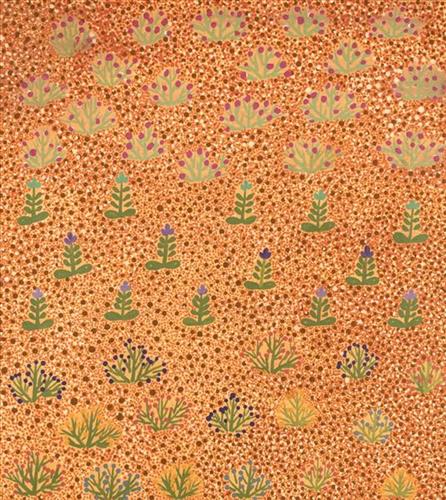
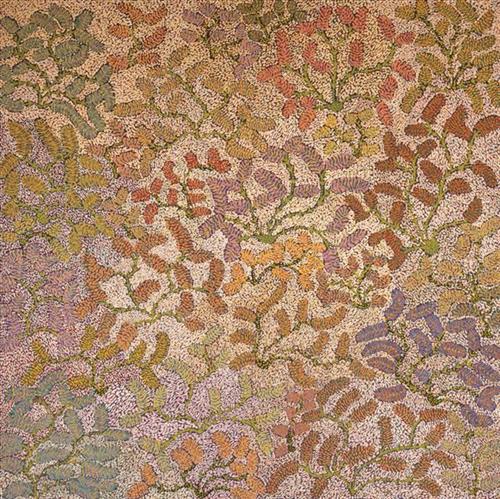
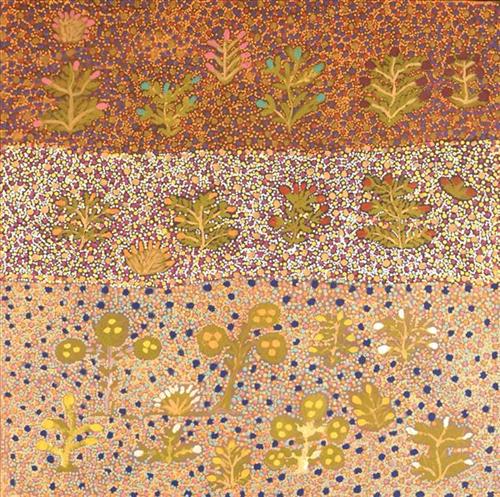
Latoya Ngwarraye Petrick – Artna Alpeyt (Bush Flowers)

These bush flowers grow seasonally in Alyawarr country, some of which are also used in bush medicine remedies.

I have just started painting, my grandmother Elizabeth Ngwarraye Bonney has been teaching me, she tells me all about the bush flowers.

The community of Ampilatwatja made a conscious decision not to paint altyerr (dreaming stories). The artists paint their country where those stories sit.

220982435474


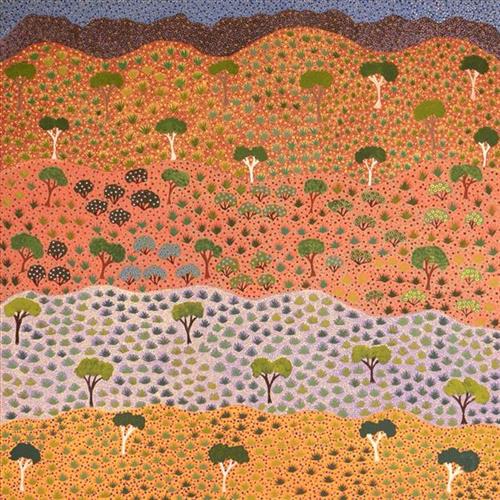
Lucy Pula Luck – Atyenh Amey Amper (My Mother’s Country)

I paint my Mother’s country. I travelled all around my country with my mother when I was child, my mother showed me the bush medicine and bush tucker.

The community of Ampilatwatja made a conscious decision not to paint altyerr (dreaming stories). The artists paint their country where those stories sit.

220982436661


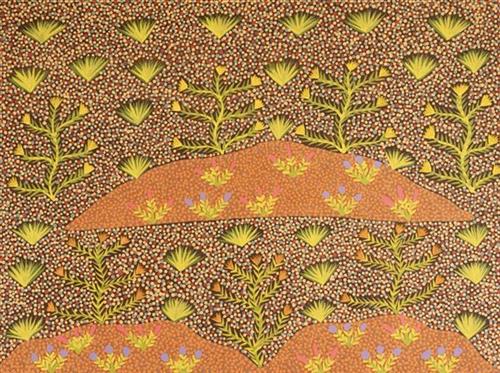
Joyrene Ngwarraye Holmes – Ateralth Alpeyt (Wildflowers)

When I go hunting for aker arlkerl (echidna) around the sandhills of Ampilatwatja I always spot the wild flowers and honey flowers.  We tap the Bankias against our hand and get the honey, it is sweet to taste.

 After the rain and bushfires all the new flowers pop up around me. My favourite time of the year is winter when it is cooler to walk and hunt. 

The community of Ampilatwatja made a conscious decision not to paint altyerr (dreaming stories). The artists paint their country where those stories sit.


220982436660


Diane Kemarre Ross – Atyenh Amper (My Country)

This is my country, it’s the country around Irrultja. This is where we like to go after big rain. After big rain there, we can go swimming. There is always good hunting on my country. It is good for me to paint my country and it makes me feel good.

The artists of Ampilatwatja made a conscious decision not to paint altyerr (dreaming stories). The artists paint their country where those stories sit.


220982436657


Jessie Pula Luck – Atyenh Artna Arnernp (My Bush Medicine)

I was born in Irrultja, my father’s country. I paint therrpeyt, a plant with red and pink flowers, it is my family symbol. You can suck the flowers to get a sweet honey from. You can wash your body with the leaves to heal sores and clean your body. I paint arreth which grows in the rocky ground and helps fix my sore throat when I make a hot tea from the leaves. I love to paint, I feel happy when I paint, I feel busy and good.

220982436651


Sabrina Pitjara Morton – Artna Alperr (Bush Leaves)

I love to look at the land and bush leaves. My mother paints, her name is Lucy Pula Luck and my Aunties Beverly Pula Luck, Jessie Pula Luck and Juliet Ngwarraye Morton all paint, they are great painters and I want to paint with them and learn. Bush medicine leaves are my favorite to look at. White flowers, leaves and bush tucker – this is what I want to show in my paintings.

111582439129


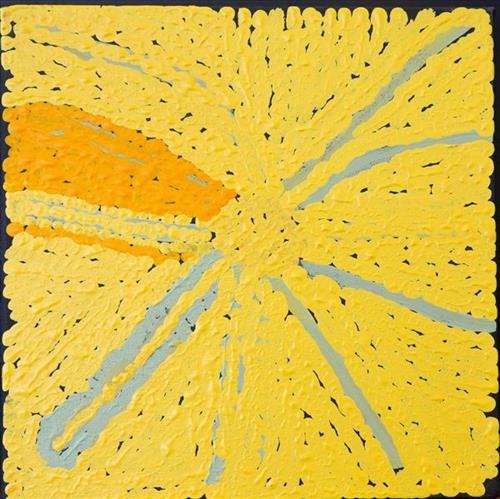
Yalta

“This is my grandmother’s and mother’s Country, Yalta. It’s very close to Kunawarritji side. I’ve never been there. That was where my mother was born during the pujiman (traditional, desert dwelling) times. All the tali (sandhills) around. I want to go there one day, to see that Country, I might go there one day” 

 – Marianne Burton

Yalta is a waterhole located between the Great Sandy Desert’s Percival Lakes region and Kunawarritji Aboriginal community. This site was visited by the Ngayurnangalku (cannibals) during the Jukurrpa (Dreaming). These fearsome ancestral cannibal beings are said to resemble people in their appearance, except for their fangs and long curved knife like fingernails they use to catch and hold their human victims. The Ngayurnangalku continue to live beneath the crust of Kumpupirntily (Kumpupintily, Lake Disappointment), south east of Yalta.  

Yalta lies within Marianne’s ngurra (home Country, camp) through her grandmother and mother. As stated by Marianne here, the site is especially significant to her as it was here that her mother was born. The Western Desert term ‘ngurra’ is hugely versatile in application. Broadly denoting birthplace and belonging, ngurra can refer to a body of water, a camp site, a large area of Country, or even a modern house. People identify with their ngurra in terms of specific rights and responsibilities, and the possession of intimate knowledge of the physical and cultural properties of one’s Country. This knowledge is traditionally passed intergenerationally through family connections. Painting ngurra, and in so doing sharing the Jukurrpa stories and physical characteristics of that place, has today become an important means of cultural maintenance. Physical maintenance of one’s ngurra, like cultural maintenance, ensures a site’s wellbeing, and is a responsibility of the people belonging to that area.

111582439128


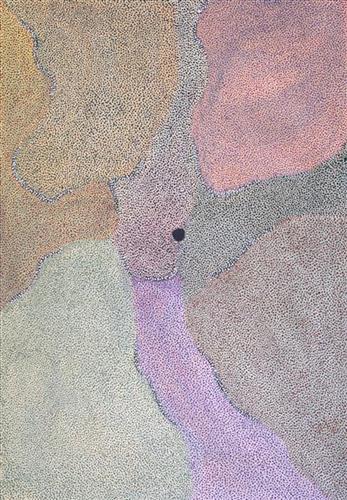
Untitled

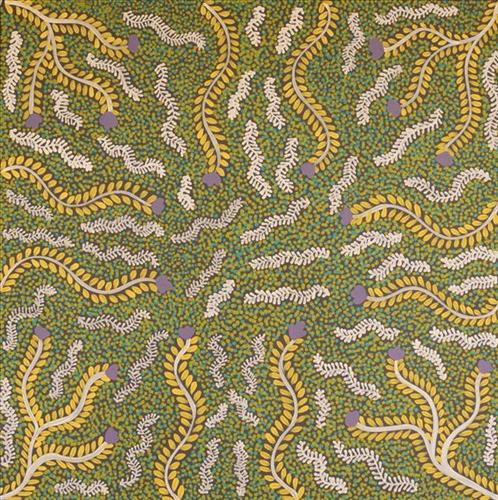
This is Ngamaru’s Country- her ‘ngurra’ (home Country, camp). People identify with their ngurra in terms of specific rights and responsibilities, and the possession of intimate knowledge of the physical and cultural properties of one’s Country. Painting ngurra, and in so doing sharing the Jukurrpa (Dreaming) stories and physical characteristics of that place, has today become an important means of cultural maintenance. 

Ngamaru’s ngurra encompasses the Country that she and her family walked in the pujiman (traditional, desert dwelling) era. At this time Ngamaru travelled nomadically with her own and other family groups, most notably the Biljabu and Whyoulter families. 

Ngamaru was born at Martilirri (Canning Stock Route Well 22). She grew up, walked and hunted primarily around Wikiri, Rarrki (Canning Stock Route Well 27), Wantili (Warntili, Canning Stock Route Well 25), Pitu, Nyilangkurr and Nyinyari. She continued to live nomadically before eventually deciding to move to Jigalong Mission along with many other relatives following an extreme and prolonged drought in the 1960s. 

Portrayed in this work are features of Ngamaru’s ngurra, such as the striking salt lakes, dominant permanent red tali (sandhills), warta (trees, vegetation), and the individually named water sources Ngamaru and her family camped at. These include Julyjarru, Juntiwa, Jaturti, Karanyal (Canning Stock Route Well 20), Martilirri (Canning Stock Route Well 22), Kaalpa (Canning Stock Route Well 23), Kartarru (Blue Hills Station, Canning Stock Route Well 24), Wantili (Canning Stock Route Well 25, Tiwa (Canning Stock Route Well 26), Rarrki (Canning Stock Route Well 27), Warla-warla (Canning Stock Route Well 31), Kulilu, Kunapila, Nyilangkurr, Parnngurr, Pitu, Purn, Wangkakalu, Wikiri, Yiranang, and Yulpu. Rock holes, waterholes, soaks and springs were all extremely important sites for Martu people during the pujiman period, and are generally depicted with circular forms. 

The encyclopaedic knowledge of the location, quality and seasonal availability of the hundreds of water bodies found in one’s Country sustained Martu as they travelled across their Country, hunting and gathering, visiting family, and fulfilling ceremonial obligations. They would traverse very large distances annually, visiting specific areas in the dry and wet season depending on the availability of water and the corresponding cycles of plant and animal life on which hunting and gathering bush tucker was reliant. As they travelled and hunted they would also burn areas of Country, generating a greater diversity of plant and animal life.