221382365140


Dilly Bag

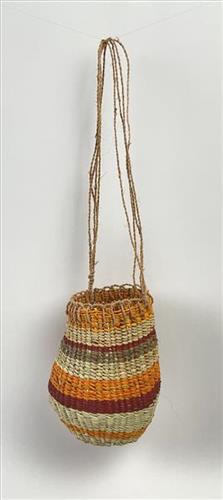
Fibre Art is an ancient Aboriginal women’s craft that is still made today using the same techniques as their ancestors. Making fibre art is labour intensive and much care and fine needlework is required to ensure the finished object is both functional and beautiful. Fibre art from Ghunmarn Culture Centre includes dilly bags, floor mats, bush fans, woven creatures found in the landscape, plants such as yams (bush potato), baskets, place mats, and spirit figures such as mermaids and Mukuys. Natural pandanus fibre (Mukarra), is used to make much of the fibre art produced by the artists of Djilpin Arts. Women collect the pandanus by pulling from the top of the pandanus tree, then stripping and drying the leaves before they are dyed with natural bush colour collected from the Beswick surrounds.
221382365139


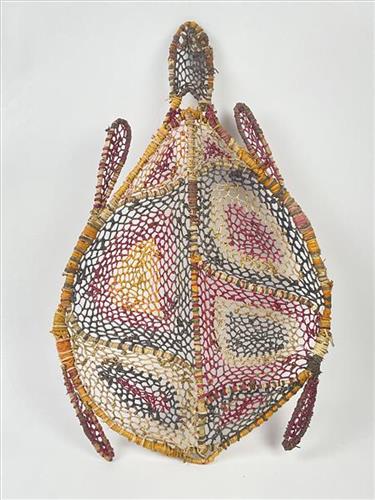
Long Neck Turtle – Nyangura

Nyangura the Long-Neck Tortoise is Yirritja. The two sacred ancestral Nyangura are found at a place called Djirringi in north-central Arnhem Lane on Ganalbingu land. The tracks left by the two ancestral totemic Nyangura, as they crawled over the land at Djirringi, is a sacred symbol. This symbol is used as a ground design or sand sculpture during cleansing ceremonies otherwise known as Bulu-Lup or Wan’tjirr. During this ceremony, water is poured over the bodies of Yolngu relatives of the deceased as they stand within the sacred ground design representing the marks left on the ground by the two original ancestral Nyangura at Djirringi. Yolngu also dance Nyangura during bunggul ceremonies. Here they may paint the design for Nyanguru and other designs. Nyangura is also food for Yolngu. It is cooked and cut according to age old tradition. The artist has depicted four Long Neck Turtle’s in this painting.

111982365136


Luma Luma relates to the coming of sacred power, Mardayin, and the establishment of ritual practices and initiations, such as the Kunapipi, Wubarr, and eventually the Lorrkon burial ceremonies.

Luma Luma also introduced the ritual paraphernalia and the sacred clan patterns that are painted onto these objects and onto the torsos of the ceremonial participants, as well as onto sheets of bark today.

115682365076


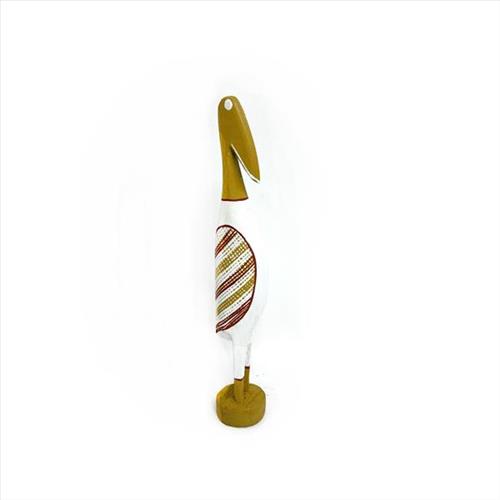
Gananhdharr (white heron)

This sculpture represents the Gananhdharr song line. Gananhdharr (white heron) can be seen at low tide searching for goya (fish) particularly garkuyi (mullet). They hunt alongside their ŋäṉḏi (mother), Ngulungulu (grey heron), at low tide, across the flood plains and amongst larrtha (mangroves).

“When you look in the distance, when the tides out, you see Gananhdharr and Ngulungulu and think you see human beings fishing. The sun gives the illusion they are taller.  That’s how we sing the song and dance.”

220982365063


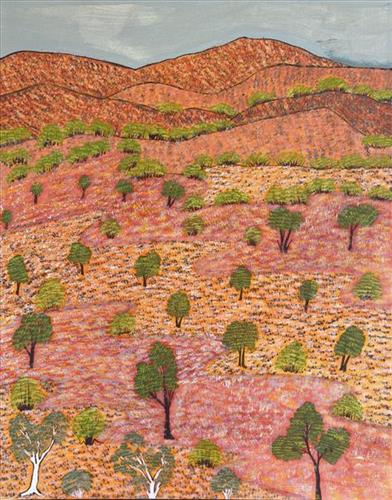
View Of Country

This shows the layered landscape of Alyawarr, Central Australia. Knowing your country is an important part of living in a remote community like Ampilatwatja.

Knowing when and where to go hunting and gathering, knowing where there is ‘soakage’ (where you can dig for water), travelling with family for ceremonies, and maintaining a connection with the land.

“This is my country, my view of country.”

The community of Ampilatwatja made a conscious decision not to paint altyerr (dreaming stories). The artists paint their country where those stories sit.


115682364962


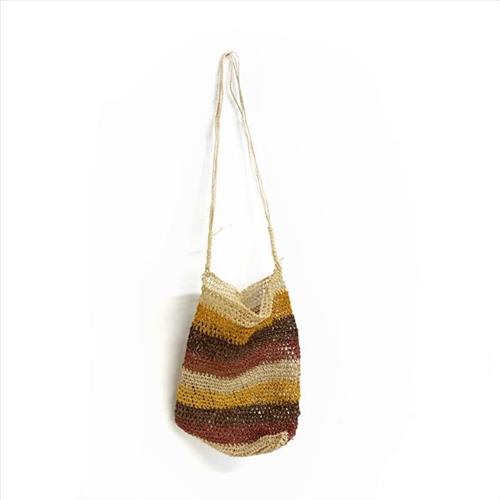
Djerrk (Bush String Bag)

Djerrk (Bush String Bag) is a flexible, open weave bag made from the bark of Balgurr (red-flowered Kurrajong) but can also be made using Banyan Tree or the Cocky Apple Tree.

The bark is harvested by cutting sections of the tree from the trunk. Depending on the size of the tree, this can involve removing small sections or the whole trunk. The inner bark is then softened by being beaten or chewed, then dyed.

Bula’bula weavers exclusively use natural dyes, derived from locally sourced roots, leaves and grasses. These pigments are extracted and infused into dried balgurr fibres by boiling over an open fire, producing the rich, vibrant colours characteristic of contemporary Yolŋu weavings.

Once dyed, the fibre is separated into fine strips the rolled on the thigh to create a rope, otherwise known as bush string. The bush string is woven and knotted to create the Djerrk (String Bag). This bag was used for every day utilitarian purposes, particularly collecting bush foods.

115682364949


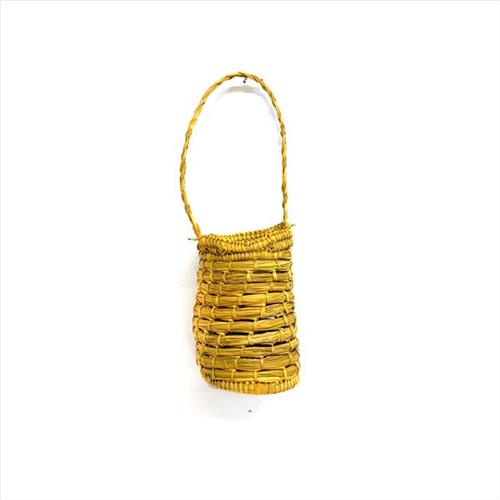
Bathi (Pandanus Basket)

Yolŋu weavers of Arnhem Land create utilitarian, ceremonial, and decorative pieces using naturally sourced materials. This Bathi (Pandanus Basket) is made from young Pandanus spiralis leaves, harvested with a wooden hook, stripped of prickles, and dried to create strong, resilient fibres. These fibres are then twisted, coiled, or woven using various techniques to produce both functional and decorative baskets.

Typically, Bathi are made using a coiling technique which was adapted from techniques used by Indigenous women throughout Southeast Australia. Introduced to Arnhem Land weavers in the 1930’s as Missionaries began commissioning pieces in this style.

Bula’bula weavers exclusively use natural dyes, derived from locally sourced roots, leaves and grasses. These pigments are extracted and infused into pandanus fibres by boiling over an open fire, producing the rich, vibrant colours characteristic of contemporary Yolŋu weavings.

115682364948


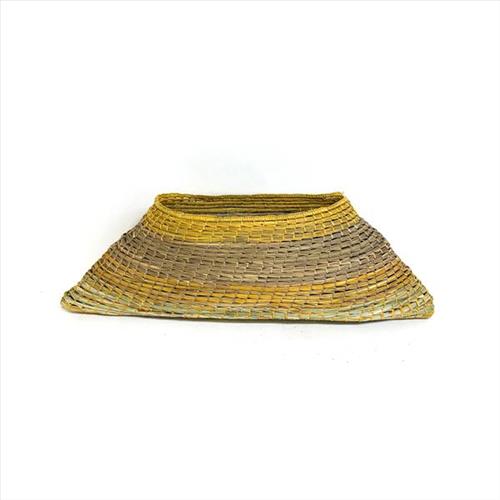
Bathi (Pandanus Basket)

Yolŋu weavers of Arnhem Land create utilitarian, ceremonial, and decorative pieces using naturally sourced materials. This Bathi (Pandanus Basket) is made from young Pandanus spiralis leaves, harvested with a wooden hook, stripped of prickles, and dried to create strong, resilient fibres. These fibres are then twisted, coiled, or woven using various techniques to produce both functional and decorative baskets.

Typically, Bathi are made using a coiling technique which was adapted from techniques used by Indigenous women throughout Southeast Australia. Introduced to Arnhem Land weavers in the 1930’s as Missionaries began commissioning pieces in this style.

Bula’bula weavers exclusively use natural dyes, derived from locally sourced roots, leaves and grasses. These pigments are extracted and infused into pandanus fibres by boiling over an open fire, producing the rich, vibrant colours characteristic of contemporary Yolŋu weavings.

114182365359


Kungkarrangkalpa (Seven Sisters)

‘Kungkarrangkalpa’ (The Seven Sisters or Pleaides) is significant Tjukurrpa (dreamtime). Its origins you may be familiar with in astronomy and its connection to ‘Wati Nyiru’ (Magic Man or Orion).  The roots of this dreaming stems across indigenous groups around the world. The Australian Aboriginal songline is one part to the whole dreaming which can be traced all around the world. The ladies of the Ngaanyatjarra Lands depict their significant chapter and understanding of the journey of the sisters. The different versions of this story depend on where you live and the significance’s of local Tjukurrpa places.

Nyiru fell in love with the sisters but he was of the wrong skin group to marry, but he still pursued them on their journey. The sisters travel across the land to escape Nyiru’s unwanted attentions, but he is persistent and always finds them. There are significant land forms which can be sited today that evidence this dreaming. As Nyiru is chasing the sisters he tries to catch them by using magic to turn into the most tempting kampurarrpa (bush tomato) and the most beautiful Yirli (wild fig tree), for them to eat and camp under. However, the sisters are knowledgeable of his magic and too clever for Nyiru who they outwit again and again. They go hungry and run through the night rather than be caught by him. As the journey continues, Nyiru gets so frustrated at the wit of the sisters that he uses his magic to make the oldest sister sick to try and get closer to her. The other sisters rescue the big sister and nurse her back to health. It is said he also captures the youngest sister, but with the help of the oldest sister, she escapes back to her sisters who are waiting for her. Eventually, the sisters fly into the sky to escape Nyiru, forming the constellation. Nyiru felt lonely, longing for the sisters who were so far away. Nyiru used his magic to go to the sky, forever in pursuit.