114182365651


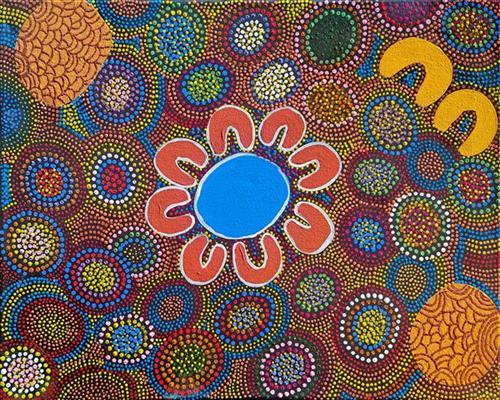
Kungkarrangkalpa (Seven Sisters)

‘Kungkarrangkalpa’ (The Seven Sisters or Pleaides) is significant Tjukurrpa (dreamtime). Its origins you may be familiar with in astronomy and its connection to ‘Wati Nyiru’ (Magic Man or Orion).  The roots of this dreaming stems across indigenous groups around the world. The Australian Aboriginal songline is one part to the whole dreaming which can be traced all around the world. The ladies of the Ngaanyatjarra Lands depict their significant chapter and understanding of the journey of the sisters. The different versions of this story depend on where you live and the significance’s of local Tjukurrpa places.

Nyiru fell in love with the sisters but he was of the wrong skin group to marry, but he still pursued them on their journey. The sisters travel across the land to escape Nyiru’s unwanted attentions, but he is persistent and always finds them. There are significant land forms which can be sited today that evidence this dreaming. As Nyiru is chasing the sisters he tries to catch them by using magic to turn into the most tempting kampurarrpa (bush tomato) and the most beautiful Yirli (wild fig tree), for them to eat and camp under. However, the sisters are knowledgeable of his magic and too clever for Nyiru who they outwit again and again. They go hungry and run through the night rather than be caught by him. As the journey continues, Nyiru gets so frustrated at the wit of the sisters that he uses his magic to make the oldest sister sick to try and get closer to her. The other sisters rescue the big sister and nurse her back to health. It is said he also captures the youngest sister, but with the help of the oldest sister, she escapes back to her sisters who are waiting for her. Eventually, the sisters fly into the sky to escape Nyiru, forming the constellation. Nyiru felt lonely, longing for the sisters who were so far away. Nyiru used his magic to go to the sky, forever in pursuit.
114182365588


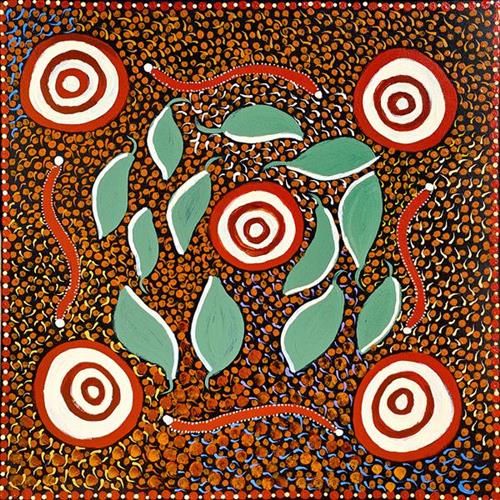
Yirmangka – Yirmangka ( Bush Medicine)

This is from a series of small works from our main artists depiocting the love of collecting from the bush traditional medicines and tucker.

115682365400


JB Fisher – Djanda (lizard)

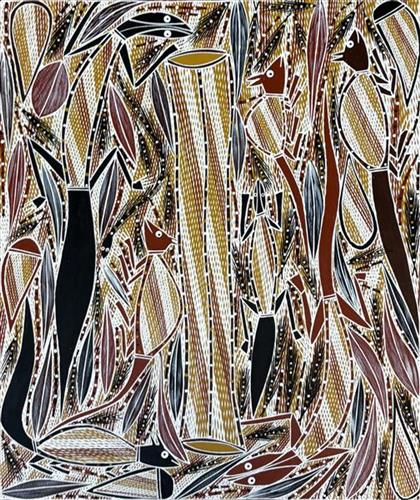
JB paints stories from his Dhuwa homeland in northeast Arnhem Land. Stories are passed on either paternally or maternally and JB would have learnt these stories from his ancestors. The cross-hatching style (Rrark) is a traditional painting style of this area and can represent elements such as water, air and wind.

His paintings often feature totemic animals of the fresh waters of North East Arnhem Land.

116482365694


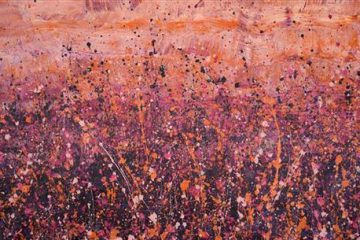
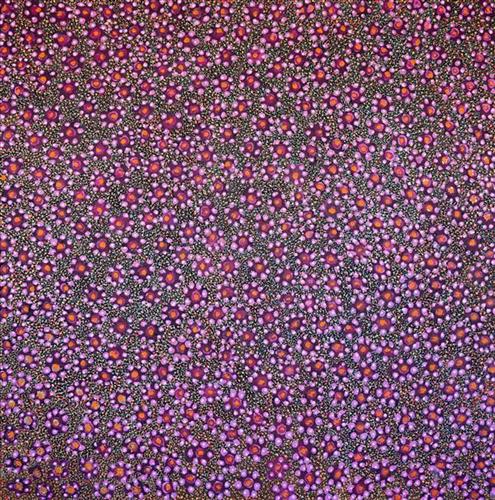
Pilbara wildflowers at Dusk

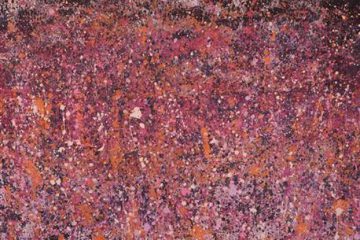
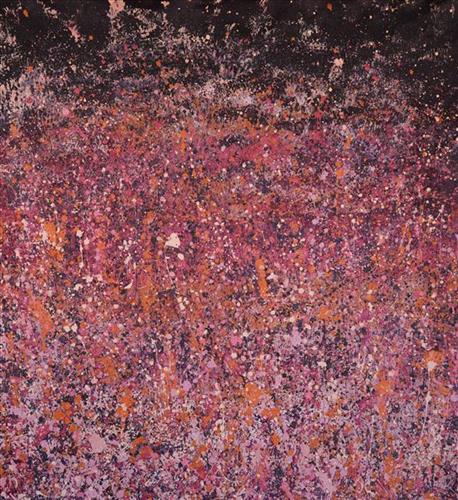
In the last light of the day, the wildflowers and Country take on new colours. In the earth you can see glimmers of darker copper colours and deep burgundy as the last light of the day hits the Pilbara. The pinks represent the mulla mulla flowers and the desert sturt pea has changed from bright red to a subtle bronze red.

116482365698


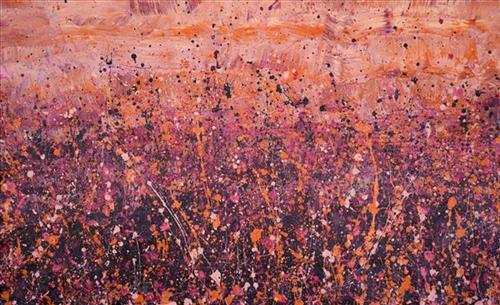
Pilbara Wildflowers at Dusk

In the last light of the day, the wildflowers and Country take on new colours. In the earth you can see glimmers of darker copper colours and deep burgundy as the last light of the day hits the Pilbara. The pinks represent the mulla mulla flowers and the desert sturt pea has changed from bright red to a subtle bronze red.

116482365696


Fortescue Running

This story is about the Fortesuce River and during the cyclone season, we notice our country is filled with running water, this is a time when the fortesuce river is running with water and filled with good fish and the country is filled with wild flowers blooming in the sunset.

116482365693


Wildflower Patch

In Spring I can never get over the beauty of these purple mulla mullas when they are in bloom along with the other yellow, pink and white flowers, and the yellow Blue Gum flower. It’s like a beautiful garden that you never have to water.

116482365654


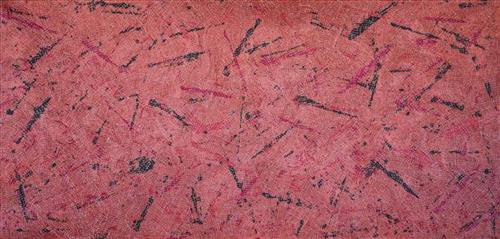
The VOID (Part VI)

“When losing someone very important to me I often turn to my art to get through the darkest of days. When completing the first artwork in this series I looked at it and realised I had more emotions about the loss that I had to put onto canvas before I had any real thoughts of healing. So that is when ‘The Void’ series came to be. At first it was a way to work through my grief about losing mum. As the series started to progress, I realised that it was also a beautiful way to pay tribute to her. She was loving caring strong proud and always willing to go out of her way to help others. She was also a well-established Yindjibarndi artist and elder. In small communities a lot of people find it hard to process grief. They turn to other vices to numb the pain. The outcome I want to achieve with my series is to help anyone who walks into this exhibition to process and work through any grief and loss that they may have gone through themselves. Losing someone can bring so many emotions to light. My Journey into The Void began with anger, confusion, guilt and pain. I used these strong feelings to work out my thoughts on canvas. The first work in my series was very dark, with black paint on black paint. With each artwork more colour was introduced as I worked through my feelings. Sometimes the textural marks are harsh and sharp. My hand worked out the frustration. This third artwork in my series shows a glimpse of hope and light seeping through, slowly bringing back a sense of normalcy back into my life.”

111582365629


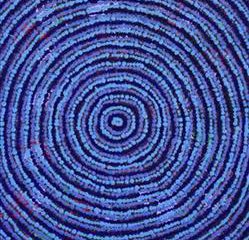
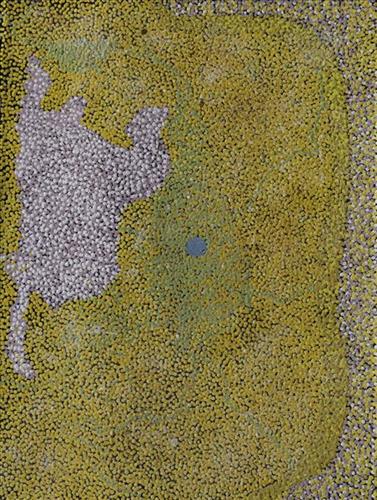
Punmu Soak

Punmu refers to a region and an Aboriginal community within its vicinity, located 670km North-East of Newman. Created during the return to Country movement of the 1980s, with the recognition of Martu land rights and native title, the community was named after a nearby Jukurrpa (Dreaming) story.

Punmu community sits on the edge of a large salt lake known as Nyayartakujarra, or Lake Dora. The lake runs south into Karlamilyi River (Rudall River). Surrounding Punmu are numerous fresh water soaks and the red tali (sandhills) typical of the area. The most frequently visited water sources around Punmu include Wirlarra, Rawa, Yilyara, Jila-jila, Tuu-tuu, Pirrkili, Jurnu, Wilurr, and Wala- Wala. Further south are Juturrpa, Wawul, and Tarl. 

During the pujiman (traditional, desert dwelling) period, Martu would traverse very large distances annually in small family groups, moving seasonally from water source to water source, and hunting and gathering bush tucker as they went. At this time knowledge of water sources was critical for survival, and today Martu Country is still defined in terms of the location and type of water. Each of the hundreds of claypans, rockholes, waterholes, soaks and springs found in the Martu desert homelands is known by name, location, quality and seasonal availability through real life experience and the recounting of Jukurrpa narratives.

111582365627


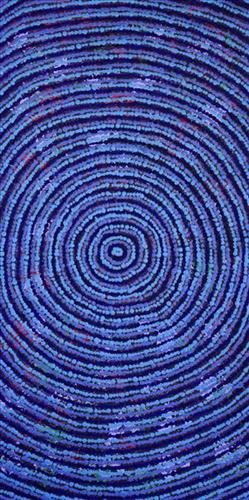
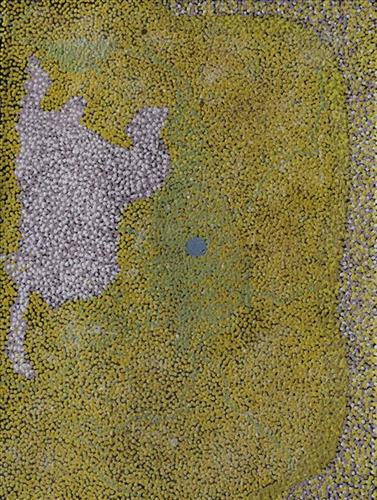
Punmu Soak

Punmu refers to a region and an Aboriginal community within its vicinity, located 670km North-East of Newman. Created during the return to Country movement of the 1980s, with the recognition of Martu land rights and native title, the community was named after a nearby Jukurrpa (Dreaming) story.

Punmu community sits on the edge of a large salt lake known as Nyayartakujarra, or Lake Dora. The lake runs south into Karlamilyi River (Rudall River). Surrounding Punmu are numerous fresh water soaks and the red tali (sandhills) typical of the area. The most frequently visited water sources around Punmu include Wirlarra, Rawa, Yilyara, Jila-jila, Tuu-tuu, Pirrkili, Jurnu, Wilurr, and Wala- Wala. Further south are Juturrpa, Wawul, and Tarl. 

During the pujiman (traditional, desert dwelling) period, Martu would traverse very large distances annually in small family groups, moving seasonally from water source to water source, and hunting and gathering bush tucker as they went. At this time knowledge of water sources was critical for survival, and today Martu Country is still defined in terms of the location and type of water. Each of the hundreds of claypans, rockholes, waterholes, soaks and springs found in the Martu desert homelands is known by name, location, quality and seasonal availability through real life experience and the recounting of Jukurrpa narratives.