11564008073


Status: Stock


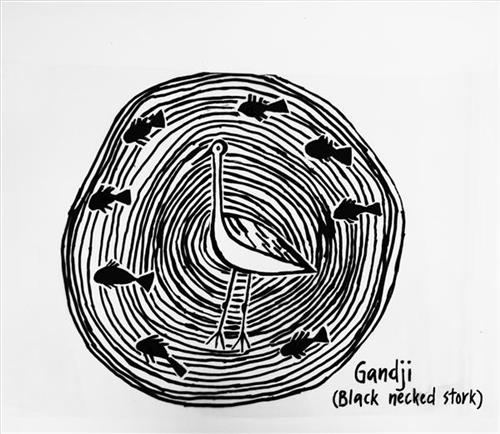
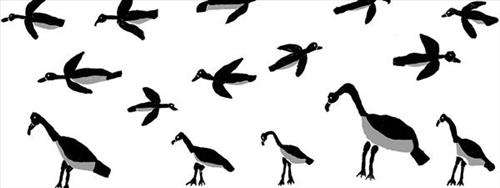
Jabiru by Evonne Rraraypum

Screenprinted tea towel with Banami (brolga) design
100% linen
70 x 50cm
Available in black and flax colours 

Manymak (very good)! This product helps build a sustainable source of income for Yolŋu artists and art workers at Bula’Bula Arts.

ARTWORK STORY 

This is a story for the Wanybarrnga clan family.  The Jabiru is in the water and he flaps his wings, hitting the water and causes it to ripple.

After a funeral ceremony, leaders for this clan family draw the Jabiru’s water ripples into the sand/earth. This symbolises a cleansing and washing for Yolngu to be free to go on with normal life.

111576341447


Kumpupirntily Area

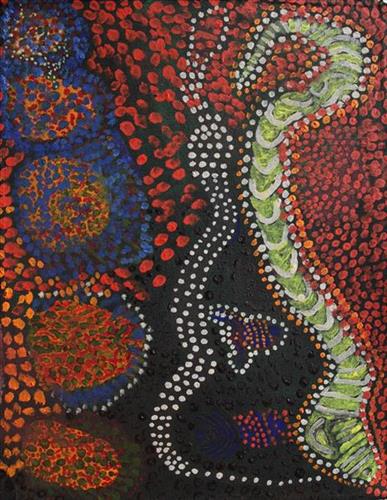
“Some people paint a rockhole, only rockhole. Nothing. I got story. Jukurrpa. Full up….” This painting depicts Kumpupirntily (Lake Disappointment) out in the Canning Stock Route area. It is a large warla (salt lake) that holds great significance for the artist. This is where the Ngayurnangalku (cannibal beings) live under the surface of the lake. If you dig in the lake and disturb them the beings rise up like a man “If they dig him up, anybody, blackfella, whitefellas they’ll get killed! They’ll have a good feed!”

111581886798


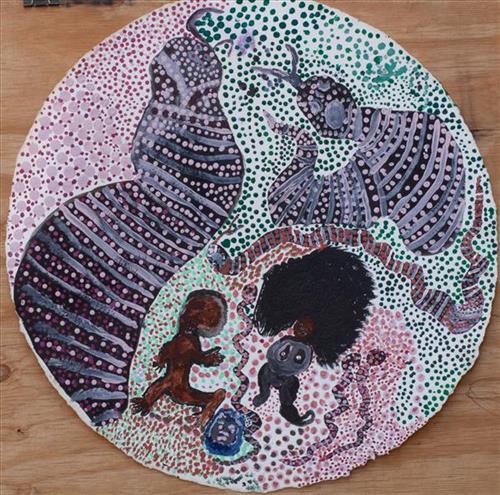
Ngayurnangalkumili Ngurra (cannibal Country)

“Ngayurnangalku (cannibal beings) fighting. They all come in here, all meet up here. Ngayurnangalku coming from this way [North], go in here. Ngayurnangalku coming from this way [East], they go in. They come from this way [West], get in there. And from the South, get in there again. Fighting all the way. All the yirrkili (boomerang) flying everywhere. All get up.”

This painting depicts several sequences in the jukurrpa (dreaming) of Kumpupirntily (Lake Disappointment) Country and the lives of it’s inhabitants, the cannibal beings Ngayurnangalku. The lake is the white section in the centre of the painting, which is further quartered by the creeks that feed into it. Including Kupayiyura (Savory Creek). In these sections, other elements of the jukurrpa intersect with the fighting scenes. Top right includes the partarta (bush turkey) and walawurru (eagle hawk) jukurrpa North of the lake Country. Bottom right includes a reference to Turnturnpa, an old woman who is not permitted into the lake area. This section and the others are interspersed by the imagery of the Ngayurnangalku fighting among themselves, indicated by their weapons flying around everywhere.

225182297625


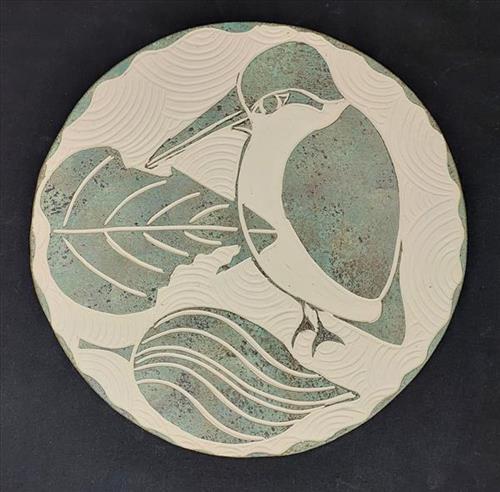
Yindili (Kingfisher)

The Kingfisher, known as Yindili in Kuku Yalanji language, is according to our culture one of the significant messenger birds. The Kingfisher will let us know when to expect a visit from families living in another community, And when we see a Kingfisher close by, we know that something good will soon happen in our personal life.

220282356545


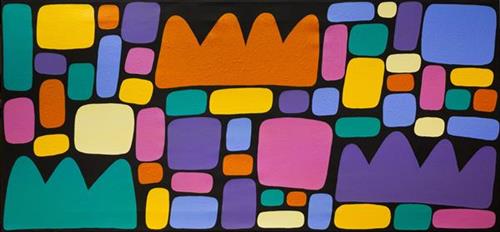
Puli Puli – Rocks

Keturah depicts the puli puli (rocks) at two different sites. She paints the landscapes at Haasts Bluff where she grew up and also at Karrkurrutintja (Lake Mcdonald in Pintupi), located west of Kintore along the Western Australia/Northern Territory border. Karrkurrutintja country is an important site of the Pilkati (snake) Tjukurrpa (dreaming) of Kaniya Kutjarra (two carpet snakes, two brothers, two Tjangalas). This story was passed town to her from her grandmother Narputta Nangala Jugadai, who was born there. Narputta was passed down this story from her father, Talaku Tjampitjinpa. Both Keturah’ss grandmother and mother, Molly Jugadai painted this same country. Narputta was one of the founding members of Ikuntji Artists, and has been painting since the beginning of the desert painting movement in the 1970’s. Keturah’s grandmother and mother have since passed away, with Keturah being the only remaining daughter in this lineage of artist to still be painting this story.

Keturah has been inspired by the painting legacy and tutorage from her grandmother and mother, though has developed a distinctive style over her practice. Keturah uses different colours and hues to depict the ways the puli puli change colours with the weather, especially at sunrise and sunset.

 “The sand hills I paint are my mother’s story and the rocks I paint are my own story. My paintings are about my story and my mother’s… I like to paint; painting helps me forget my troubles. I paint every day. My Grandmother used to say to me when I was younger: “One day you will paint.”

115682362213


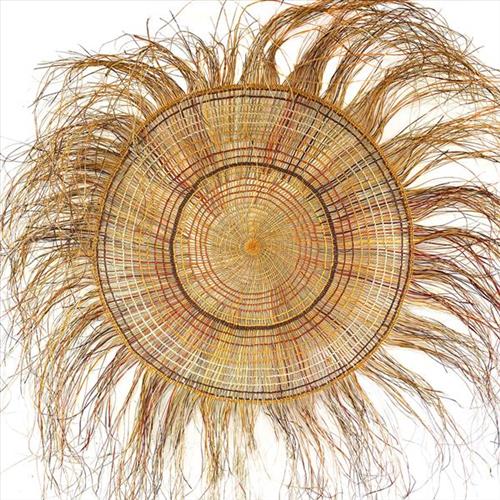
Woven Mat

Yolŋu weavers of Arnhem Land create utilitarian, ceremonial, and decorative pieces using naturally sourced materials. This mat is made from young Pandanus spiralis leaves, harvested with a wooden hook, stripped of prickles, and dried to create strong, resilient fibres. These fibres are then twisted, coiled, or woven using traditional techniques to produce both functional and decorative mats.

Bula’bula weavers exclusively use natural dyes, derived from locally sourced roots, leaves and grasses. These pigments are extracted and infused into pandanus fibres by boiling over an open fire, producing the rich, vibrant colours characteristic of contemporary Yolŋu weavings.

Traditionally, Nganiyal (conical mats) functioned as insect screens when erected and as seating mats when folded, playing an important role in both daily life and ceremonial practices. Today, Yolŋu artists create a variety of shapes, including flat, round, and oblong mats. These non-traditional styles and the use of bright colours became more common after Missionaries began commissioning pieces in this style.

115682362115


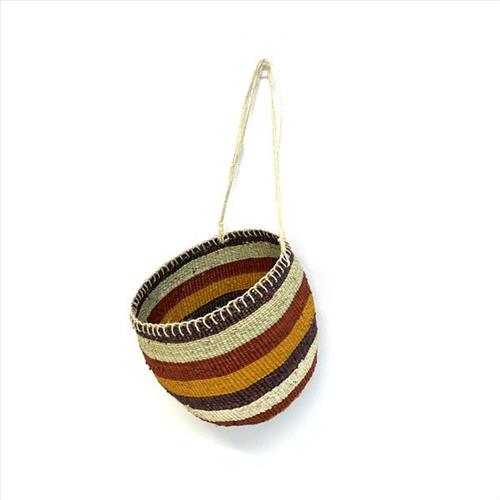
Mindirr (Pandanus Bag)

Miṉḏirr (dilly bags) are made from gunga (Pandanus spiralis), baḻgurr (kurrajong) and natural bush dyes. The body of the miṉḏirr is made from gunga, and the handles from baḻgurr. Once the gunga fronds and baḻgurr bark have been collected, they are stripped and prepared then boiled with the dyes.

Miṉḏirr were used traditionally for every day utilitarian purposes, particularly collecting bush foods such as bäḻtji (yam). Traditionally, the baḻgurr handles were worn across the forehead while the body of the miṉḏirr sat at the back, between the shoulder blades making it easily accessible when collecting ŋatha (food).

115682362112


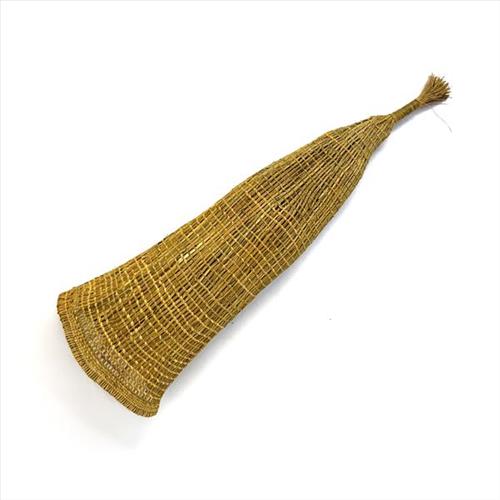
Dhawurr or Batjbarra (Fish Trap)

Dhawurr, or Batjbarra, is a traditional fishing method used by Indigenous people in the Arafura Swamp and surrounding wetlands of Arnhem Land. Yolŋu now prefer the modern fishing methods of reels and bait, however, weavers continue to make Batjbarra for cultural conservation and to be sold as decorative pieces.

When used for practical purposes, the Batjbarra was placed into the river with the opening facing oncoming fish. The woven tunnel trapped the fish with the weave tight enough to prevent escape but loose enough to allow water to freely flow through. The traps tapered so that when they were submerged, the water pressure wedged them into place.

The primary material used in this piece is the young, green leaves of the Pandanus spiralis tree, that were harvested using a long wooden hook. The leaves are stripped of their prickles, with the smaller fibres being dried to produce a strong, resilient material. These fibres are then twisted, coiled, or combined using various techniques to create the fish trap.

Bula’bula weavers exclusively use natural dyes, derived from locally sourced roots, leaves and grasses. These pigments are extracted and infused into pandanus fibres by boiling over an open fire, producing the rich, vibrant colours characteristic of contemporary Yolŋu weavings.

377810582362155


Murnubbarr Karrolkan (Flying Magpie Geese)

Murnubbarr (magpie geese) are a waterbird found in abundance in the wetland areas of Kakadu and western Arnhem Land. Murnubbarr are a sustainably hunted and enjoyed manme (bush food). They are known to fly long distances, particularly in the wet season.

22024007276


Status: Stock


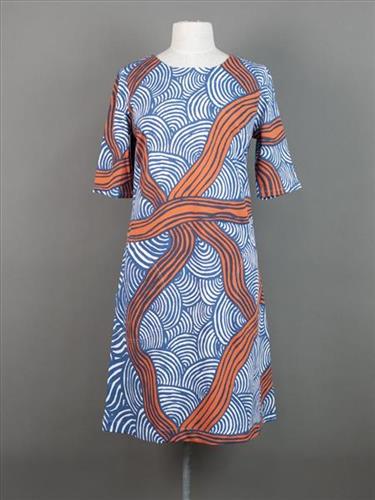
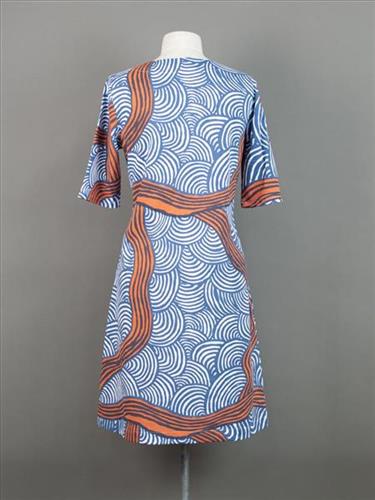
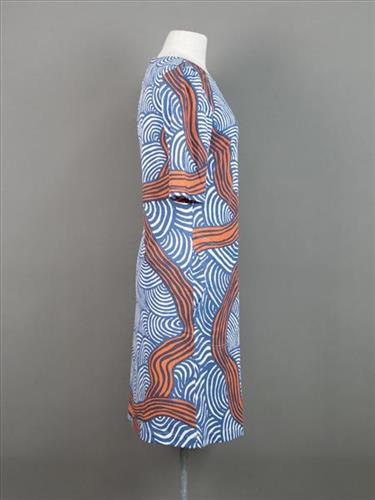
Alison Multa Doris Day Dress in Blue/Orange Kungkaku Puturru

This 1960s inspired shift dress is an easy to wear, comfortable every day dress. Featuring design by artist Alison Napurrula Multa:

This design shows ‘Kungkaku Puturru’ – the hairstring women make from their own hair for ceremony. In the older days, women used to cut their own hair and create this string by spinning the hair on their thighs. The hairstring was used for dancing, ceremony and domestic purposes. Kungkaku puturru is connected to the Tjukurrpa place Kungkayunti (Brown’s Bore). Kungkayunti is the place where the ancestral women, who travelled from Ntaria (Hermannsburg) to the west of Kintore, stopped and danced. Kungkayunti means women dancing.

This flattering A-line shape finishes just above the knee and features mid length sleeves and two scoop side pockets.

About the Makers:

Publisher Textiles & Papers is one of Australia’s leading print houses. Focused on producing original patterns through traditional hand-screen printing methods we create bold and colourful textiles, hand printed wallpaper, clothing and fabric.

Hand printed in our studio in Leichhardt.

Treat this handmade garment with love and it will love you back! Cold gentle machine wash, drip dry in shade, warm iron. Avoid the tumble dryer and dry cleaner.

Being handmade there may be some print variations, making each garment unique.

Hand printed and made in Sydney.

Sizing: Refer to chart below.