225482310820


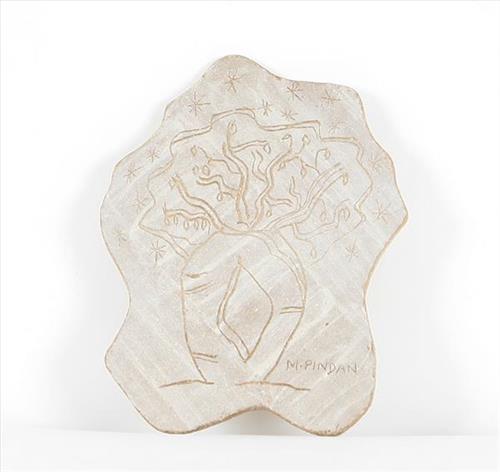
Lulgardi (Boab Tree)

The boab tree is special us – we can eat the nuts, the young roots are also delicious, and we make string from the bark. It is also part of our flood story, the Dumbi story. You get good shade from it, and we carve the nuts to make beautiful objects. It helps us to earn money and it’s a beautiful tree. The boab belongs to our country, here in the Western Kimberley. You don’t find it in other places like Broome. The last boab tree is just over the NT border. In this painting the boab tree represents our land, our traditional area. I have put the three Wandjinas Rimijmudda (Wunumbul) Namarali (Wororra) Wanalirri (Ngarinyin) representing the three tribes of Mowanjum on the tree, because it lives in the same areas as we do.
225482323963


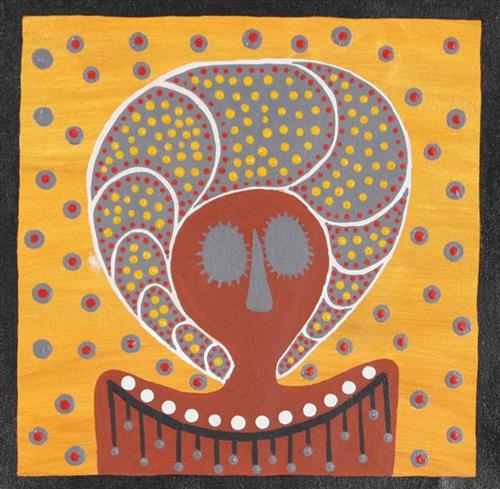
Wandjina Dreaming

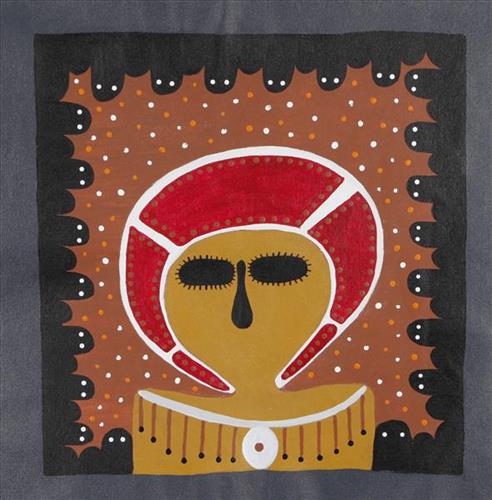
The Wandjina spirit of the Wororra, Ngarinyin and Wunumbul tribe is highly respected by the people of Mowanjum. The Wandjinas brought the law, culture and language. The people of Mowanjum believe that the first Wandjina was called Idjair. He created the first human beings, the Gyorn Gyorn people. Wallungunder (Milky Way) travelled back to Idjair (the first Wandjina) to bring back more Wandjinas to give the Gyorn Gyorn (Bradshaw) people laws to live by. Wallungunder also created Ungud spirits which often appear in Mowanjum people. Every person at Mowanjum has an Ungud or Totem. It’s given before birth by the father or the grandfather through dreams, and represents a living animal. The three Wandjinas which represent the three language groups of Mowanjum are Namarali for the Worora people, Wodjin or Wanalirri for the Ngarinyin people, and Rimijmarra for the Wunumbul people. Each family group at Mowanjum has a Wandjina which guides them through their lives. The Wandjinas are most active as cloud spirits during the monsoon period, bringing rain to the entire Kimberley region. The Wandjinas facial characteristics can represent many climatic features. The eyes of the Wandjina can represent thunderstorms and even cyclones. The bigger and darker the eyes, the more powerful the Wandjina is said to be. The haloes and lines around the face represent different cloud formations and lightning. The line between the eyes resembles a nose, but it is actually a power line which is used to transfer energy. Small brush marks on the Wandjinas body usually represent rain drops. Wandjinas can be represented with either four or five fingers. When depicted with only head and shoulders the Wandjina is said to be floating in space or in the form of a cloud or storm. A full-bodied Wandjina is said to be walking the Earth. The rounded feature in the upper chest area can represent the heart of the Wandjina or a large pearl shell that was worn by tribal leaders.

225482352804


Wandjina & Ungud (cloud and rain spirits & totem)

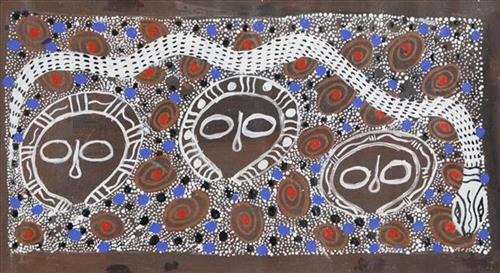
The Wandjina is the creator spirit that belongs to us (the Wororra, Ngarinyin and Wunumbul people). He is the one that created everything, he also gave us our culture, law and songs and even the dreaming of each child before they are born.

The Ungud Snake story is about two young boys who didn’t listen to their elders or believe in them. There is a big waterhole an in it lies a large Ungud Snake. The old people told the kids not to go near that waterhole, but these boys thought the elders were tricking them so they wanted to find out for themselves. So they went to the waterhole and built a hideout from branches with small holes so that they can see ( just in case the elders told the truth) they looked at the billabong and it was calm. They banged two sticks together to make clapping noise and then they saw all the lilypads starting to move apart on the water and large logs came up from out of the water, then came bubbles and after a huge head coming out of the water to have a look around for who had been making all the noise. He hadn’t seen annone so he went back down and the lilypads went flat and the water went calm. Those two boys ran back to the camp and told the elders that they were right , there was a snake and the elders told them that they should have listened in the first place. The Ungud Snake also was the chosen animal in helping with the creation of mother earth, creating rivers, gorges, stream’s and helped with the formation of the earth. Still today it lives in these dark deep water hole’s in our country which doesn’t want to be disturbed.


225482352796


Wandjina & Ungud (cloud and rain spirits & totem)

The Wandjina is the creator spirit that belongs to us (the Wororra, Ngarinyin and Wunumbul people). He is the one that created everything, he also gave us our culture, law and songs and even the dreaming of each child before they are born.

The Ungud Snake story is about two young boys who didn’t listen to their elders or believe in them. There is a big waterhole an in it lies a large Ungud Snake. The old people told the kids not to go near that waterhole, but these boys thought the elders were tricking them so they wanted to find out for themselves. So they went to the waterhole and built a hideout from branches with small holes so that they can see ( just in case the elders told the truth) they looked at the billabong and it was calm. They banged two sticks together to make clapping noise and then they saw all the lilypads starting to move apart on the water and large logs came up from out of the water, then came bubbles and after a huge head coming out of the water to have a look around for who had been making all the noise. He hadn’t seen annone so he went back down and the lilypads went flat and the water went calm. Those two boys ran back to the camp and told the elders that they were right , there was a snake and the elders told them that they should have listened in the first place. The Ungud Snake also was the chosen animal in helping with the creation of mother earth, creating rivers, gorges, stream’s and helped with the formation of the earth. Still today it lives in these dark deep water hole’s in our country which doesn’t want to be disturbed.


115682355714


Raypiny Dhawu (Fresh Water Story)

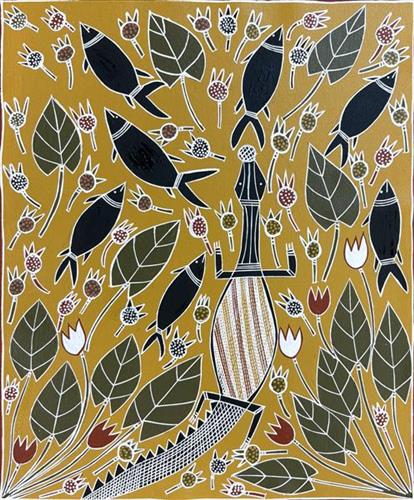
All Aboriginal people originate from a spiritual source, fixed in a particular place in their land or the sea. These ‘spiritual reservoirs’ are often in the form of special waterholes made by Wangarr (creative spirits) that were created long ago close to the beginning of time. These creator beings moved across the countryside, shaping the land and implanting in each tract of country, the spiritual life force for the people who were to own it. These creative spirits took many forms and when they gave the land to each group, they also gave songs, dances, ceremony, the associated laws and language.


The creation story for Ganalbingu people took place near the middle section of the Glyde River where it becomes the Goyder River. Their land, Ngaliyindi, sits astride the Arafura Swamp in Central Arnhem Land. Many Ganalbingu artists paint totemic species significant to their clan. These can include baru (crocodile), banda (long necked turtle), buliya (catfish), yalman (waterlilies), gumang (magpie geese), dakawa (fresh water yabby), ratjuk (barramundi), warrnyu (flying fox) and more.


359709482356464


Sovereignty – Land/Sea

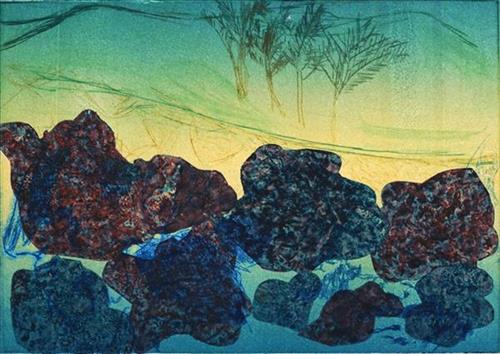
Ownership to our land/sea’s shows sovereignty of how as a nation we live with natural beauty and unique lifestyles.

359709482356459


Sovereignty – Land/Sea

Ownership to our land/sea’s shows sovereignty of how as a nation we live with natural beauty and unique lifestyles.

359709482356457


Sovereignty – Land/Sea

Ownership to our land/sea’s shows sovereignty of how as a nation we live with natural beauty and unique lifestyles.

359709482356453


Sovereignty – Land/Sea

Ownership to our land/sea’s shows sovereignty of how as a nation we live with natural beauty and unique lifestyles.

359709482356448


Sovereignty – Land/Sea

Ownership to our land/sea’s shows sovereignty of how as a nation we live with natural beauty and unique lifestyles.