Status: Stock
Punu (wood carving)
Punu are wood carvings by Anangu (Central and Western Desert Aboriginal people), they are hand carved and decorated with walka, patterns burnt into the wood with heated wire.
Status: Stock
Punu are wood carvings by Anangu (Central and Western Desert Aboriginal people), they are hand carved and decorated with walka, patterns burnt into the wood with heated wire.
Status: Stock
Ngarinyin, Woddorda (Worrorra) and Wunambal are the three main languages of the North Kimberley language families. The Boab Tree is known by Wurnambal people as Jungurri, in Woddorda as Jungurim and in Ngarinyin as Jungulan jirri, Larrgari jirri and Malawudi jirri.
Boab or Larrgardi Trees (lt.: Adansonia Gregorii) – is an Australian native species only found in the Kimberley region of Western Australia. They are very recognisable due to their unusual shape – reminding one of a full-bodied bottle. Some trees are more then 1500 years old and can hold more than 100,000 litres of water in their trunks.
Every part of the tree is used either as a food-resource, as medicine or otherwise. Almost every part of the tree is edible from the young leaves and tubers to the internal fruit pods and seeds.
The tree produces beautiful large fragrant yellow flowers. Inside the fruit pod the fruit is naturally dried on the tree itself. This is the only fruit in the world that does this.
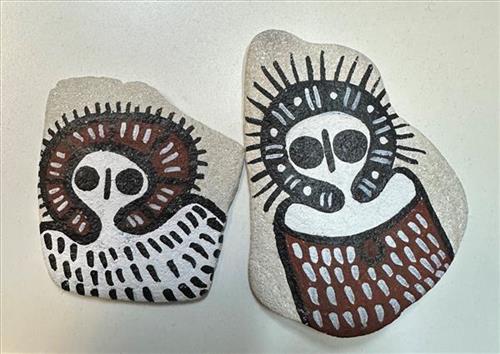
Indigenous artists carve designs into shell of the boab nut or paint it with different designs and children use it as a rattle. The designs on the nuts vary from Wandjina’s to different animals, like the Brolga, turtles, and fish to people’s faces and landscapes.
“Boab nut Carving was a way of expressing ones artistic skills. Aboriginal people across the Kimberley Region of Western Australia was carving along time ago it started with our ancestors.”
Ngarinyin, Woddorda (Worrorra) and Wunambal are the three main languages of the North Kimberley language families. The Boab Tree is known by Wurnambal people as Jungurri, in Woddorda as Jungurim and in Ngarinyin as Jungulan jirri, Larrgari jirri and Malawudi jirri.
Boab or Larrgardi Trees (lt.: Adansonia Gregorii) – is an Australian native species only found in the Kimberley region of Western Australia. They are very recognisable due to their unusual shape – reminding one of a full-bodied bottle. Some trees are more then 1500 years old and can hold more than 100,000 litres of water in their trunks.
Every part of the tree is used either as a food-resource, as medicine or otherwise. Almost every part of the tree is edible from the young leaves and tubers to the internal fruit pods and seeds.
The tree produces beautiful large fragrant yellow flowers. Inside the fruit pod the fruit is naturally dried on the tree itself. This is the only fruit in the world that does this.
Indigenous artists carve designs into shell of the boab nut or paint it with different designs and children use it as a rattle. The designs on the nuts vary from Wandjina’s to different animals, like the Brolga, turtles, and fish to people’s faces and landscapes.
“Boab nut Carving was a way of expressing ones artistic skills. Aboriginal people across the Kimberley Region of Western Australia was carving along time ago it started with our ancestors.”
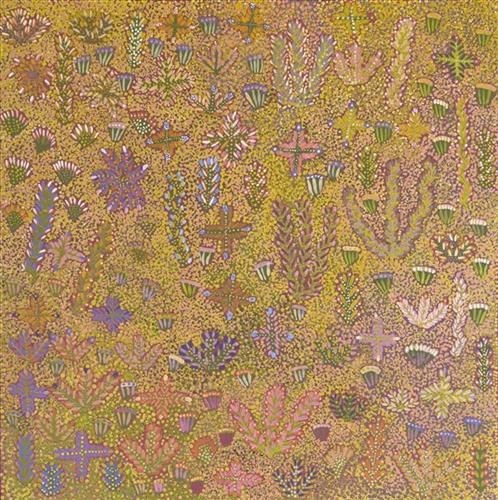
“Bush medicine plants are used for healing on the body and for drinking. We make this by grinding the plants with a rock, we use the juice and the fibre of the plant.
We collect bush medicine plants when we are out hunting. Different kinds of plants grow during different seasons.
There are lots of different medicines, we know what their stories are, we learnt them from our parents and we teach these stories to our children.”
Bush medicine knowledge is still strong in Ampilatwatja, it continues to be passed down to the younger generations and is widely used.
When the women go hunting they often gather bush medicine. The plants depicted here are found in the country around Ampilatwatja, they are used for soothing skin infections and to make a drink to help with colds and coughs.
Painting bush medicine stories is important because it helps to maintain a strong knowledge and culture for the community.
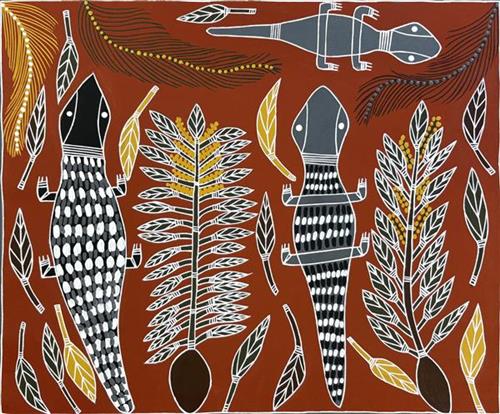
Aboriginal art in Ramingining, Central Arnhem Land is commonly illustrated through designs and images of animals, plants, and landscape. These motifs commonly reflect the artists ancestral inheritance and their dreamings and are referred to as totems.
For this painting, the artist has painted Northern Marbled Velvet Gecko (Oedura marmorata)
Status: Stock
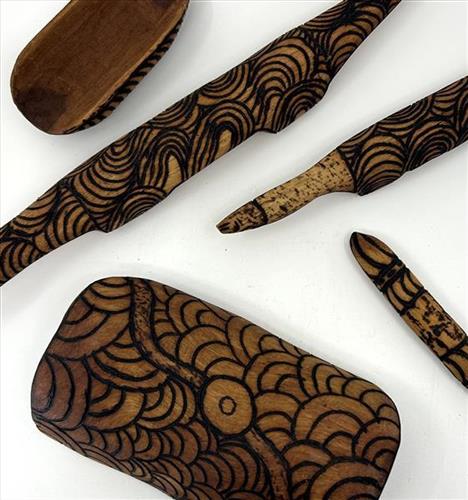
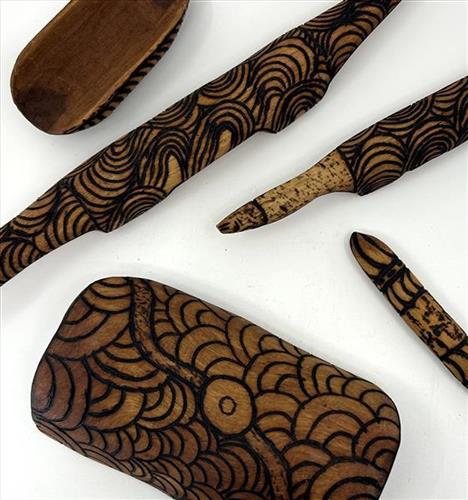
Punu are wood carvings by Anangu, they are hand carved and decorated with walka, patterns burnt into the wood with heated wire.
Status: Stock
Punu are wood carvings by Anangu, they are hand carved and decorated with walka, patterns burnt into the wood with heated wire.
Status: Stock
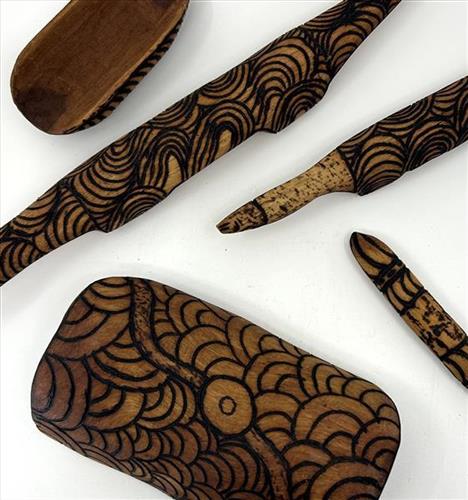
Punu are wood carvings by Anangu (Central and Western Desert Aboriginal people), they are hand carved and decorated with walka, patterns burnt into the wood with heated wire.
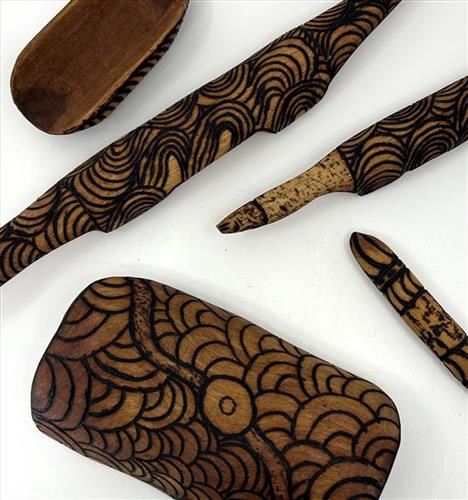
Status: Stock
Punu are wood carvings by Anangu, they are hand carved and decorated with walka, patterns burnt into the wood with heated wire.