220982417820


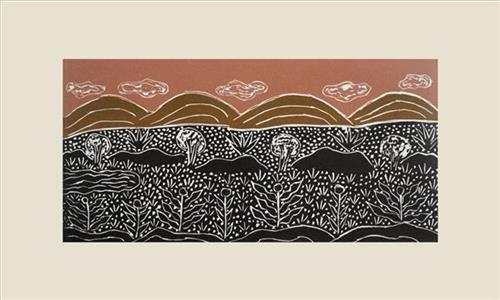
Valerie Kemarre Lewis – My Mothers Country

My mothers country is flowers, trees and mountains. I love to paint them. We see springs, the water from the springs is like rainwater, fresh and clean. We hunt goanna and turkeys, we roast them in the fire and the flesh is strong and sweet.

When we hunt we sleep at night next to the fire, the skies are big and the stars are beautiful, it makes me feel good.


Dimensions: 15 x 30 cm Lino Print – Desert Rust S/H250gsm

220982430360


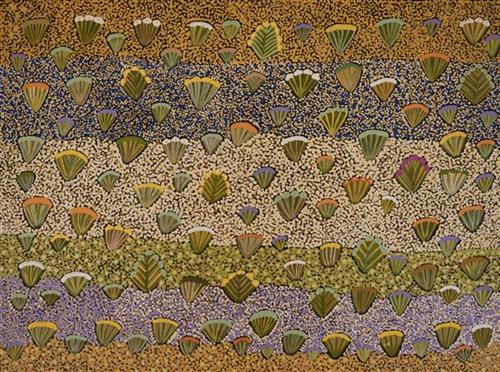
Lilly Kemarre Morton – Antarrengeny, My Country

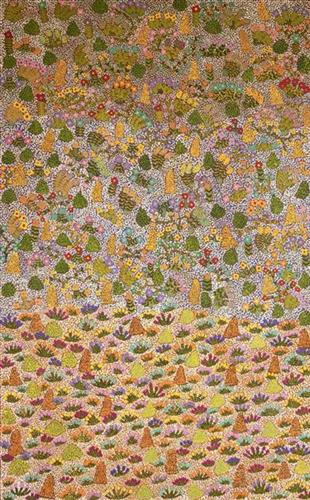
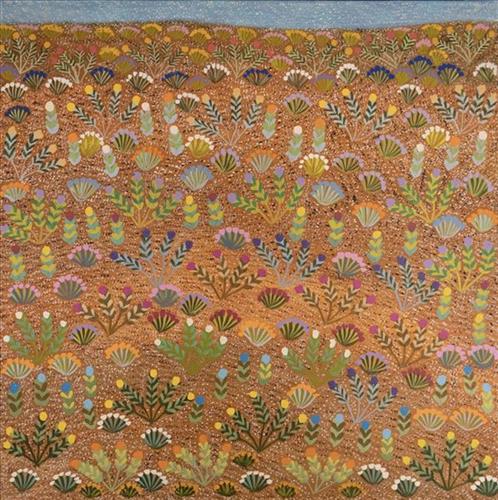
Lilly has painted her country, Antarrengeny. The brightly coloured flowers and small bushes are bush medicine and are still used within the community.

Lilly’s landscapes beautifully communicate the rich knowledge she possesses of both medicinal plants and country, the heart of her culture.

As a young girl, Lilly lived traditionally off of the land with her family and Alyawarr people. In Lilly’s lifetime, she has experienced and borne witness to the irreversible changes of country and way of life, that were previously unchanged for thousands of years.

She is a kind and gentle elder of the community and often tells stories of how life used to be, in Alywarre, her language, to her family and friends. These stories are also a great inspiration for many of the artists within the community.

Lilly is passionate about nature, especially her country and the plants that grow on it, she speaks in launguage and is keen to explain the various bush medicines which she depicts in her paintings.

The community of Ampilatwatja made a conscious decision not to paint altyerr (dreaming stories). The artists paint their country where those stories sit.

220982431181


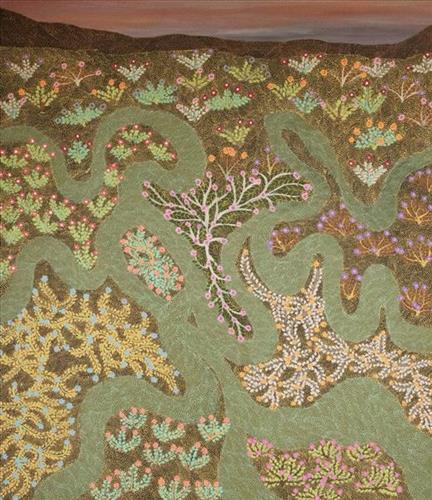
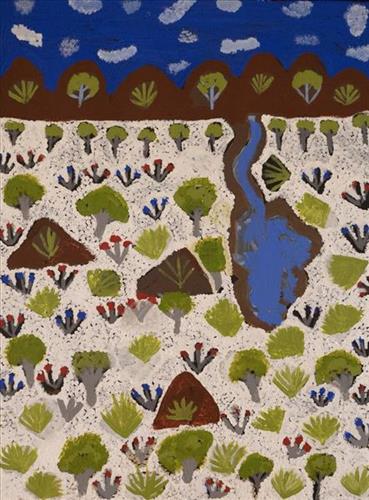
Kathleen Nanima Rambler – Creek Bed Running

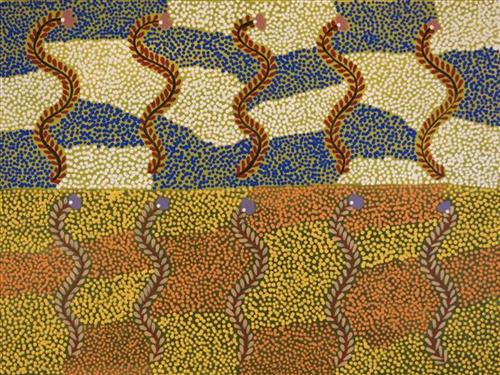
When you fly over my country looking down after the rain you can see the river beds running like snakes slithering through the land, everything looks like patches of green with the spinifex and sacred trees, and the beautiful blue of the water refreshing the land and the dry river beds

220982431161


Kindy Kemarre Ross – Irrultja is My Country

My country is called Irrultja, it’s past the hill and the dried-up creek from here, it’s a nice place, my dad’s country too, and my Mum’s country is here in Ampilatwatja. When I go to see my country, we always go to gather bush medicine, we always climb up the hill that’s in the south, we always go there.

We like to look out over the land and there are lots of flowers and bush medicine up there. I love my countryside; I see the nice flowers and gather bush medicine for me and my family. I like to paint a mix of wildflowers and bush medicines in all my paintings because it reminds me of my favourite part of my country and when it rains the flowers come out. Yeah, my countryside.

The community of Ampilatwatja made a conscious decision not to paint altyerr (dreaming stories). The artists paint their country where those stories sit.

220982434915


Joyrene Ngwarraye Holmes – Alpeyt Penh Kwaty (Flowers After Rain)

The land is blooming with flowers after the rain. This is when I will go and collect the bush flowers for my home

220982434902


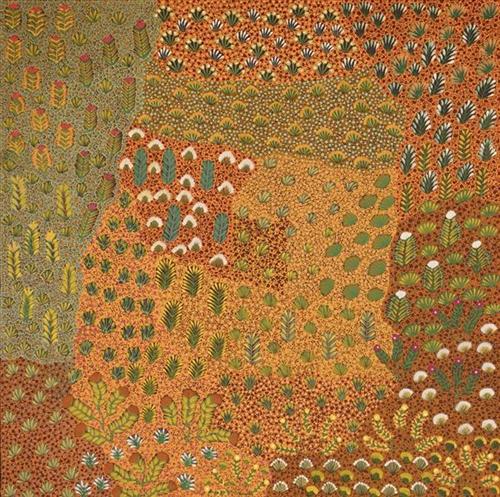
Edie Kemarre Holmes – Antarrengeny

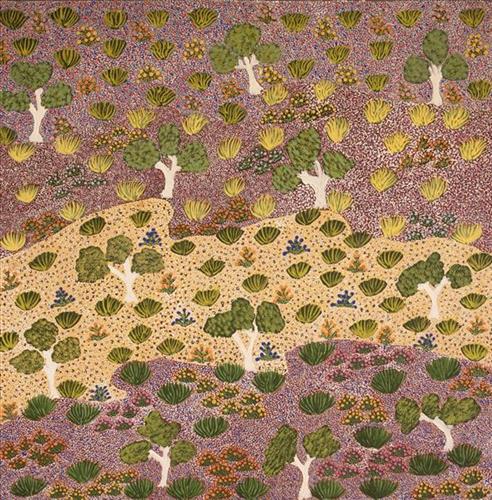
Edie depicts Antarrengeny when there has been no rain and the land shimmers like jewels. It is the open flat country, after a bushfire, when only the young grasses and the trees are growing and where there is good hunting.”

Antarrengeny is Edie’s country and also her Father’s.

Edie has a strong connection to Antarrengeny. She gave birth to two of her daughters out bush on this land. It is her country and she loves it dearly.

220982435078


Michelle Pula Holmes – Kwenkart (Mulga Fuchsia)

After the rain we go and cut the bush medicine for flu. We boil it and drink it when we got flu and sore throat.

220982435482


Sabrina Pitjara Morton

I love to look at the land and bush leaves. My mother paints, her name is Lucy Pula Luck and my Aunties Beverly Pula Luck, Jessie Pula Luck and Juliet Ngwarraye Morton all paint, they are great painters and I want to paint with them and learn. Bush medicine leaves are my favorite to look at. White flowers, leaves and bush tucker – this is what I want to show in my paintings.

220982435466


Susan Ngwarraye Philomac – Spring Creek

Kwetyaylp (donkeys) and nantew (horses) would come and drink from the water at Spring Creek on my father’s country.  We would put a bucket in the sand we would filter the water so we could drink it. 

When I was young girl we would go to Canteen Creek following the track along the hills, we would hunt turkey, emus and kangaroo and we would cut the bark and collect the sap from the sugar bag trees. `

111982435991


Mat

Works in fibre from the Maningrida region are widely recognised as some of the finest in Australia. Artists confidently push the boundaries of fibre craft and cultural expression, adapting traditional techniques and forms to produce strikingly inventive and aesthetically exquisite artworks.

Commonly used fibres include the leaves of pandanus (Pandanus spiralis), and palms (Livistonus), mírlírl (burney or jungle vine, Malaisia scandens), and the inner bark of kurrajong and stringybark eucalyptus trees. Weaving is physically hard work, now done only by women. Artists commonly use a mix of naturally dyed and undyed fibre to create a striking variation of coloured bands. They colour the pandanus using natural dyes made from the roots, leaves or flowers of plants within the weaver’s clan estate. Some artists also incorporate different types of looping to produce different patterns and textured finishes. Each type of mat, fibre bag, basket and dilly bag has its own name in the various languages spoken in the Maningrida region.

Artists weave many different kinds of mats. Conical mats were traditionally used to shield babies from mosquitoes. Long flat mats were used for blocking creeks so that fish would be diverted into fish traps. A small triangular mat made of pandanus fibre used to be worn by women during ceremonial gatherings, tied around their back and covering them at the front. Mats are also used for wrapping and rinsing food in water.

Artists usually use ngarakáya, pandanus spiralis, to weave fragrant, decorative round or oblong mats, as well as the less common triangular and conical shapes. The radial woven patterns of the finest round mats appear to vibrate with colour, sometimes regarded as an aesthetic manifestation of deep cultural meaning, as there is a significant spiritual dimension to pandanus mats.