Sea Turtle
When we see sea turtles it can mean that they can be mating and that makes us aware that they will soon be going to lay eggs. Some of our people eat the eggs and turtles.
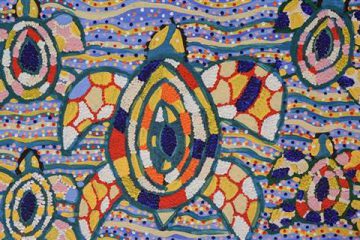
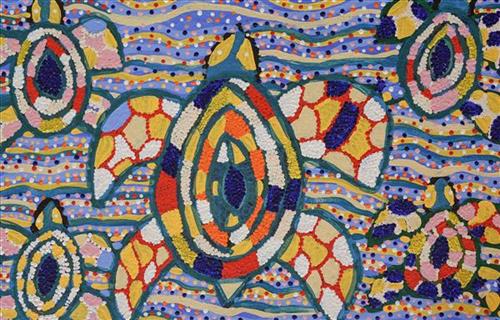
When we see sea turtles it can mean that they can be mating and that makes us aware that they will soon be going to lay eggs. Some of our people eat the eggs and turtles.
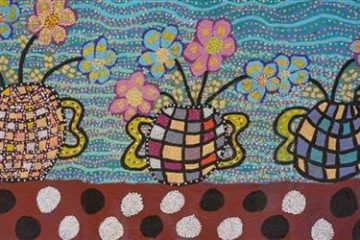
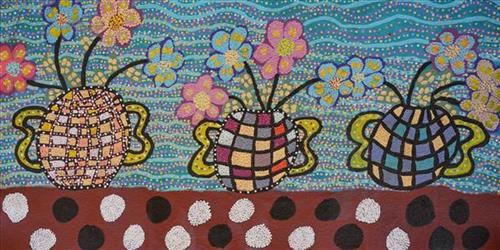
Vase of flowers. This is my painting of a vase of flowers ,I love painting flowers we have many beautiful flowers in our country
Traditionally, Nganiyal (conical mats) were used as an insect screen when erected, and as a sitting mat when folded. They are used in Ceremony as well as a functional item.
Nowadays, artists weave many different shapes including flat, round and oblong.

Status: Stock
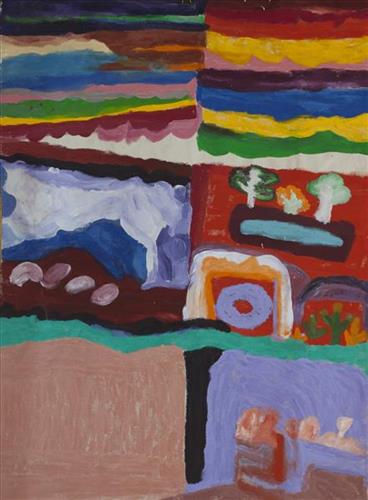
This is Wurta Amy French’s Country- her ‘ngurra’ (home Country, camp). People identify with their ngurra in terms of specific rights and responsibilities, and the possession of intimate knowledge of the physical and cultural properties of one’s Country. Painting ngurra, and in so doing sharing the Jukurrpa (Dreaming) stories and physical characteristics of that place, has today become an important means of cultural maintenance.
Wurta’s ngurra encompasses the Country that she and her family walked in the pujiman (traditional, desert-dwelling) era. At this time Wurta travelled nomadically with her own and other family groups. The Country they traversed encompassed an enormous tract of land, all around the Karlamily (Rudall River) region and through to Tiwa (Canning Stock Route Well 26) .
Wurta was born at Wantili (Warntili, Canning Stock Route Well 25). She grew up, walked and hunted primarily around water sources Pangkartal, Yalpalpa, Walirrlirri, Yanytikuji, Wartararra, Tintinmarran, Pimurlu, Raarki (Canning Stock Route Well 27), and Tiwa. Her family continued to live nomadically before eventually deciding to move to Jigalong Mission along with many other relatives following an extreme and prolonged drought in the 1960s.
Portrayed in this work are features of Wurta’s ngurra, such as the hills, gorges and valleys, warta (trees, vegetation), and the individually named water sources she and her family camped at. Rock holes, waterholes, soaks and springs were all extremely important sites for Martu people during the pujiman period, and are generally depicted with circular forms.
The encyclopaedic knowledge of the location, quality and seasonal availability of the hundreds of water bodies found in one’s Country sustained Martu as they travelled across their Country, hunting and gathering, visiting family, and fulfilling ceremonial obligations. They would traverse very large distances annually, visiting specific areas in the dry and wet season depending on the availability of water and the corresponding cycles of plant and animal life on which hunting and gathering bush tucker was reliant. As they travelled and hunted they would also burn areas of Country, generating a greater diversity of plant and animal life.
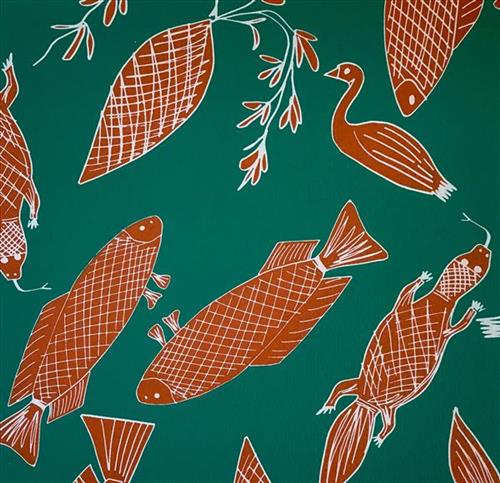
Djilpin Arts’ collection of Gapu limited edition prints commenced in 2007 with Basil Hall Editions. Gapu – Water – is the inspiration behind much of the work produced. The continuing collaboration between artists from Djilpin’s Ghunmarn Culture Centre and Basil Hall encourages new and emerging artists as well as established artists to experiment with a variety of print mediums. Etchings and Silk Screens make up Series I to VIII, with Series V also including Japanese Woodblock prints.
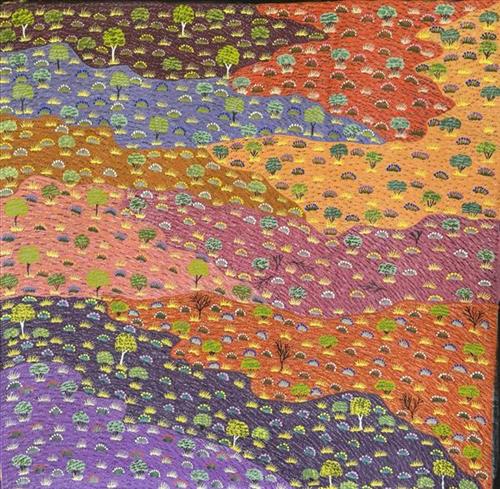
“When I go out hunting I always like to see the colour in the trees, the light, the dark and the bush medicine plants growing on the sand hills. The colours change at sunrise and sunset. I like hunting and seeing my country.”
I love to paint since childhood. My paintings show my deep love for my country and the beauty I see.
The community of Ampilatwatja made a conscious decision not to paint ‘altyerr’ dreaming stories. The artists paint their country where those stories belong.
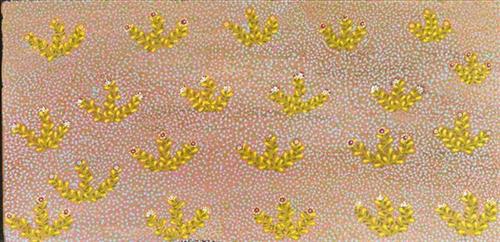
The artists of Ampilatwatja made a conscious decision not to paint ‘altyerr’ dreaming stories. The artists paint their country where those stories sit.
These bush flowers grow seasonly in Alyawarr country, some of which are also used in bush medicine remedies.
“I have just started painting, my grandmother Elizabeth Ngwarraye Bonney has been teaching me, she tells me all about the bush Flowers
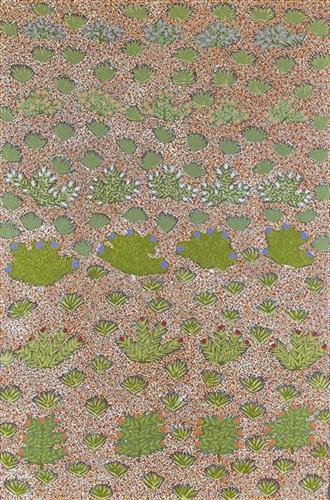
Beverly paints her Mother’s country. When Beverly was a child her mother took her all around her country and showed her the bush medicine and bush tucker.
The knowledge of the bush plants has been handed down through generation to generation and Beverly still spends time hunting and collecting bush medicine plants to use in everyday life. Taught by her mother and grand mother, Beverly also sings the songs of the bush medicine plants.
Beverly’s paintings are joyous and full of information regarding bush medicine plants.
The community of Ampilatwatja made a conscious decision not to paint ‘altyerr’ dreaming stories. The artists paint their country where those stories sit.