115682331454
Nawarlah (Brown River Stingray)
Aboriginal art in Ramingining, Central Arnhem Land is commonly illustrated through designs and images of animals, plants, and landscape. These motifs commonly reflect the artists ancestral inheritance and their dreamings and are referred to as totems.
For this, the weaver has made a stingray.
115682331450
Nawarlah (Brown River Stingray)
Aboriginal art in Ramingining, Central Arnhem Land is commonly illustrated through designs and images of animals, plants, and landscape. These motifs commonly reflect the artists ancestral inheritance and their dreamings and are referred to as totems.
For this, the weaver has made a stingray.
115682331449
Nawarlah (Brown River Stingray)
Aboriginal art in Ramingining, Central Arnhem Land is commonly illustrated through designs and images of animals, plants, and landscape. These motifs commonly reflect the artists ancestral inheritance and their dreamings and are referred to as totems.
For this, the weaver has made a stingray.
115682331448
Nawarlah (Brown River Stingray)
Aboriginal art in Ramingining, Central Arnhem Land is commonly illustrated through designs and images of animals, plants, and landscape. These motifs commonly reflect the artists ancestral inheritance and their dreamings and are referred to as totems.
For this, the weaver has made a stingray.

377810582331453
Kunmadj
Kunmadj is the Kuninjku term for large woven collecting baskets, known as dillybags.
They are often made from the burney vine (Malaisia scandens), a strong, pliable plant that grows along the ground and into the canopy of monsoon vine thickets. The baskets are used to collect a variety of heavy foods, such as fish caught in conical fish traps or a good harvest of yams. As well as being of practical use, dillybags are of cultural significance to Arnhem Land people. Dillybags are totemic objects and they are associated with particular sites in the landscape.
115682331669
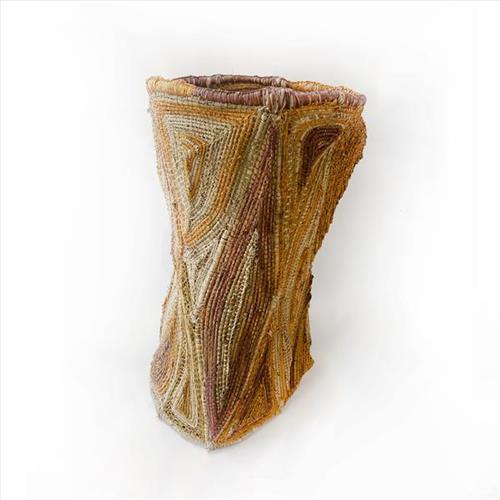
Hollow Log
Janice was inspired by the hollow logs seen in and around the bushlands of Ramingining.
116482331691
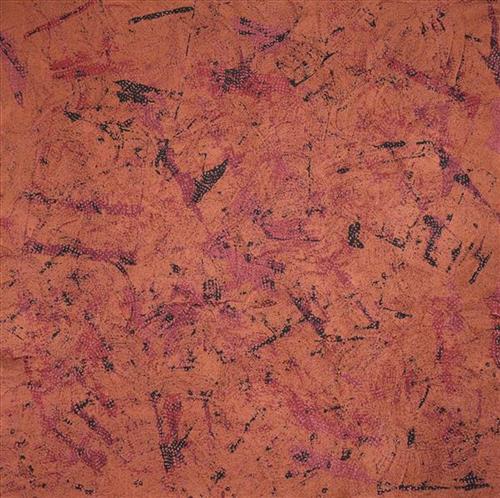
This painting is about love, hope, strength and respect for family. I, as an artist, have never left an artwork untitled, but this is it. UNTITLED.
116482331666
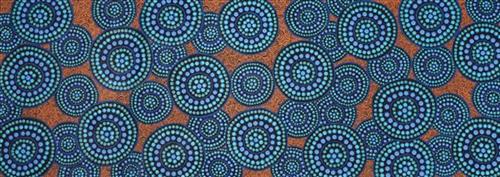
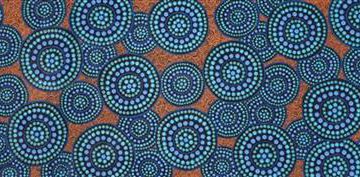
Waterhole
116482331663
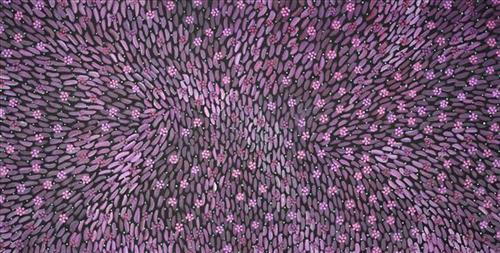
Mulla Mulla
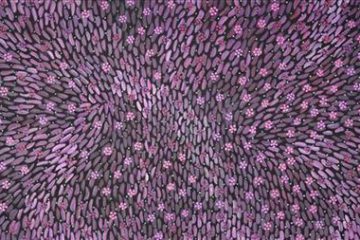
This is the Fortescue Mulla Mulla or ‘Gumbarli’ in Yindjibarndi language. The flower is a purplish colour. It’s not a bush medicine, just a flower that grows in the country. Once the leaves and petals have fallen off, the seeds are blown all through the land to bring flowers again the next year.