115682329215


Sea Turtle

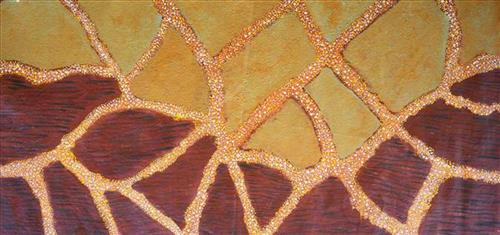
Peter is painting a sea turtle (or Hawksbill Turtle) from his Yirritja song line. This depiction of the Guwarrtji is a small part of a great story which Peter inherited from the Liyagal-wu Mirr tribe, his mother tribe. The diamonds on the Guwarrtji’s shell connect this story to the honey story, another part of Peter’s song line. Upon Peter’s death, his spirit will return to the Guwarrtji.

116482329430


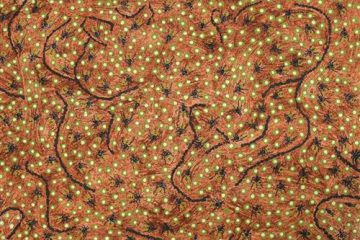
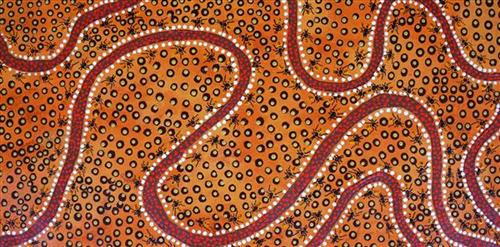
Honey ants (minga)

Busy ants are shown here collecting food before winter. Bunjima people call the food ‘mulma nujnu’. This name comes from the leaves, and another name is ‘ngardanu’, which comes from the branches.

116482329391


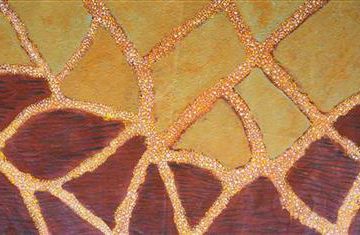
Tableland Flooding

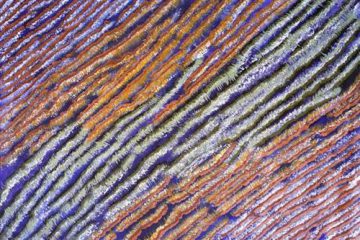
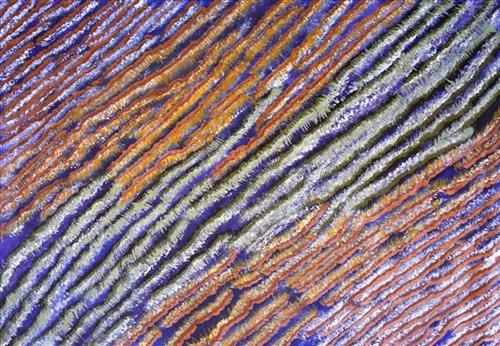
When it’s flooding time the rain starts and then all the wet muddy puddles are left over the country before the beautiful flowers and green grass.

116482329373


Purple Mulla Mulla

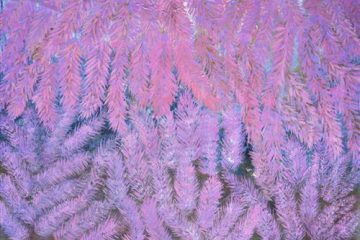
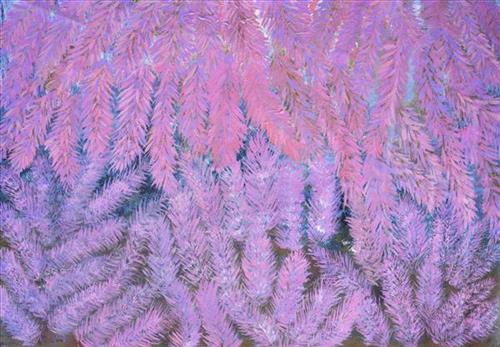
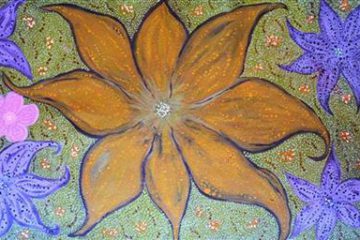
Purple Mulla Mulla grows among the grasses, blending beautifully with the bushes,

116482329364


Willy Willy

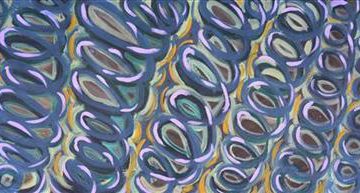
During the heat of the summer season when the country is dry, the willy willy comes up . In the country where it is flat you can see the dust storm forming into a willy willy, we call it ‘wanagga’. There is a legend about a bad sprit that is in the wanagga, it can make you sick . When we see one nearby we go inside

116482329422


Spinifex Grass

Madeline paints the Yinjibarndi Country as she sees it around her, taking inspiration from the natural environment which she has lives amongst since childhood. She often paints things she sees on Country like the pilbara wildflowers, lilyponds, claypan and spinifex.

116482329400


Flowers

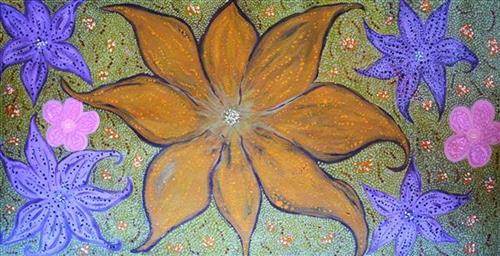
Madeline paints the country as she sees it around her, taking inspiration from the natural environment which she has lives amongst since childhood. She often paints things she sees in Yinjibarndi Country like the Pilbara wildflowers, lilyponds, claypan and spinifex.

116482329336


Bush Onion (Nina)

When we were children we used to live in the bush with our parents and we lived mainly off the land, eating a lot of bush food. We used to walk along the river beds and banks looking for the bush onions. When we found the right plant we used to dig and pull it up. It is like the onion you buy in the shop but very small in size and brown in colour. You peel it can eat it raw or put it on top of the coals. It is very tasty.

116482329320


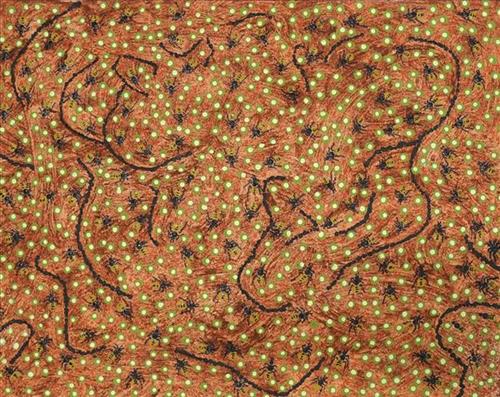
Honey Ants

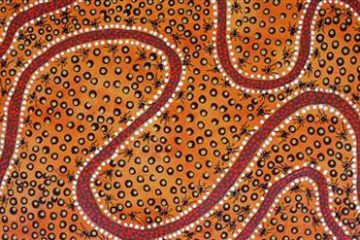
Busy ants are shown here collecting food before winter. Bunjima people call the food ‘mulma nujnu’. This name comes from the leaves, and another name is ‘ngardanu’, which comes from the branches.

111582329197


Basket

Weaving is a skill that has been practiced by Martu for thousands of years in the making of utilitarian and ceremonial items, such as yakapiri (bark sandals) and manguri (head pads for balancing carved carrying dishes). However, coiled basket weaving as an artform is a relatively newly adopted practice for the Martu, a skill passed on from Central Desert artists in the 1990’s. Leading Martu fibre arts practitioner Nola Taylor says that basket weaving was so popular amongst Martu women that it “spread across the desert like a waru (fire)”.

Each basket is built up through wrapping fine bundles of grass in brightly coloured wool and then stitching each round on to the previous one. The baskets are primarily made from puntayarra and minarri (Amphipogon Caricinus) grass, usually collected incidentally during trips to visit family, attend ceremonies, maintain Country, and hunt and gather bush tucker. Martu artists have developed a distinctive style of basketry and individual artists continue to develop new designs and incorporate novel materials, including steel, wire and wood, into their work.