111582323224


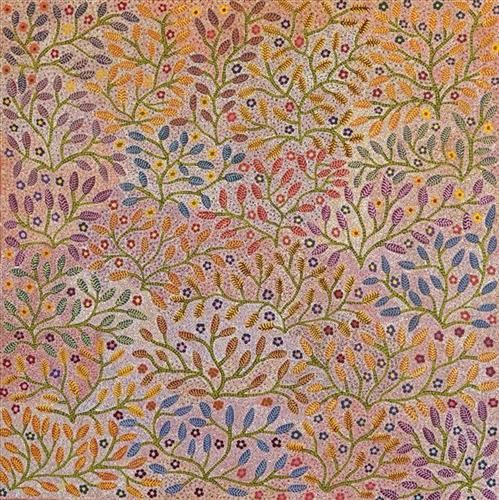
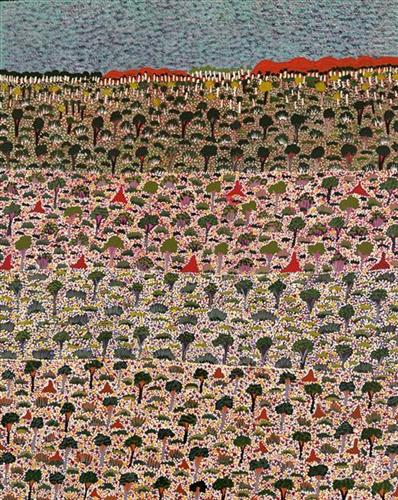
Untitled

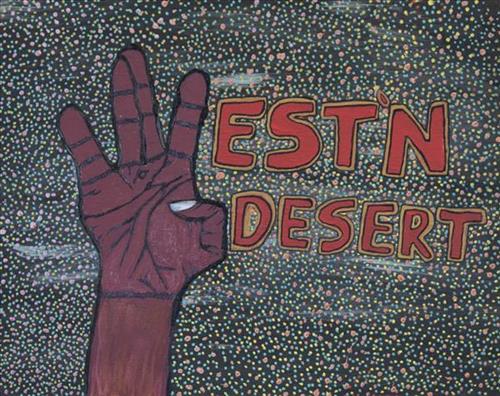
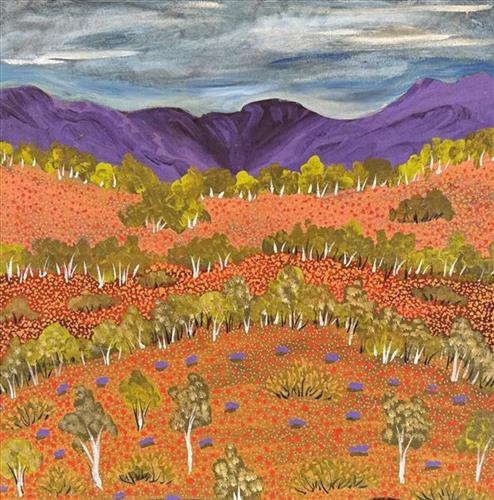
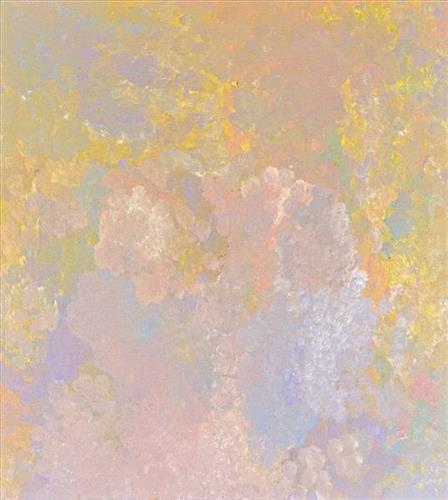
“I was learning about painting from school and from watching Bamba’s [Corban Clause Williams] mob painting. Bamba is my little brother. I like a painting about Country, painting my grandfather’s Country- Kaalpa (Kalypa, Canning Stock Route Well 23). 

I also like to go hunting with my family.”

– Robina Clause

Robina is part of the youngest generation of Martumili Artists. She, like her contemporaries, began to paint with her parents, grandparents and extended family, thus fostering an organic process of learning, not only about painting techniques, but also specific locations, family histories, traditional ways of life, and Jukurrpa (Dreaming). In this way, cultural knowledge continues to be transferred through visual arts, keeping Martu culture strong.

Robina’s subject matter is strongly informed by her traditional ngurra (home Country, camp) through her grandfather- Kaalpa (Kalypa, Canning Stock Route Well 23). A permanent water source located northeast of Kumpupirntily (Kumpupintily, Lake Disappointment), the site is of great cultural significance, and is also known for good hunting. Adjacent to the waterhole is a hill of the same name. The landscape around Kaalpa is parlkarra (flat country) bordered by tali (sandhills), stretching as far as Windy Corner, northeast and towards the border of Western Australia and the Northern Territory. The large and dangerous Jukurrpa mosquito and fly beings partially created the landforms in this area and continue to live underground here. Kaalpa also features in the Minyipuru (Jakulyukulyu, Seven Sisters) Jukurrpa, a central creation narrative for Martu, Ngaanyatjarra, Pitjantjatjara and Yankunytjatjara people that is associated with the seasonal Pleiades star constellation.   

Stylistically Robina’s work melds traditional and contemporary elements, demonstrating the development of her own aesthetic while continuing to reflect the powerful influence of her elders. Dotted paint applied in modern palettes depict walka (designs), iconographic forms universally shared across the Western Desert. For many thousands of years these designs have represented men and women, kapi (water sources), tali (sandhills), different varieties of warta (trees, vegetation), ngarrini (camps), jina (tracks), jila (snakes), and Jukurrpa ancestral beings.
220982317076


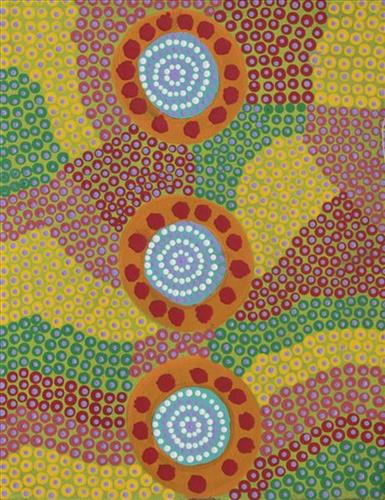
Antarrengeny – Edie Kemarre Holmes

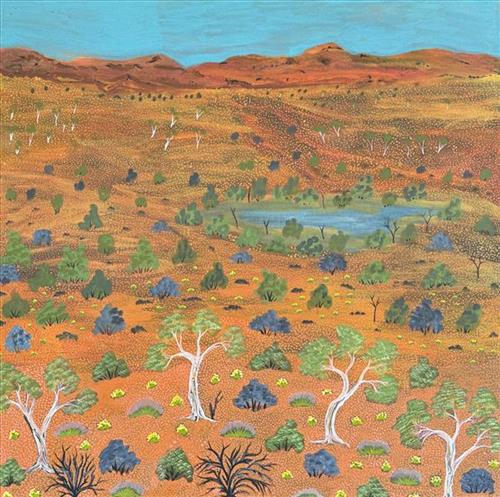
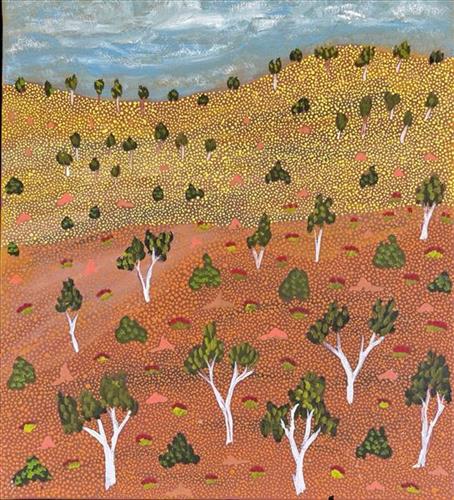
The community of Ampilatwatja made a conscious decision not to paint ‘altyerr’ dreaming stories. The artists paint their country where those stories sit. Antarrengeny is Edie’s country and also her Father’s.

In this painting Edie depicts Antarrengeny, “when there has been no rain and the land shimmers like jewels. It is the open flat country, after a bushfire, when only the young grasses and the trees are growing and where there is good hunting.”

Edie has a strong connection to Antarrengeny. She gave birth to two of her daughters ‘out bush’ on this land. It is her country and she loves it dearly.

220982317419


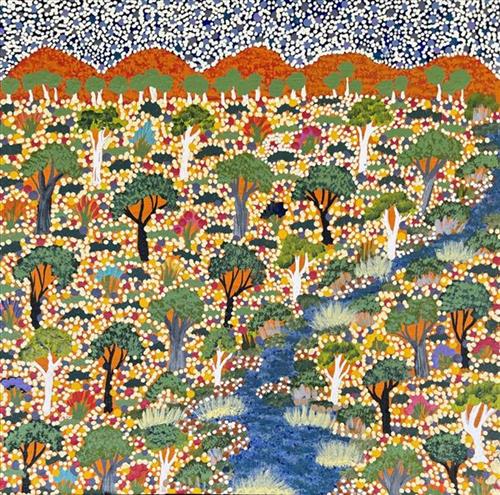
View Of Country

The community of Ampilatwatja made a conscious decision not to paint ‘altyerr’ dreaming stories, the artists paint their country where those stories sit.

This painting shows the layered landscape of Alyawarr, Central Australia. Knowing your country is an important part of living in a remote community like Ampilatwatja. Knowing when and where to go hunting and gathering, knowing where there is ‘soakage’ (where you can dig for water), travelling with family for ceremonies, and maintaining a connection with the land.

“This is my country, my view of country.”

220982318071


My Mothers Country – Eileen Bonney

The community of Ampilatwatja made a conscious decision not to paint ‘altyerr’ dreaming stories. The artists paint their country where those stories sit.

Eileen has painted ‘Tijamburra’, her mothers country.

“This is my mothers country, we go hunting there for wild onions, goannas, echidnas and sugarbag honey in the trees. I like to hunt there, there’s water all year round. Even if it doesn’t look like there is, we follow the bird tracks to know where to dig and we find water.”

From living here in the remote community of Ampilatwatja, going hunting out bush and traveling for family and ceremonies Eileen knows this land, her country.

220982318070


My Grandmothers Country-Elizabeth Ngwarra Bonney

I still hunt my Grand Mothers country for goanna, bush medicine and yams.

I hunt all year round, hunting and walking through the country makes me happy.  When I look at the distant hills I can feel my grandmother.  Bush flowers are everywhere.

Painting my grandmother’s country reminds about those times.

220982321329


My Grandmothers Country – Denise Ngwarraye Bonney

The community of Ampilatwatja made a conscious decision not to paint ‘altyerr’ dreaming stories. The artists paint their country where those stories belong.

Denise paints ‘Tijamburra’, her Grandmothers country.

“This is my Mothers Mothers country, out near Canteen Creek, we go hunting  for wild onions, goannas, echidnas and sugar bag honey in the trees. I like to hunt in my country, there is water all year round even if it look dry, we follow the bird tracks to know where to dig and then we find water.


This painting is after rain, many grasses are out, but the riverbed is still sandy.”


220982321498


Great Grandmothers Country – Gunderson Kemarre Lewis

I paint my Great Grandmothers country around Canteen Creek.  Long time ago she hunted around this soakage in this country.   When I paint, I paint that country, the soakage the bushflowers the sandhills and the distant mountains.  I hunt this country now.

220982322236


Bush Tucker – Maisie Petyarre Bundey;-

Maisie paints the bush tucker found in her country, the area that surrounds Boundary Bore in the Utopia homelands. She paints bush plums, bush bananas, bush potatoes and bush medicine plants. The main motif which recurs often in Maisie artworks is a full coolamon. When she paints she always speaks of gathering and hunting on her country ‘long way from here, long time ago’, filling up coolamons with ‘bush potato, bush banana, goanna and porcupine.’ Maisie always says her family are ‘happy ones, healthy ones.’