Mparntwe (Alice Springs), Central Australia
Caterpillar Dreaming
Caterpillar Dreaming

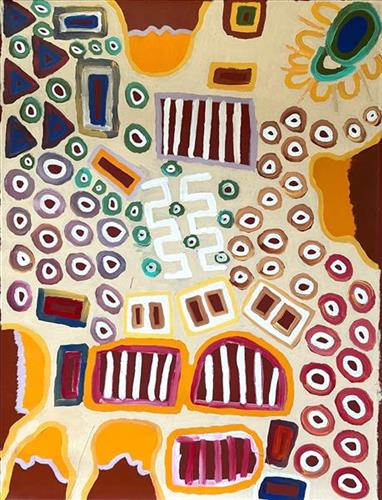
‘Kungkarrangkalpa’ (The Seven Sisters or Pleaides) is significant Tjukurrpa (dreamtime). Its origins you may be familiar with in astronomy and its connection to ‘Wati Nyiru’ (Magic Man or Orion). The roots of this dreaming stems across indigenous groups around the world. The Australian Aboriginal songline is one part to the whole dreaming which can be traced all around the world. The ladies of the Ngaanyatjarra Lands depict their significant chapter and understanding of the journey of the sisters. The different versions of this story depend on where you live and the significance’s of local Tjukurrpa places.
Nyiru fell in love with the sisters but he was of the wrong skin group to marry, but he still pursued them on their journey. The sisters travel across the land to escape Nyiru’s unwanted attentions, but he is persistent and always finds them. There are significant land forms which can be sited today that evidence this dreaming. As Nyiru is chasing the sisters he tries to catch them by using magic to turn into the most tempting kampurarrpa (bush tomato) and the most beautiful Yirli (wild fig tree), for them to eat and camp under. However, the sisters are knowledgeable of his magic and too clever for Nyiru who they outwit again and again. They go hungry and run through the night rather than be caught by him. As the journey continues, Nyiru gets so frustrated at the wit of the sisters that he uses his magic to make the oldest sister sick to try and get closer to her. The other sisters rescue the big sister and nurse her back to health. It is said he also captures the youngest sister, but with the help of the oldest sister, she escapes back to her sisters who are waiting for her. Eventually, the sisters fly into the sky to escape Nyiru, forming the constellation. Nyiru felt lonely, longing for the sisters who were so far away. Nyiru used his magic to go to the sky, forever in pursuit.
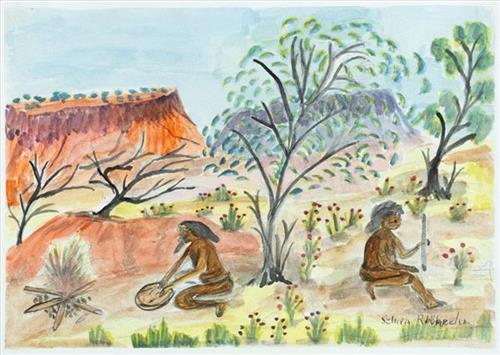
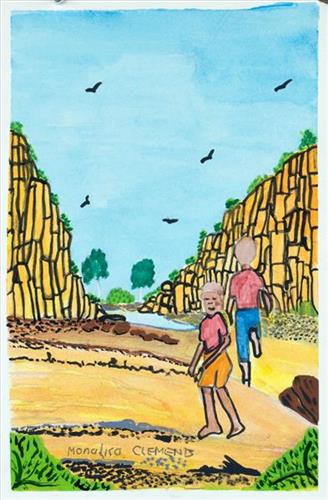
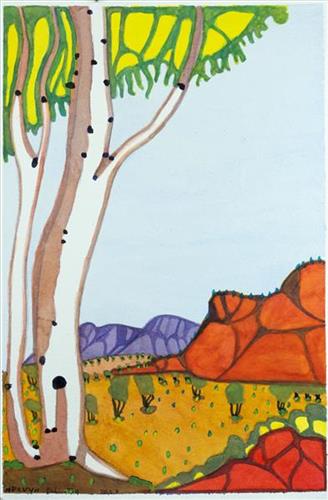
East Mac – Story other side of Ross River – sacred site for the women.
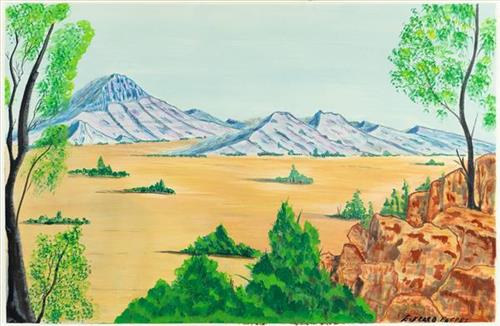
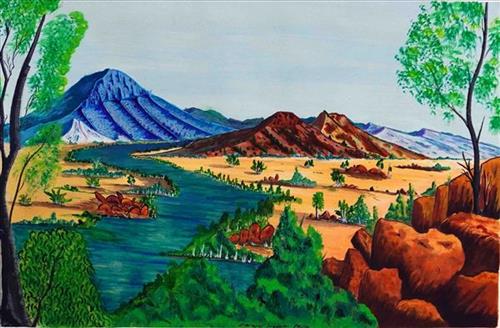
My father and I are from Areyonga. It is a special place for us and the Dreaming related to it is secret. I learned this story from my grandfather, he used to tell me the story of the countryside.
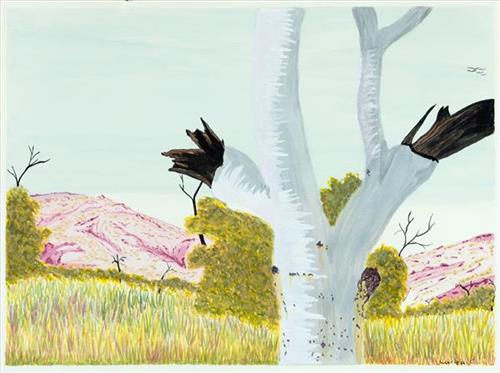
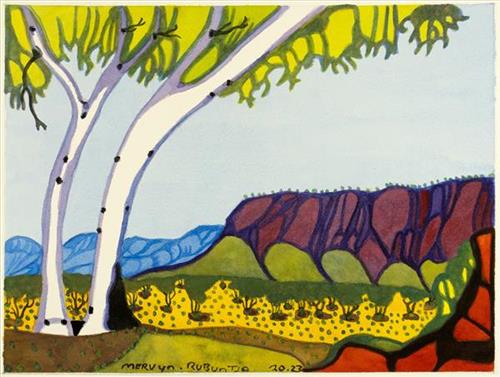
Para Ingkwia – this is about the Gumtree and the hills and the spinifex and the Grass belongs to the creek sands. There are birds flying in the dark and cloudy blue sky.; it is clear sky further away. The black cockatoos are flying towards the old gumtree.

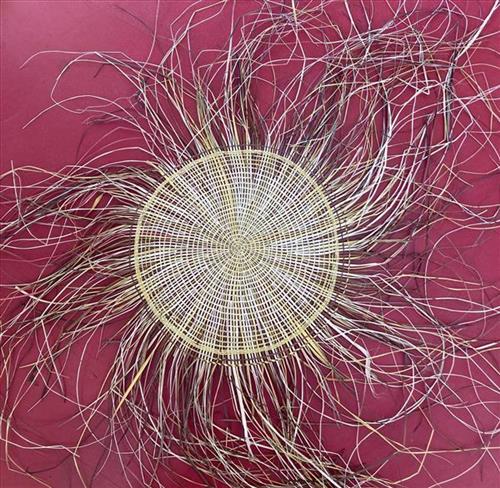
Fibre Art is an ancient Aboriginal women’s craft that is still made today using the same techniques as their ancestors. Making fibre art is labour intensive and much care and fine needlework is required to ensure the finished object is both functional and beautiful. Fibre art from Ghunmarn Culture Centre includes dilly bags, floor mats, bush fans, woven creatures found in the landscape, plants such as yams (bush potato), baskets, place mats, and spirit figures such as mermaids and Mukuys. Natural pandanus fibre (Mukarra), is used to make much of the fibre art produced by the artists of Djilpin Arts. Women collect the pandanus by pulling from the top of the pandanus tree, then stripping and drying the leaves before they are dyed with natural bush colour collected from the Beswick surrounds.


This painting depicts a filesnake (top), barramundi (middle) and rainbow serpent (bottom). All are hiding among freshwater lily pads.
Painting has been completed using a handmade grass reed brush called Jarlk. This is harvested from billabongs and wet areas surrounding Beswick. Raark or fine line work is in a mixture of Yirritja and Dhuwa style.
Filesnake at the top has been completed using a modern paintbrush and a stippling effect. Middle barramundi is in Dhuwa style and consists of a single line before alternating colour. Bottom rainbow serpent is in Yirritja style which has multiple lines before alternating colour.
Modern acrylic paint has been used.
Bathi are woven from the split leaves of the Screw Palm (Pandanus Spiralis). Coil weaving was introduced to Arnhem Land in the 1930s. It was adapted from techniques used by Indigenous women throughout South East Australia.