11564004648


Status: Stock


Fabric length – 1m

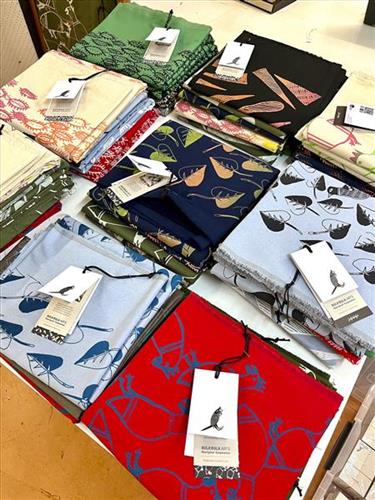
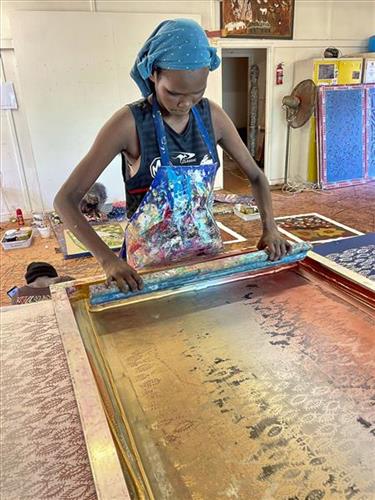
This product was screenprinted by Yolŋu art workers at Bula’Bula Arts. We print small batches of tea towels, tshirts and fabric lengths by hand because we love putting Yolŋu designs on everyday items – especially ones that balanda (non-Yolŋu) use! Due to the lovely handmade nature of this product, print quality may vary.

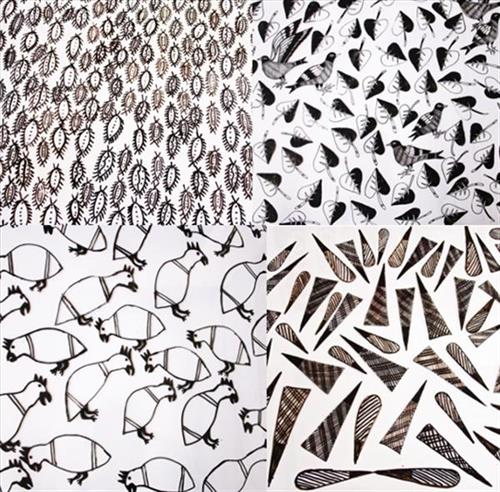
 Available in four fabric designs and multiple colourways:

  • Dawurrmonuk (itchy caterpillar) by Evonne Gayuwrri
  • Lidjilidji (Crimson Finch) by Andrew Wanamilil
  • Lorrpu (Sulphur-crested Cockatoo) by Peter Gambung
  • Ngambi (limestone) spear by Shannon Ashley

Manymak (very good)! Buying Bula’Bula Arts products helps us build a sustainable income source for our 150 artists and artworkers from Ramingining and surrounding outstations.

55% linen 45% cotton 


11564004645


Status: Stock


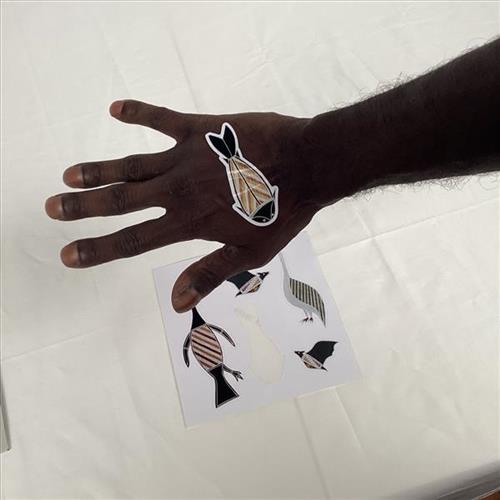
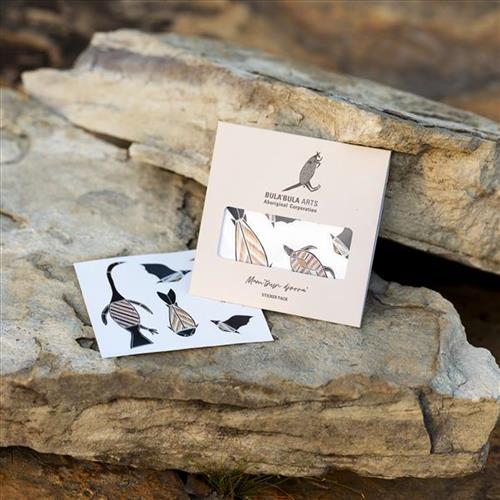
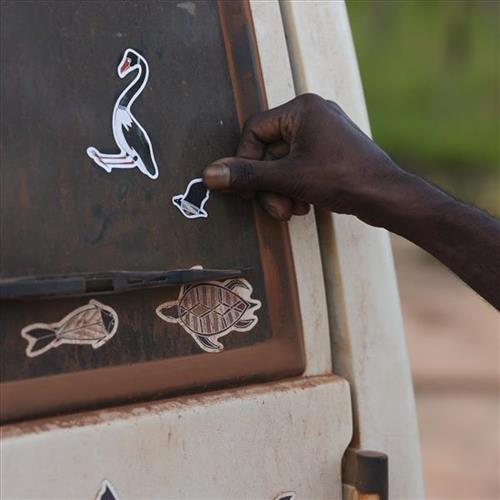
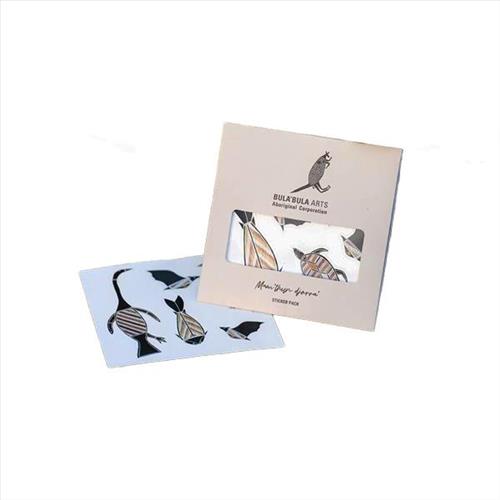
mam’thun djorra’ (sticker pack)

Meet animals and creation spirits from Ramingining, Arnhem Land. These sticker designs are taken from original paintings from incredible Yolŋu artists at Bula’Bula Arts. We love seeing Yolŋu designs on everyday items – especially ones that balanda (non-Yolŋu) use – because we are proud of our culture! It makes us happy to see our stories travel all around the world.

  • Materials: High quality PVC. UV protected and water resistant. 
  • Use: Suitable for indoor and outdoor use including bumpers, vehicles and windows.
  • Designed in Ramingining, Arnhem Land. 

Yo! 10 stickers inside by Bula’bula artists: 

  • Guwarrtji (Hawksbill sea turtle) by Peter Gambung
  • Warrnyu (Flying Fox) by Andrew Wanamilil
  • Wuldulbal/badju (bream) by JB Fisher
  • Gananhdharr (egret) by Daniel Warrulukuma
  • Gumang (magpie goose) by Angela Malibirr
  • Burala (diving duck/oriental darter) by Peter Gambung

Manymak (very good)! This product helps build a sustainable source of income for Yolŋu artists and art workers at Bula’Bula Arts.

11564004372


Status: Stock


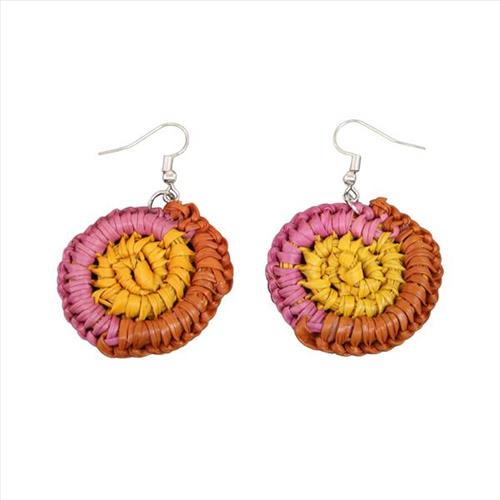
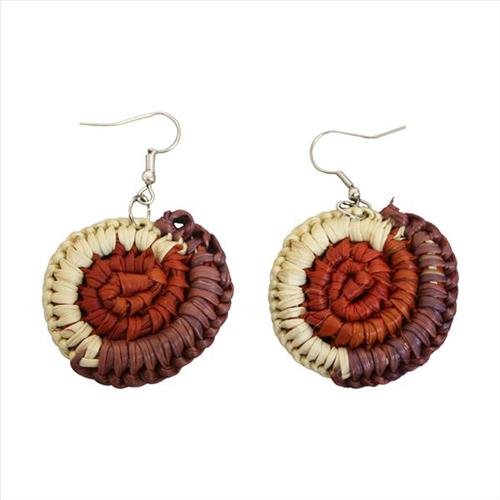
Pandanus earrings by Daphne Banyawarra

  • Bush-dyed pandanus, harvested locally and dyed with bush dyes
  • Silver plated hooks 

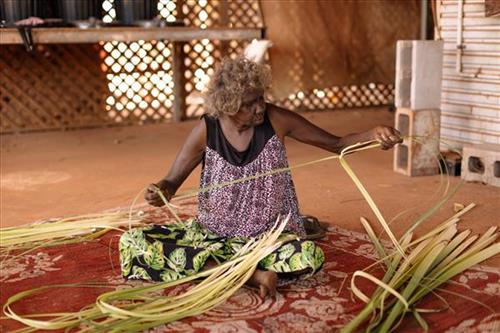
Yolŋu artistand masterweaver Daphne Banyawarra is a strong Ganalbingu woman from Gurrwiliny (Arafura Wetlands). Her intricate and highly skilled works are made from naturally dyed pandanus and kurrajong plant materials sourced from the bush surrounding Ramingining, Arnhem Land. Her work embodies the traditional knowledge of the Yolngu Nation. The plant material is worked and treated in the ways passed on from ancestors and in doing, she recreates and identifies with sacred ceremonial objects which connect Yolngu to each other, to their past, their Creative Beings and to their Country.

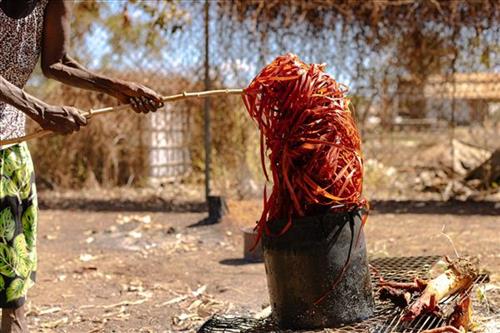
Daphne harvests the youngest bunches of leaves from the top of the Gunga (pandanus spiralis) with a hooked long stick. The prickly edges stripped off with the thumb nail. Daphne returns to the bush to collect natural dyes from roots, leaves and grasses. The stripped pandanus is then boiled with the dye to create the variety of colours. The freshly dyed strips of pandanus are hung to drip-dry and are ready f or weaving whilst the fibres are still moist and pliable.

11564004373


Status: Stock


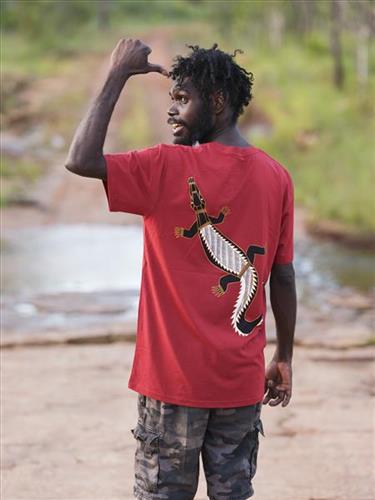
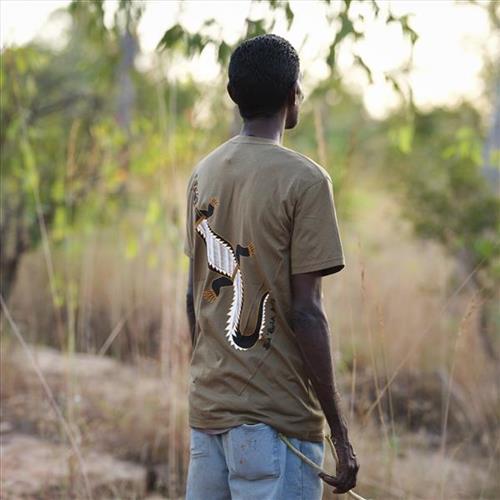
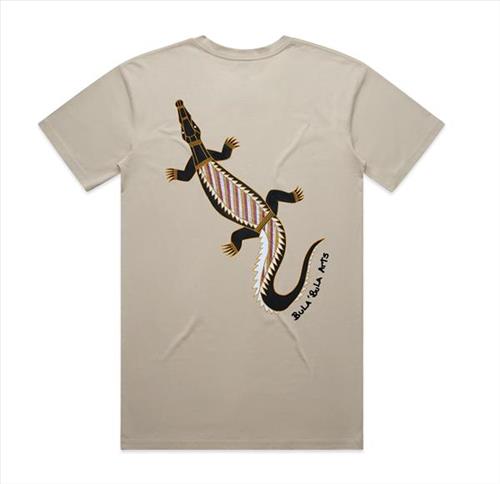
Baru T-shirt

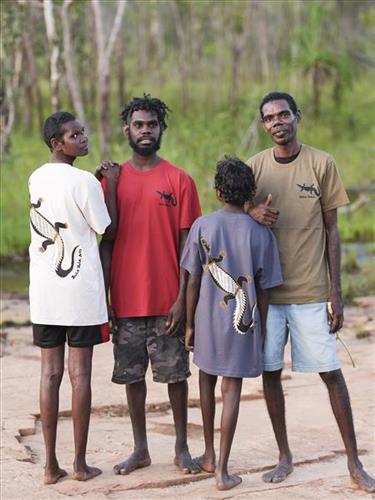
This tshirt was designed by Yolŋu artist Andrew Wanamilil in Ramingining, Arnhem Land. Baru (crocodile) is one of Andrew’s totems and part of a very important Creation Story for the Ganalbingu people. 

Manymak (very good)! Buying products by Bula’Bula Arts helps us build a sustainable income source for Yolŋu artists and artworkers.   

DETAILS

  • Unisex TShirt, regular fit 
  • Mid weight 180GSM 100% combed cotton (very soft!)
  • Available sizes: S, M, L, XL, 2XL
  • Available colours: Bone, Petrol Blue, Cardinal Red, Army Green
  • Neck ribbing, side seamed, shoulder to shoulder tape, double needle hems, preshrunk to minimise shrinkage
  • UPF rating: UPF50+

SIZE GUIDE 

We are a small team based in a very remote location. Please choose your size carefully as returns are very difficult and expensive for us to facilitate.  Thank you for your understanding! 

Our tshirts are an AS Colour Staple Tee with the following dimensions (width x length): 

  • Small: 47cm x 71cm
  • Medium: 52cm x 75cm
  • Large: 56.5cm x 78.5cm 
  • 2XL: 64cm x 83.5cm l

*allow for 2cm tolerances on all sizes.  

Originally created in collaboration with the MCA Store, Museum of Contemporary Art Australia, 2023 

11564004374


Status: Stock


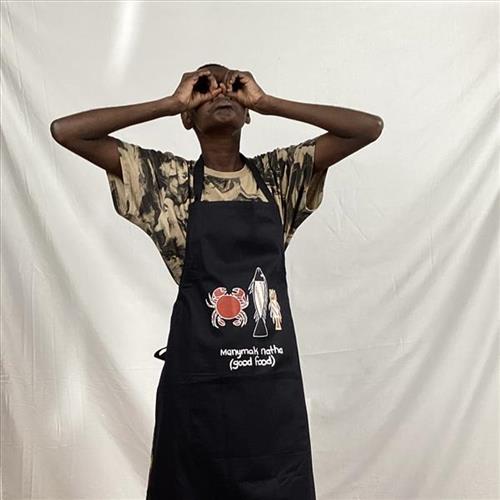
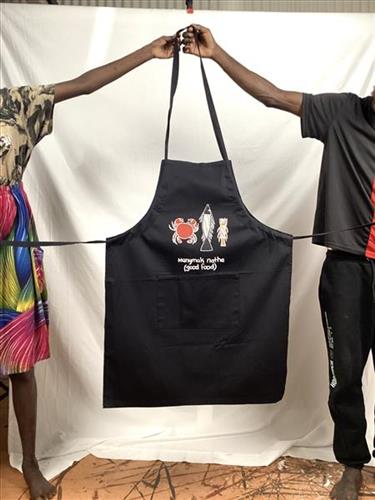
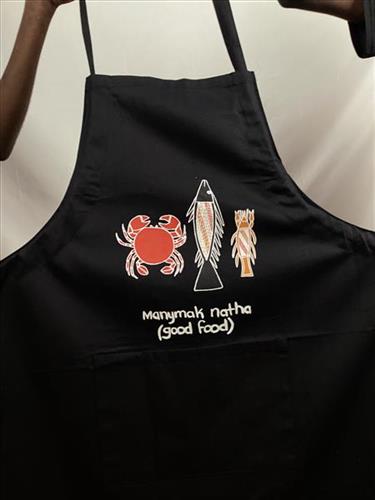
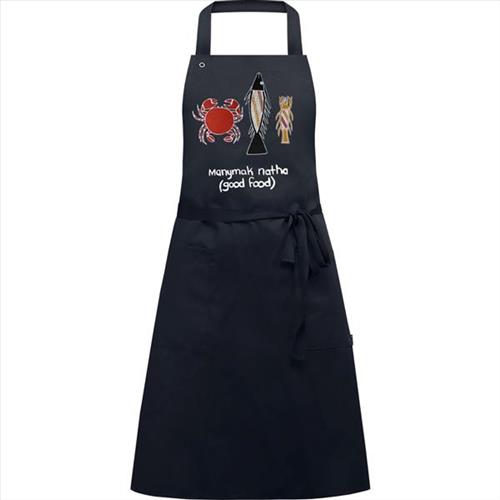
Manymak natha (good food) apron

Perfect the art of cooking in our ‘Manymak natha’ apron – it means ‘good food’! The design is made from three original artworks and features traditional Yolgnu bush foods from both freshwater and saltwater sources.

Cotton drill apron with pocket and adjustable straps.

ARTISTS

  • Nyoka (crab), Benjamin Garrawurra
  • Wuldulbal/badju (bream), JB Fisher
  • Dakawa (yabby), Peter Gambung 

Manymak (very good)! This product helps build a sustainable source of income for Yolŋu artists and art workers at Bula’Bula Arts. 


377814082246223


All the Things from Numbulwar

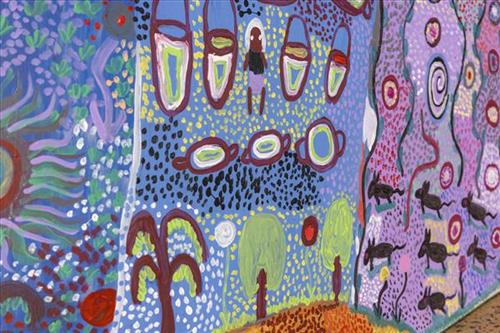
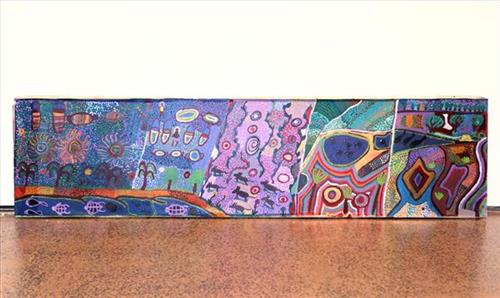
All the things from Numbulwar. Like, different types of baskets and dillybags, mats, and the pandanus tree where we get the weaving string from. All of the dogs in community. The birds in the water, stingray and big mob fish and turtle. Some things close to me and all of the trees in the distance.

114182259087


Kungkarrangkalpa (Seven Sisters)

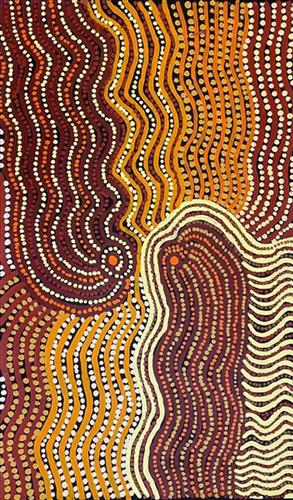
‘Kungkarrangkalpa’ (The Seven Sisters or Pleaides) is significant Tjukurrpa (dreamtime). Its origins you may be familiar with in astronomy and its connection to ‘Wati Nyiru’ (Magic Man or Orion).  The roots of this dreaming stems across indigenous groups around the world. The Australian Aboriginal songline is one part to the whole dreaming which can be traced all around the world. The ladies of the Ngaanyatjarra Lands depict their significant chapter and understanding of the journey of the sisters. The different versions of this story depend on where you live and the significance’s of local Tjukurrpa places.

Nyiru fell in love with the sisters but he was of the wrong skin group to marry, but he still pursued them on their journey. The sisters travel across the land to escape Nyiru’s unwanted attentions, but he is persistent and always finds them. There are significant land forms which can be sited today that evidence this dreaming. As Nyiru is chasing the sisters he tries to catch them by using magic to turn into the most tempting kampurarrpa (bush tomato) and the most beautiful Yirli (wild fig tree), for them to eat and camp under. However, the sisters are knowledgeable of his magic and too clever for Nyiru who they outwit again and again. They go hungry and run through the night rather than be caught by him. As the journey continues, Nyiru gets so frustrated at the wit of the sisters that he uses his magic to make the oldest sister sick to try and get closer to her. The other sisters rescue the big sister and nurse her back to health. It is said he also captures the youngest sister, but with the help of the oldest sister, she escapes back to her sisters who are waiting for her. Eventually, the sisters fly into the sky to escape Nyiru, forming the constellation. Nyiru felt lonely, longing for the sisters who were so far away. Nyiru used his magic to go to the sky, forever in pursuit.

114182298560


Kungkarrangkalpa (Seven Sisters)

‘Kungkarrangkalpa’ (The Seven Sisters or Pleaides) is significant Tjukurrpa (dreamtime). Its origins you may be familiar with in astronomy and its connection to ‘Wati Nyiru’ (Magic Man or Orion).  The roots of this dreaming stems across indigenous groups around the world. The Australian Aboriginal songline is one part to the whole dreaming which can be traced all around the world. The ladies of the Ngaanyatjarra Lands depict their significant chapter and understanding of the journey of the sisters. The different versions of this story depend on where you live and the significance’s of local Tjukurrpa places.

Nyiru fell in love with the sisters but he was of the wrong skin group to marry, but he still pursued them on their journey. The sisters travel across the land to escape Nyiru’s unwanted attentions, but he is persistent and always finds them. There are significant land forms which can be sited today that evidence this dreaming. As Nyiru is chasing the sisters he tries to catch them by using magic to turn into the most tempting kampurarrpa (bush tomato) and the most beautiful Yirli (wild fig tree), for them to eat and camp under. However, the sisters are knowledgeable of his magic and too clever for Nyiru who they outwit again and again. They go hungry and run through the night rather than be caught by him. As the journey continues, Nyiru gets so frustrated at the wit of the sisters that he uses his magic to make the oldest sister sick to try and get closer to her. The other sisters rescue the big sister and nurse her back to health. It is said he also captures the youngest sister, but with the help of the oldest sister, she escapes back to her sisters who are waiting for her. Eventually, the sisters fly into the sky to escape Nyiru, forming the constellation. Nyiru felt lonely, longing for the sisters who were so far away. Nyiru used his magic to go to the sky, forever in pursuit.

114182298502


Kungkarrangkalpa (Seven Sisters) – Angilyiya Mitchell

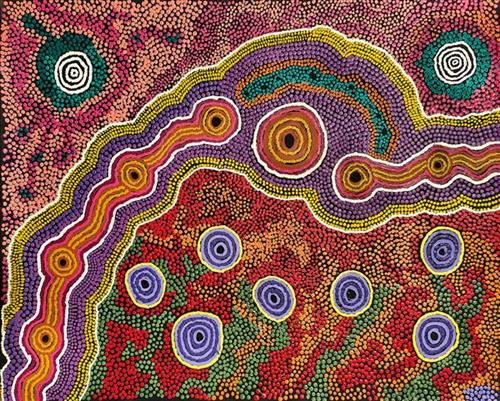
‘Kungkarrangkalpa’ (The Seven Sisters or Pleaides) is significant Tjukurrpa (dreamtime). Its origins you may be familiar with in astronomy and its connection to ‘Wati Nyiru’ (Magic Man or Orion).  The roots of this dreaming stems across indigenous groups around the world. The Australian Aboriginal songline is one part to the whole dreaming which can be traced all around the world. The ladies of the Ngaanyatjarra Lands depict their significant chapter and understanding of the journey of the sisters. The different versions of this story depend on where you live and the significance’s of local Tjukurrpa places.

Nyiru fell in love with the sisters but he was of the wrong skin group to marry, but he still pursued them on their journey. The sisters travel across the land to escape Nyiru’s unwanted attentions, but he is persistent and always finds them. There are significant land forms which can be sited today that evidence this dreaming. As Nyiru is chasing the sisters he tries to catch them by using magic to turn into the most tempting kampurarrpa (bush tomato) and the most beautiful Yirli (wild fig tree), for them to eat and camp under. However, the sisters are knowledgeable of his magic and too clever for Nyiru who they outwit again and again. They go hungry and run through the night rather than be caught by him. As the journey continues, Nyiru gets so frustrated at the wit of the sisters that he uses his magic to make the oldest sister sick to try and get closer to her. The other sisters rescue the big sister and nurse her back to health. It is said he also captures the youngest sister, but with the help of the oldest sister, she escapes back to her sisters who are waiting for her. Eventually, the sisters fly into the sky to escape Nyiru, forming the constellation. Nyiru felt lonely, longing for the sisters who were so far away. Nyiru used his magic to go to the sky, forever in pursuit. 

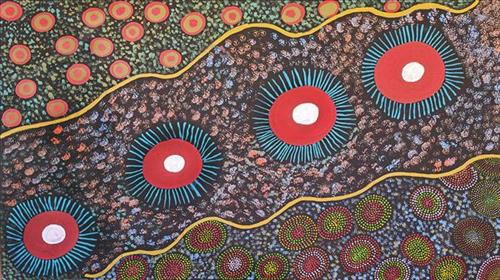
This painting maps the site of ‘Kuru Ala’ (two-eyes), a sacred place for women in Angilyiya’s mother’s country south of Papulankutja (Blackstone). Wati Nyiru was following them, disguising himself as a Quandong tree, a Yirli (wild fig tree), and then a carpet snake, spying on them as they made camp and dug for food. 

“This is the story about my Grandmother’s country, south of Papulankutja. You can see today the circles at the site in the cave from that Dreamtime story. It’s the young girls turning into young women. The bigger circles are those already women. They have been travelling for food and they saw that man had already taken the big sister. So they are taking her to the second cave for resting and getting better. You can see that man sitting; the rock hole down the bottom “Kuru Ala”, they drank that water in the early days. We still drink this water today”.
114182301901


Kungkarrangkalpa (Seven Sisters)

‘Kungkarrangkalpa’ (The Seven Sisters or Pleaides) is significant Tjukurrpa (dreamtime). Its origins you may be familiar with in astronomy and its connection to ‘Wati Nyiru’ (Magic Man or Orion).  The roots of this dreaming stems across indigenous groups around the world. The Australian Aboriginal songline is one part to the whole dreaming which can be traced all around the world. The ladies of the Ngaanyatjarra Lands depict their significant chapter and understanding of the journey of the sisters. The different versions of this story depend on where you live and the significance’s of local Tjukurrpa places.

Nyiru fell in love with the sisters but he was of the wrong skin group to marry, but he still pursued them on their journey. The sisters travel across the land to escape Nyiru’s unwanted attentions, but he is persistent and always finds them. There are significant land forms which can be sited today that evidence this dreaming. As Nyiru is chasing the sisters he tries to catch them by using magic to turn into the most tempting kampurarrpa (bush tomato) and the most beautiful Yirli (wild fig tree), for them to eat and camp under. However, the sisters are knowledgeable of his magic and too clever for Nyiru who they outwit again and again. They go hungry and run through the night rather than be caught by him. As the journey continues, Nyiru gets so frustrated at the wit of the sisters that he uses his magic to make the oldest sister sick to try and get closer to her. The other sisters rescue the big sister and nurse her back to health. It is said he also captures the youngest sister, but with the help of the oldest sister, she escapes back to her sisters who are waiting for her. Eventually, the sisters fly into the sky to escape Nyiru, forming the constellation. Nyiru felt lonely, longing for the sisters who were so far away. Nyiru used his magic to go to the sky, forever in pursuit.